


Georgian Burr Elm Furniture
These georgian burr elm furniture pieces bring magnificent natural patterning and rich honey tones into a room.
Georgian Burr Elm Furniture
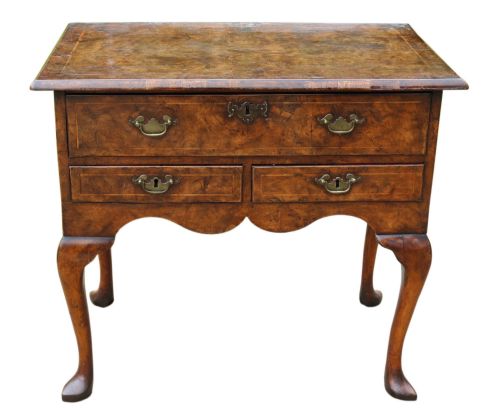
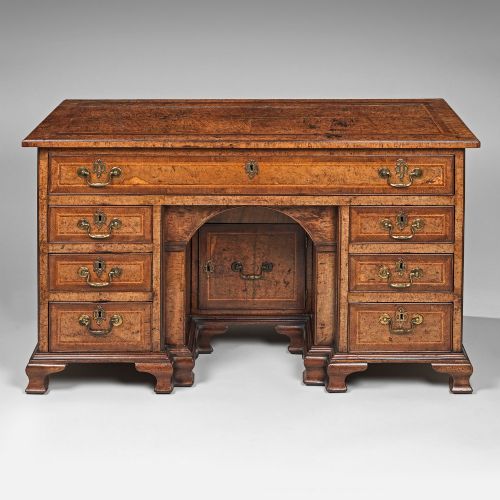
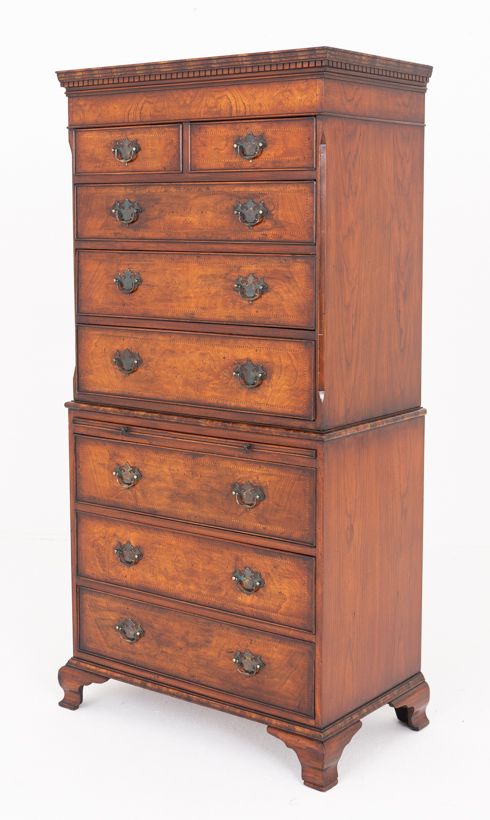
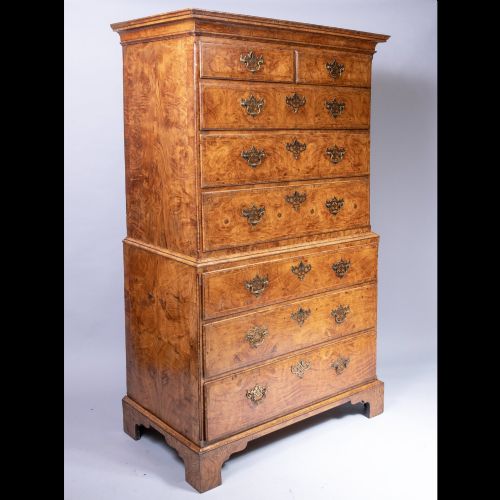
When you search for georgian burr elm furniture, you are looking at timber with wild, swirling grain patterns created by growth excrescences on the tree. These pieces span the eighteenth and nineteenth centuries, taking the form of lowboys, kneehole desks, dining tables, chests of drawers, tallboys, commodes, armchairs, sideboards, breakfast tables, cellarettes, occasional tables, and davenport desks.
The versions you are most likely to meet on this page date from the Georgian, George I, George II, and George III periods, alongside occasional Regency and Victorian examples. Makers such as The Woodworkers Ltd, Kilkenny also contributed to this tradition utilising native timber.
Forms range from vernacular Welsh Windsor chairs incorporating ash to sophisticated neoclassical demi-lune commodes featuring burr yew wood inlay. The variety demonstrates the adaptability of elm in both country workshops and metropolitan cabinet-making.
How they were made
Cabinet-makers selected burr elm for its decorative figuring, frequently pairing the primary timber with secondary woods such as oak and mahogany for structural stability. Wood inlay and brass hardware were applied to enhance the visual impact of the swirling grain.
Constructive techniques combined sturdy joinery for functional items like tallboys and cellarettes with delicate veneering on surfaces such as occasional tables and breakfast tables.
Even a humble milking stool or primitive comb back stick chair received the wild, swirling majesty of burr elm timber.
What varies in quality
The distinction between ordinary and exceptional pieces lies in the density and dramatic movement of the burr figuring across the primary surfaces. Finer examples display a cohesive grain pattern that has been thoughtfully matched across drawer fronts and table tops.
Proportion and stylistic restraint also define the upper tier, where regional vernacular styles like Welsh comb back stick Windsor chairs meet the refined standards of George II and George III cabinet-making.
The Woodworkers Ltd Kilkenny
The Georgian Burr Elm Furniture Glossary
- Burr elm
- A timber harvested from tree growths that produce chaotic, highly decorative swirling grain patterns. It is prized by cabinet-makers for surface veneers.
- Lowboy
- A small side table with drawers, typically raised on four legs, frequently produced during the eighteenth century. These items served multiple domestic functions.
- Tallboy
- A tall chest of drawers consisting of one chest stacked upon a deeper base chest. This form maximised storage capacity in domestic interiors.
- Kneehole desk
- A compact writing desk featuring a recessed central space for the user's legs, flanked by pedestals of small drawers.
Georgian Burr Elm Furniture: Frequently Asked Questions
What is burr elm wood?
Burr elm is a figured timber taken from a tree excrescence where the grain grows in a distorted, swirling pattern. This creates intricate natural designs across furniture surfaces.
Cabinet-makers utilised these distinctive veneers on prominent surfaces like drawer fronts and table tops to catch the eye.
How do I date these pieces?
Dating relies on stylistic markers associated with periods such as George I, George II, George III, Regency, and Victorian eras. Construction methods and hardware types also offer clues.
Early eighteenth-century pieces often display simpler vernacular forms, whereas later Georgian items incorporate neoclassical details like burr yew wood inlay.
Where were these pieces used?
Georgian burr elm furniture served practical roles throughout the home, from dining rooms to bedchambers and studies. Items ranged from cellarettes and breakfast tables to tallboys and davenport desks.
They furnished both grand townhouses and regional country dwellings, reflecting the versatility of elm.
How do I care for elm furniture?
Elm responds well to consistent indoor humidity and gentle cleaning with a soft, dry cloth to preserve the polished surface. Avoid placing pieces near direct heat sources.
Applying occasional natural wax helps maintain the lustre of the burr grain without building up heavy residues.