

Antique Elm Desk
An antique elm desk brings together rich, figuring-heavy timbers and honest country craftsmanship to anchor a study with warmth.
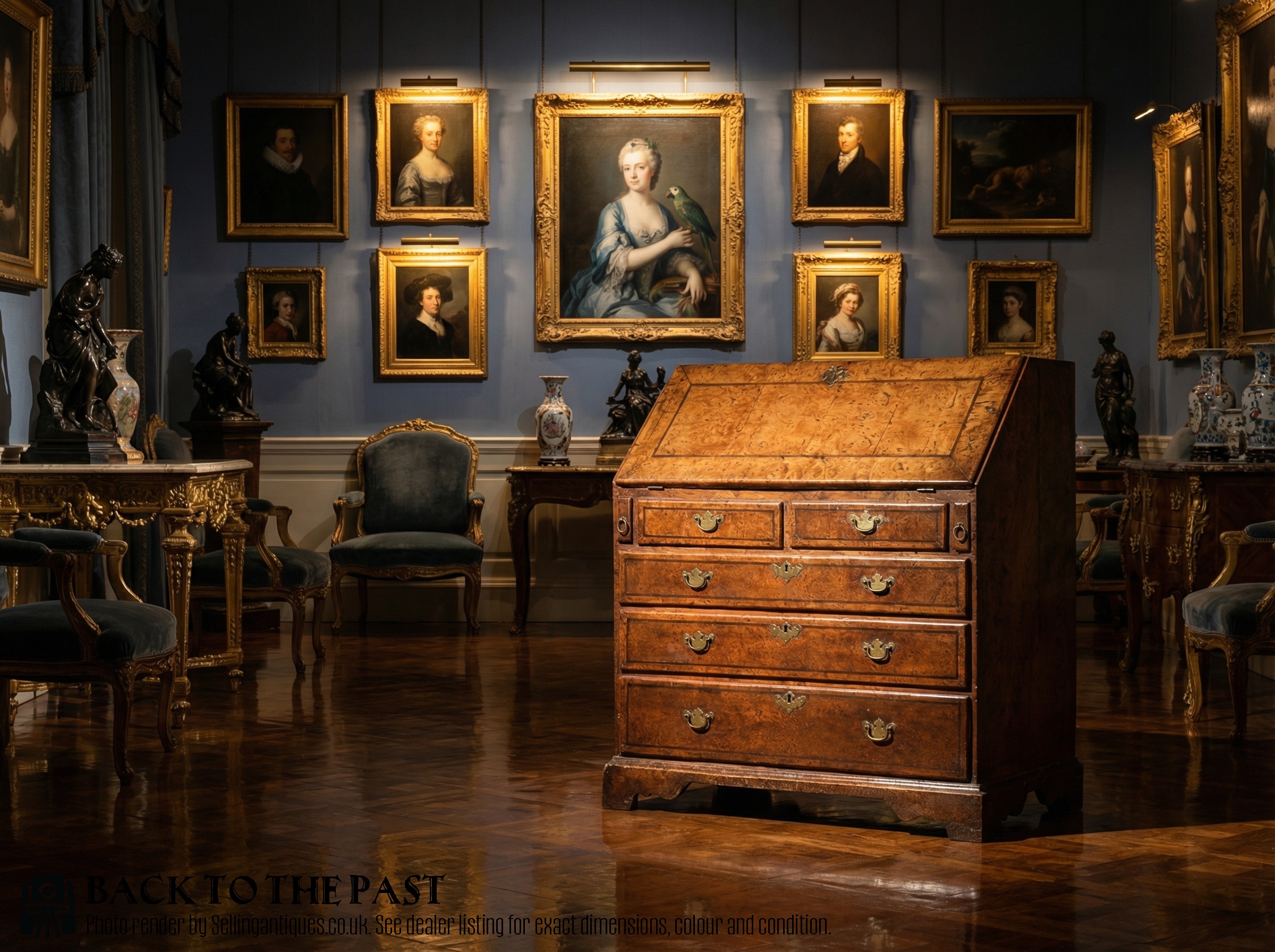
Antique Elm Desk
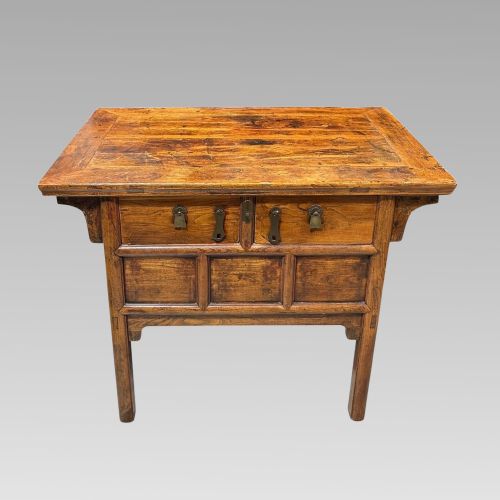
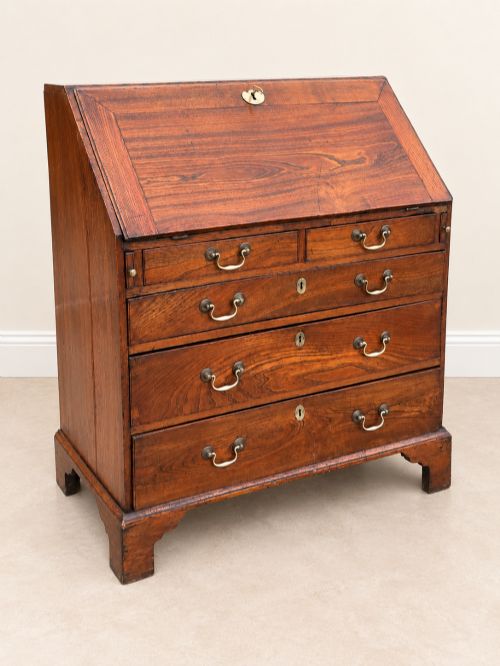
Buyers meeting this search phrase frequently encounter side tables adapted for writing, bureau formats with fitted interiors, and kneehole configurations dated from the eighteenth to nineteenth centuries. The material palette ranges from plain domestic timber to highly figured burr varieties.
Materials and construction
Constructed primarily from solid elm, burr elm, and oak, these desks rely on the dense, interlocking grain of elm which resists splitting during heavy daily use. Cabinet-makers paired this tough primary wood with secondary elements of fruitwood, beech, ash, and pitch pine in structural components.
Metal hardware such as brass handles and mounts secures drawers and drop-front mechanisms, while surface finishes include black lacquer on oriental scholarly pieces and polished waxed treatments on English vernacular items.
Antique Elm Desk Retail Price Guide 2026
Typical asking prices for elm desk among the pieces listed under this phrase on Sellingantiques today, from the lower quarter to the upper quarter. They describe what is for sale here now, not the wider market.
Listings incorporate 18th Century, 19th Century, and Georgian periods alongside Qing Dynasty pieces.
Assessing quality and character
The aesthetic appeal of an antique elm desk rests heavily on the choice of timber, where tightly swirled burr elm figuring elevates a simple writing table into a high-status piece. Plain elm boards show honest rustic grain, but finer examples display deliberate book-matching and careful selection of growth rings.
Construction integrity distinguishes workshop output, separating straightforward provincial utilitarian items from sophisticated Georgian bureau forms with fitted pigeonholes and secret compartments. The harmony between primary elm surfaces and secondary timbers like oak defines the standard of the build.
Glenisters of High Wycombe·Geo M Hammer and Co Ltd London
The Antique Elm Desk Glossary
- Kneehole desk
- A compact writing desk featuring a central recessed space for the user's legs flanked by pedestals of small drawers. This form became popular during the Georgian period for domestic studies.
- Low boy
- A small leg table with drawers, frequently utilised as a writing surface or side table in eighteenth-century interiors. It typically stands on cabriole or straight legs.
- Bureau
- A slant-front desk enclosing a fitted interior of small drawers and pigeonholes above further long drawers. It provides a concealed workspace that can be locked shut.
- Side table
- A rectangular furniture piece designed to stand against a wall, often adapted for writing or administrative tasks in period settings.
Antique Elm Desk: Frequently Asked Questions
How do I care for an elm surface?
Feed the dry timber periodically with a quality beeswax to maintain the moisture of the grain.
Avoid placing the desk near direct heat sources which can cause the dense elm boards to warp or split.
What is burr elm?
Burr elm is taken from a tree growth that produces tightly swirled, highly decorative grain patterns.
Cabinet-makers prized this figured timber for the front panels of high-status desks and bureaus.
Are these desks suitable for daily work?
Most antique writing desks accommodate modern laptop use, provided the writing height matches your chair.
Drawer depths on older models can be shallower than modern equivalents, so check internal dimensions first.
How do I date an antique elm desk?
Examine the drawer construction, timber selection, and handle fixings to determine the likely period.
Georgian pieces often display hand-cut dovetails and oak drawer linings, whereas later nineteenth-century examples show machine assistance.