


Fall Front Secretary Desk
A fall front secretary desk conceals fitted compartments and a writing slope behind a drop-down panel, bringing practical workspace to period rooms.
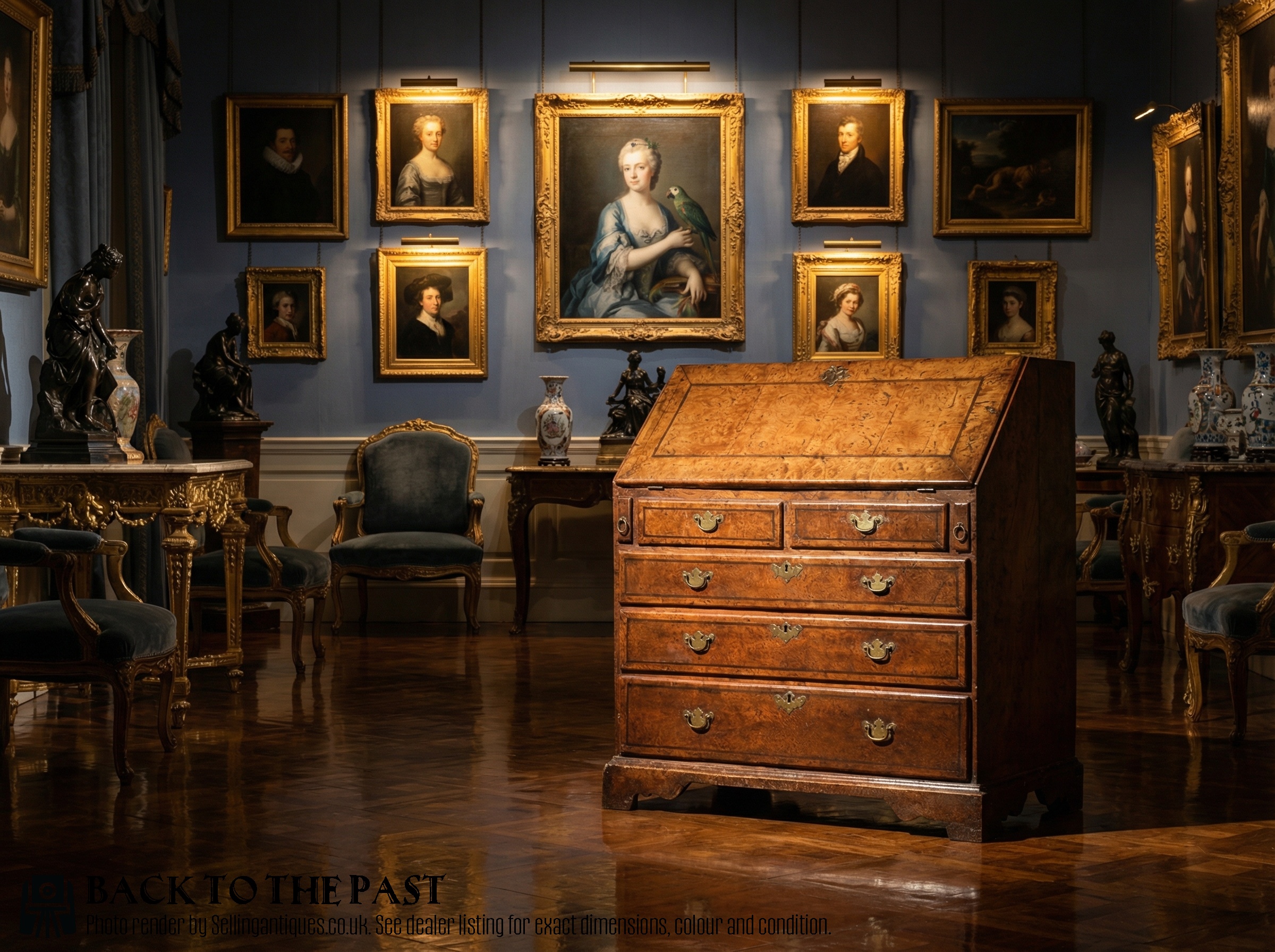
Fall Front Secretary Desk
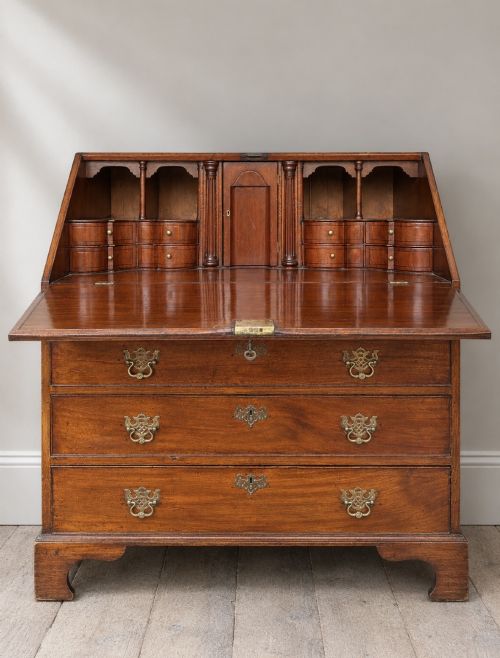
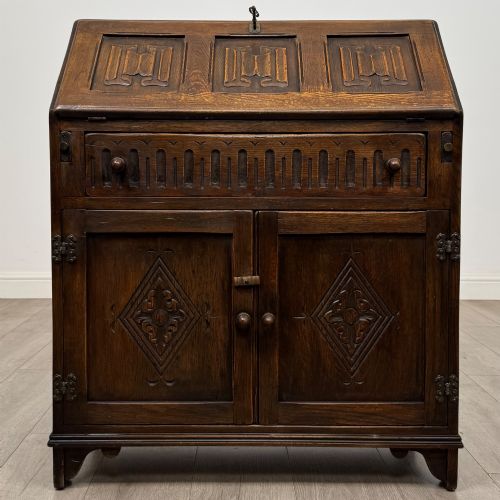
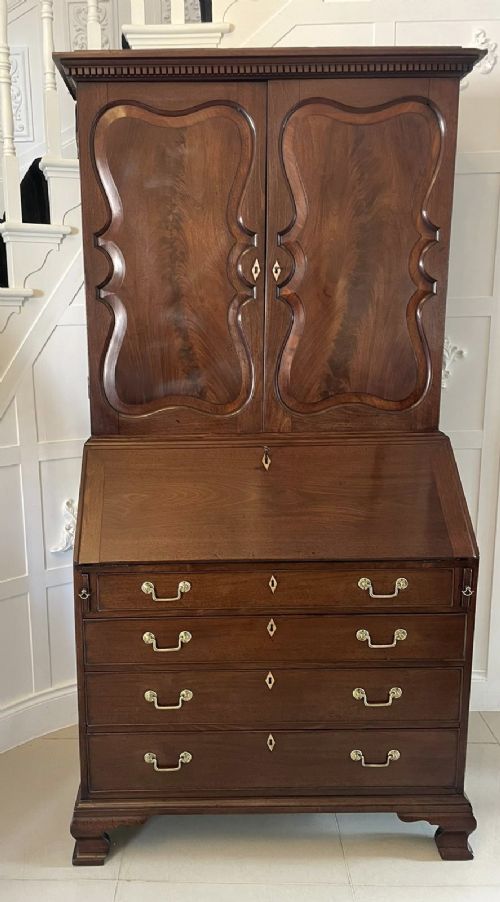
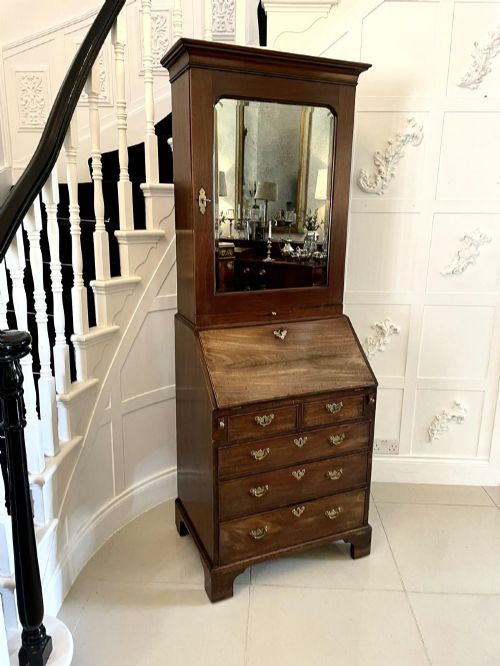
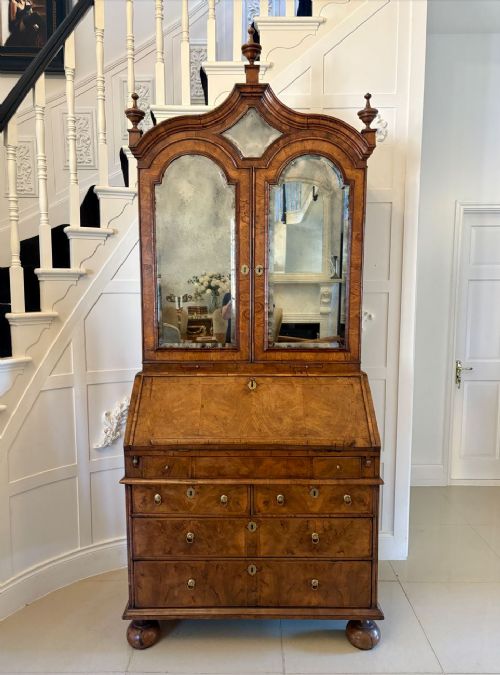
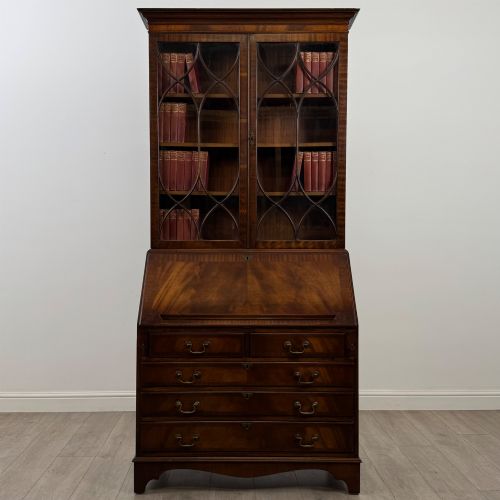
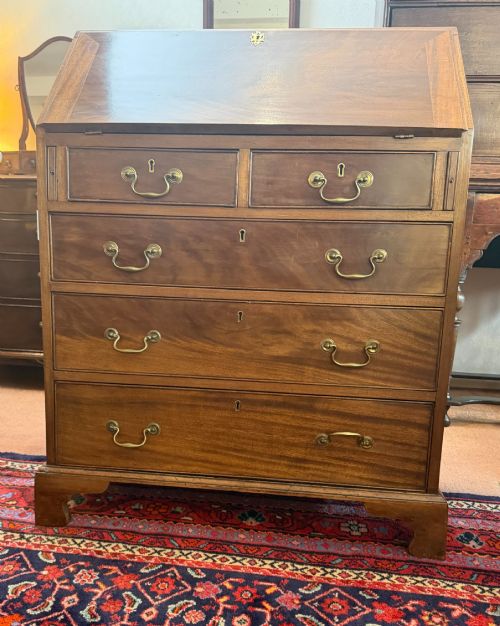
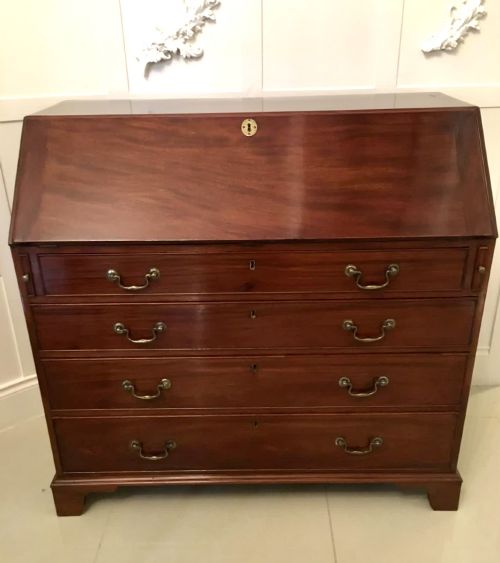
A fall front secretary desk combines a sloping or vertical writing flap with internal pigeonholes and drawers, often surmounted by a bookcase cabinet. These pieces appear frequently as mahogany and oak bureaux from the eighteenth century, alongside walnut examples spanning the Queen Anne and Georgian eras.
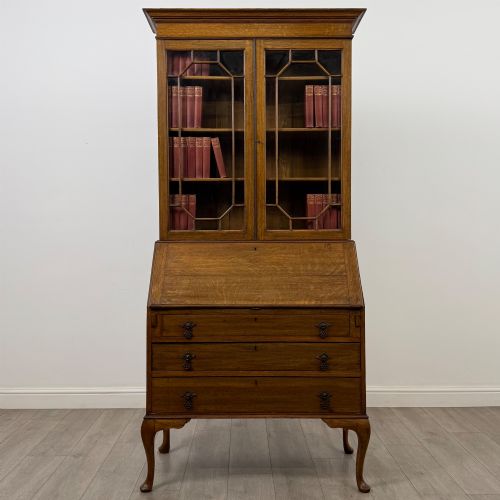
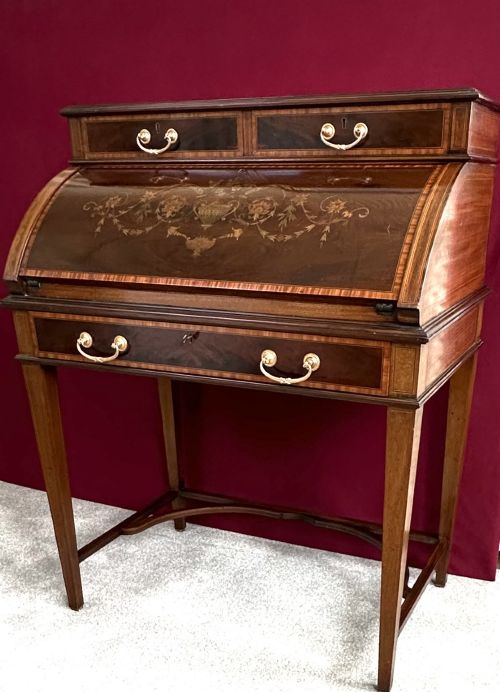
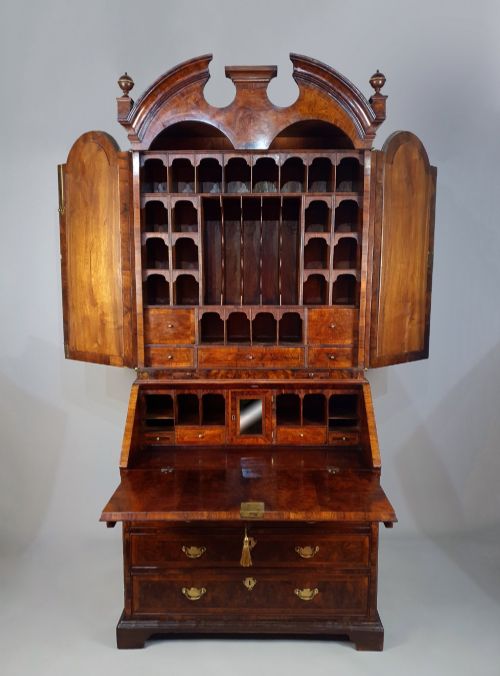
Buyers also encounter later iterations from the Edwardian period and the early twentieth century, including Arts and Crafts oak designs and marquetry decorated pieces. Cabinet forms range from compact standing bureaux to taller bureau bookcases with glazed upper doors.
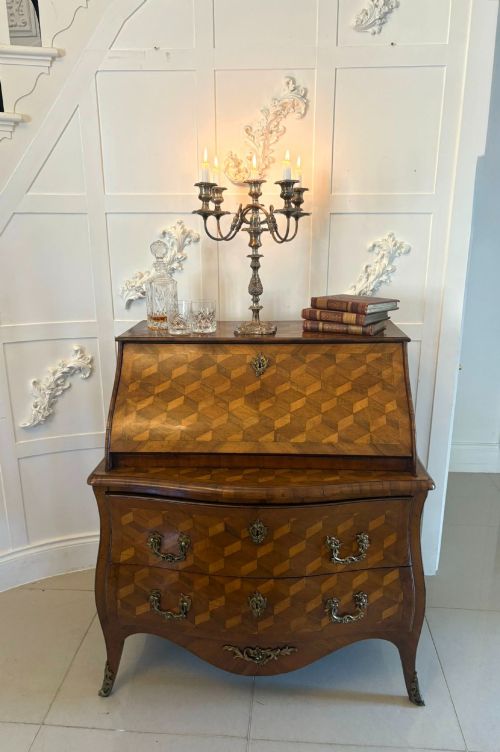
Regional variations span Dutch floral marquetry, French bombe shapes, and English provincial craftsmanship in fruitwood or yew wood.
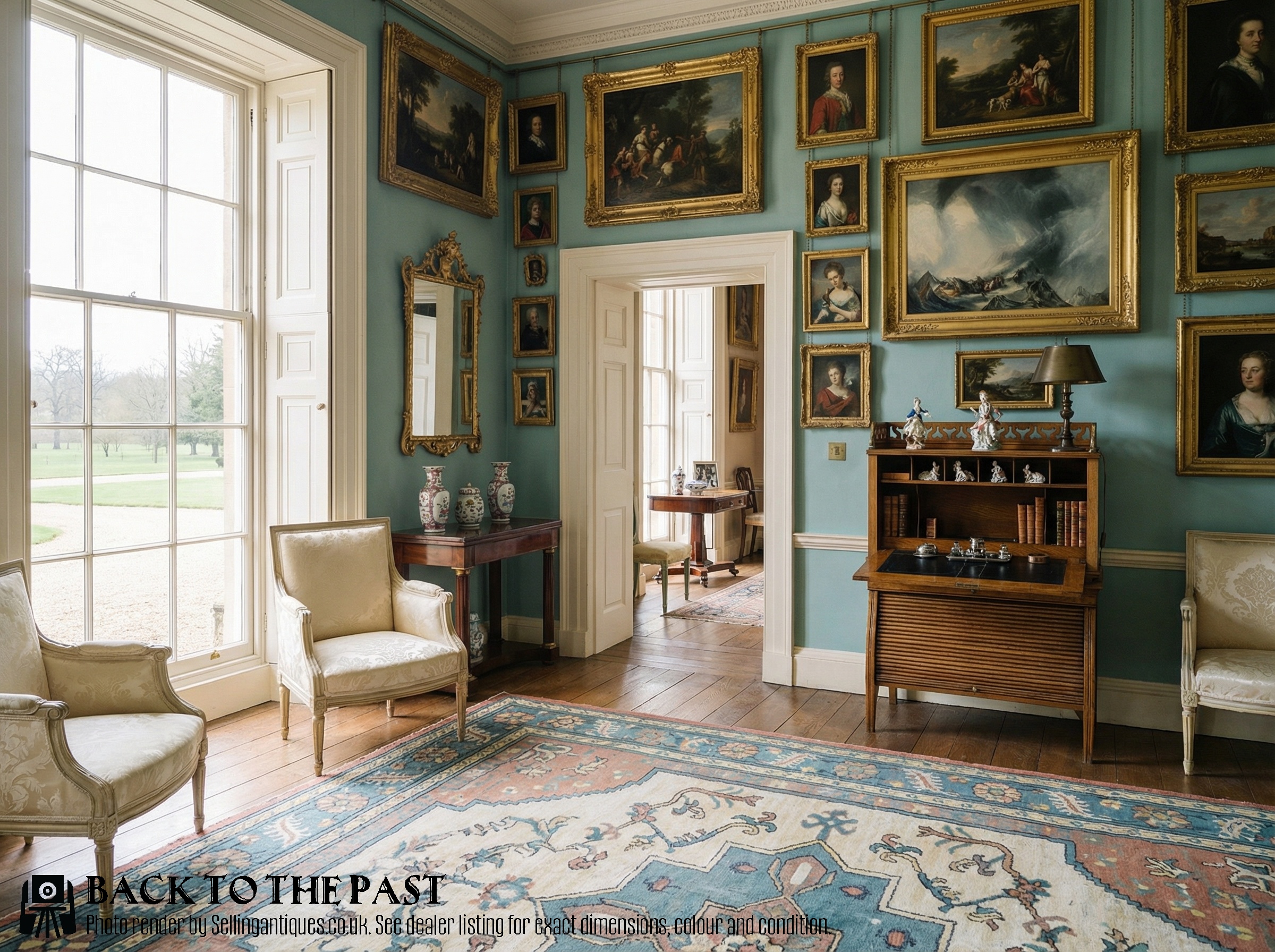
Materials and technique
Cabinetmakers utilised solid timbers and selected veneers, applying figured mahogany, burr walnut, and oak over robust structural carcasses. Drawer linings often employ secondary woods such as cedar or oak, joined with hand-cut dovetails.
Surfaces receive decorative treatments including featherbanding, parquetry, and marquetry inlay using contrasting woods and brass hardware. Fall fronts require sturdy brass hinges and internal support brackets or lopers to bear the weight of the writing surface.
Fall Front Secretary Desk Retail Price Guide 2026
Typical asking prices for fall front secretary desk among the pieces listed under this phrase on Sellingantiques today, from the lower quarter to the upper quarter. They describe what is for sale here now, not the wider market.
One early oak bureau bookcase carries evidence of an adaptation designed to accommodate a television set.
Judging quality
The degree of refinement in timber selection and internal configuration marks the division between standard and superior pieces. Finer examples display symmetrical burr walnut or figured mahogany veneers that continue seamlessly across the fall front.
Internal joinery of the small drawers and stepped pigeonholes reveals the hand of the maker, where secret compartments, carved bracket feet, and original brasses indicate higher workshops.
Heals of London·Arthur Basil Reynolds
The Fall Front Secretary Desk Glossary
- Fall front
- The hinged writing panel that drops to a horizontal position to serve as a desk surface. It conceals internal drawers and pigeonholes when closed.
- Bureau bookcase
- A dual-purpose tall furniture form featuring a sloping desk base combined with an upper shelved cabinet enclosed by doors.
- Featherbanding
- A decorative banding technique using thin strips of veneer laid diagonally to form a herringbone pattern around panel edges.
- Bombe
- A swelling, convex curved profile typical of continental furniture front and side panels.
- Lopers
- Wooden pull-out support arms that slide out from beneath the fall front to hold the writing flap steady.
Fall Front Secretary Desk: Frequently Asked Questions
How do I use a fall front secretary desk?
Release the brass catches or lock to lower the hinged writing flap until it rests flat upon the pull-out lopers. This reveals an arrangement of small drawers and pigeonholes for correspondence and writing materials.
Close the fall front when finished to conceal the workspace and protect documents from dust within period rooms.
What is the difference between a bureau and a secretary?
Both terms describe furniture featuring a writing flap, though British usage historically prefers bureau while secretary often denotes pieces with taller upper bookcase sections.
Regional terminology varies between English cabinetmakers and continental workshops, yet both share the primary function of concealed storage and a fold-down writing surface.
How do I date a walnut bureau?
Examine the grain patterns, secondary timbers inside the drawer boxes, and the construction of the feet, which transition from bracket feet to carved paw designs across different decades. Early eighteenth-century examples often display rich burr walnut veneers with featherbanded borders.
Later Edwardian revivals replicate these Queen Anne and Georgian forms but utilise twentieth-century internal fixings and machine-cut elements.
Where should I place a bureau bookcase?
Position the piece against a sturdy wall in a study, living room, or hallway where adequate floor clearance permits the fall front to drop fully open. Keep walnut and mahogany surfaces away from direct sunlight and heat sources to prevent timber shrinkage.
Ensure sufficient room on either side to access the upper bookcase doors if the model incorporates a glazed top.