


Georgian Slant Desk
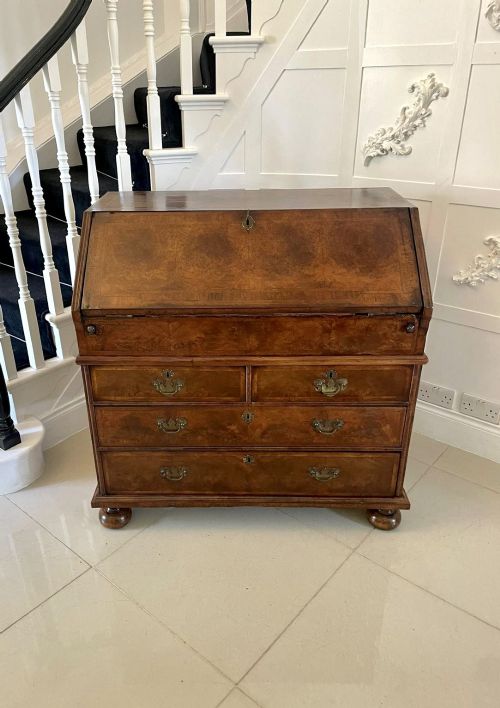
A georgian slant desk offers a fitted interior hidden beneath a sloping fall front, combining a practical writing surface with deep set storage.
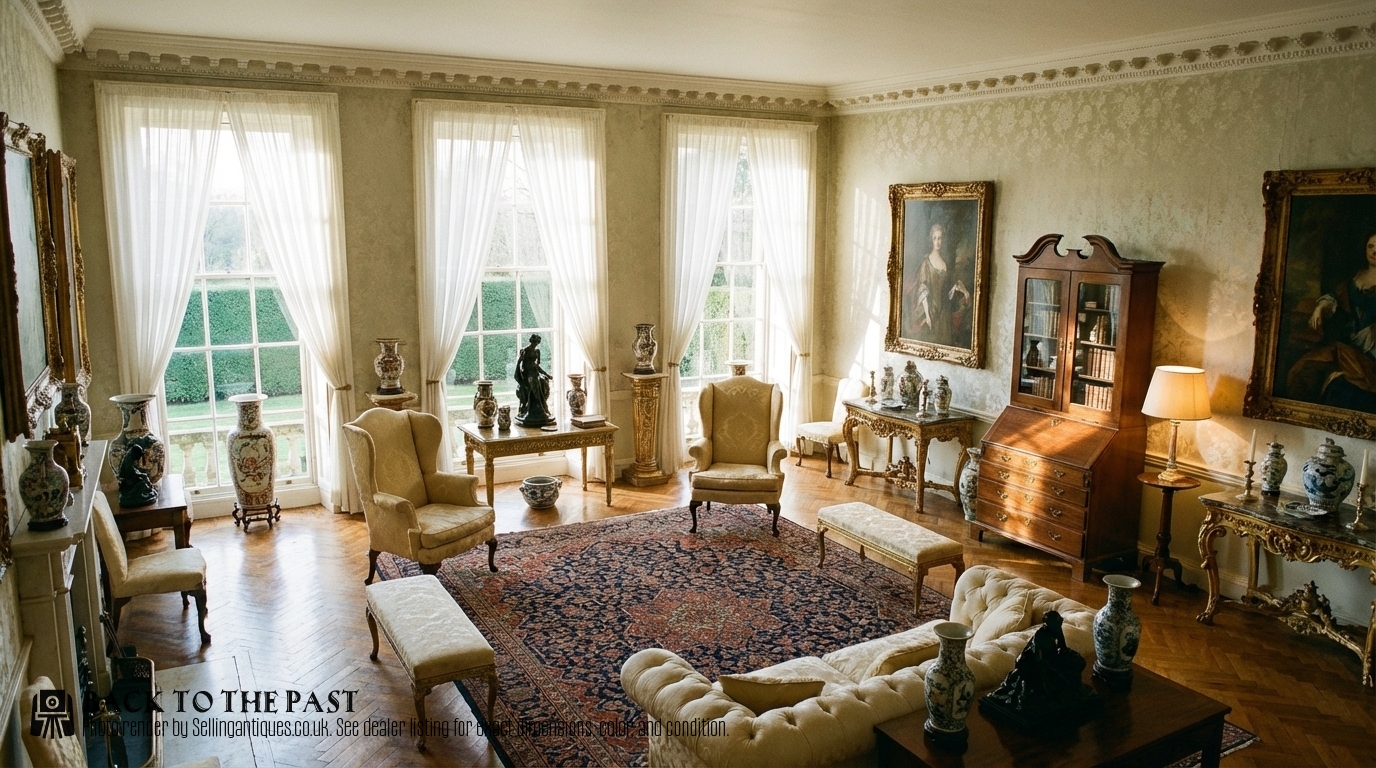
Georgian Slant Desk
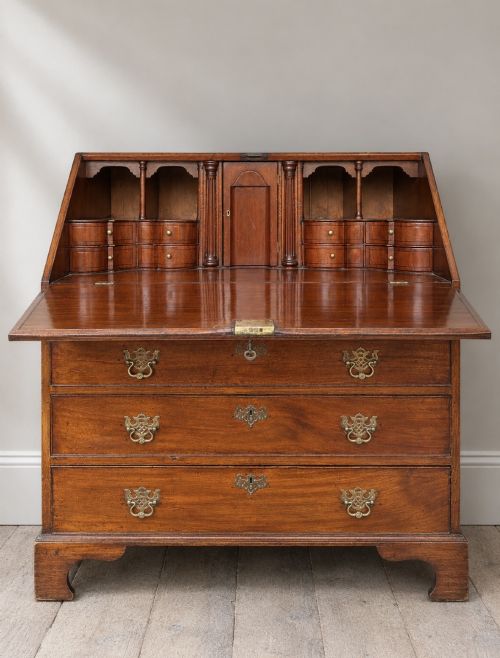
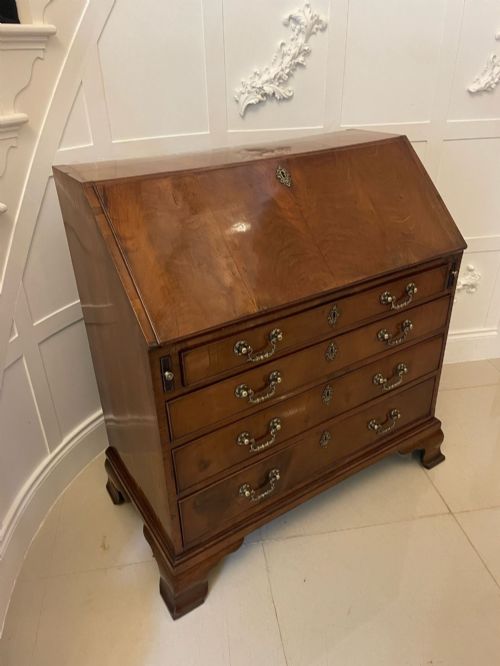
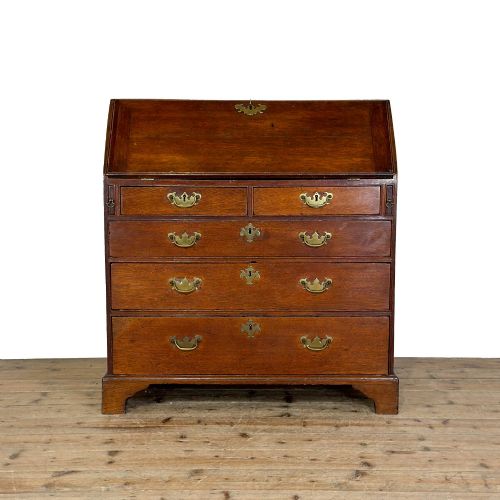
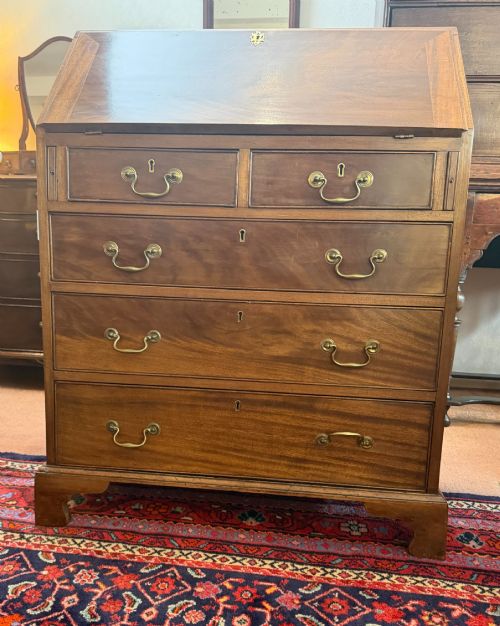
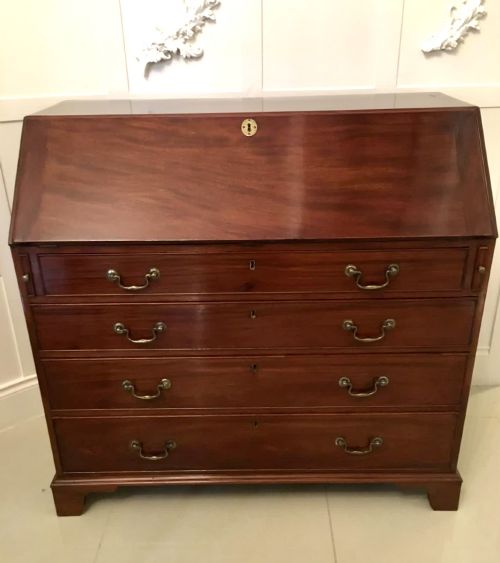
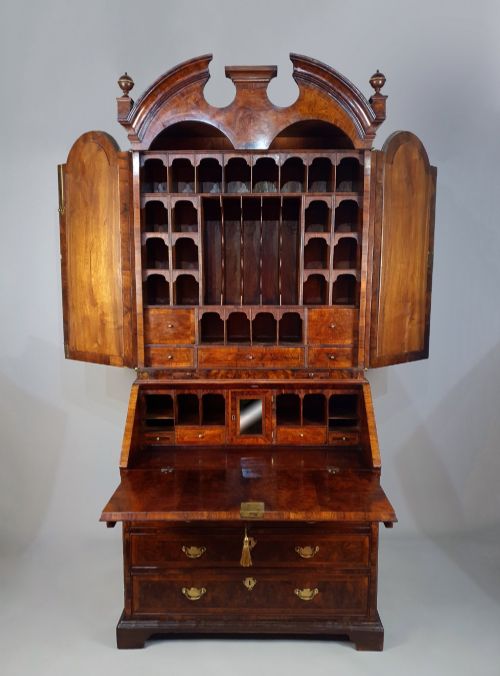
When you search for a georgian slant desk, you encounter pieces primarily from the eighteenth century, spanning periods from George I through to George III. These items function as writing desks and storage units combined, often featuring a sloping fall front that opens to reveal a stepped interior of small drawers and pigeonholes.
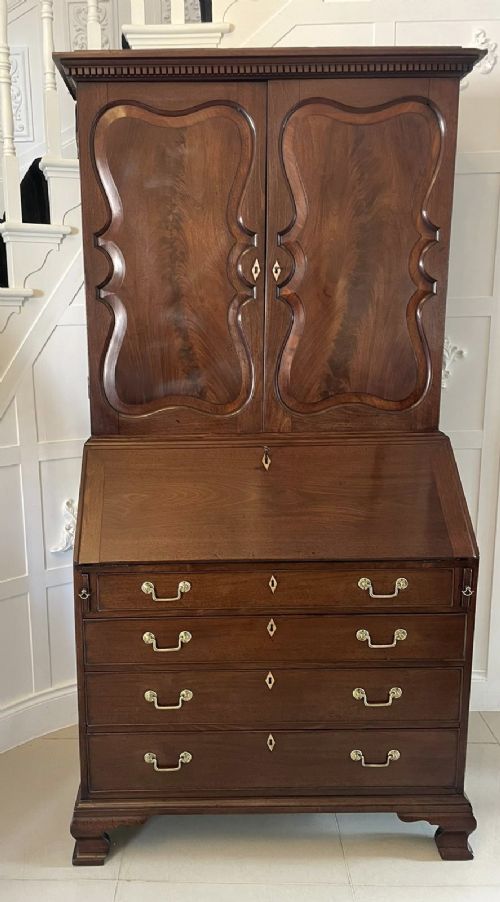
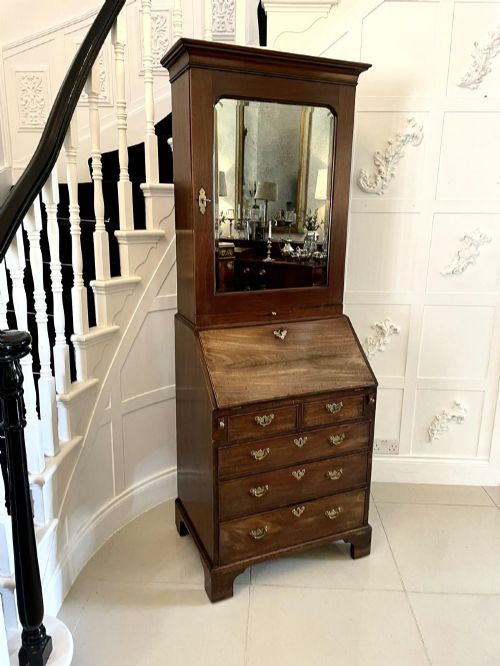
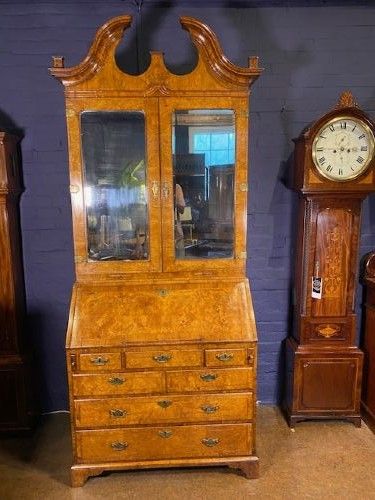
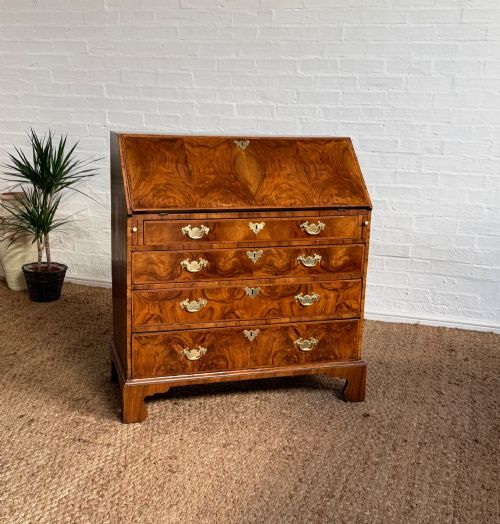
The most common forms on this page include mahogany and walnut bureaux, alongside larger bureau bookcases topped with glazed doors. Variations range from compact oak examples to elaborate burr walnut pieces on stands.
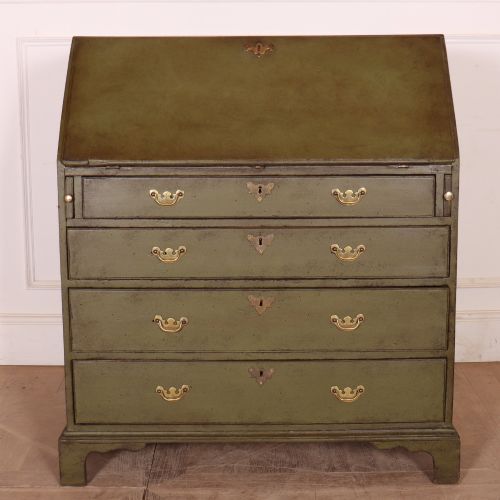
Makers and provincial makers also produced painted and fruitwood variants, reflecting both urban cabinet making and English country traditions.
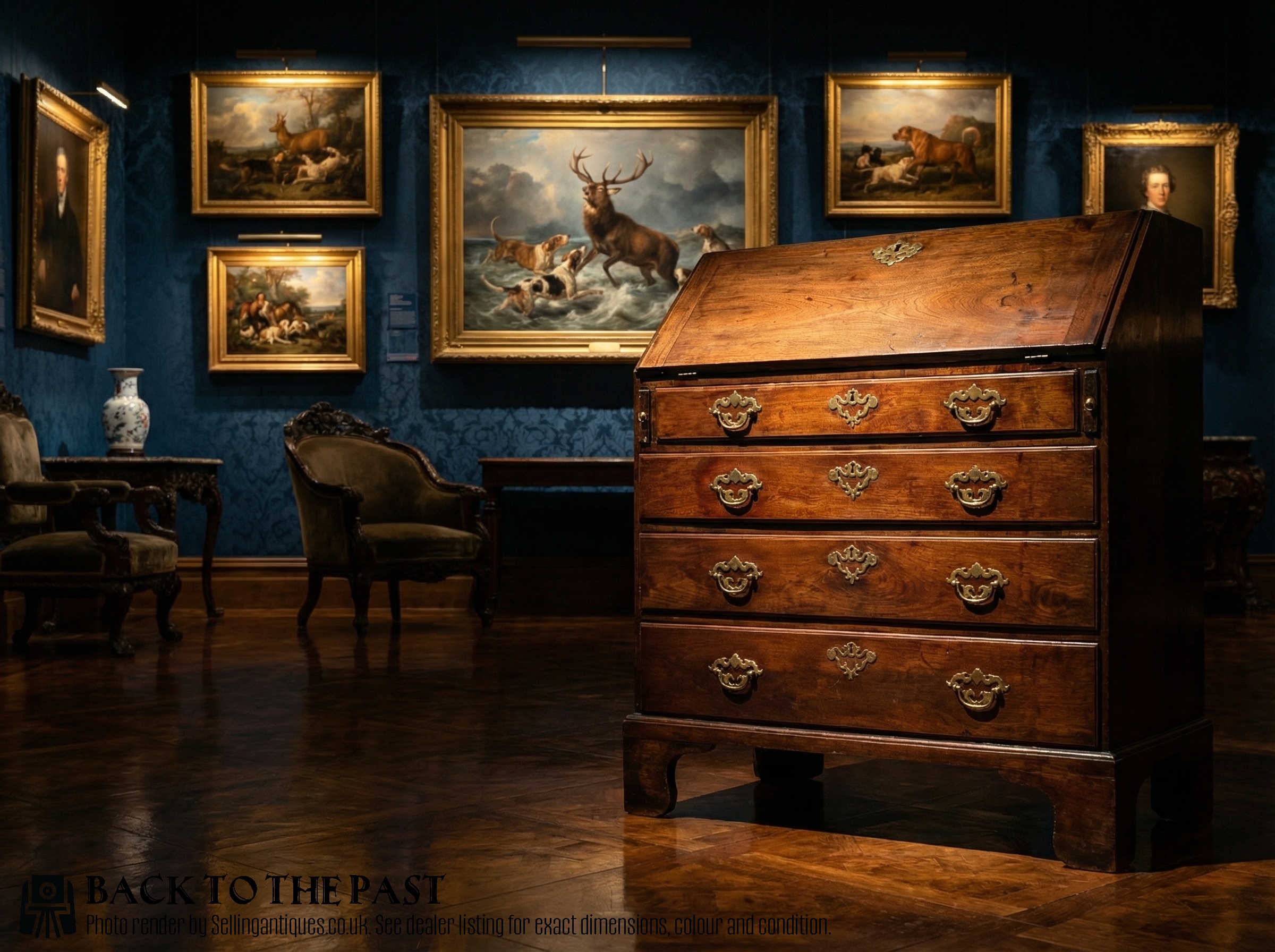
How they were made
Cabinet makers utilised dense hardwoods such as mahogany, oak, and walnut, often selecting figured veneers and herringbone inlay to ornament the fall fronts. Secondary timbers like cedar appear in drawer construction.
Brass hardware, including bracket feet mounts and drop handles, secures the structure, while inset red leather writing surfaces provide a durable platform for correspondence.
Joinery methods rely on dovetailed drawer boxes and panelled construction to support the heavy weight of the sloping desk lid.
Georgian Slant Desk Retail Price Guide 2026
Typical asking prices for georgian slant desk among the pieces listed under this phrase on Sellingantiques today, from the lower quarter to the upper quarter. They describe what is for sale here now, not the wider market.
One early oak bureau bookcase arrives adapted specifically for television housing.
What varies in quality
The distinction between tiers rests upon timber selection and interior complexity, where highly figured burr walnut or flame mahogany veneers elevate a piece significantly. Finely stepped interiors with secret compartments demonstrate superior workshop competency compared to plain wells.
Proportion and foot configuration also dictate standing, with well executed ogee bracket feet or dedicated stands outperforming simpler bracket designs. Original brasses and uncompromised structural timber preserve the integrity of the fall front action.
The Georgian Slant Desk Glossary
- Fall front
- The hinged sloping panel that drops down to form the writing surface of a bureau. It conceals the fitted interior when closed.
- Bureau bookcase
- A two part form comprising a slant desk base surmounted by a glazed or panelled shelved cabinet for books. These tall pieces dominate a room.
- Stepped interior
- An arrangement of small drawers and pigeonholes arranged in ascending tiers inside the desk. It provides storage for letters and documents.
- Herringbone inlay
- A decorative band of contrasting veneer laid in a V shaped pattern. It frames the drawer fronts and fall lids of walnut pieces.
- Bracket feet
- Small structural supports attached to the bottom corners of the case. They lift the bureau off the floor.
- Bureau on stand
- A compact writing desk raised upon separate legs connected by stretchers. This form typically dates to the early eighteenth century.
Georgian Slant Desk: Frequently Asked Questions
What is a georgian slant desk?
A georgian slant desk is a writing cabinet featuring an angled hinged lid that drops forward to create a flat workspace. These pieces originated during the eighteenth century to store writing materials and correspondence.
Inside, they contain a fitted array of small drawers and pigeonholes. Below the writing flap, several graduating drawers provide general storage.
How do you use a slant desk?
You open the fall front by lowering the sloping lid until it rests horizontally, supported by internal wooden pigeonhole slides or hinges. This reveals the writing surface for drafting letters or conducting daily administration.
When writing concludes, papers stow within the internal compartments before the lid closes and secures with a key. The surface returns to a compact cabinet profile against the wall.
How do walnut and mahogany desks differ?
Walnut desks typically date from the earlier eighteenth century, spanning the reigns of Queen Anne and George I. They frequently display figured grain patterns, crossbanding, and herringbone inlay.
Mahogany examples become prominent later in the eighteenth century under George III. They utilise dense reddish brown timber that accepts crisp carved details and bracket feet.
Where were these desks placed?
These desks served as functional administrative furniture in private libraries, studies, and drawing rooms of large houses. Their dual function allowed owners to write letters and manage estate accounts in primary living areas.
Smaller provincial examples also suited bedrooms and smaller chambers. Their compact footprint made them versatile additions to domestic spaces.