







Elm Console Table
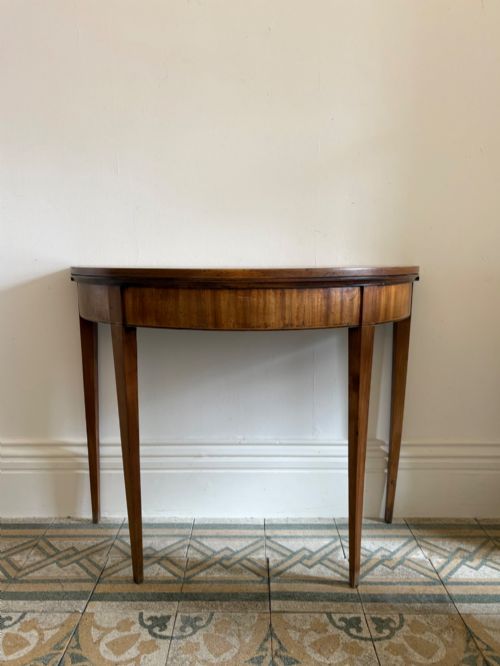
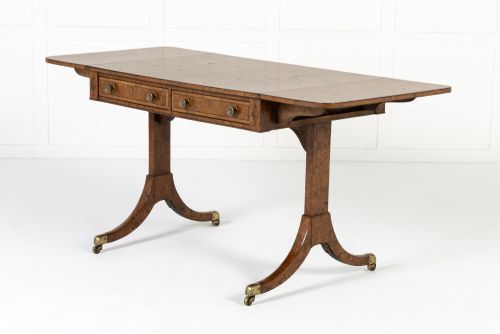
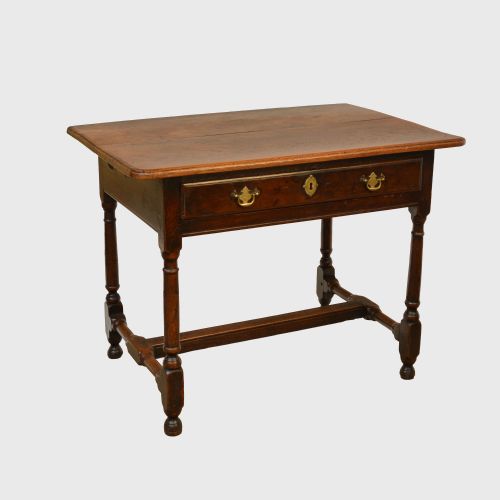
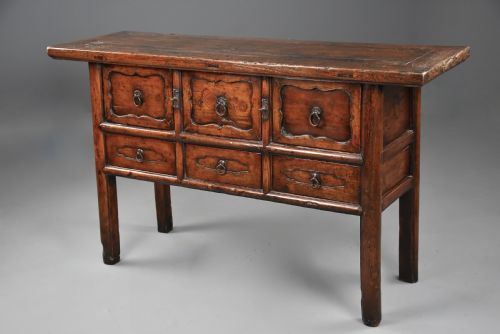
These elm console table examples range from rustic Chinese provincial pieces to refined Georgian country designs, built for everyday utility and lasting presence.
Elm Console Table
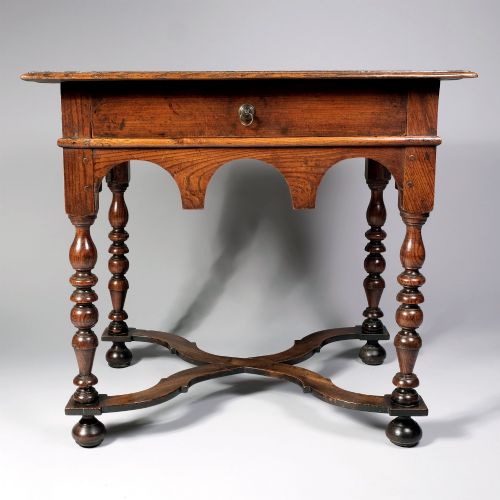
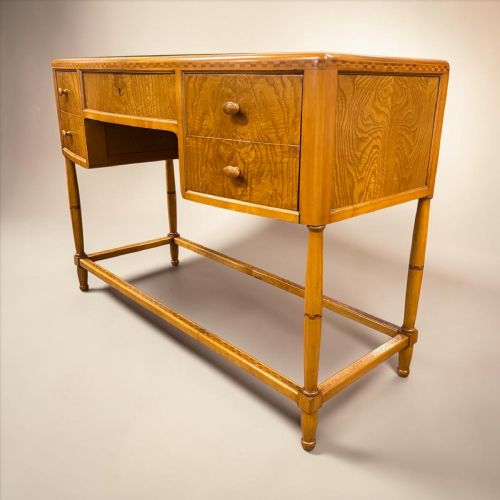
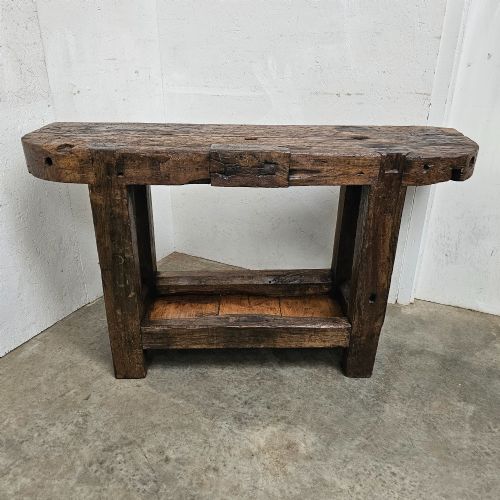
An elm console table brings together a specific timber and a long, narrow form designed to stand against a wall in halls, living spaces and dining rooms. The pieces gathered here span centuries and regions, connecting English country workshops with French provincial homes and Chinese traditional joinery.
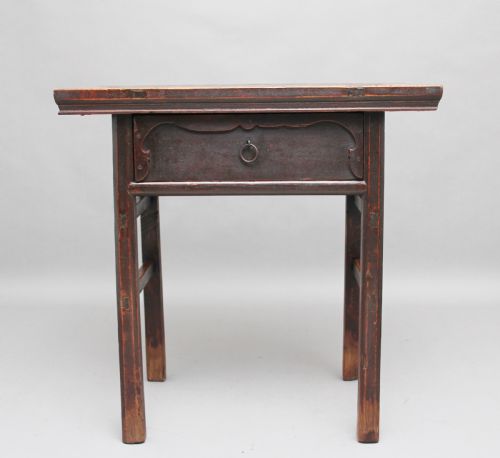
Buyers meet two distinct traditions most frequently within these listings. One stream originates in Chinese provincial and altar furniture, built from solid elm with characteristic plank tops and structured framing. The other draws on European country traditions, where English Georgian makers and French makers paired elm with oak, yew, sycamore or fruitwood.
The form adapts readily across domestic settings, serving as side tables, half-moon tables, writing desks or narrow servers. Regional variations run from William and Mary periods through to Art Deco Scandinavian work and late nineteenth century rustic pieces, maintaining a shared reliance on timber grain.
How they were made
Makers built these tables around the distinctive properties of elm, a timber prized for its interlocking grain that resists splitting under heavy daily use. Workshops frequently paired elm with supporting secondary timbers such as oak, sycamore, fruitwood and yew, creating robust frames for plank tops and drawers.
Surface treatments varied by region, ranging from natural waxed finishes that emphasised the figure of the wood to traditional red lacquer and polished patinas. Joinery techniques relied on precise mortise and tenon construction, allowing structural stability without complex metal fastenings.
Elm Console Table Retail Price Guide 2026
Typical asking prices for elm console table among the pieces listed under this phrase on Sellingantiques today, from the lower quarter to the upper quarter. They describe what is for sale here now, not the wider market.
What varies in quality
Quality rests primarily in the character of the timber surface and the integrity of the original construction. Pieces exhibiting a deep, undisturbed patina and rich figure command attention, showing how centuries of use have mellowed the grain.
Proportion and structural honesty separate exceptional examples from simpler utilitarian items. Master joiners achieved balanced lines and taut joinery that survived rigorous domestic service, whether in a formal English hall or a provincial Chinese interior.
The Elm Console Table Glossary
- Elm
- A dense, tough hardwood noted for its twisted, interlocking grain pattern and resistance to splitting. It forms the primary structural material across both European country furniture and Asian provincial pieces.
- Patina
- The lustrous surface sheen developed through years of handling, waxing and age. A rich patina indicates undisturbed historical surfaces.
- Altar table
- A traditional Chinese form characterised by an elongated narrow top and distinct recessed legs, often featuring upturned flanges at the short ends.
- Trestle table
- A table construction where the top rests on supportive end assemblies rather than four independent vertical legs, offering stability and legroom.
- Demi lune
- A half-moon shape used for console and tea tables designed to sit flush against a wall while occupying minimal floor space.
Elm Console Table: Frequently Asked Questions
Where should an elm console table go?
These narrow tables suit entrance halls, narrow corridors and living room perimeters where floor space remains at a premium. Their shallow depth allows them to sit against walls without obstructing pathways.
They function effectively beneath mirrors or paintings, providing a display surface for lamps and decorative objects while anchoring the surrounding wall space.
How do I care for antique elm furniture?
Maintain the timber by applying natural beeswax sparingly and buffing with a soft cloth to preserve the historical surface sheen. Avoid placing the wood near direct heat sources or in strong sunlight.
Regular dusting keeps abrasive particles from settling into the grain, while stable indoor humidity prevents timber movement.
Are Chinese elm tables heavy?
Solid elm possesses a dense and heavy cellular structure, meaning traditional Chinese console and altar tables often carry substantial weight. This density contributes to their structural stability and enduring strength.
Moving these pieces requires two people to protect both the joinery and the historic timber feet.
How do I distinguish regional styles?
European country pieces often display secondary timbers like oak or fruitwood alongside turned legs and drawer configurations typical of Georgian or provincial design. Chinese pieces rely on visible mortise joinery, recessed leg structures and occasional lacquer finishes.
Examining the underside and drawer construction reveals the specific joinery methods characteristic of each regional workshop tradition.