


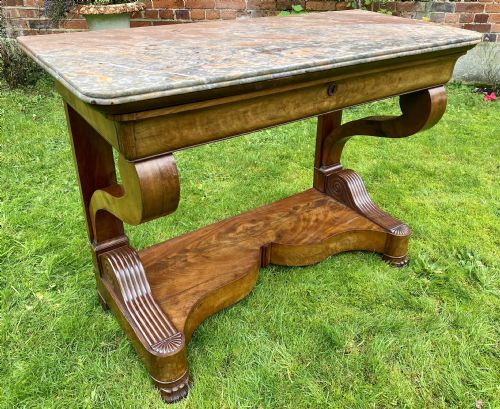

Biedermeier Console Table
A biedermeier console table brings restrained nineteenth-century geometry and rich figured timbers into a modern interior.
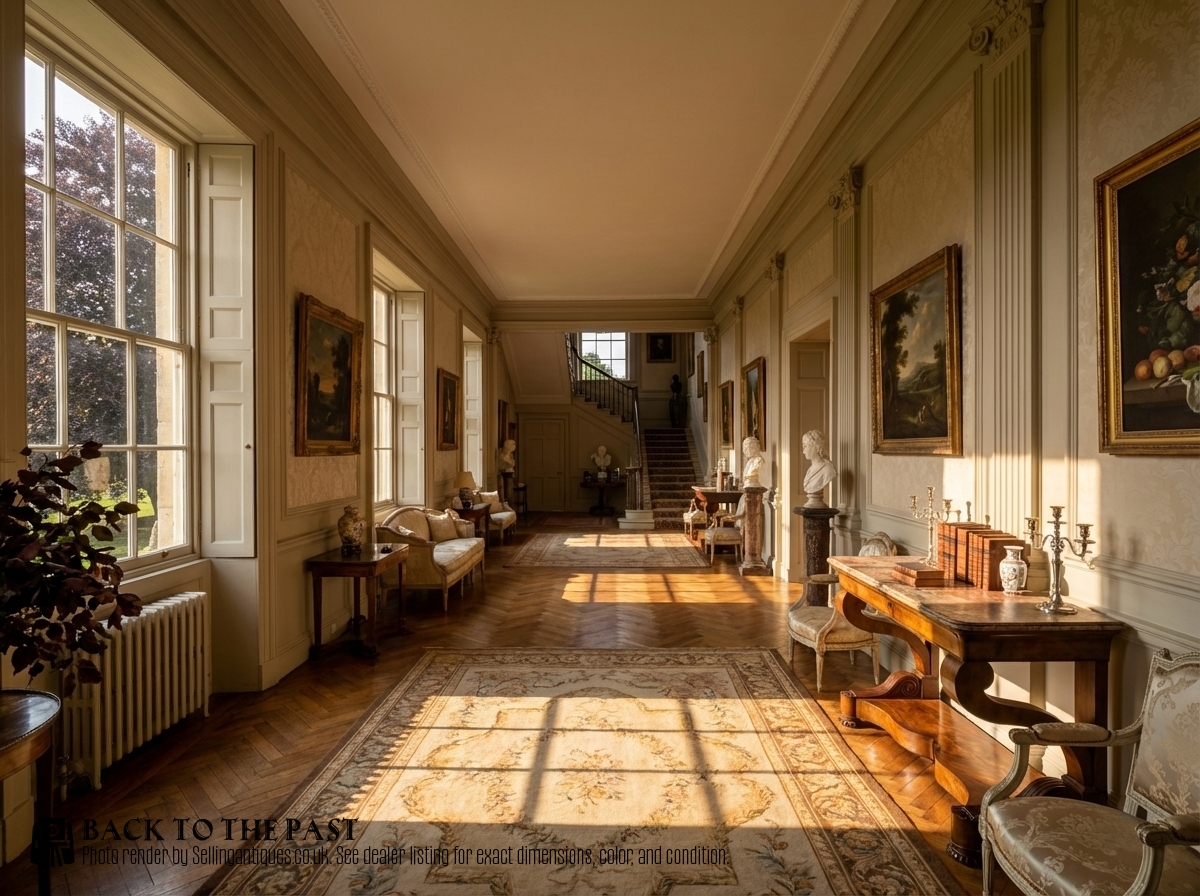
Biedermeier Console Table
A biedermeier console table is a nineteenth-century form designed to stand against a wall, often accompanied by related occasional pieces such as sofa tables, card tables and side tables. These tables emerge from continental European traditions, with Scandinavian makers producing notable examples in burr birch, maserbirch and Karelian birch.
The pieces appearing on this page span the nineteenth century and into the early twentieth century, taking in related styles like Empire Revival, French Restauration and William IV. Alongside standard console forms, buyers encounter console tables paired with mirrors, demi-lune shapes and pier tables.
The construction relies heavily on striking timber veneers rather than heavy carving, allowing the natural grain to form the primary decoration. Many examples utilise native and exotic woods such as walnut, mahogany and ebonised wood to create contrast against lighter birch surfaces.
What varies in quality
Quality rests primarily in the selection and matching of the veneer, where symmetrical grain patterns and undisturbed surfaces elevate a piece above standard workshop production. The depth of colour in the birch or walnut and the crispness of any applied ormolu or brass mounts also indicate the level of craftsmanship.
Proportion and structural integrity define the distinction between ordinary utility items and superior examples. Well-balanced supports, clean joinery and harmonious integration of associated elements like mirrors dictate the standing of a console table.
Biedermeier Console Table Retail Price Guide 2026
Typical asking prices for biedermeier console table among the pieces listed under this phrase on Sellingantiques today, from the lower quarter to the upper quarter. They describe what is for sale here now, not the wider market.
Scandinavian workshops contributed significant examples utilising burr birch, maserbirch and Karelian birch.
The Biedermeier Console Table Glossary
- Console table
- A table designed to be fixed against a wall, frequently supported by front legs or brackets while relying on the wall for ultimate stability.
- Burr birch
- A specialised timber growth producing swirling, highly figured grain patterns that cabinet makers sliced into thin veneers for decorative surfaces.
- Ormolu
- Gilded bronze detailing applied to furniture frames to provide metallic contrast against dark or polished wood.
- Demi-lune
- A half-moon shape characteristic of certain console and card tables designed to sit flush against a flat wall.
- Maserbirch
- A Scandinavian term describing birch timber with knotty, highly ornamental grain variations favoured in regional furniture.
Biedermeier Console Table: Frequently Asked Questions
Where should I place a console table?
These tables suit hallways, living rooms and dining spaces where floor space is limited yet surface area is needed. Placing one beneath a painting or a matching mirror creates a balanced focal point.
Because many nineteenth-century console and pier tables were designed to stand against walls, they anchor a room without protruding too far into the walking space.
How do I care for nineteenth-century wood?
Keep wooden surfaces away from direct sunlight and excessive heat sources to prevent the underlying veneers from drying out or splitting. Dust regularly with a dry cloth and apply appropriate natural waxes sparingly.
Avoid using modern chemical polishes that can degrade historical finishes and alter the natural lustre of walnut, mahogany or birch.
What is the difference between a console and a sofa table?
A console table is built specifically to stand against a wall, often featuring flat backs and decorative fronts. A sofa table is traditionally freestanding, designed to sit behind a sofa with drop leaves on either side.
While both share nineteenth-century origins and similar timber choices, their original intended placement in a room dictates their structural design.
How do I identify Empire Revival pieces?
Empire Revival furniture looks back to the monumental classical styles of the early nineteenth century, using dark woods, symmetry and restrained classical motifs. These later interpretations often date from the late nineteenth or early twentieth century.
They share the clean architectural lines of original pieces but display construction methods and timber pairings typical of their actual production era.