

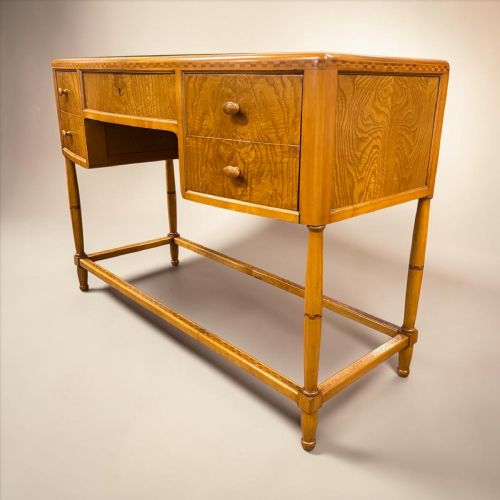

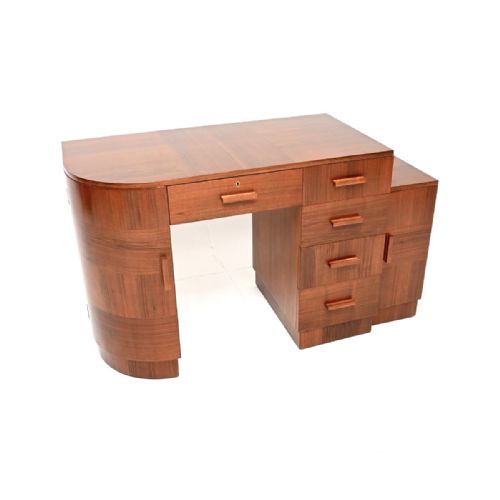


Art Deco Kneehole Desk
These art deco kneehole desk pieces combine 1930s architectural forms with striking timber grains, offering a practical workspace defined by period character.
Art Deco Kneehole Desk
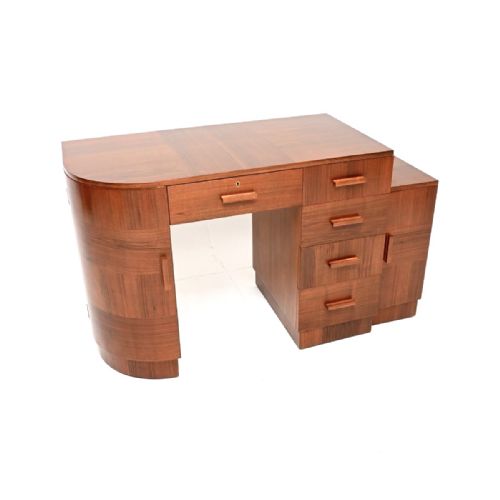
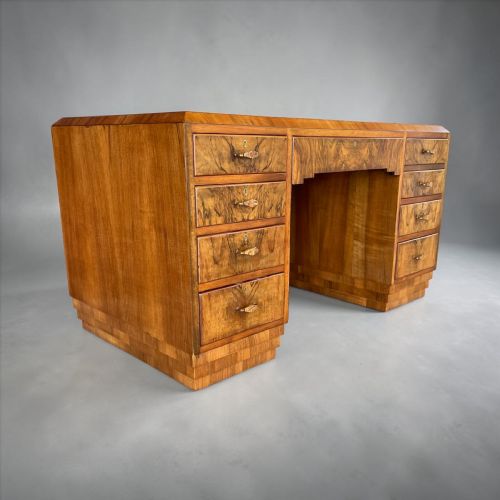
An art deco kneehole desk brings distinctive 1930s design to a study, relying on architectural pedestals flanking a central recess for seating. The pieces appearing in this category originate predominantly from the 1930s, reflecting the streamlined aesthetic of that decade.
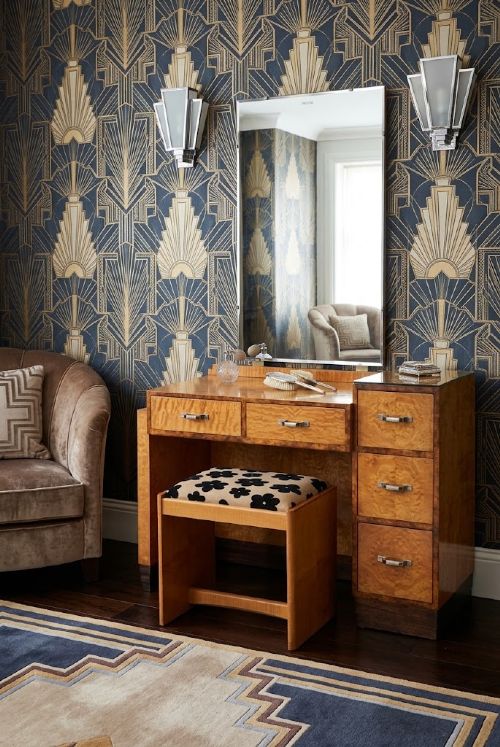
Makers utilised various forms of walnut, oak, elm, and birdseye maple to construct these pedestals and writing tables. Alongside traditional desks, buyers frequently encounter related forms such as dressing tables and console tables from the same period.
Origin influences the character of the piece, with examples recorded from English workshops alongside Scandinavian and French makers. Each variation employs specific regional timber choices while maintaining the characteristic geometric discipline of the style.
How they were made
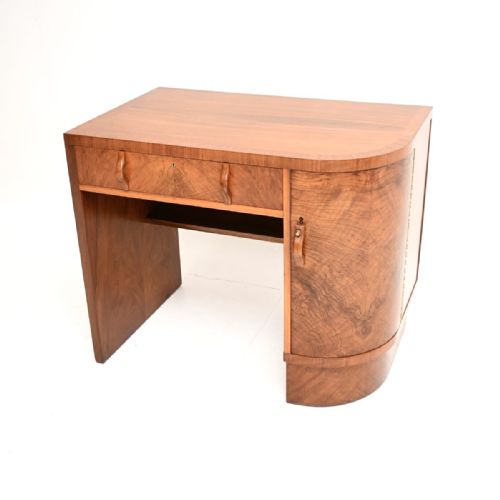
Cabinetmakers applied figured and burr walnut veneer, as well as birdseye maple and elm, over solid wood carcases to create striking surface patterns. This technique allowed workshops to showcase the natural decorative movement of the timber across wide drawer fronts and flat desk tops.
Designers incorporated contrasting elements such as brass handles, metal framing, glass tops, and inset leather writing surfaces into the construction. These materials provided functional durability while accentuating the clean horizontal and vertical lines typical of 1930s furniture.
Art Deco Kneehole Desk Retail Price Guide 2026
Typical asking prices for art deco kneehole desk among the pieces listed under this phrase on Sellingantiques today, from the lower quarter to the upper quarter. They describe what is for sale here now, not the wider market.
Some desks hide their inkwells so cleverly you might spend ten minutes looking for where the writer dipped.
What varies in quality
The selection of timber veneer dictates much of the visual merit, with highly figured burr walnut and carefully matched grain patterns commanding greater attention than plain surfaces. Workshops paid close attention to how these veneers met at the corners and drawer edges.
Attribution to documented makers such as Betty Joel, Étienne Kohlmann, or Waring & Gillow elevates the standing of a piece within the period. Furthermore, the integration of specialised materials like brass fittings and inset leather distinguishes standard production from finer commissions.
Betty Joel·Étienne Kohlmann·Waring & Gillow
The Art Deco Kneehole Desk Glossary
- Kneehole desk
- A writing table featuring pedestals of drawers on either side with a central recess for the user's legs. This form maximises storage space while maintaining a compact footprint.
- Burr walnut
- A prized timber harvested from growth deformations on walnut trees, yielding intricate, swirling grain patterns. Cabinetmakers sliced this wood into thin veneers for decorative surfaces.
- Birdseye maple
- A figured timber marked by small, circular disruptions in the grain resembling tiny eyes. It appears frequently on lighter 1930s furniture surfaces.
- Veneer
- A thin layer of superior wood bonded to a secondary wood base to provide a decorative exterior. This technique prevented warping while displaying expensive grain figures.
- Pedestal
- A structural support column containing banks of drawers flanking the central seating space of a desk. These units provide stability and weight to the composition.
Art Deco Kneehole Desk: Frequently Asked Questions
What is an art deco kneehole desk?
An art deco kneehole desk is a 1930s workspace featuring two banks of drawers separated by a central knee space. These pieces rely on geometric symmetry and figured timbers to define their appearance.
Makers constructed them using materials like walnut, oak, and birdseye maple, often accented with brass or leather. They serve as both functional writing furniture and striking decorative centerpieces.
How do I identify a 1930s desk?
Identifying a 1930s desk involves looking for characteristic art deco proportions, streamlined silhouettes, and specific wood veneers such as burr walnut. Construction methods from this decade favor flush drawer fronts and minimal applied ornament.
Makers frequently combined traditional cabinet woods with modern touches like metal handles or glass tops. Examining the interior secondary timbers and drawer construction helps confirm the period origin.
Which woods were used for these desks?
Cabinetmakers utilised a range of domestic and exotic timbers during the 1930s, with walnut being the most prevalent choice. Figured walnut, burr walnut, and walnut veneer appear across many examples.
Other pieces employ birdseye maple, English oak, or elm. These materials were selected for their ability to take a smooth polish and display natural grain movement.
How do I style a kneehole desk at home?
Styling a kneehole desk involves placing it where its geometric form and figured timber can be fully appreciated. Pairing it with a simple chair allows the architectural pedestals to remain visible.
Keep surface accessories minimal to showcase the grain patterns of the walnut or maple top. The balanced proportions of these desks suit both traditional studies and modern living spaces.