

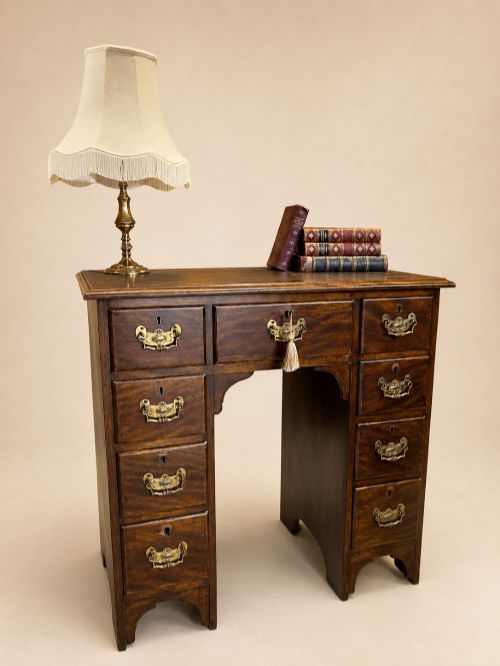
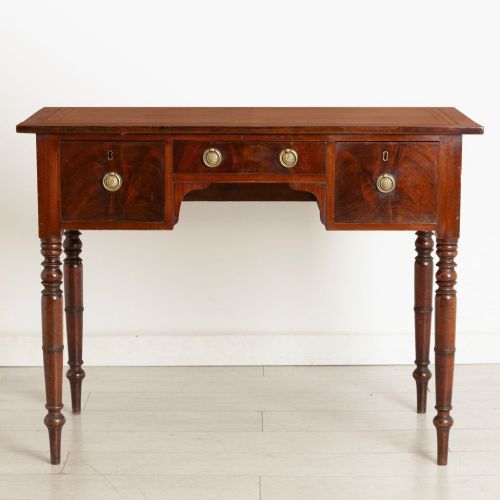
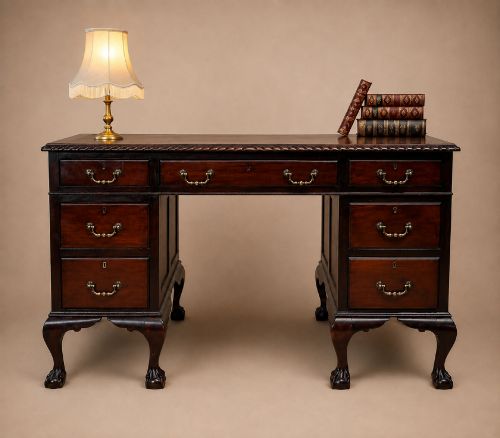
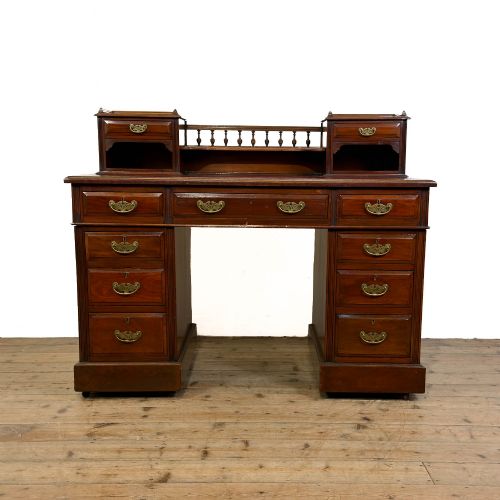


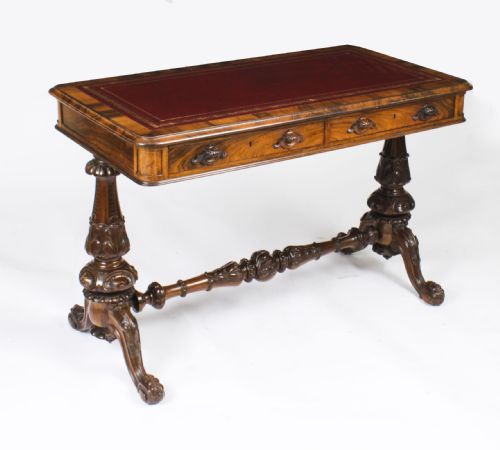
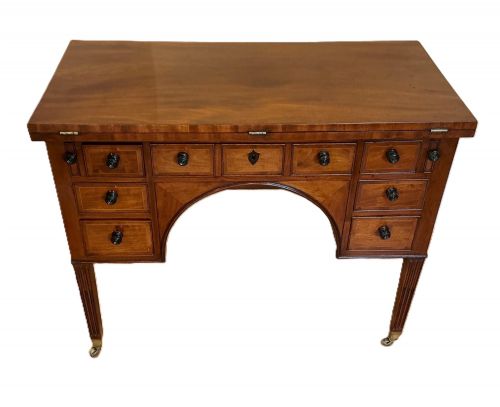
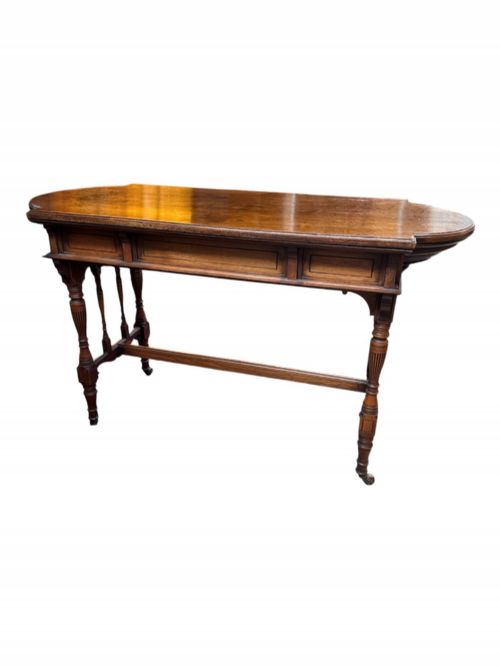


Brown Wood Executive Desk
These brown wood executive desk pieces offer generous workspaces built from rich timbers, bringing historic function and presence into a study.

Defining the brown wood executive desk
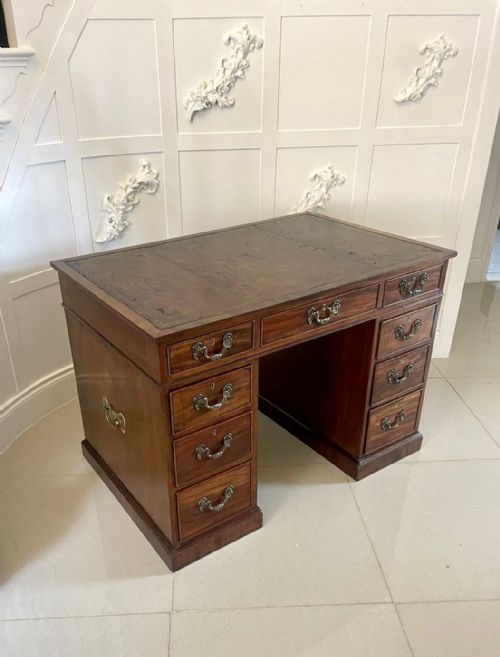
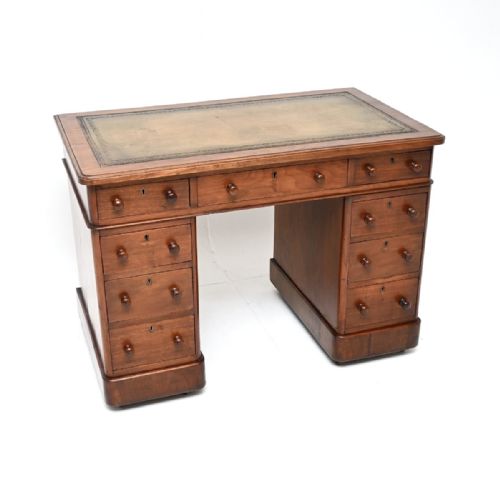
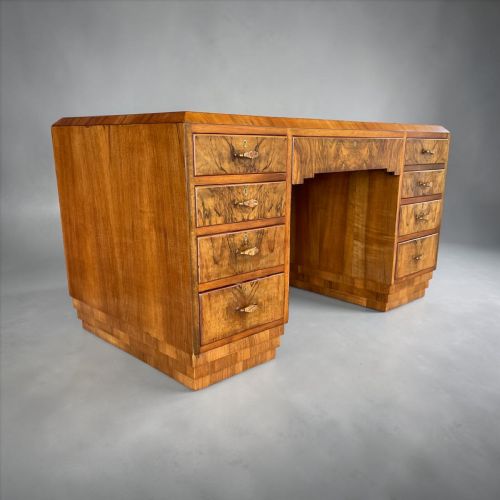
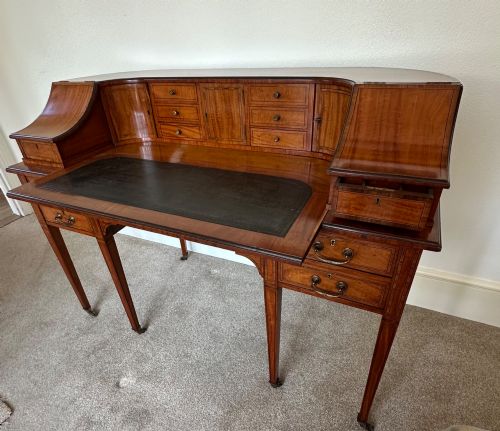
A brown wood executive desk provides a substantial writing surface supported by pedestals or legs, designed for administrative use in a study or office. The brown wood executive desk examples gathered here span from the 18th century through the Victorian era up to the 1930s.
Buyers meet pedestal forms most frequently among these listings, alongside partners desks and bureau plat formats. These originate from English, French, and period revivals, representing diverse working traditions.
The objects combine drawers, cupboards, and writing surfaces into single architectural units intended for daily use. Their construction reflects the administrative needs of past centuries executed in durable hardwoods.
Construction and materials
Cabinet makers utilised mahogany and walnut as primary timbers for framing and drawer construction, supplemented by oak and general wood elements. These dense woods provided the structural integrity required for heavy daily use.
Metal components such as brass hardware secure drawers and provide decorative accents, while leather inserts create durable writing surfaces. Skilled joinery methods joined these varied materials together to withstand decades of handling.
Retail Price Guide 2026
Typical UK retail prices for brown wood executive desk, calculated from the Sellingantiques database of over a million retail prices indexed since 2003. This retail price guide relies exclusively on Sellingantiques data; no external sources or auction records are used, so the figures do not describe the wider market.
Current listings span from the 18th century through the Victorian era to the 1930s, utilising mahogany, walnut, and oak.
Judging quality in execution
Superior examples demonstrate refined proportions and meticulous timber selection, whereas simpler pieces rely on standard commercial construction. The integration of period specific details, such as Chippendale period carving or Directoire style lines, elevates a piece.
The treatment of secondary surfaces, including leather tooling and brass fittings, distinguishes finer workshop production from standard utilitarian office furniture.
Étienne Kohlmann·Gillows of Lancaster
The Brown Wood Executive Desk Glossary
- Pedestal desk
- A heavy writing table supported by two pillars of drawers flanking a central opening. This form provides substantial storage beneath the main surface.
- Partners desk
- A large pedestal desk designed with drawers and cupboards on both sides so two people can work opposite each other. It represents a grand scale of nineteenth century office furniture.
- Bureau plat
- A French writing table featuring a rectangular top and one or more rows of drawers beneath. It lacks pedestals and stands typically on slender legs in styles like Directoire.
- Directoire style
- A transitional French design movement bridging neoclassical and empire aesthetics. It favours restrained geometry over ornate carving.
Frequently Asked Questions
What is a pedestal desk?
A pedestal desk is a large writing table featuring two vertical stacks of drawers that support the main work surface. This design offers generous storage and a commanding presence.
Such pieces served as the central workstation for administrators and writers in historic offices and private studies.
How do partners desks differ?
Partners desks are built with drawers and storage compartments accessible from both sides, allowing two individuals to work facing one another. They generally measure larger than standard single sided pedestal desks.
These pieces were typically commissioned for banking halls, libraries, and senior administrative offices.
What woods were used?
Cabinet makers relied primarily on mahogany and walnut for the primary visible surfaces and structural frames. Oak and other timbers often appear in secondary areas like drawer linings.
These dense hardwoods ensured the furniture could endure generations of heavy clerical use.
How do I identify periods?
Period identification relies on observing stylistic markers, such as the neoclassical lines of the Directoire style or the ornate carving of the Chippendale period. Construction methods and timber choices also provide clues to date.
Victorian and 20th century examples display different hardware and proportions compared to 18th century pieces.
Where should I place one?
These desks require a spacious room where they can sit away from walls, particularly partners desks that demand all-around access. They anchor a traditional study or executive office.
Ensure adequate floor space for chairs to pull out comfortably behind the pedestals.