
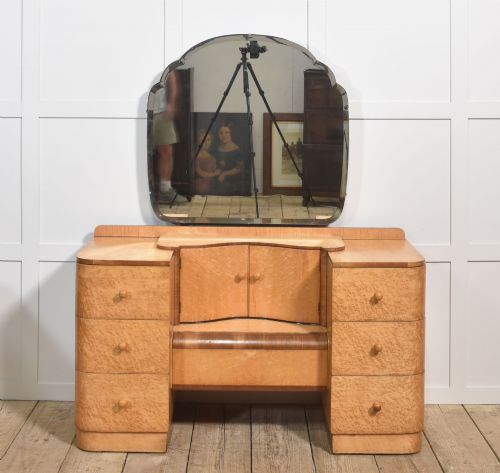
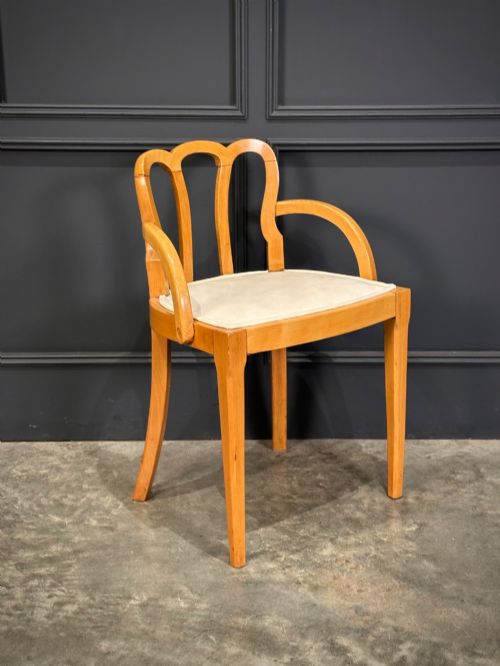
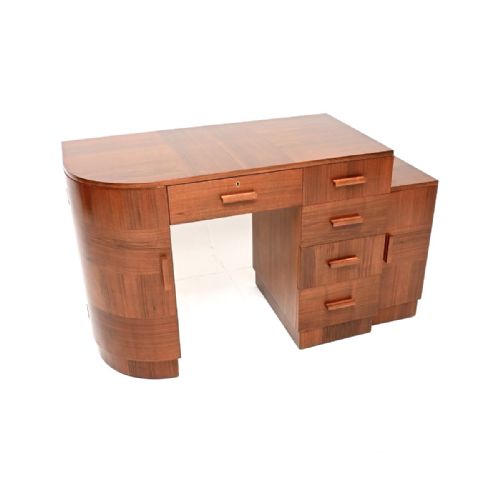


Curved Art Deco Desk
These curved art deco desk examples combine striking nineteen-thirtyer forms with rich veneers, offering a bold architectural silhouette for the study.
What They Are
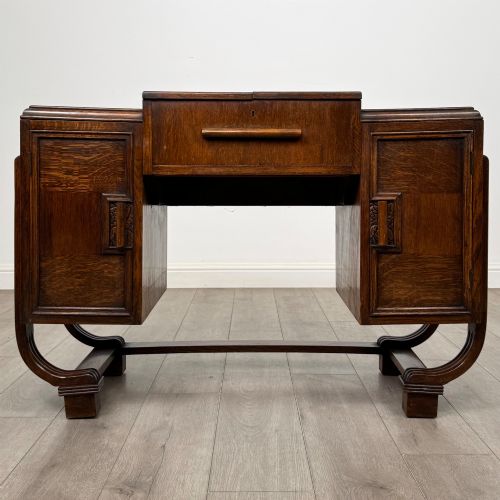
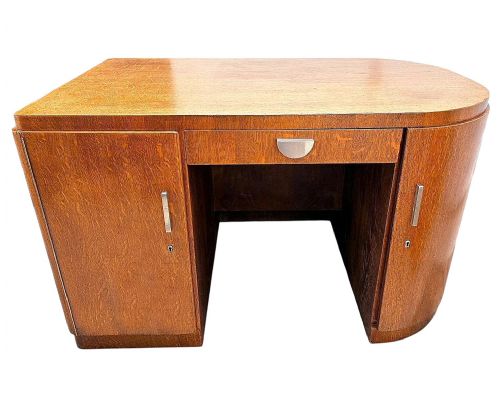
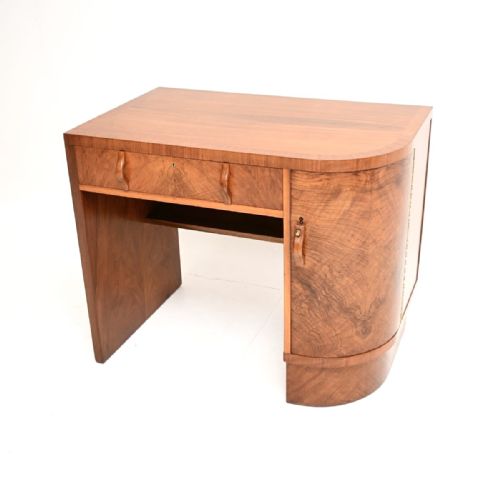
A curved art deco desk represents the distinctive streamlined aesthetic of nineteen-thirtyer design. These writing surfaces typically feature rounded pedestals or sweeping top contours that define the style.
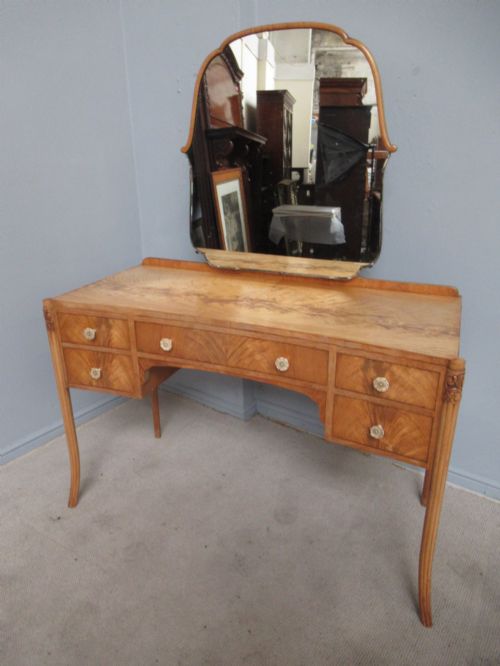
Buyers encounter walnut and walnut veneer frequently across these pieces, often paired with contrasting sycamore or metal details. Dressing tables also appear in this selection, sharing the characteristic curved geometry of the period.
How They Were Made
Craftsmen built these pieces using solid timber frames overlaid with figured walnut veneer to create symmetrical grain patterns across the curved surfaces. Brass and glass elements frequently integrate into the construction for structural and decorative effect.
Working surfaces often incorporate inset leather panels framed by polished wood. Metal components add structural support and sharp linear contrast to the sweeping wooden curves.
Retail Price Guide 2026
Typical UK retail prices for curved art deco desk, calculated from the Sellingantiques database of over a million retail prices indexed since 2003. This retail price guide relies exclusively on Sellingantiques data; no external sources or auction records are used, so the figures do not describe the wider market.
Every listed piece dates from nineteen-thirty and incorporates walnut veneer combined with brass, glass, leather, metal or sycamore.
What Varies in Quality
The sophistication of the veneer matching across curved sections dictates the visual harmony of the piece. Master craftsmen aligned grain patterns meticulously around tight radiuses, whereas simpler execution lacks this seamless continuity.
Attribution to documented designers elevates certain examples through refined proportions and superior material selection. The integration of secondary timbers like sycamore and the quality of brass mounts further distinguish standard production from exceptional work.
Maurice Adams·Betty Joel
The Curved Art Deco Desk Glossary
- Art Deco
- A design style emerging in the interwar period characterised by streamlined forms, geometric symmetry and modern industrial materials.
- Walnut Veneer
- Thin slices of decorative walnut timber applied over a stable core to display complex grain patterns across large curved surfaces.
- Sycamore
- A light-coloured hardwood frequently utilised for contrasting inlay work and interior drawer construction within nineteen-thirtyer furniture.
- Dressing Table
- A vanity furniture form sharing the curved pedestals and kneehole configuration typical of partner desks from the same era.
Frequently Asked Questions
What is a curved art deco desk?
A curved art deco desk is a workspace originating from nineteen-thirty featuring rounded pedestals and sweeping geometric lines.
These pieces rely on figured walnut veneers and contrasting metal or brass details to achieve their characteristic modern architectural silhouette.
How do I identify a nineteen-thirtyer desk?
Identification rests on the presence of streamlined curves, waterfall edges, and characteristic veneers such as figured walnut.
Maker attributions and associated dressing tables of the same period provide further contextual clues regarding authenticity and origin.
What materials were used?
Construction primarily involves walnut and walnut veneer over supportive timber framing, often enhanced by sycamore and glass.
Working surfaces frequently feature inset leather panels, while handles and structural trims utilise polished brass and metal.
Where were they made?
English workshops produced many of these pieces during the interwar design movement of nineteen-thirty.
Renowned cabinet makers and regional designers contributed distinctive interpretations of the international art deco aesthetic.