


1930s Walnut Desk
A 1930s walnut desk combines rich timber figure with geometric lines, offering a practical workspace defined by period character.
1930s Walnut Desk
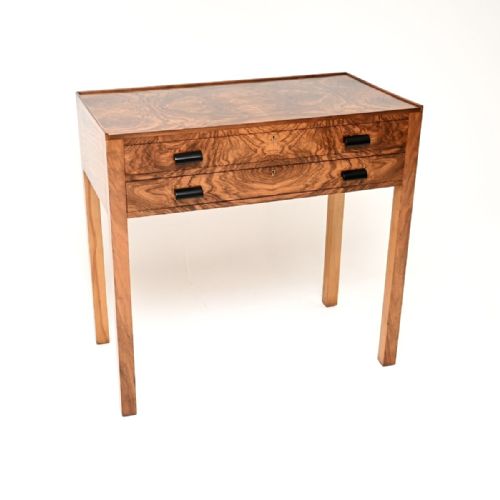
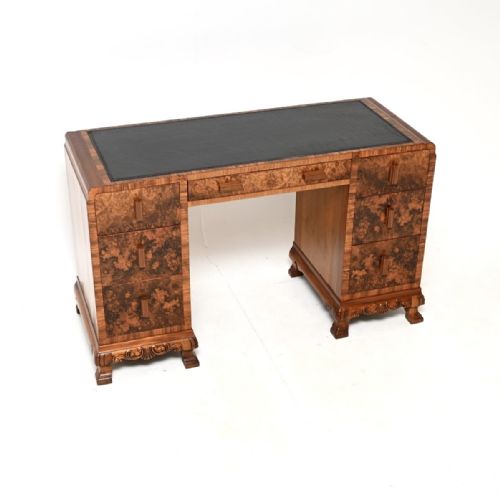
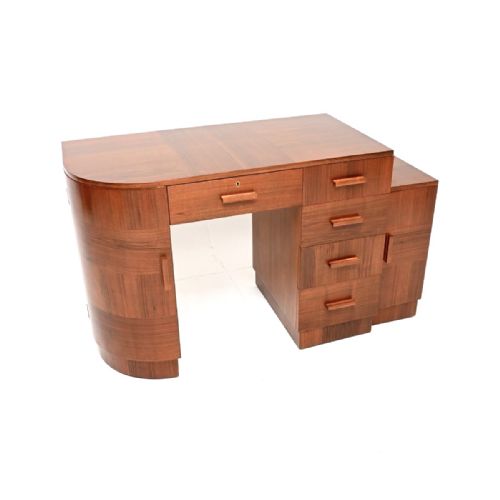
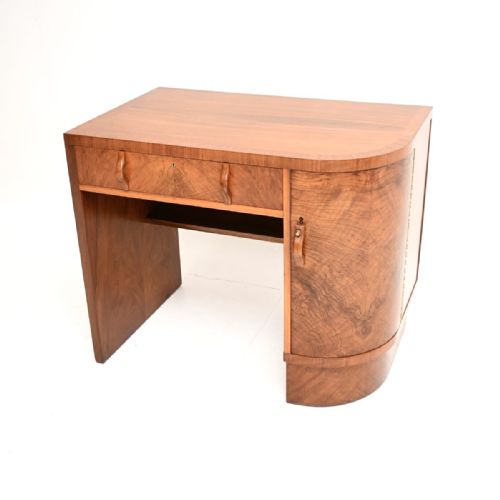
A 1930s walnut desk typically emerges from the Art Deco period, presenting clean horizontal lines and architectural forms that suit modern interiors. Buyers encounter pedestal configurations, writing tables, and bureau variants designed for domestic or office use.
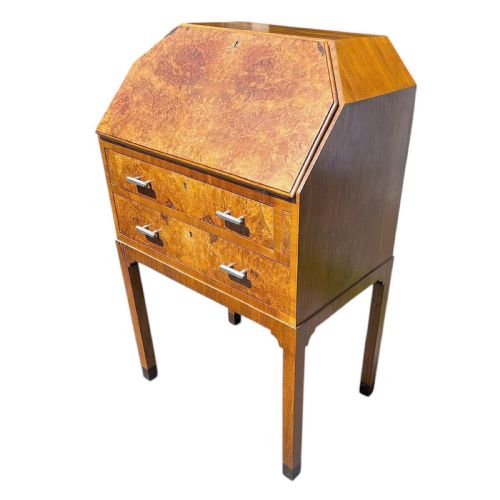
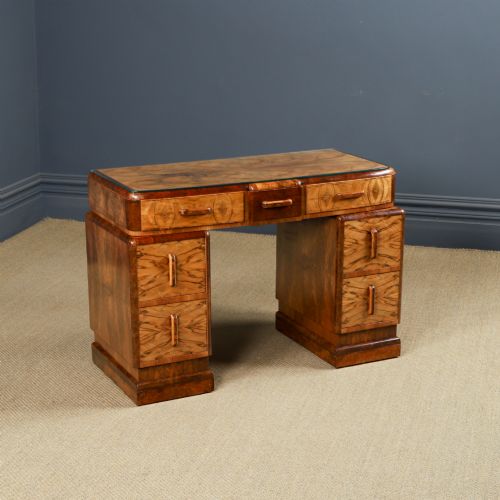
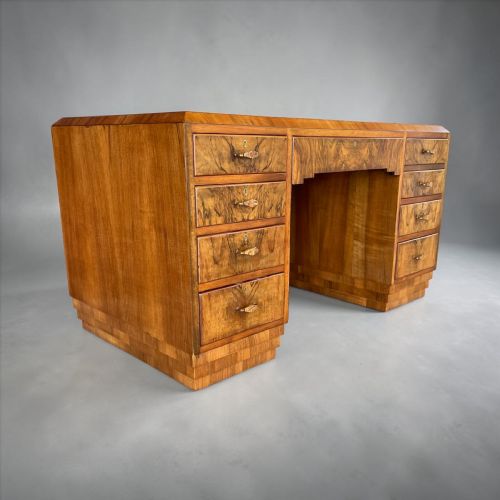
Many examples incorporate pedestals with banks of drawers flanking a central kneehole, while others adopt slant-front bureau formats or streamlined writing tables. The forms reflect the prevailing taste for functional modernity combined with luxurious surfaces.
English and French workshops dominate the production seen here, often pairing the primary timber with contrasting details in chrome, brass, or glass. These pieces serve as both efficient workstations and focal points within a room.
Materials and construction
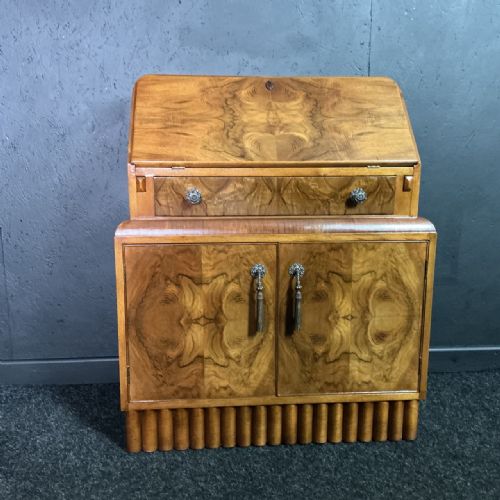
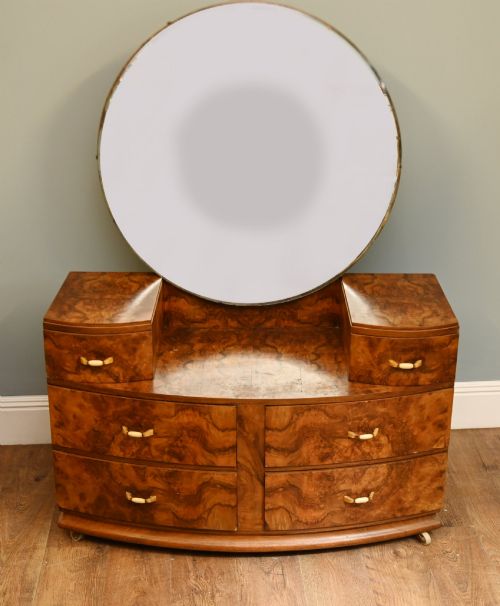
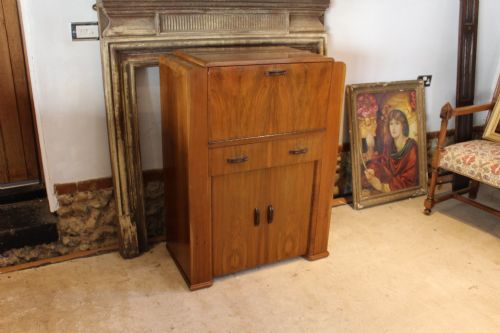
Cabinet makers utilised solid walnut alongside sophisticated veneers, selecting burr walnut and figured walnut to create striking grain patterns across flat surfaces and drawer fronts. These decorative faces are meticulously matched to present symmetrical natural designs.
Structural elements frequently integrate secondary timbers, while metal components such as chrome and brass provide handles, feet, and decorative trims. Leather inserts often line the writing surfaces, secured with subtle blind-tooled borders.
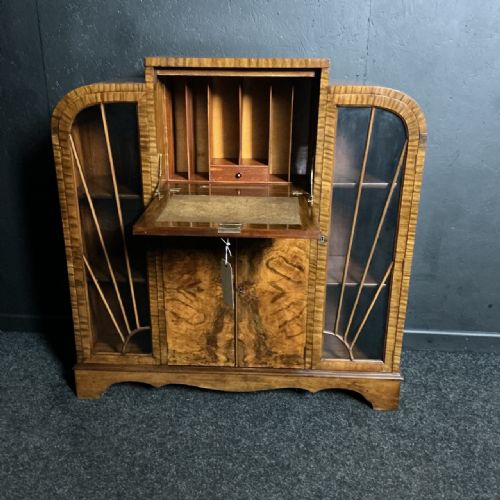
Glass panels and skyscraper tiers appear on specific pedestal models, showing the architectural influence of the decade. Joinery techniques balance internal stability with the clean external geometry demanded by the style.
1930s Walnut Desk Retail Price Guide 2026
Typical asking prices for 1930s walnut desk among the pieces listed under this phrase on Sellingantiques today, from the lower quarter to the upper quarter. They describe what is for sale here now, not the wider market.
Listings feature walnut, burr walnut, and walnut veneer combined with chrome, brass, and glass across various Art Deco desk formats.
Distinctions in craftsmanship
The sophistication of the timber selection dictates the visual impact of a piece, with high-end examples displaying continuous burr figuring that wraps seamlessly around corners and drawer edges. Lesser examples rely on plain walnut or repetitive veneer patterns.
Integration of secondary materials marks the tier of production, where heavy cast chrome mounts, thick leather writing inserts, and precise internal joinery distinguish bespoke workshops from standard commercial output. The handling of edges and the transition between wood and metal reveal the maker's hand.
Proportion and architectural clarity separate exceptional desks from ordinary ones, as the best items maintain balanced volumes without appearing heavy. The relationship between the pedestal drawers and the writing surface demonstrates thoughtful design execution.
F.H. Marshall & Co Glasgow·Betty Joel·Harry and Lou Epstein·Maurice Adams·Maurice Dufrêne·Heals of London·Hille·Bravingtons Ltd of London
The 1930s Walnut Desk Glossary
- Burr walnut
- A knotted growth on the walnut tree that yields timber with highly twisted, swirling grain patterns. Cabinet makers slice this wood into thin veneers to create decorative surfaces on prominent panels.
- Art Deco
- A design movement flourishing in the 1920s and 1930s characterised by streamlined shapes, geometric ornamentation, and modern industrial materials. It influences the overall silhouette and decorative hardware of these desks.
- Pedestal desk
- A freestanding writing table supported by two vertical columns of drawers with a central space for the user's legs. This format allows for substantial storage capacity while maintaining a formal presence.
- Bureau
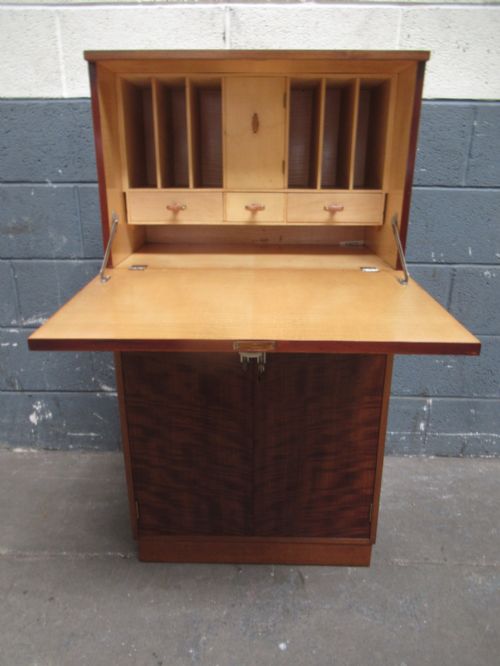
- A desk featuring a hinged writing flap that drops down to reveal internal pigeonholes and small compartments. Many period examples enclose these fitted interiors behind sloping lids or upright cabinets.
1930s Walnut Desk: Frequently Asked Questions
What defines a 1930s walnut desk?
A 1930s walnut desk is defined by its Art Deco aesthetic, featuring geometric massing, architectural pedestals, and decorative burr or figured walnut veneers. These pieces reflect a shift toward functional modernity while retaining luxurious natural timber surfaces.
Such desks often include integrated storage drawers, leather-lined writing surfaces, and occasional metal accents in chrome or brass. Their proportions range from compact writing tables to large executive pedestal formats.
How do I care for walnut veneer?
Walnut veneer requires protection from direct sunlight and excessive moisture to prevent fading and lifting of the thin timber layers. Regular dusting with a soft, dry cloth preserves the polished finish.
Avoid placing hot items or liquids directly on the wood or leather surfaces. Occasional application of appropriate furniture wax maintains the moisture and lustre of the grain.
How do I identify Art Deco style?
Art Deco style is recognisable through clean lines, symmetrical arrangements, and a lack of excessive traditional ornamentation. The focus rests on streamlined silhouettes and the natural beauty of materials.
In desks from this period, this translates to stepped pedestals, curved cloud-shaped fronts, and contrasting inlays of sycamore, chrome, or glass. The overall effect remains bold yet balanced.
Where were these desks used originally?
These desks served in private executive offices, domestic studies, and sophisticated dressing rooms of the interwar period. Their dual function as storage units and writing surfaces made them central to modern domestic organisation.
Many designs catered to professional settings where projecting a contemporary image mattered as much as practical utility. Smaller bureau variants suited bedrooms and multifunctional living spaces.