


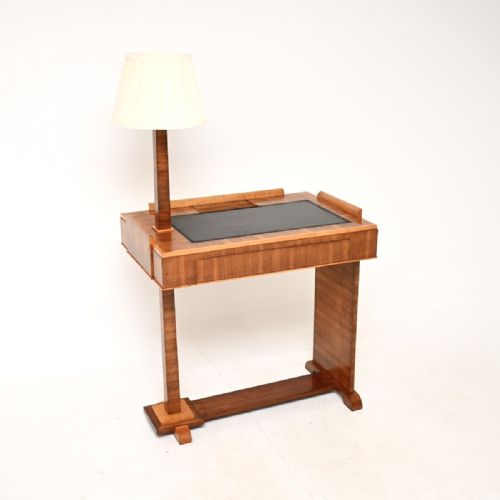


Art Deco Hall Table
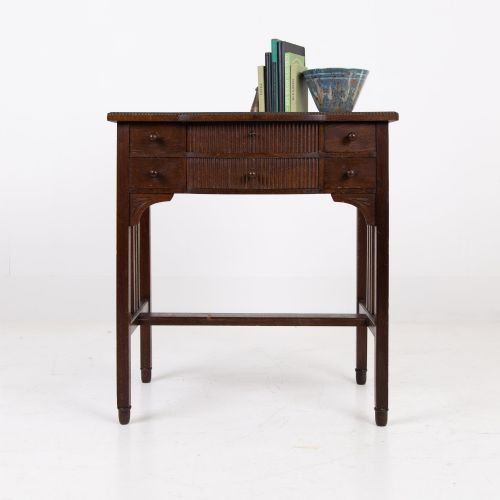
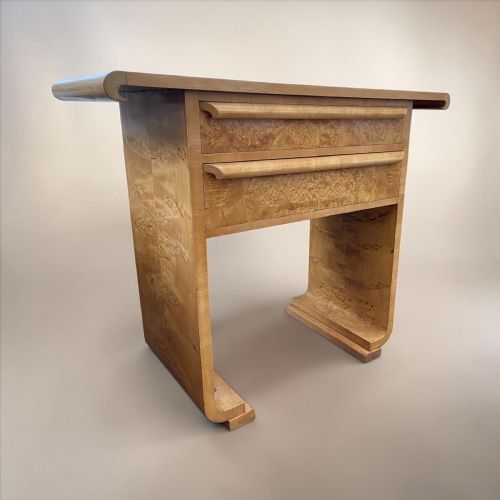
An art deco hall table brings immediate architectural presence and purposeful surface space to an entranceway, combining streamlined geometry with rich cabinet timbers.
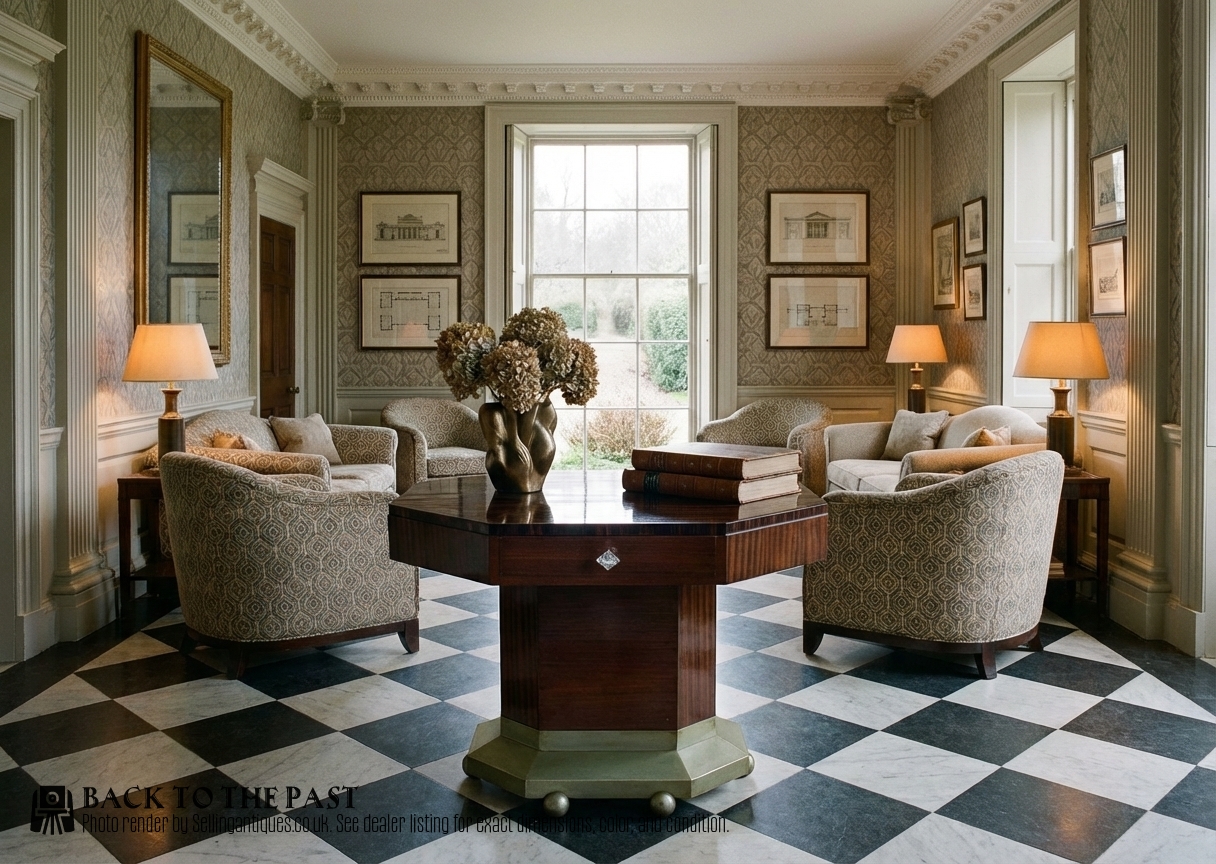
Art Deco Hall Table
An art deco hall table serves as a functional and decorative focal point in entranceways, drawing upon console and side table forms from the interwar decades. Buyers seeking this phrase encounter pieces designed primarily for narrow spaces, though broader centre tables and occasional forms also appear.
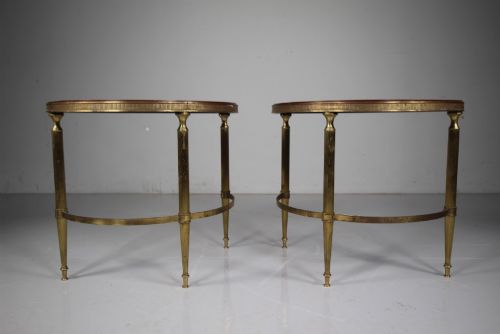
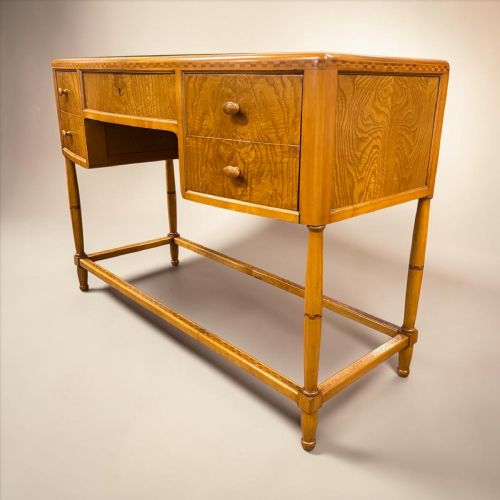
The selections span distinct stylistic tributaries, from austere English oak designs to high-end French models finished in exotic veneers. Makers utilised varied formats, incorporating drawers, integrated lamps, and demi-lune shapes suited to domestic hallways.
While the dominant period represented is the 1930s alongside the 1920s, occasional pieces bridge earlier traditions through Georgian Revival influences. Console tables and serving tables dominate the configuration of surviving examples.
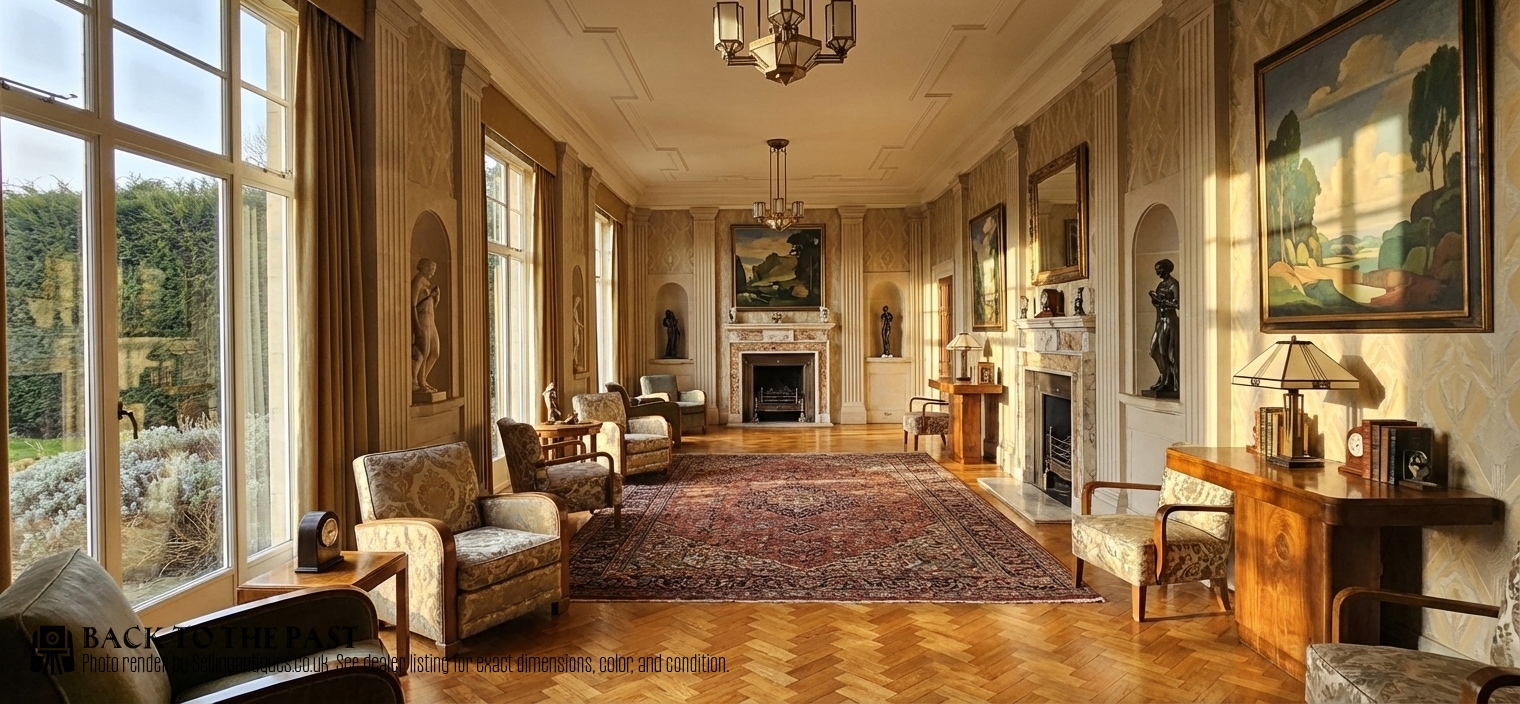
Materials and construction
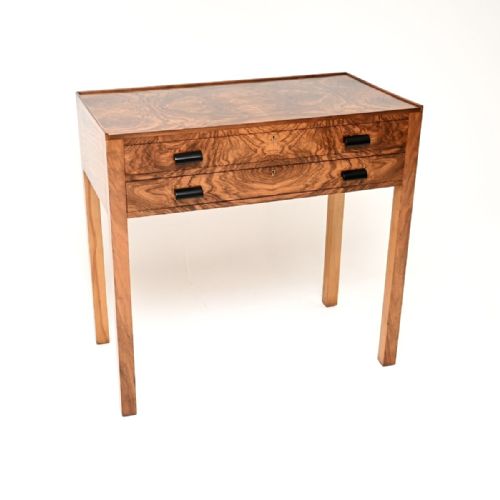
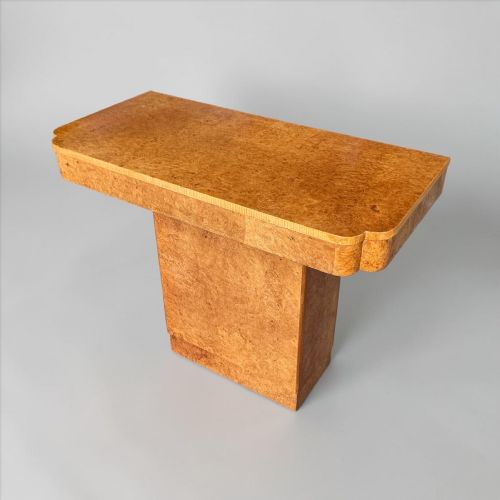
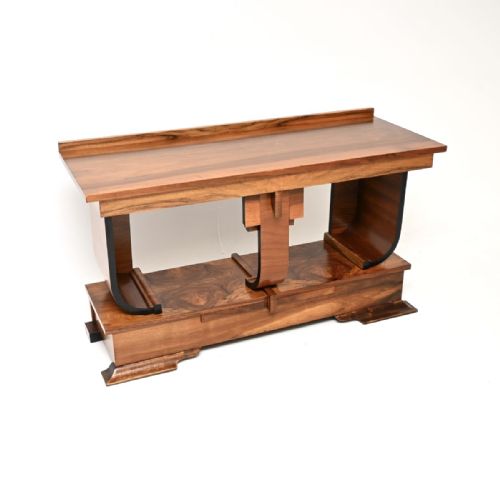
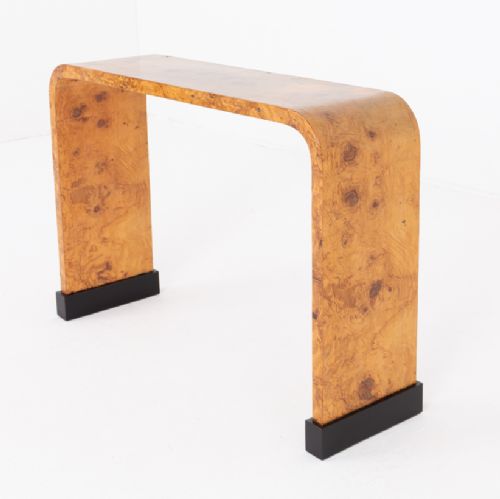
Cabinetmakers constructed these tables using a foundation of solid timbers such as oak and timber, overlaid with decorative veneers including walnut, burr walnut, birch, and ebony macassar. The grain patterns of these woods provided the primary visual ornament, arranged symmetrically to create striking geometric effects.
Secondary materials such as brass, glass, and leather appear in mounts, inset tops, and handles, contributing to the utilitarian yet luxurious aesthetic. Joinery techniques relied on sturdy framing to support cantilevered shelves and heavy slab legs characteristic of the style.
Art Deco Hall Table Retail Price Guide 2026
Typical asking prices for art deco hall table among the pieces listed under this phrase on Sellingantiques today, from the lower quarter to the upper quarter. They describe what is for sale here now, not the wider market.
One exceptional desk manages to merge a writing surface with an integrated lamp, proving that 1930s designers took multitasking very seriously indeed.
Distinctions in quality
The hierarchy of quality rests primarily on the selection of timber veneers and the sophistication of the joinery. Tables finished in figured burr walnut, elm, or ebony macassar command greater attention than standard oak versions due to the complexity of working with decorative grain.
Attribution to documented retail establishments or workshops elevates a piece beyond anonymous production. Furthermore, the integration of specialised elements, such as built-in lighting or complex multi-drawer configurations, separates standard utilitarian furniture from high-end commissions.
Hille·Fortnum and Mason·James William Benson
The Art Deco Hall Table Glossary
- Console table
- A table designed to stand against a wall, frequently supported by brackets or two front legs. These pieces provide shallow surface space ideal for narrow entranceways.
- Burr walnut
- A specialised wood veneer taken from the growth growths or burls of the walnut tree. It yields highly intricate, swirling grain patterns prized in cabinetmaking.
- Demi-lune
- A half-moon shape used for table tops and footprints. This format allows the furniture to sit flush against a wall while projecting minimally into the hallway.
- Centre table
- A freestanding table intended to be viewed from all sides rather than placed against a wall. They occupy open spaces in larger hallways or principal rooms.
- Modernist
- A design philosophy emphasising clean lines, functional utility, and the rejection of superfluous ornament. It heavily influenced the architecture of interwar furniture.
Art Deco Hall Table: Frequently Asked Questions
How do I style an art deco hall table in a modern home?
Keep the surface uncluttered to let the geometric lines and wood veneers take visual precedence. A single statement lamp or a low ceramic bowl complements the period aesthetic without overwhelming a narrow space.
Position the table against a plain wall to accentuate the silhouette. Pair it with a complementary mirror above to amplify natural light in the hallway.
Were these tables originally made for hallways?
Many examples functioned flexibly as console tables, serving tables, or dressing surfaces rather than dedicated hallway furniture. Their shallow depths made them naturally adaptable to narrow circulation spaces in period homes.
Over decades of domestic use, surviving pieces gravitated toward entranceways due to their convenient proportions for holding keys and post.
Are these tables suitable for daily practical use?
Solid construction and durable timber surfaces make these tables well-suited for everyday domestic demands. Drawer storage in many models provides practical containment for household clutter.
Care should be taken to protect delicate wood veneers and polished finishes from moisture and direct heat by using coasters or protective mats.