
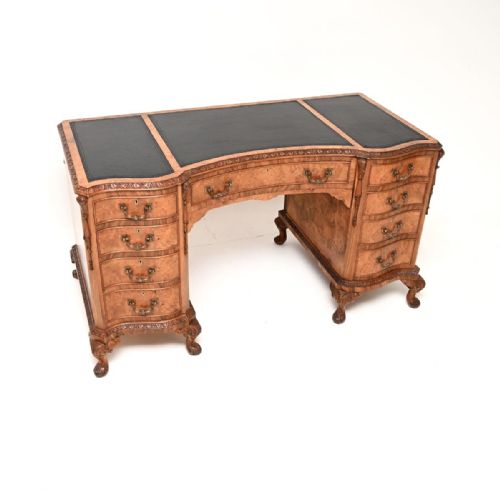
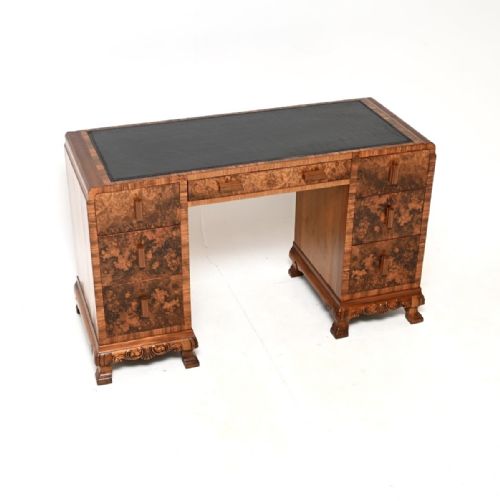


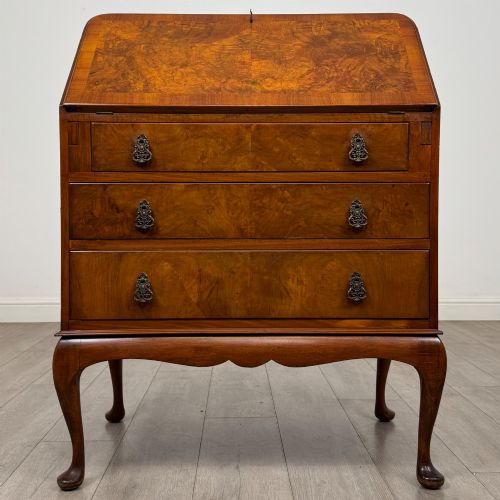
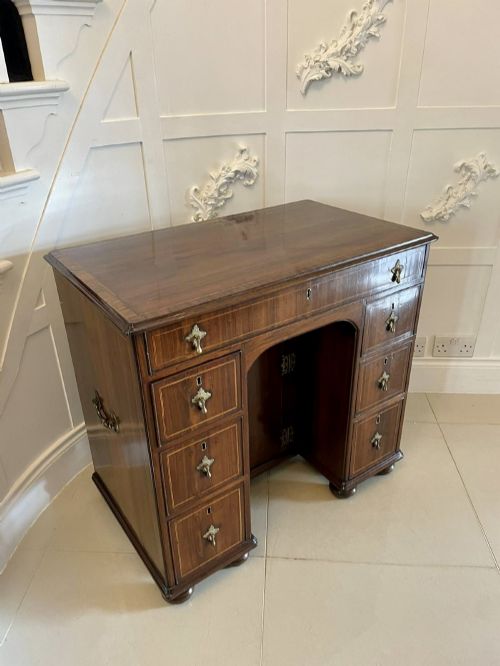
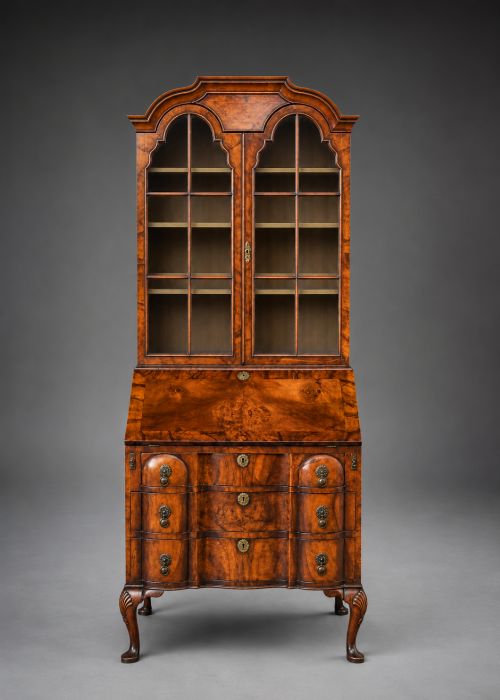
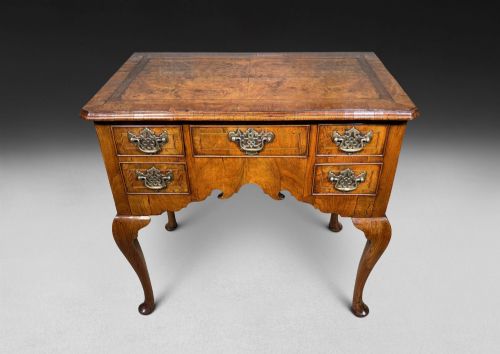
Vintage Burr Walnut Desk
These vintage burr walnut desk examples offer richly figured surfaces and traditional form, prized for adding character and warmth to a study.
What these pieces are
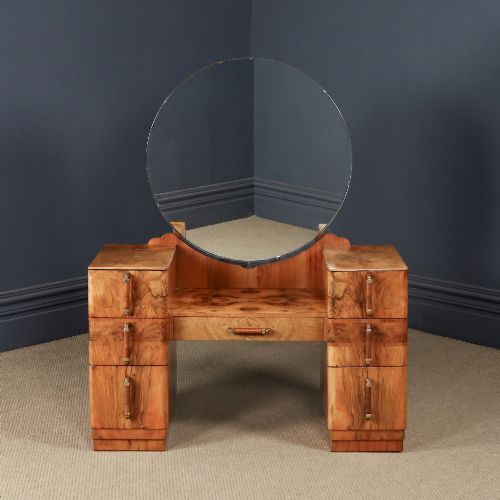
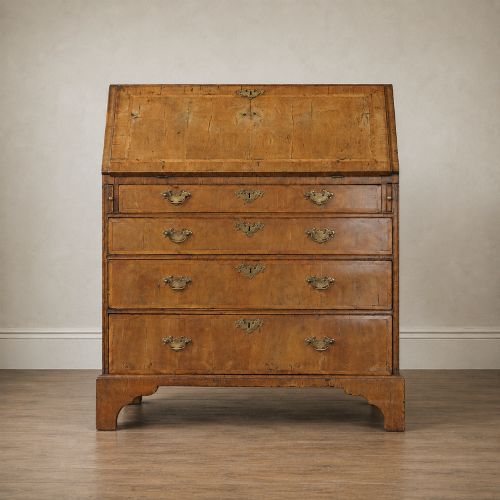
A vintage burr walnut desk brings together figured timber and traditional form across several periods. The selection spans the mid-eighteenth century up through Edwardian pieces and nineteen-thirties production.
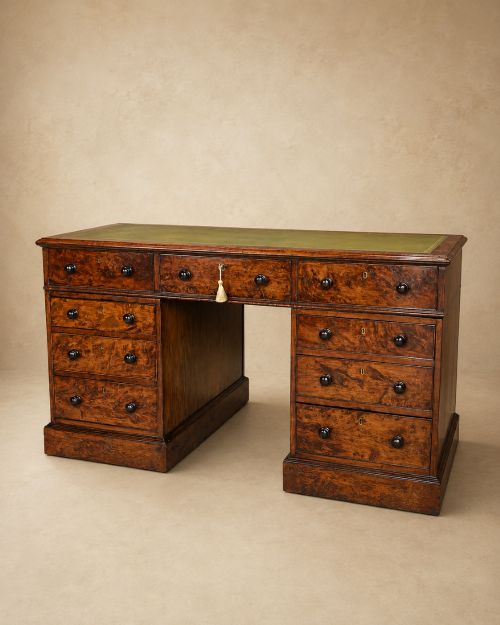
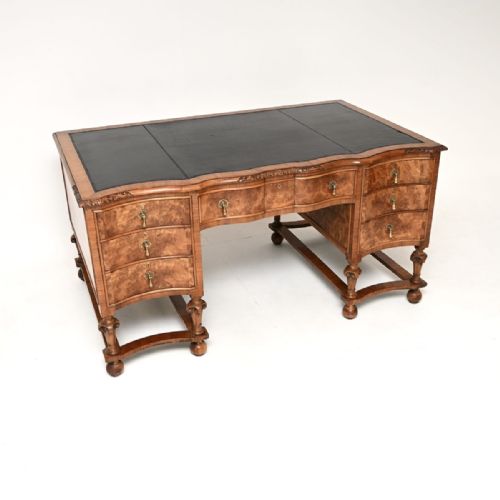
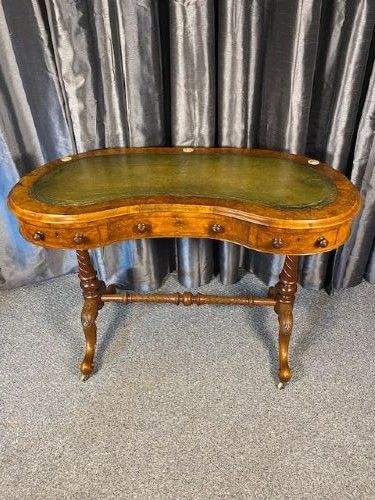
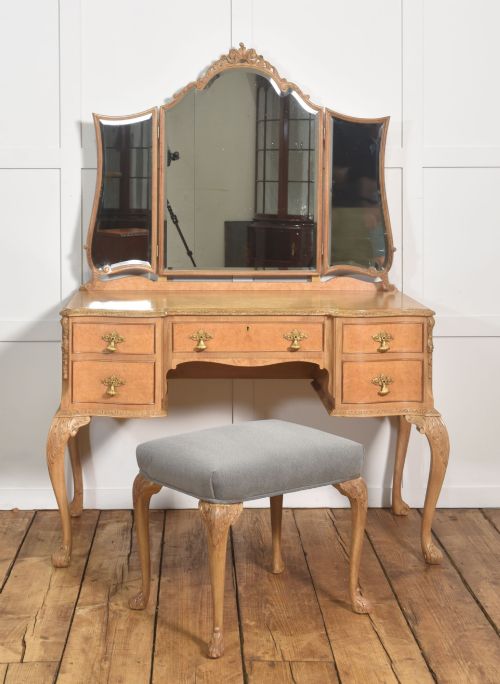
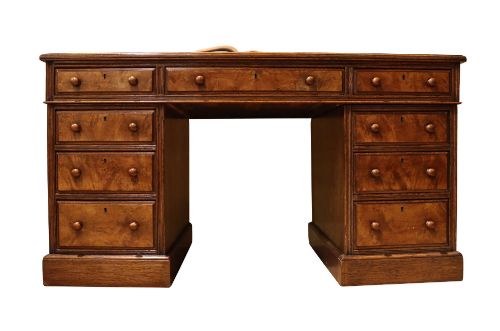
Forms vary from classic pedestal desks fitted with leather writing surfaces to lowboys and writing tables. Pieces often reflect styles such as Queen Anne revival, Art Deco, and George II design.
Alongside dedicated desks, the category includes centre tables and side tables utilised for writing. Materials such as brass hardware and oak secondary timbers frequently accompany the burr walnut veneers.
How they were made
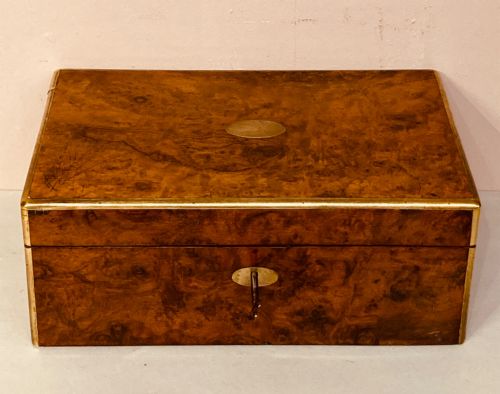
Constructed using burr walnut veneers applied to carcases, these items showcase complex grain patterns formed from tree growths. Secondary woods like oak provide structural stability beneath the decorative surfaces.
Many examples incorporate inset leather panels on the writing surface, complemented by brass handles and escutcheons on drawer fronts. Traditional joinery methods unite the frames, panels, and drawers across the various styles.
Retail Price Guide 2026
Typical UK retail prices for vintage burr walnut desk, calculated from the Sellingantiques database of over a million retail prices indexed since 2003. This retail price guide relies exclusively on Sellingantiques data; no external sources or auction records are used, so the figures do not describe the wider market.
Burr walnut forms from tree stress, meaning the most chaotic wood grain often creates the most serene desk.
What varies in quality
The visual impact of the burr walnut veneer dictates much of the character, with tighter and more balanced figuring marking out finer examples. Matching of the grain across drawer fronts and table tops requires considerable skill from the cabinetmaker.
Construction details such as the choice of secondary timbers, the crispness of mouldings, and the integration of brass fittings separate standard production from superior craftsmanship. Period stylistic adherence, whether following Queen Anne or Art Deco tenets, also influences the coherence of the design.
The Vintage Burr Walnut Desk Glossary
- Burr walnut
- A veneer taken from the wart or burl growth on a walnut tree, producing swirling and mottled grain patterns. It is prized for decorative furniture surfaces.
- Pedestal desk
- A freestanding writing table comprising two freestanding drawer pedestals supporting a top. A central drawer usually sits above the kneehole space.
- Lowboy
- A small seventeenth or eighteenth-century table with one or more rows of drawers, commonly used as a dressing or writing table. George II examples often feature graceful cabriole legs.
- Queen Anne style
- A design movement characterised by curved lines, cabriole legs, and pad feet, which later inspired twentieth-century revival pieces. Burr walnut became a dominant veneer during this period.
Frequently Asked Questions
How do I care for a burr walnut desk?
Keep the wood away from direct sunlight and heat sources to prevent the veneer from drying and lifting over time. Regular dusting with a soft, dry cloth preserves the polished finish.
Apply a microcrystalline wax occasionally to nourish the walnut and protect the surface from moisture. Avoid harsh chemical cleaners that can strip the traditional polish.
How do I identify Art Deco desk styles?
Art Deco desks from the nineteen-thirties favour streamlined geometric forms and symmetrical veneer layouts. They often omit traditional ornamentation in favour of clean architectural lines.
Burr walnut was utilised in this era to provide dramatic texture against otherwise simple, blocky silhouettes. Metal accents and contrasting woods frequently complete the look.
Are these desks suitable for daily computer work?
Many vintage writing tables and pedestal desks provide adequate surface area for modern laptops and writing materials. Ensure the kneehole height accommodates comfortable seating before daily use.
Protect the historic leather or wood top with a bespoke blotter if used intensively for writing or administrative tasks. This prevents accidental scratching of the antique finish.