

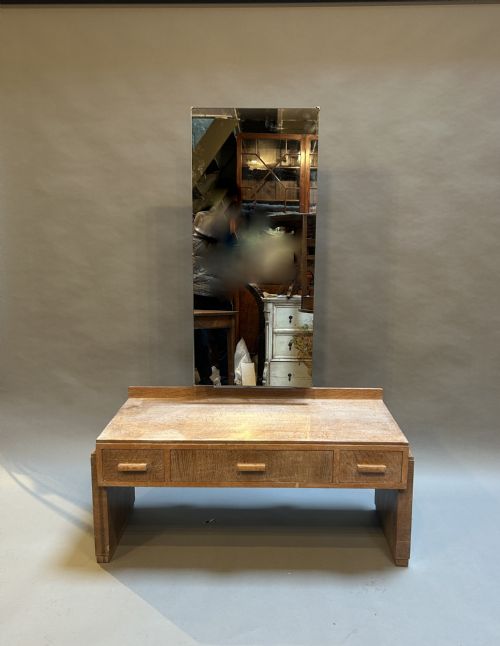


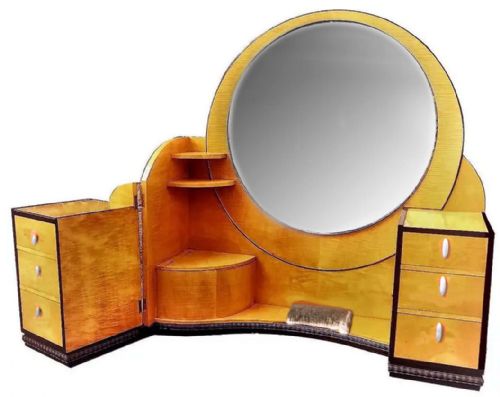


Art Deco Vanity Unit
An art deco vanity unit brings distinctive 1920 and 1930 style to a bedroom through striking geometric forms and fine cabinet-making.
Art Deco Vanity Unit
When you search for an art deco vanity unit, you encounter a selection of dressing tables, dressing chests, washstands, and wall mirrors dating from the 1920s and 1930s. These pieces function primarily as bedroom furnishings that combine storage and mirrored surfaces for grooming.
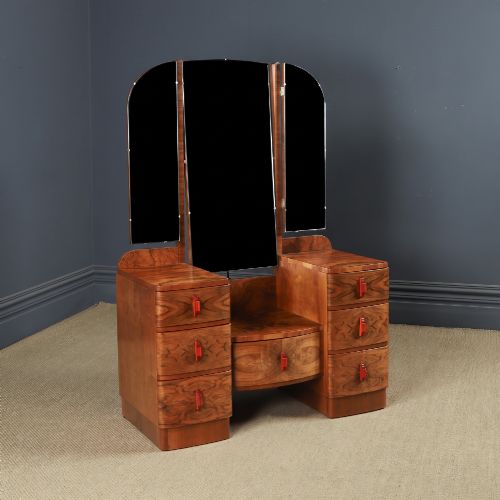
The most common form on this page is the dressing table, often featuring integrated or pivoting mirrors alongside multiple drawers. Examples span simple pedestal designs to more elaborate combinations that form part of a larger bedroom suite.
Origin details vary across the inventory, including English workshops, continental European pieces, and Swedish Grace designs. Oak, walnut, and exotic timbers shape the physical presence of these items in domestic spaces.
Materials and construction methods
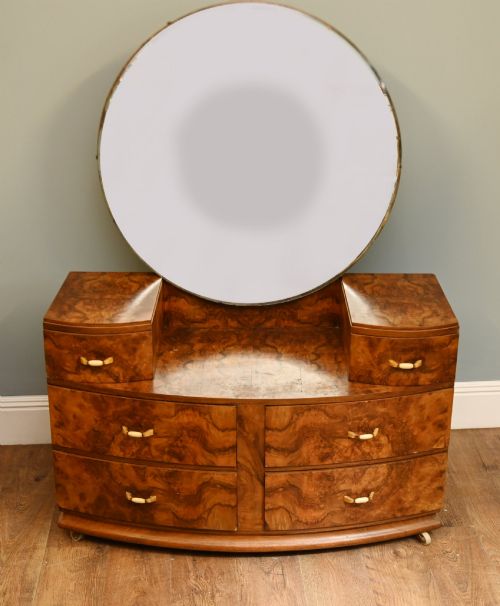
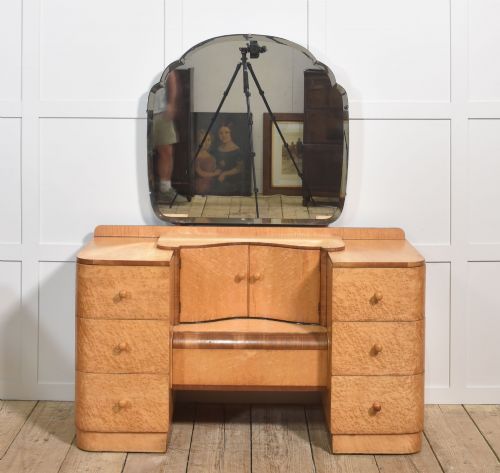
Cabinet-makers utilised a foundation of solid woods such as oak and walnut, overlaid with decorative veneers like burr walnut, birdseye maple, and maple. These figured veneers were arranged to create symmetrical grain patterns across drawer fronts and table surfaces.
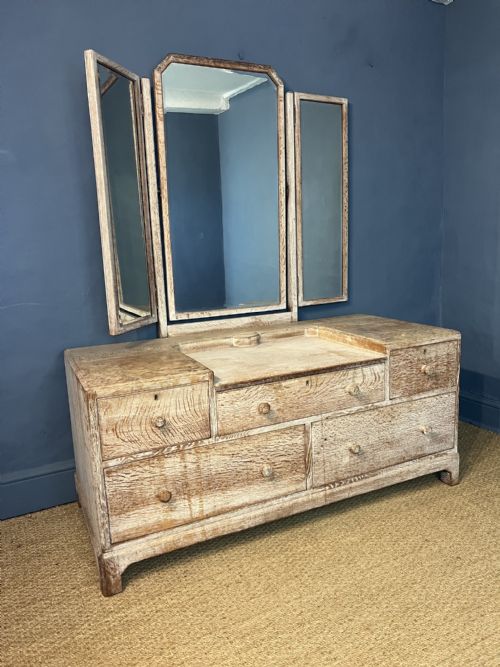
Mirrors form a central component of the construction, utilising clear or shaped mirror glass mounted directly to the timber frame or supported by chrome metal fittings. Limed oak finishes appear alongside polished wood surfaces to achieve distinct textural effects.
Art Deco Vanity Unit Retail Price Guide 2026
Typical asking prices for art deco vanity unit among the pieces listed under this phrase on Sellingantiques today, from the lower quarter to the upper quarter. They describe what is for sale here now, not the wider market.
Distinctions in craftsmanship
Quality rests in the selection of wood veneers and the precision of their layout across the structure. Finer pieces display carefully matched grain patterns that flow seamlessly from drawer to drawer.
The integration of secondary materials such as chromium plating and specialised glass indicates higher execution standards. Construction details like dovetail joints in the drawers and the structural stability of mirror frames separate standard items from superior works.
Heals·Maurice Adams·Harry and Lou Epstein·Betty Joel
The Art Deco Vanity Unit Glossary
- Birdseye maple
- A decorative timber featuring small, circular markings resembling bird eyes within the grain. This figured veneer was favoured by cabinet-makers for light-toned modernist furniture.
- Burr walnut
- A highly prized wood veneer sourced from the growth deformations of walnut trees. It provides dense, swirling patterns that define prominent surfaces on dressing chests.
- Limed oak
- Timber treated with a specialised finish that lightens the wood tone while leaving the grain open and visible. Heals utilised this technique on several oak bedroom pieces.
- Pedestal dressing table
- A vanity unit supported by one or two banks of drawers rather than four distinct legs. This configuration creates substantial under-desk storage space.
- Swedish Grace
- A sophisticated design style bridging neoclassical restraint and early modernism in Sweden during the 1920s. Pieces from this movement exhibit refined proportions and understated detail.
Art Deco Vanity Unit: Frequently Asked Questions
How do I identify a 1920s piece from a 1930s one?
Pieces from the 1920s often lean towards transitional or Swedish Grace aesthetics, while 1930s examples frequently showcase bolder geometric forms and contrasting veneers.
Examining the specific handles, mirror shapes, and wood finishes helps distinguish between the two decades.
Were these units used as washstands or dressing tables?
The inventory includes both dedicated dressing tables for the bedroom and specific washstands equipped for bathroom or bedroom use.
Most items function as grooming desks with integrated mirrors, though washstands feature distinct stone or wooden tops suited for basin placement.
How do I care for burr walnut and birdseye maple surfaces?
These veneered woods require protection from direct sunlight and excessive moisture to prevent fading and lifting of the grain.
Regular dusting with a dry cloth and occasional application of appropriate furniture wax preserves the polished finish.
What is the typical setup of a pedestal dressing chest?
A pedestal dressing chest utilises vertical stacks of drawers flanking a central kneehole space, topped by a large mirror.
This configuration offers generous storage capacity while maintaining a compact footprint in the bedroom.