








Art Deco Pedestal Vanity
An art deco pedestal vanity brings geometric discipline and rich timbers into the bedroom, offering a dedicated surface for grooming with architectural presence.
Art Deco Pedestal Vanity
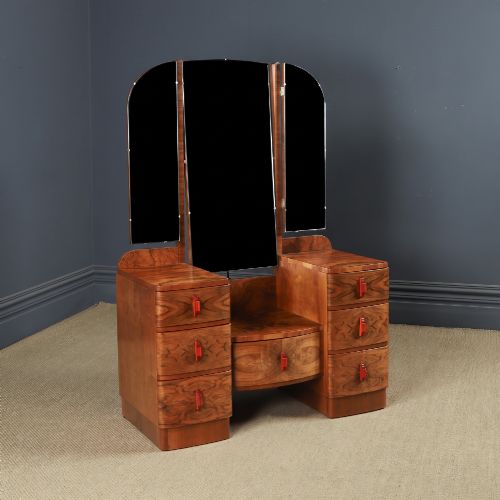
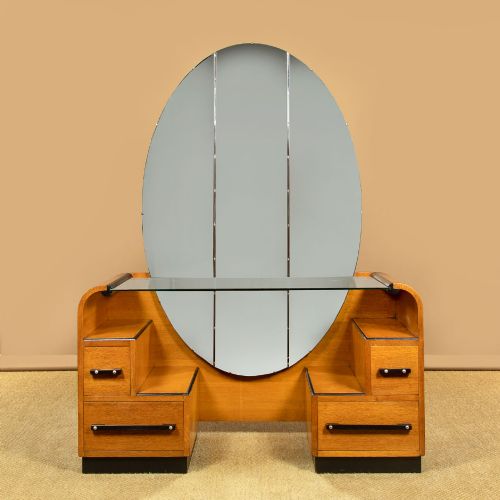
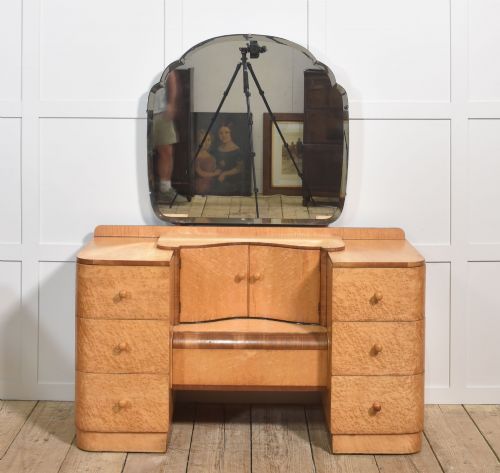
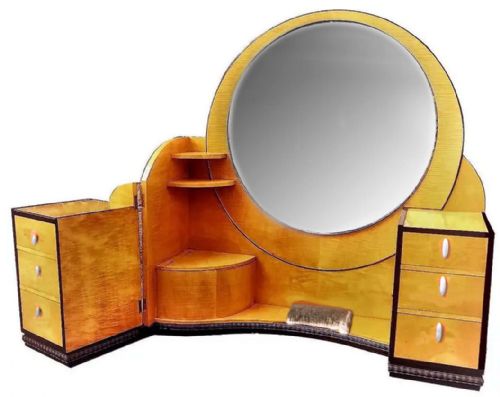
An art deco pedestal vanity combines twin pedestals with a central mirror to create a striking focal point for dressing and grooming. These pieces emerge predominantly from the nineteen thirties, though Edwardian and nineteen twenties examples also appear.
The form typically incorporates flanking drawer columns beneath a substantial tabletop, often accompanied by original plate glass mirrors. While dressing tables dominate, variations such as writing desks and work boxes share the same architectural vocabulary.
How they were made
Cabinetmakers utilised walnut veneer, burr walnut, and figured walnut over solid timber carcases to achieve dramatic grain patterns across the flat surfaces and curved pedestals. Maple and oak also feature, providing lighter counterpoints to the darker walnut tones.
Mirror glass plays a structural as well as a functional role, shaped into circular or arched plates that crown the pedestals. Metal elements, particularly chrome, appear on mirrors and fittings to punctuate the wooden surfaces.
Art Deco Pedestal Vanity Retail Price Guide 2026
Typical asking prices for art deco pedestal vanity among the pieces listed under this phrase on Sellingantiques today, from the lower quarter to the upper quarter. They describe what is for sale here now, not the wider market.
Listings feature walnut, burr walnut, oak, maple, and mirror glass across the nineteen twenties and nineteen thirties periods.
What varies in quality
The selection and bookmatching of veneer dictate the visual impact of the piece, with symmetrical burr patterns marking out superior examples. The handling of curved pedestal corners and the integration of the mirror assembly reveal the underlying joinery skill.
Attribution to known makers elevates certain pieces, whilst the survival of original glass and fitted interior compartments preserves the integrity of the design.
Harry and Lou Epstein·Betty Joel
The Art Deco Pedestal Vanity Glossary
- Burr walnut
- A prized timber harvested from the growths of walnut trees, displaying complex, swirling grain patterns. It was sliced into thin veneers for decorative furniture faces.
- Pedestal
- A structural support column beneath the tabletop, containing banks of drawers. Twin pedestals balance the weight and geometry of the vanity.
- Veneer
- A thin layer of figured wood applied over a stable secondary timber. This technique allowed makers to display dramatic grain without risking the warping of solid wood.
- Swedish Grace
- A sophisticated Nordic design movement bridging classical restraint and early modernism. It valued refined proportions and understated luxury.
- Mirror glass
- The reflective plate fitted to the dressing table, frequently shaped into curves or arches characteristic of the period.
Art Deco Pedestal Vanity: Frequently Asked Questions
How do I date an art deco vanity?
Dating relies on stylistic markers, materials, and construction methods. Pieces from the nineteen thirties often feature dramatic burr walnut veneers and chrome hardware, while earlier iterations lean towards simpler oak or maple forms.
The presence of original mirror plates and specific cabinetmaker signatures also helps establish the precise decade of manufacture.
Where should I place a pedestal vanity?
These vanities require sufficient floor space and clearance for the pedestals and attached mirror assemblies. Placing them against a wall with good natural light allows the mirror to function effectively while showcasing the wood grain.
They work best as focal points in a bedroom or dressing room rather than tucked into confined corners.
How do I care for walnut veneer?
Walnut veneer responds best to gentle dusting with a dry, soft cloth and protection from direct sunlight and excessive heat. Avoid silicone-based polishes that can degrade the historic finish over time.
Maintaining stable room humidity prevents the veneer from lifting or cracking along the edges.
Are the mirrors original?
Many pieces retain their original bevelled or plate glass mirrors, which may show light foxing or spotting consistent with age. Replacement mirrors do occur if the original glass suffered damage over the decades.
Inspecting the mirror mounts and backing helps determine whether the glass has survived intact from the period.