






Curved Art Deco Vanity
These curved art deco vanity pieces bring architectural sweep and figured grain into modern bedrooms, offering the clean, sculptural lines collectors prize.
Curved Art Deco Vanity
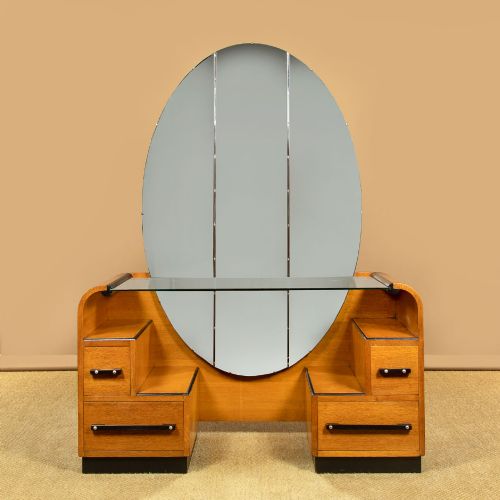
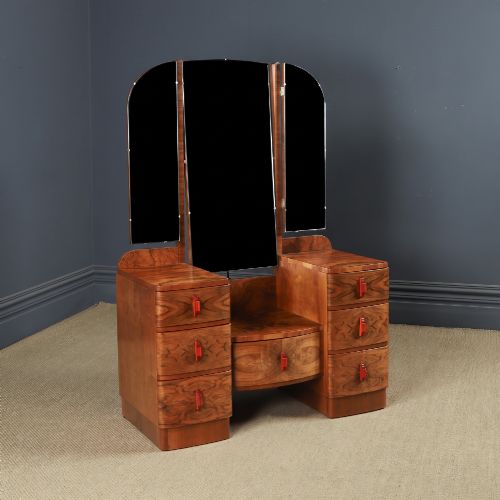
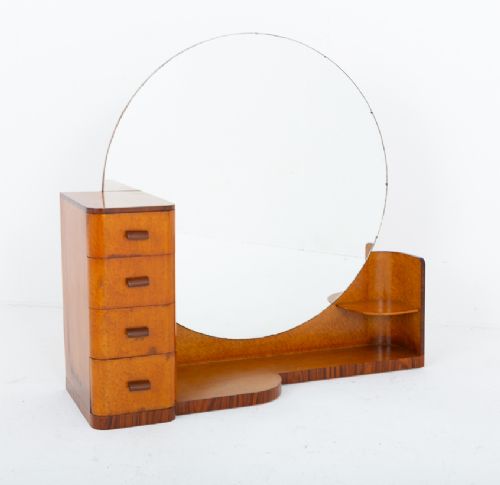
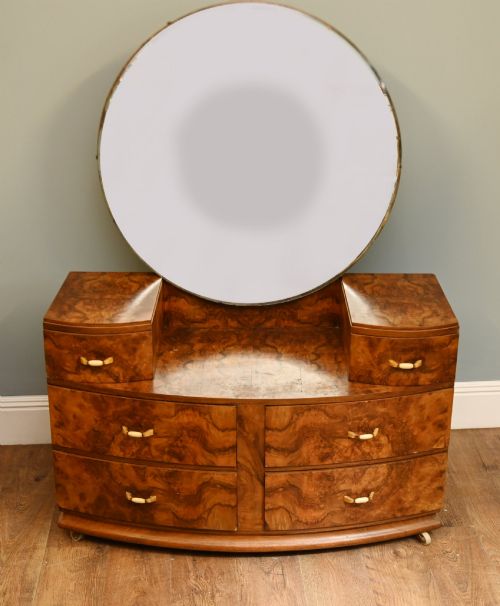
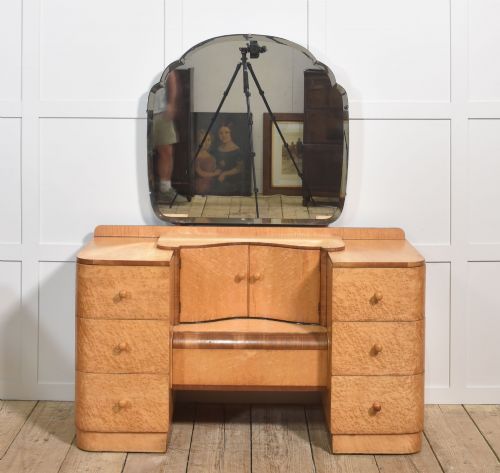
When you search for a curved art deco vanity, you encounter dressing tables, pedestal dressing chests, and matching stools designed in the 1920s and 1930s. These pieces focus on sweeping, rounded silhouettes that soften the geometry of early twentieth-century interiors.
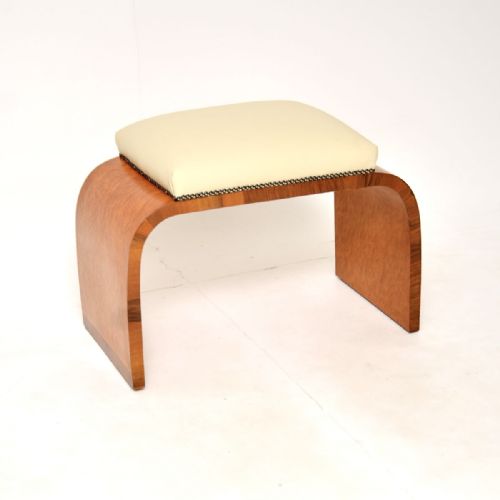
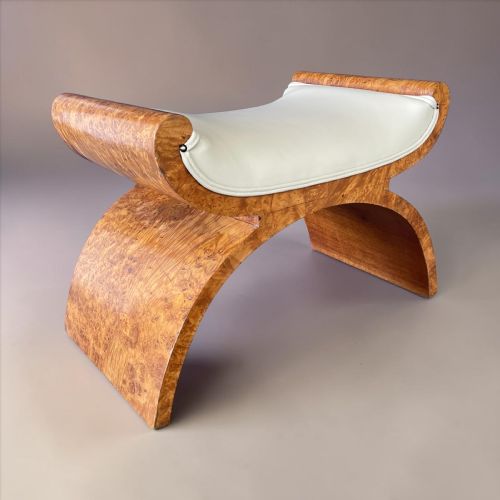
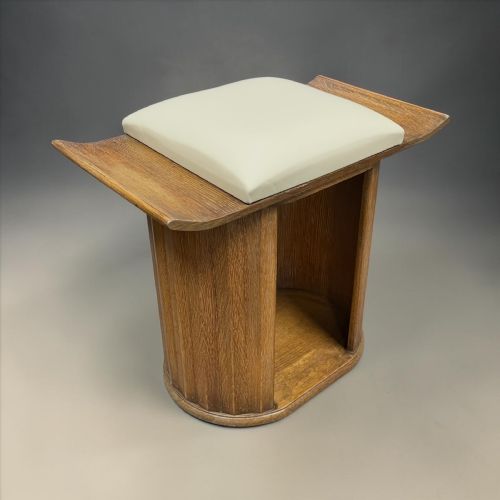
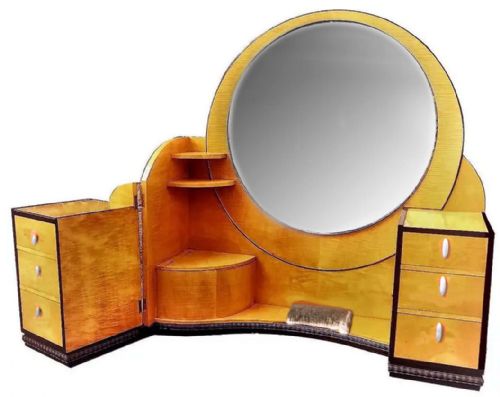
The most common form on this page is the dressing table featuring integrated mirrors and substantial kneehole spaces. They often arrive accompanied by low stools upholstered in leather or patterned fabric.
Makers and designers of the period utilised pedestals, cascading tiers, and circular mirror frames to create a sense of theatrical movement. Walnut and maple dominate the offerings, bringing warmth to the characteristic curves.
How they were made
Cabinet makers constructed these vanities using solid carcases faced with choice veneers such as burr walnut, figured walnut, birds eye maple, and pale mahogany. The distinctive curvature relies on steam-bent timber and advanced laminating techniques developed during the interwar period.
Surfaces were meticulously polished to highlight the natural patterns of the wood grain, while secondary materials like mirror glass, leather, oak, and metal hardware provided functional contrast and structural support.
Curved Art Deco Vanity Retail Price Guide 2026
Typical asking prices for curved art deco vanity among the pieces listed under this phrase on Sellingantiques today, from the lower quarter to the upper quarter. They describe what is for sale here now, not the wider market.
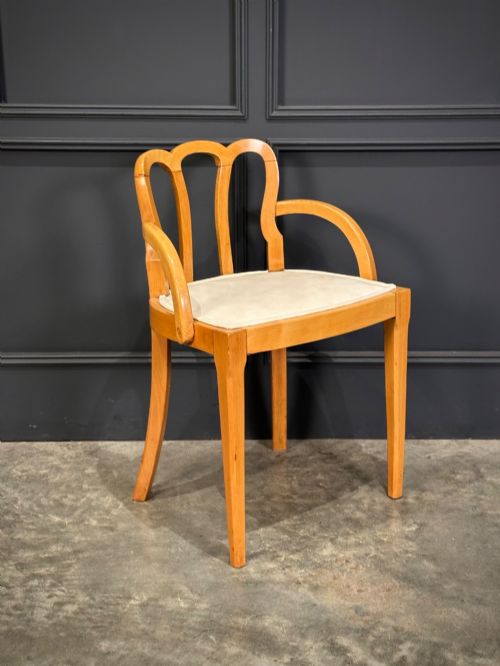
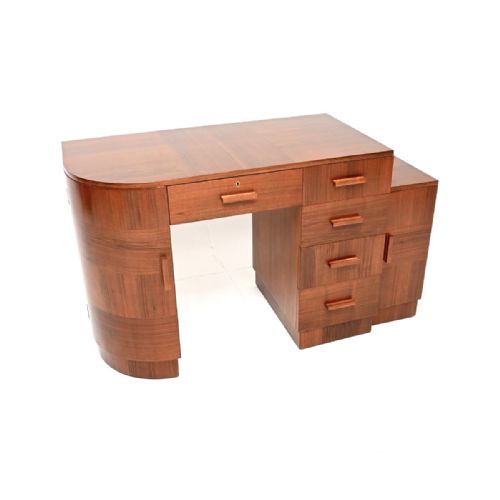
Dressing tables and stools dominate the selection, accompanied by occasional desks and armchairs in art deco styles.
What varies in quality
The distinction between standard commercial production and finer workshop output rests largely on the selection and matching of veneers. Master cabinet makers arranged burr walnut and maple grains symmetrically across curved drawer fronts to create striking visual harmony.
Construction methods also separate the tiers of quality, visible in the joinery of the pedestal carcasses and the original integration of heavy glass mirrors. Pieces attributed to known design studios or specific workshops exhibit superior internal framing and heavier gauge hardware.
Harry and Lou Epstein·Maurice Adams·Betty Joel
The Curved Art Deco Vanity Glossary
- Burr Walnut
- A highly figured wood grain taken from the warted growths on walnut trees, prized for its swirling patterns. It is sliced into thin veneers and applied to curved furniture fronts.
- Pedestal
- A structural support column beneath a dressing table or desk, often fitted with banks of drawers. In art deco pieces, these pedestals frequently curve outwards to soften the silhouette.
- Sycamore
- A pale hardwood often used in English art deco furniture for contrasting stringing or light-toned primary surfaces. It provides a clean backdrop against darker walnut elements.
- Veneer
- A thin layer of decorative wood applied over a secondary timber carcase to display superior grain patterns. This technique allowed makers to curve expensive timbers around complex art deco shapes.
- Dressing Chest
- A lower chest of drawers incorporating a mirror, functioning similarly to a dressing table. These forms offer substantial storage alongside integrated display space.
Curved Art Deco Vanity: Frequently Asked Questions
How do I identify a 1930s vanity?
Look for symmetrical burr walnut veneers, cascading curved pedestals, and original circular or stepped mirror glass frames. These structural hallmarks define the interwar aesthetic.
Check interior drawer construction and secondary timbers like oak or mahogany, which help confirm the early twentieth-century date.
Where should I place a dressing table?
Position your vanity against a bedroom wall where natural light can strike the mirror and highlight the figured wood grain. Ensure adequate floor space around the curved pedestals so the silhouette remains unobstructed.
Pair the table with a matching low stool upholstered in leather or patterned fabric to complete the arrangement.
Are these pieces suitable for daily use?
These dressing tables provide generous surface area and deep pedestal drawers for modern storage needs. The robust timber construction and durable leather or wooden seats handle everyday routines easily.
Treat veneer surfaces with care, using coasters and avoiding excessive moisture to preserve the polished finish.
How do I care for burr walnut?
Dust the curved surfaces regularly with a soft, dry cloth to prevent dirt accumulation in the intricate grain patterns. Avoid placing the wood in direct sunlight or near heat sources to prevent the veneer from drying out.
Apply a quality beeswax polish occasionally to nourish the timber and maintain its natural lustre.