
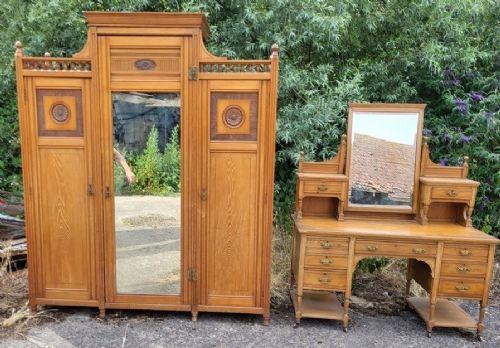
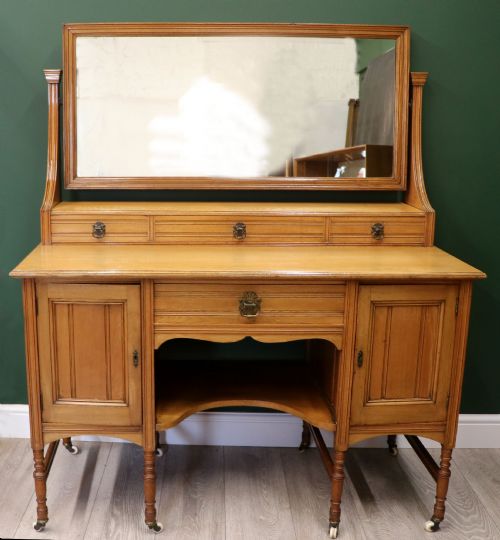


Pedestal Dressing Table Mirror
A pedestal dressing table mirror offers a practical workspace and a tilting glass, combining daily grooming with fine cabinet work.
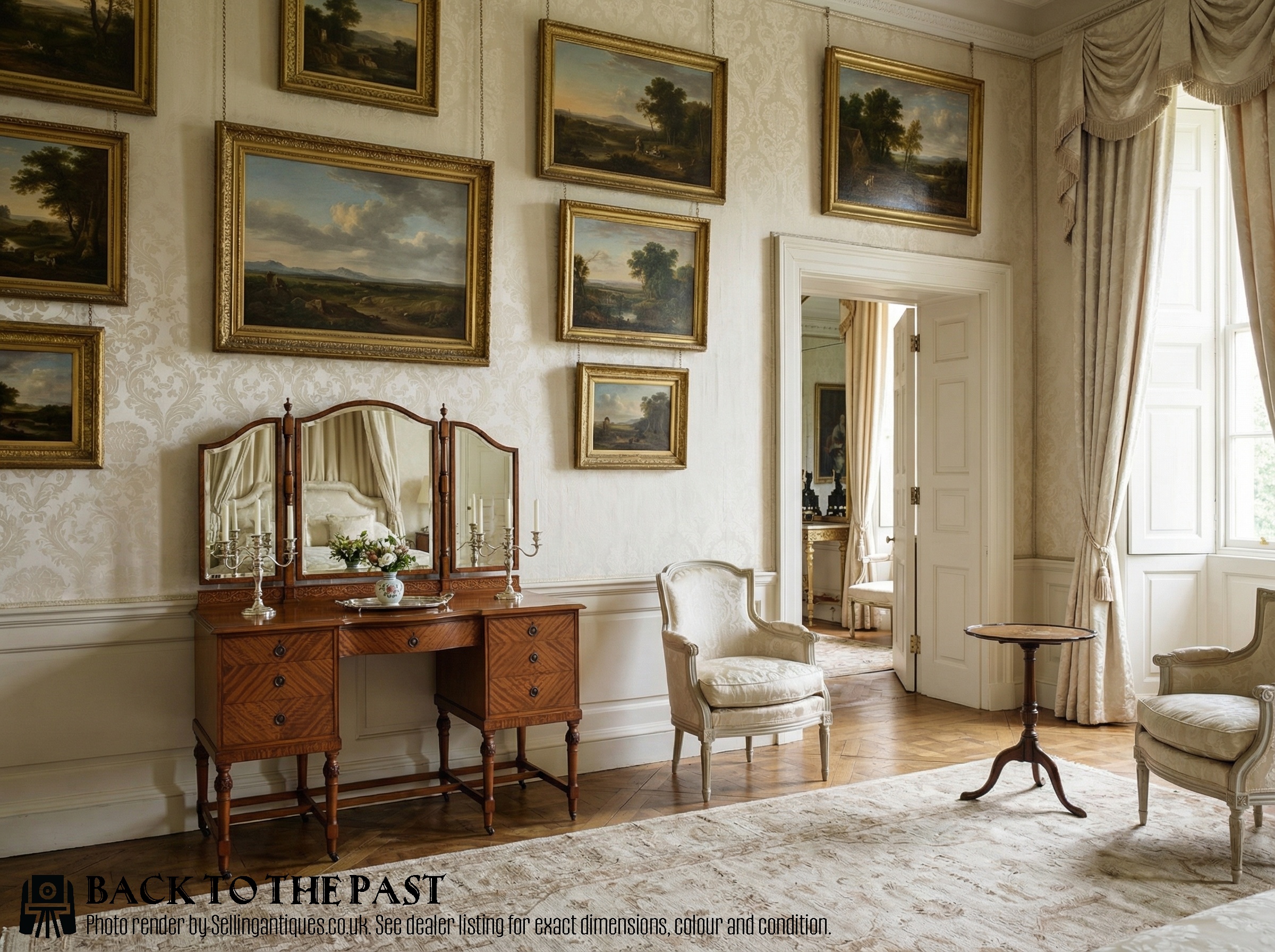
Pedestal Dressing Table Mirror
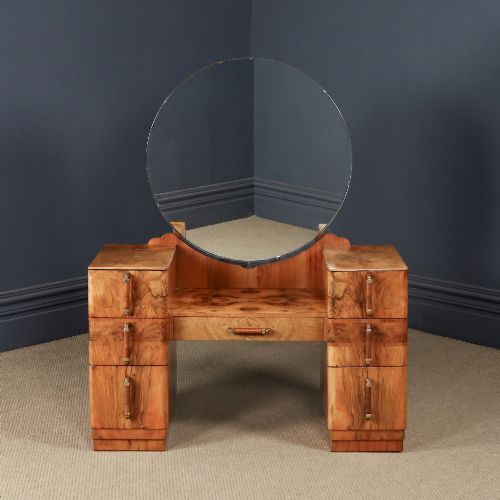
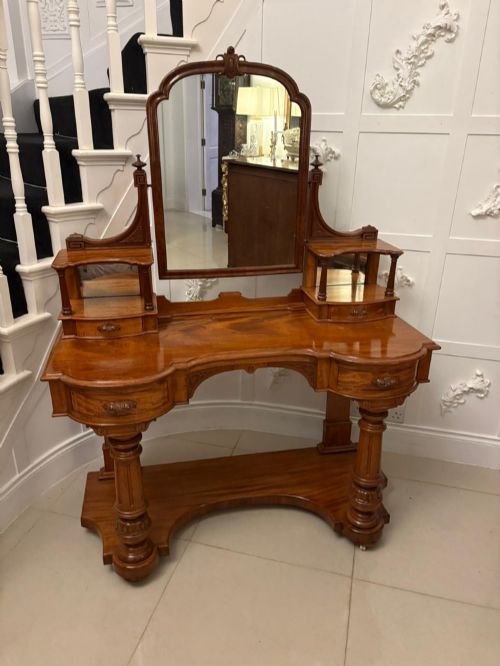
A pedestal dressing table mirror brings together a pivoting glass and a supportive base, often integrated into a larger dressing chest or vanity. These pieces emerge predominantly from the Victorian and Edwardian eras, alongside later Art Deco designs from the nineteen thirties.
Most examples found in these records utilise timber carcases such as mahogany, walnut, or oak, supporting an adjustable or fixed mirror plate. The glass itself usually pivots between upright supports mounted either directly onto the table surface or onto flanking pedestals.
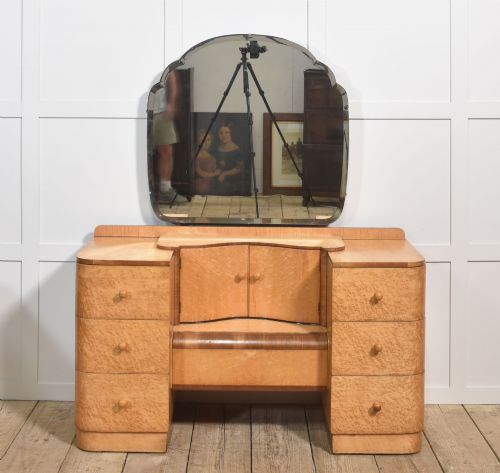
Victorian pieces tend to use dense hardwoods with rich grain patterns, whereas later nineteen-thirties examples favour figured burr walnut, maple, or chromium framing. Buyers frequently encounter versions equipped with small drawers or compartments built into the pedestal bases for storage.
Materials and Construction
Cabinetmakers constructed the main carcases using solid timbers like mahogany, oak, and walnut, frequently applying veneers of burr walnut, satinwood, or maple to visible surfaces. Joinery relied on traditional dovetailed drawers and turned or carved supports for the mirror frames.
Metal components typically include brass screws, hinges, and candle sconces on older pieces, or polished chrome and bronze ormolu on later designs. Mirror glass was historically silvered and set into rebated wooden frames designed to tilt on adjustable pivots.
Pedestal Dressing Table Mirror Retail Price Guide 2026
Typical asking prices for pedestal dressing table mirror among the pieces listed under this phrase on Sellingantiques today, from the lower quarter to the upper quarter. They describe what is for sale here now, not the wider market.
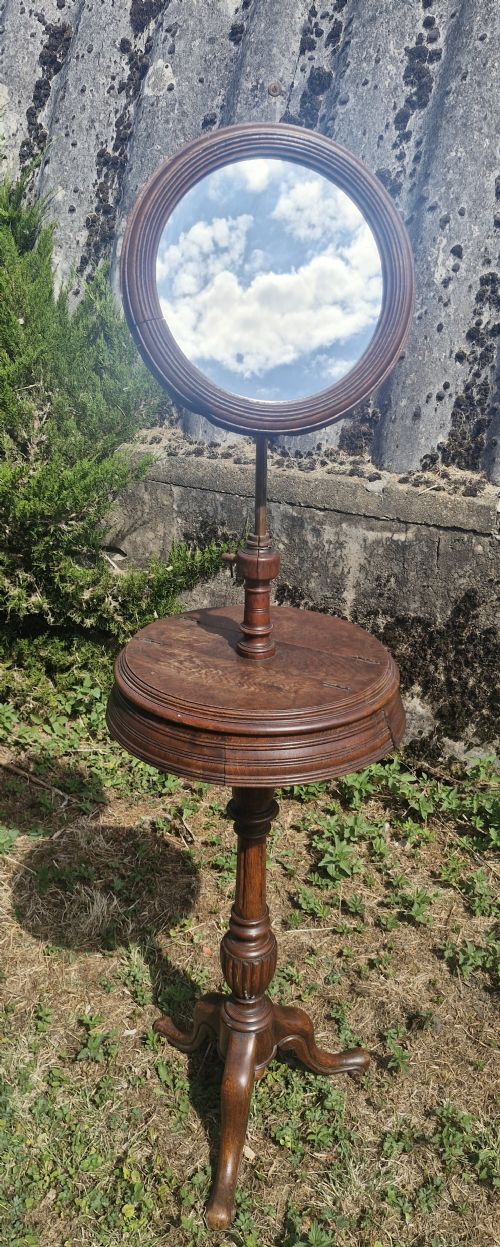
Several Victorian shaving stands arrive with tripod bases sturdy enough to survive a hearty morning lather.
Assessing Quality
Quality rests upon the selection of timber veneers, the crispness of carved details, and the integrity of the joinery in the pedestals and drawers. Pieces bearing maker attribution or distinct regional characteristics display superior cabinet work and thoughtful proportions.
The sophistication of the pivoting mechanism and the clarity of the original mirror glass further distinguish finer examples from standard production. Well-executed marquetry, precise inlay, and intact original fittings elevate the standing of a dressing mirror significantly.
Shapland & Petter·Edwards & Roberts·Harry and Lou Epstein·James Shoolbred
The Pedestal Dressing Table Mirror Glossary
- Pedestal dressing table
- A dressing table featuring banks of small drawers on either side of a kneehole space, often supporting a mirror.
- Shaving stand
- A specialist furniture form designed for grooming, typically incorporating an adjustable mirror and a small table platform.
- Burr walnut
- A decorative timber veneer harvested from the wart-like growths on walnut trees, prized for its swirling grain patterns.
- Marquetry
- The art of applying decorative veneer pieces to a structure to form intricate patterns or pictures.
- Ormolu
- Gilded bronze ornamentation applied to furniture mounts, common in French Empire and nineteenth-century pieces.
Pedestal Dressing Table Mirror: Frequently Asked Questions
What periods do these mirrors come from?
The available selection spans from the early nineteenth century through the Victorian and Edwardian eras into the nineteen thirties.
Victorian and Edwardian examples predominate, alongside distinct Art Deco pieces featuring streamlined walnut and chrome.
How do I use a shaving stand?
Shaving stands serve as compact grooming stations, usually featuring an adjustable mirror mounted at a convenient height for standing use.
Many incorporate small ledges or tripod supports designed to hold shaving accessories and basins.
Are the mirror glasses original?
Mirror glasses vary, with some retaining their original mercury or early silvered plates while others have been replaced over time.
Original plates often display minor foxing or age spots that confirm their antique status.
What woods are commonly used?
Mahogany and walnut form the backbone of most Victorian and nineteenth-century pieces, often enriched with burr walnut or satinwood veneers.
Later pieces from the nineteen thirties introduce maple, oak, and occasionally chromium-plated metal.