







Blonde Wood Vanity Table
A blonde wood vanity table brings a clean, pale warmth to a bedroom through distinctive light-toned timbers.
Blonde Wood Vanity Table
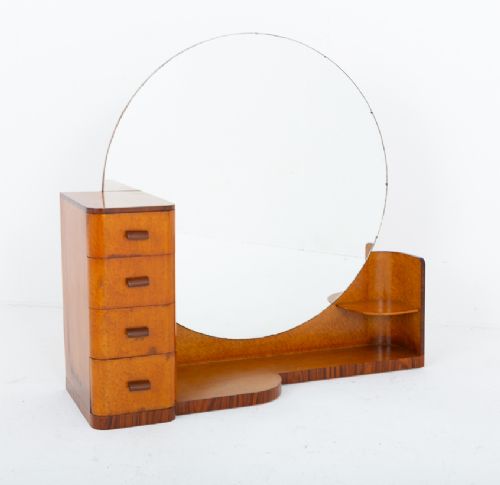
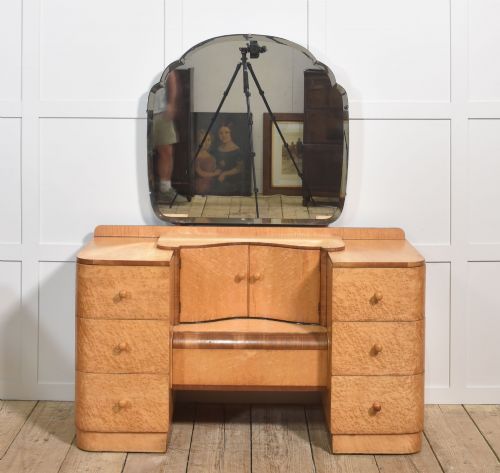
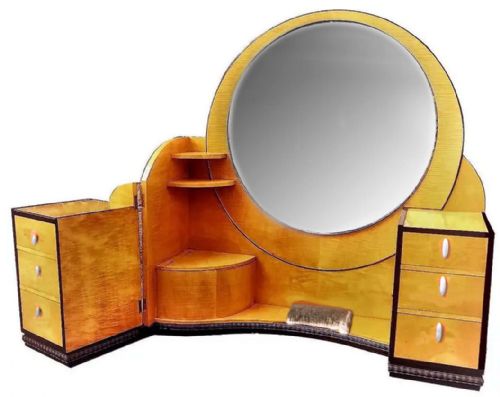
A blonde wood vanity table is primarily represented here by dressing tables dating from the nineteen-thirties, featuring distinct light timbers such as birdseye maple, sycamore, and satin birch. These pieces often incorporate integral mirrors and matching stools to complete the dressing set.
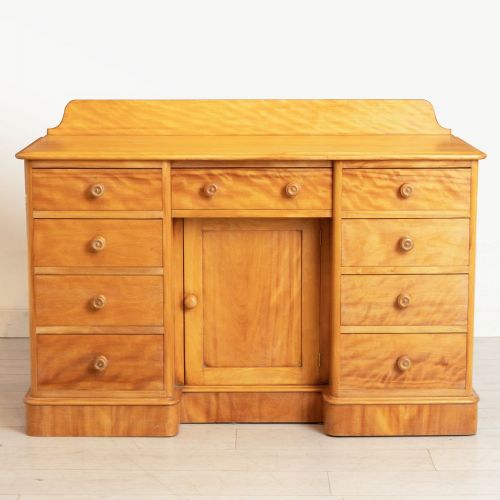
Beyond the predominant nineteen-thirties pieces, the selection extends through Victorian kneehole desks and George III dressing mirrors down to nineteenth-century French bleached oak. Forms range from streamlined Modernist dressing tables to traditional writing tables adapted for personal grooming.
Makers and designers working in these lighter timbers utilised the natural figuring of the grain to create decorative surfaces without heavy staining. Buyers searching this phrase encounter both British Art Deco studio output and continental European pieces from Swedish Grace to French Provincial traditions.
How they were made
Makers constructed these tables using a carcase of solid timber or sturdy secondary woods faced with highly figured veneers like birdseye maple and satinwood. This technique allowed craftsmen to display symmetrical grain patterns across large drawer fronts and top surfaces.
Glass and mirror glass form an integral component of the construction, frequently cut into geometric Art Deco shapes or mounted on pivoting frames above the main writing surface. Finishing involved polishing the pale wood to a smooth sheen that protected the timber while highlighting its natural tone.
Blonde Wood Vanity Table Retail Price Guide 2026
Typical asking prices for blonde wood vanity table among the pieces listed under this phrase on Sellingantiques today, from the lower quarter to the upper quarter. They describe what is for sale here now, not the wider market.
Some dressing tables arrive with replacement fabric top covers on their stools, proving that even Art Deco needs a soft landing.
What varies in quality
The distinction between standard production and exceptional quality lies in the selection and matching of the wood veneers. Superior pieces display continuous, carefully aligned grain patterns across multiple drawers, whereas lesser examples show random or mismatched figuring.
Attribution to known designers or prominent cabinet makers elevates the standing of a piece, particularly when paired with original hardware and matching stools. Construction integrity, such as smooth drawer runners and robust mirror mountings, separates master workshops from commercial trade production.
Harry and Lou Epstein·John Taylor of Edinburgh·Betty Joel
The Blonde Wood Vanity Table Glossary
- Birdseye maple
- A figure in maple wood resembling tiny swirling eyes caused by depressions in the growing tree's annual rings. It provides a highly decorative surface for nineteen-thirties furniture.
- Art Deco
- A design style prevalent in the nineteen-twenties and nineteen-thirties characterised by streamlined forms, geometric shapes, and modern materials. It heavily influences the dressing tables found in this selection.
- Kneehole desk
- A small desk or vanity featuring a central recess for the user's knees, flanked by pedestals of small drawers. Victorian examples in satin birch represent this traditional form.
- Sycamore
- A hard white British timber often used for furniture making. It offers a pale, clean surface that takes a fine polished finish.
- Dressing mirror
- A tabletop glass mounted on side posts or a small frame for adjusting the angle. Georgian versions in burr maple demonstrate early portable mirror design.
Blonde Wood Vanity Table: Frequently Asked Questions
What is a blonde wood vanity table?
A blonde wood vanity table is a dressing piece constructed from light-coloured timbers like maple, sycamore, or satin birch. These items are designed for personal grooming and often include mirrors and matching stools.
Most examples seen here date from the nineteen-thirties Art Deco period, though earlier Victorian and Georgian pieces also appear.
How do I identify Art Deco vanity tables?
Art Deco vanity tables feature streamlined silhouettes, geometric lines, and frequently incorporate circular or curved mirror glass. The use of exotic light veneers such as birdseye maple defines their modernist aesthetic.
Unlike ornate Victorian furniture, these pieces rely on clean planes and the natural figuring of the wood for visual effect.
Are mirrors original to these tables?
Many nineteen-thirties dressing tables retain their original glass and pivoting mirror frames, which were engineered specifically for the carcase. Replacement glass is sometimes found due to the fragile nature of vintage mirrors.
Checking the silvering behind the glass and the fitting of the frame helps determine if the mirror belongs to the period of the table.
How do I care for pale wood furniture?
Pale woods like maple and sycamore require protection from direct sunlight to prevent the timber from darkening or yellowing unevenly over time. Regular dusting with a dry, soft cloth maintains the polished finish without sealing the grain.
Avoid using silicone-based polishes, which can penetrate porous vintage finishes and attract dust to the figured surface.
What distinguishes Victorian vanity tables?
Victorian versions, such as kneehole desks in satin birch, tend to feature more traditional joinery and solid timber construction compared to later veneered pieces. They often prioritise compartmentalised drawer storage over sweeping decorative curves.
These earlier pieces bring a heavier, traditional presence to a room compared to the lighter geometric forms of the twentieth century.