



Satin Birch Dressing Table
A satin birch dressing table brings pale golden timber and distinctive grain into a bedroom, offering both a functional mirror surface and refined period character.
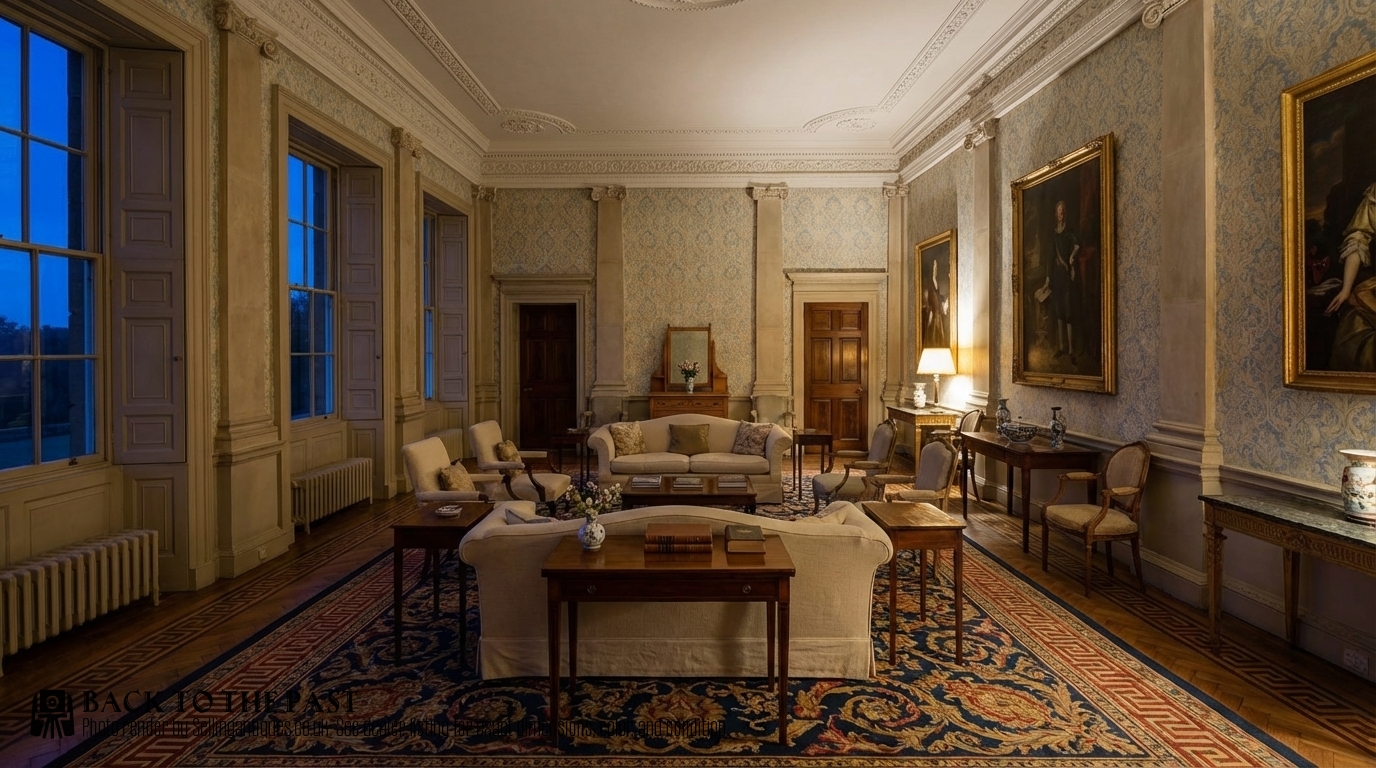
Satin Birch Dressing Table
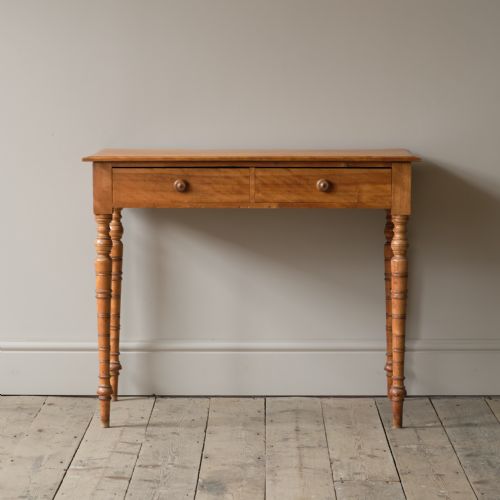
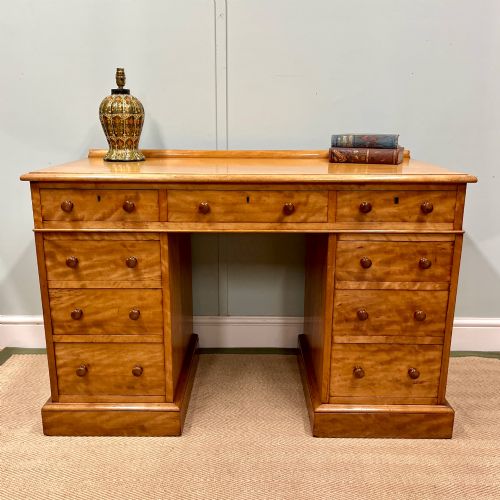
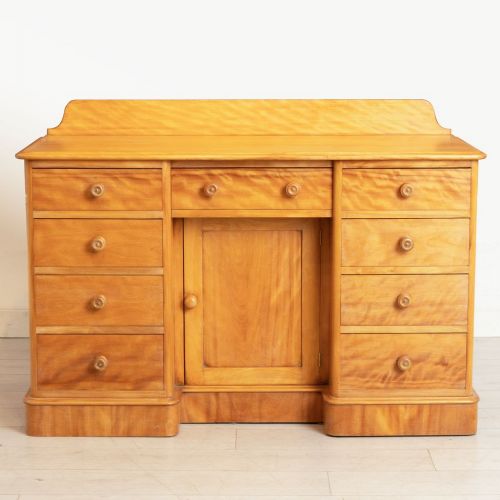
A satin birch dressing table is primarily a 19th-century or early 20th-century vanity piece, though the search phrase frequently brings up closely related forms such as writing desks, side tables, and dressing chests.
Most examples you encounter date from the Victorian era, spanning the mid to late 1800s, alongside occasional Edwardian and Art Deco iterations influenced by Swedish Grace design.
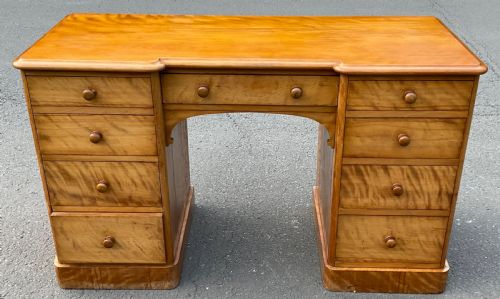
These pieces range from simpler single-pedestal designs and dressing chests with candle sconces to elaborate double dressing tables and kidney-shaped forms.
What varies in quality
Quality rests heavily on the selection and matching of the birch veneer, where superior examples display a uniform, highly active chatoyant figure across the entire surface rather than plain or mismatched sections.
Construction methods also distinguish finer workshops, seen in the precision of dovetailed drawer linings, the retention of original brass hardware, and the integration of secondary elements like candle sconces or makers' stamps.
Victorian dressing chests frequently include built-in candle sconces, ready for the moment when evening grooming relied on flickering wax rather than electric light.
Heal and Son·J Shoolbred·Gillows of Lancaster·Maple and Co·Holland and Sons
The Satin Birch Dressing Table Glossary
- Satin birch
- A timber derived from the birch tree, finished to show a bright, golden, light-reflecting grain. It was favoured by high-end Victorian and Edwardian cabinet makers as a lighter alternative to mahogany.
- Veneer
- A thin layer of superior wood applied to a base timber such as pine. This technique prevented warping while allowing the maker to showcase decorative grain patterns.
- Duchess dressing table
- A large Victorian dressing table featuring a fixed or swing mirror supported by small accessory drawers or a superstructure above a central desk base.
- Kneehole desk
- A writing table or dressing table featuring a central recess for the legs, flanked by pedestals of drawers on both sides.
- Swedish Grace
- A style of 1920s design originating in Sweden that combined classicism with stripped-back modern simplicity, often expressed in pale Scandinavian timbers.
Satin Birch Dressing Table: Frequently Asked Questions
How do I care for satin birch wood?
Keep these pieces away from direct sunlight and excessive heat to prevent the pale timber from darkening or the veneer from drying out. Dust regularly with a dry cloth and apply a microcrystalline wax occasionally to nourish the surface.
Avoid using silicone-based polishes or wet cloths, as moisture can penetrate old finishes and damage the delicate birch veneer over time.
Are these dressing tables suitable for modern bedrooms?
Their compact footprints and warm, light golden tones allow them to sit comfortably in contemporary spaces as dressing desks or hallway writing tables. Many retain original mirrors that brighten a room by reflecting natural light.
While designed for historical dressing routines, the drawer configurations provide practical storage for modern accessories and stationery.
What is the difference between a dressing table and a writing desk?
A dressing table is traditionally built to accommodate a mirror, often featuring superstructure drawers, trinket boxes, or candle sconces designed for grooming. Writing desks prioritise a flat, sometimes leather-lined surface suited for correspondence.
Because forms overlap in period furniture, many tables with drawers served multiple domestic functions depending on the room they occupied.