

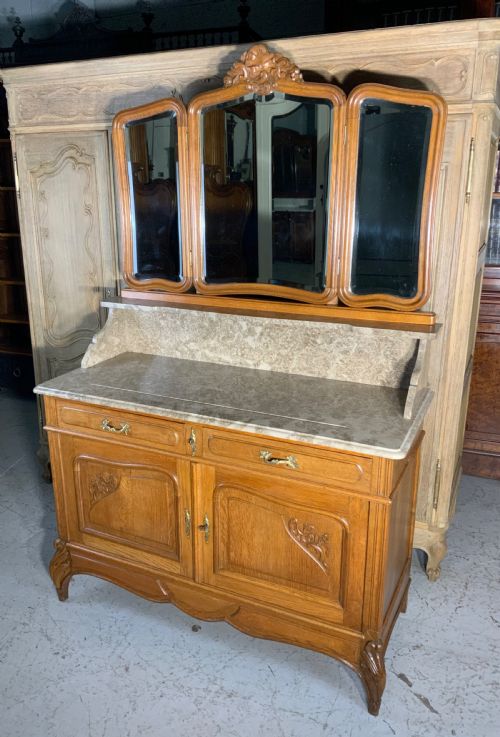
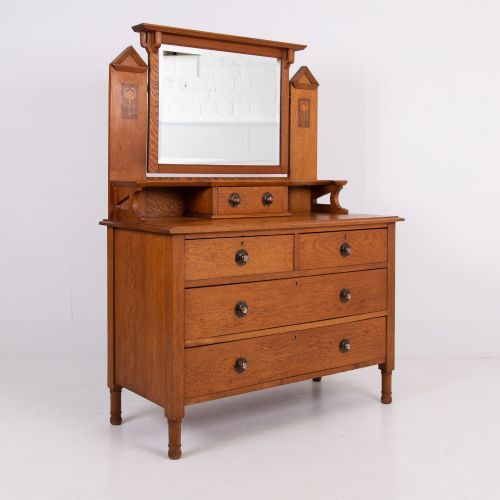
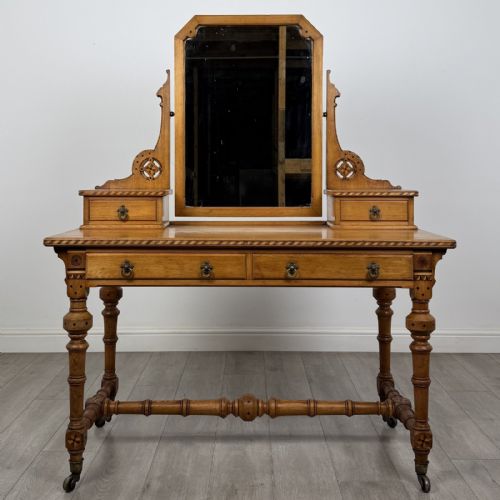
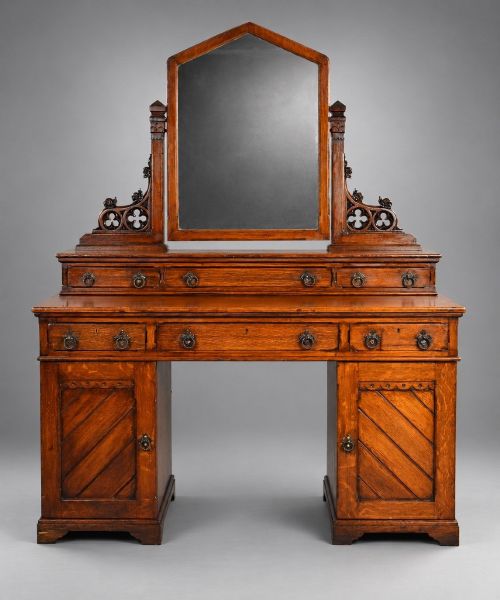

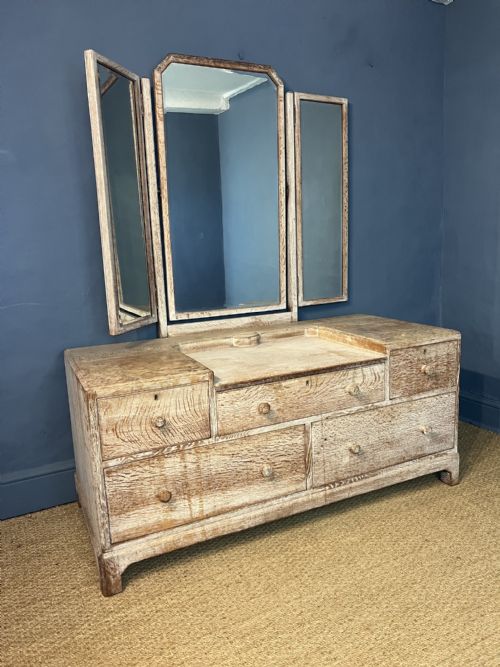
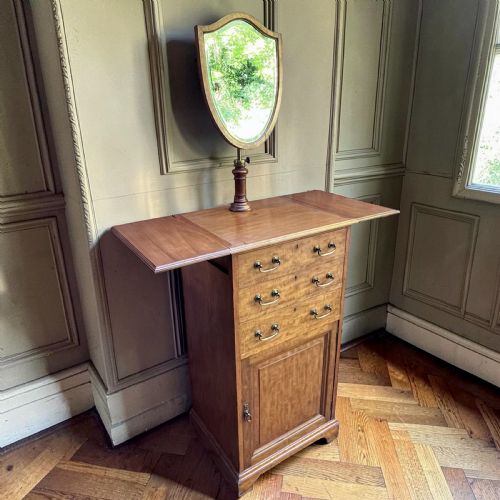
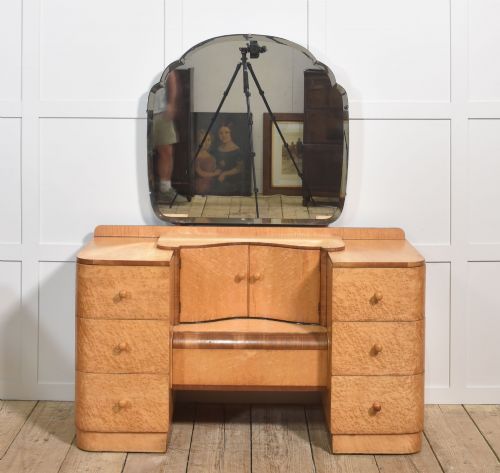
Dressing Chest with Mirror
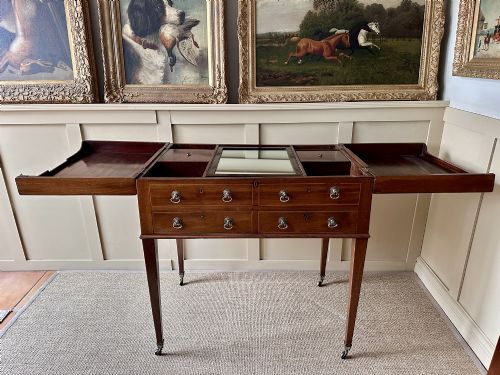
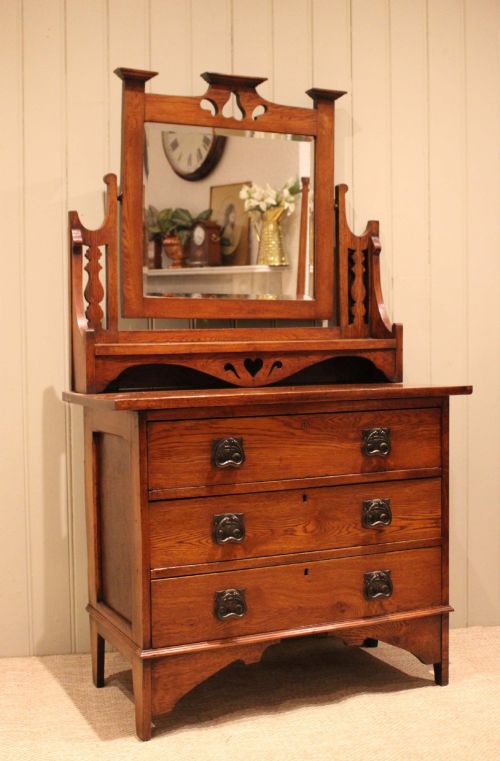
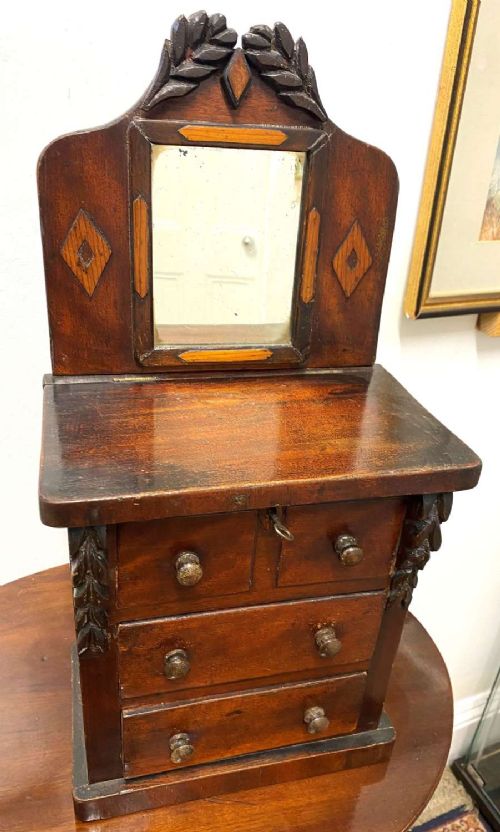
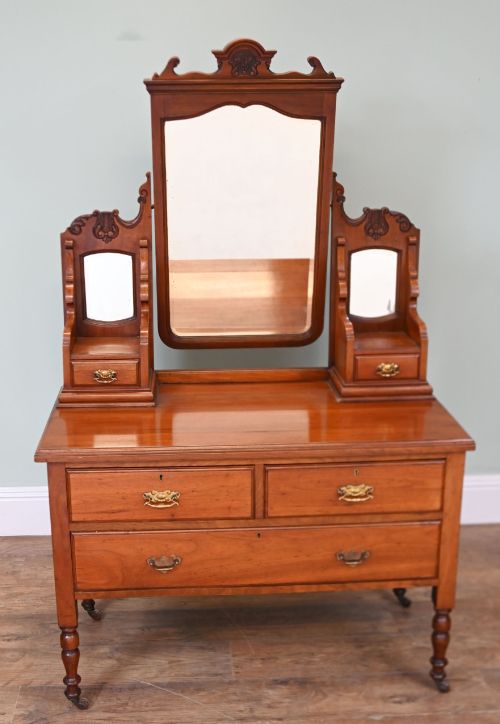
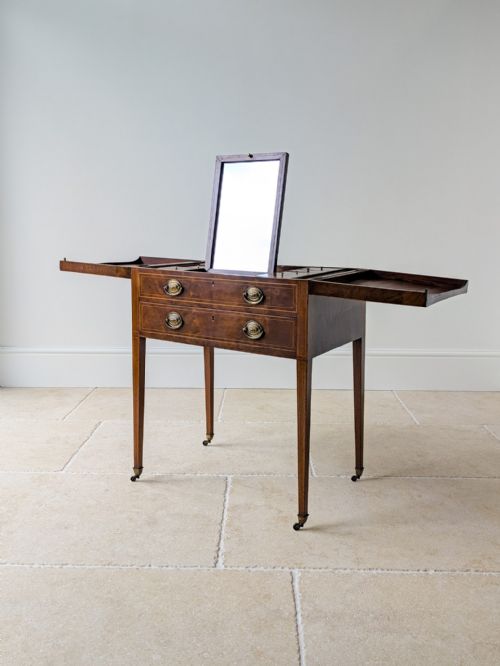
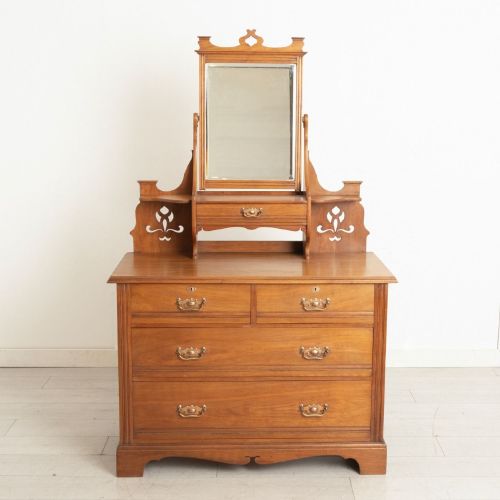
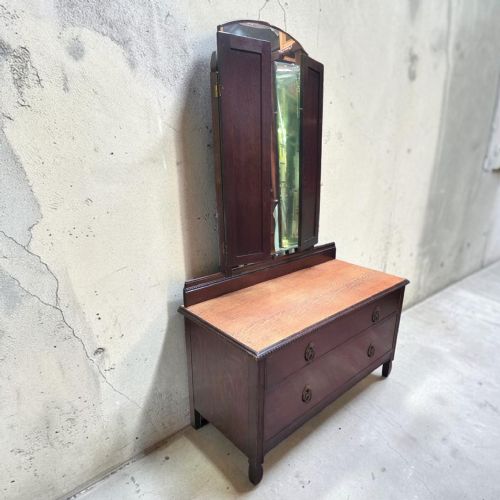
A dressing chest with mirror combines fitted drawers and a pivoting glass, spanning Victorian, Edwardian, and Art Deco periods.
Dressing Chest with Mirror
A dressing chest with mirror unites a chest of drawers with a mounted looking glass, serving as a functional bedroom station throughout the nineteenth and early twentieth centuries.
The pieces on this page emerge primarily from Victorian and Edwardian workshops, alongside later Art Deco iterations and Arts and Crafts designs.
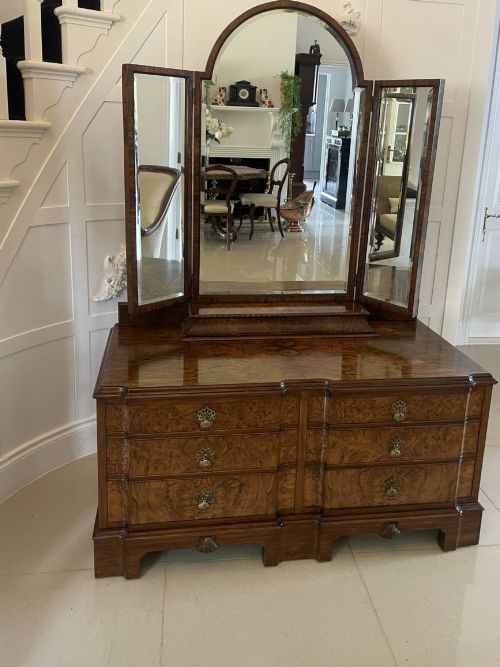
Forms range from compact pine and oak washstands and chests to substantial burr walnut pedestal dressing tables featuring triple or adjustable shield mirrors.
Materials and Construction
Cabinetmakers utilised solid timbers and decorative veneers, notably mahogany, oak, walnut, and burr walnut, alongside painted or scumble glazed pine.
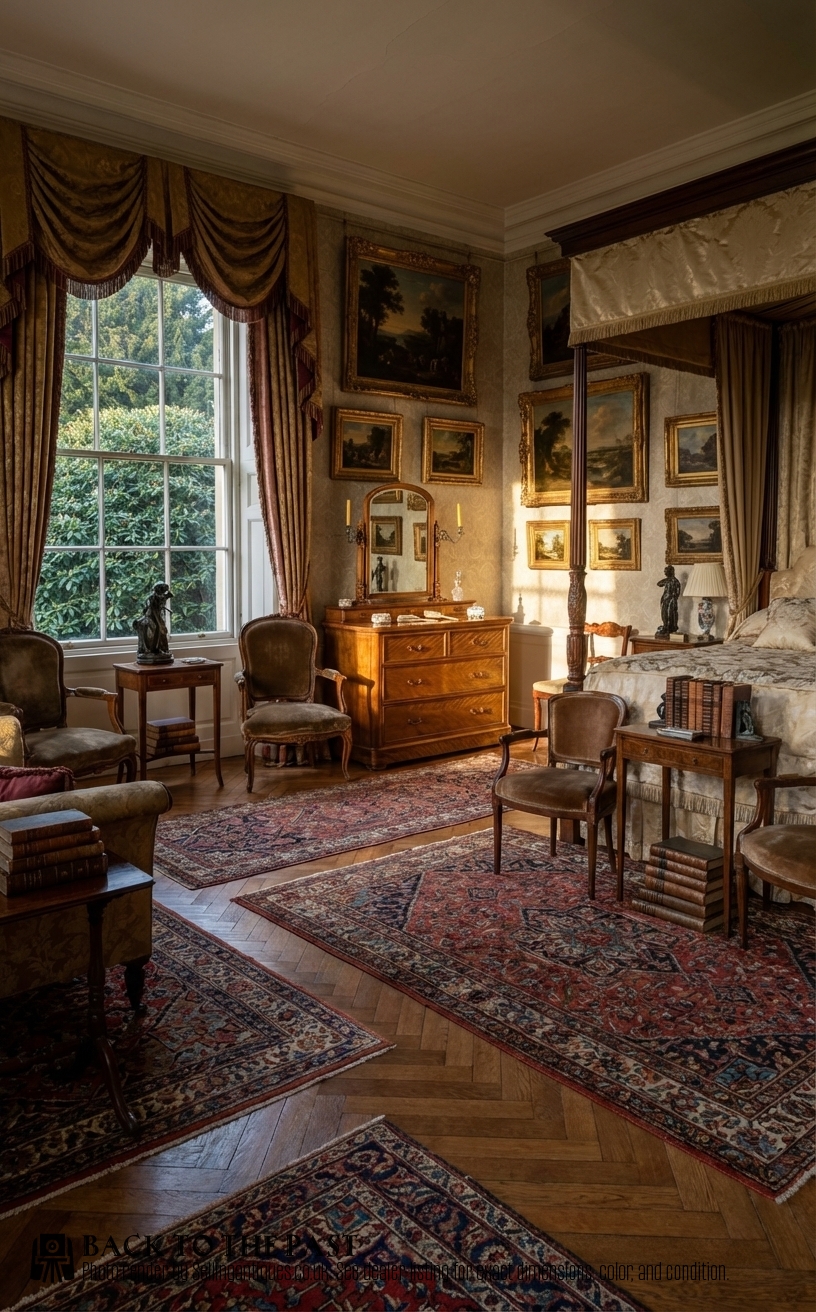
Mirrors were set into pivoting wooden frames or supported by upright arms, occasionally accompanied by candle scones or small jewellery drawers.
Dressing Chest with Mirror Retail Price Guide 2026
Typical asking prices for dressing chest with mirror among the pieces listed under this phrase on Sellingantiques today, from the lower quarter to the upper quarter. They describe what is for sale here now, not the wider market.
Several Victorian examples retain small candle scones attached beside the glass for early morning routines.
Craftsmanship and Design
Quality rests in the selection of figured timbers and the integration of the mirror superstructure with the base drawers.
The distinction between standard utility furniture and important workshop pieces lies in thoughtful proportions, inlaid details, and retained original hardware.
George Walton·Heals·Maurice Adams·Wright and Hunter·Harris Lebus
The Dressing Chest with Mirror Glossary
- Burr walnut
- A highly figured timber veneer prized for its swirling grain patterns. It frequently appears on high-end Edwardian and Art Deco dressing chests.
- Shield mirror
- A looking glass cut in the silhouette of a heraldic shield, typically suspended between two upright posts on pivots. This style is common in Edwardian pieces.
- Duchess dressing table
- A grand Victorian form featuring a large central mirror flanked by smaller drawers or trinket boxes. It offers an expansive surface area for grooming.
- Kneehole dressing chest
- A form with a central recess for the user's legs, flanked by pedestals of small drawers. This layout allows for seated dressing.
- Scumble glaze
- A painted finish manipulated with combs or brushes to simulate the appearance of finer grained wood. It was often applied to pine furniture.
Dressing Chest with Mirror: Frequently Asked Questions
How do I date a dressing chest?
Dates are indicated by the primary timber, handle styles, and mirror construction methods. Victorian pieces often utilise heavy mahogany or walnut, while Edwardian versions frequently feature lighter satin walnut or inlaid mahogany.
Simpler pine chests with stencilled decoration point toward the later nineteenth century, whereas geometric veneers and pedestal forms align with the nineteen-twenties and thirties.
Are the mirrors original?
Original mirrors often display faint foxing, minor silvering loss, or slight distortion consistent with age. The bevel edges and the backing boards offer further clues to their period authenticity.
Replacement glass is clean and bright without historical blemishes. Examining the fixings where the mirror attaches to the frame helps determine whether the glass has been swapped.
How were these pieces used historically?
These furniture items served as the primary station for morning grooming, hair styling, and the storage of personal garments and accessories. The drawers held linens and brushes, while the surface accommodated perfume bottles and trinkets.
Adjustable swivel mirrors allowed the user to change the angle of reflection. Candle scones, when present, provided illumination before the widespread adoption of electric lighting.
How do I care for a walnut veneer?
Burr and figured walnut require protection from direct sunlight and excessive heat to prevent the delicate veneer from drying and lifting. Dusting should be done gently with a dry, soft cloth.
Application of appropriate waxes feeds the timber and maintains the sheen. Moisture should be kept away from the surface to protect the polished finish.