


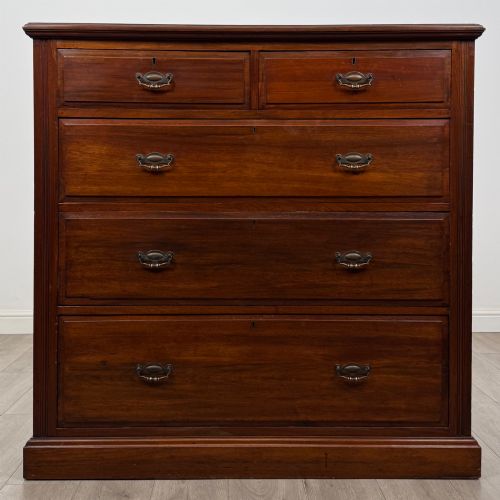
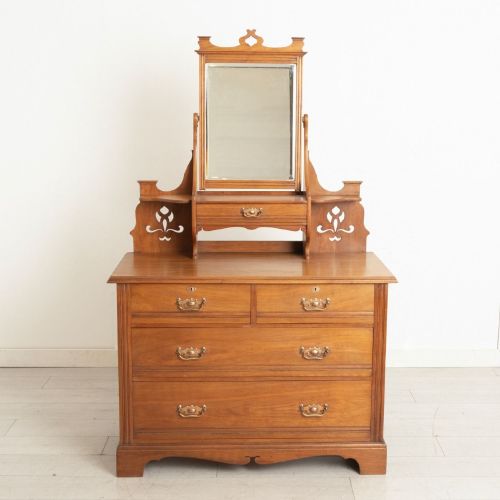

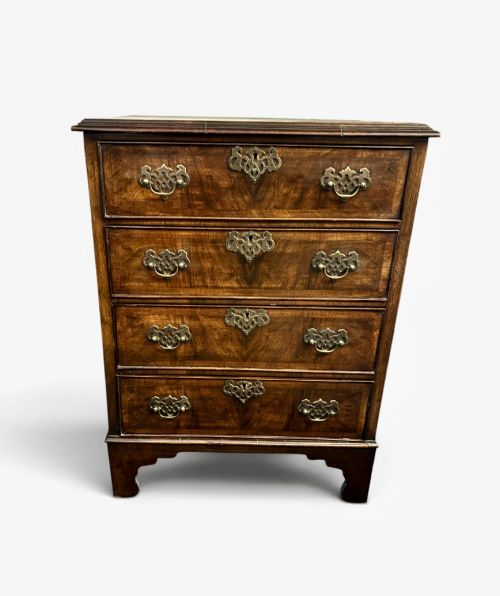
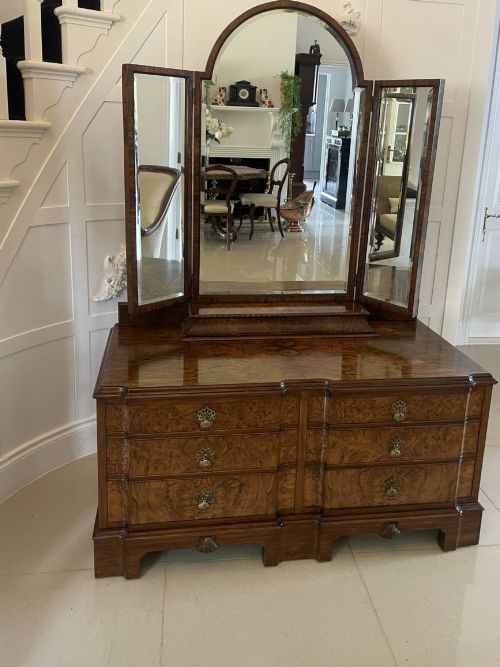
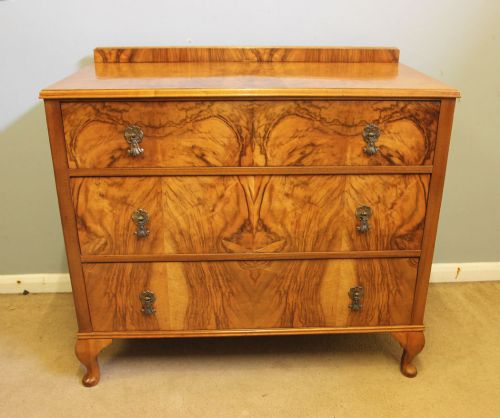
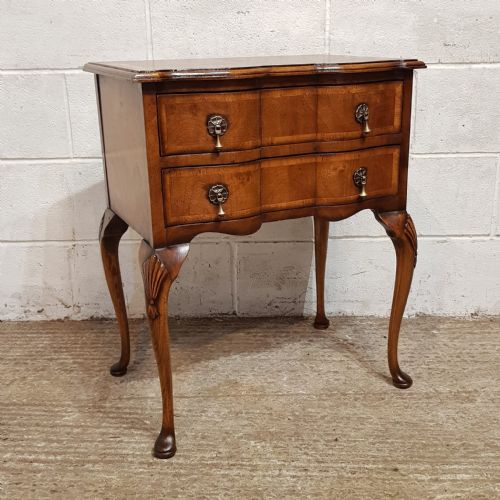
Edwardian Walnut Chest
When you search for an edwardian walnut chest, you are looking at practical bedroom storage that ranges from compact bedside cabinets to large serpentine tallboys.
Edwardian Walnut Chest
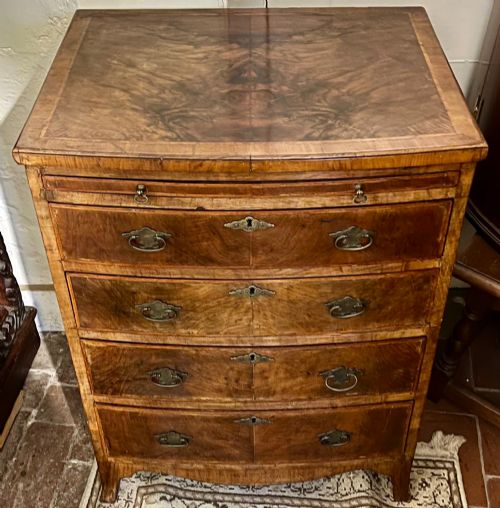
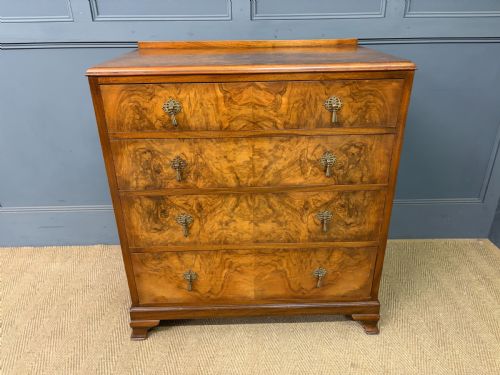
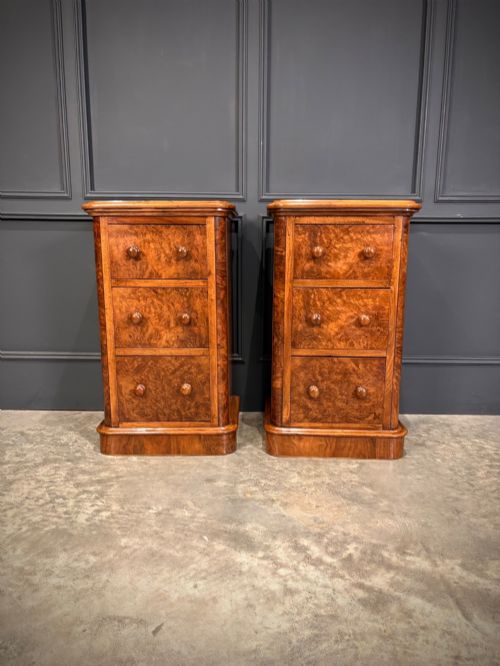
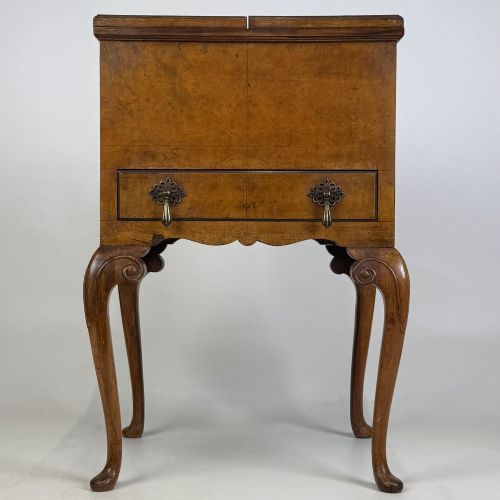
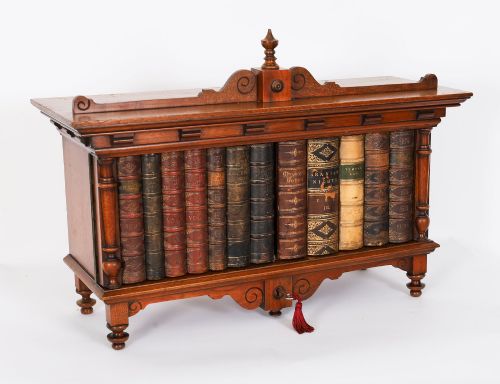
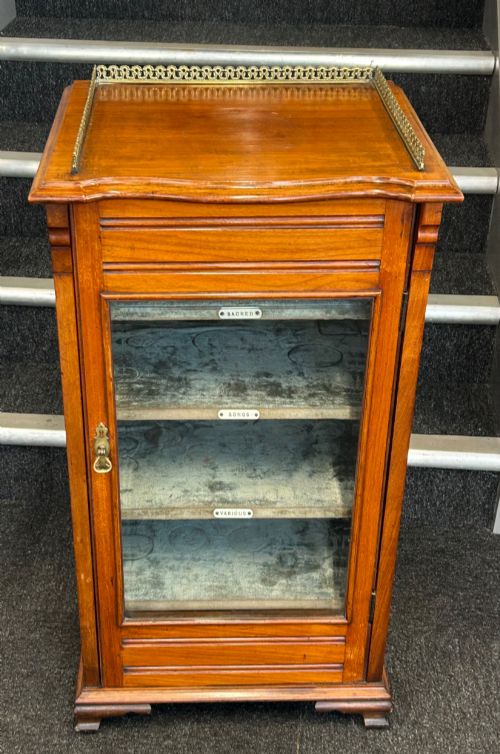
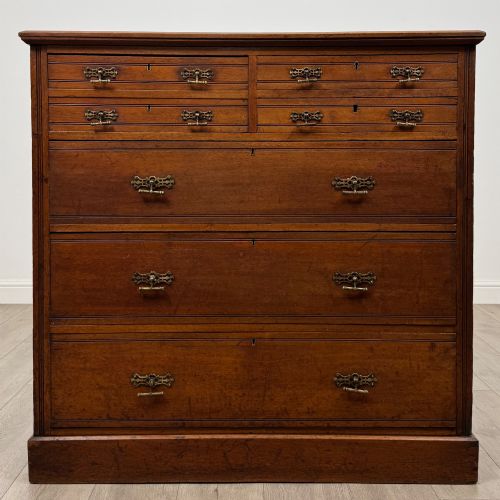
An edwardian walnut chest brings together the rich figuring of domestic timber and the functional storage demands of the early twentieth century. These pieces appear as standard drawer units, tallboys, bedside cabinets, and specialised music or bureau forms.
The versions most commonly met on this page span the Edwardian period and adjacent years, often displaying revival influences such as Queen Anne or Georgian styles alongside more utilitarian Arts and Crafts designs.
How they were made
Cabinetmakers utilised solid walnut and figured walnut veneers over secondary timbers like oak and mahogany, often applying parquetry or crossbanding to accentuate the natural grain patterns. Brass hardware, glass elements, and internal drawer linings complete the construction of these storage pieces.
Techniques varied from simple dovetailed solid timber work to intricate curved serpentine fronts and veneer application, demonstrating traditional cabinetmaking methods adapted to changing aesthetic revivals.
Edwardian Walnut Chest Retail Price Guide 2026
Typical asking prices for edwardian walnut chest among the pieces listed under this phrase on Sellingantiques today, from the lower quarter to the upper quarter. They describe what is for sale here now, not the wider market.
Some Edwardian gentlemen secured their tobacco in specialised locking cigar cabinets.
What varies in quality
Quality in an edwardian walnut chest rests on the selection and matching of the walnut veneer, particularly where burr or figured sections create symmetrical patterns across the drawer fronts. Finer examples display meticulous attention to detail in secondary wood selection, such as solid oak drawer linings, and precise joinery along complex serpentine or bow shapes.
The distinction between standard workshop production and top-tier pieces often lies in the sophistication of the revival styling, such as carved details, harmonious proportions, and branded maker attribution.
Jas Shoolbred·Arthur Simpson·Maurice Adams·Gill & Reigate
The Edwardian Walnut Chest Glossary
- Burr Walnut
- A figured wood grain derived from the wart-like growths on walnut trees, prized for its swirling patterns. Cabinetmakers sliced this timber into thin veneers to cover larger drawer and cabinet surfaces.
- Serpentine Front
- A furniture front that curves outward in the centre and inward at the sides in an 'S' shape. This shape requires advanced woodworking skill to veneer and fit accurately.
- Tallboy
- A tall chest of drawers, often constructed as a smaller chest sitting upon a base or as a single tall unit. These pieces maximise vertical storage space in bedrooms.
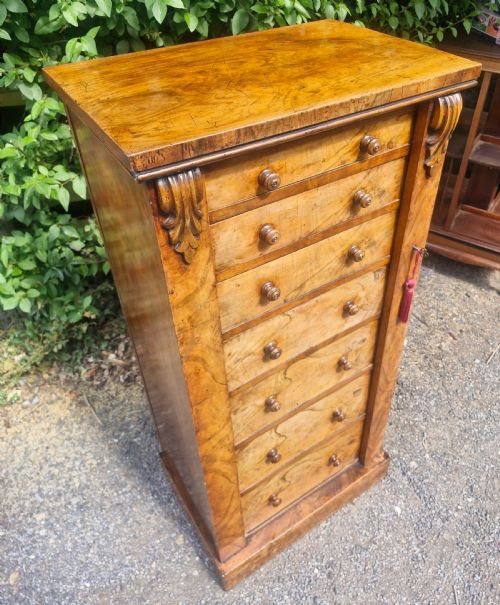
- Wellington Chest
- A narrow vertical chest of drawers secured by a hinged locking side flap that fastens with a key. This form originated in the nineteenth century and continued into later production.
- Crossbanding
- A decorative border technique where thin strips of veneer are laid perpendicular to the grain of the central panel. This frames the drawer fronts and highlights the geometric layout of the timber.
Edwardian Walnut Chest: Frequently Asked Questions
How do I spot an Edwardian chest?
Edwardian chests often feature lighter proportions than their Victorian predecessors, utilising walnut and burr walnut veneers with subtle decorative stringing or revival styling.
Look for honest construction methods, original brass hardware, and secondary timbers like oak inside the drawers that match the period manufacturing techniques.
Are these chests suitable for modern bedrooms?
These pieces provide practical storage in compact formats such as bedside tables, music cabinets, and smaller drawer units that easily fit contemporary living spaces.
Their varied dimensions and internal configurations make them adaptable for organising clothes, documents, or personal items without dominating a room.
What is the difference between solid and veneered walnut?
Solid walnut uses thick timber throughout the structure, whereas veneered walnut applies thin slices of highly figured wood over a stable secondary timber core.
Veneering allowed makers to display dramatic burr patterns across large surfaces that would be unstable or prohibitively expensive if built from solid wood.
How do I care for walnut furniture?
Protect walnut surfaces by keeping them away from direct sunlight and maintaining stable room humidity to prevent the timber and veneer from drying out.
Clean the wood gently using a soft, dry cloth and apply occasional appropriate wax polish to nourish the grain without buildup.