


Victorian Vanity Unit
A victorian vanity unit brings daily utility and period timber into the bedroom, uniting mirrors, basins and drawers.
Victorian Vanity Unit
A victorian vanity unit encompasses dressing tables, washstands and dressing chests created during the nineteenth century and the Edwardian era.
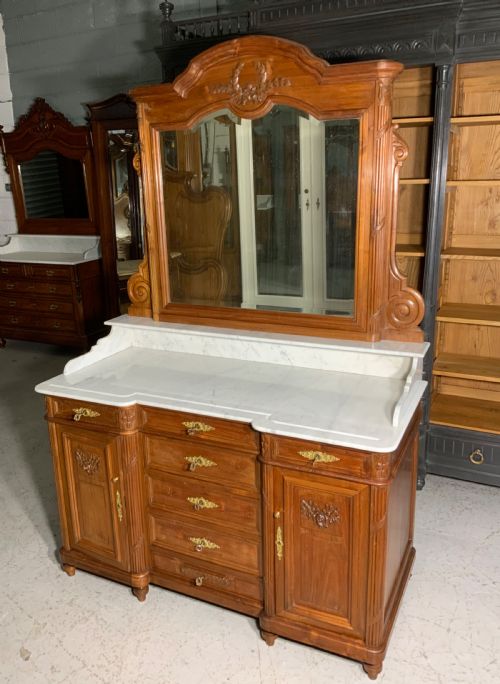
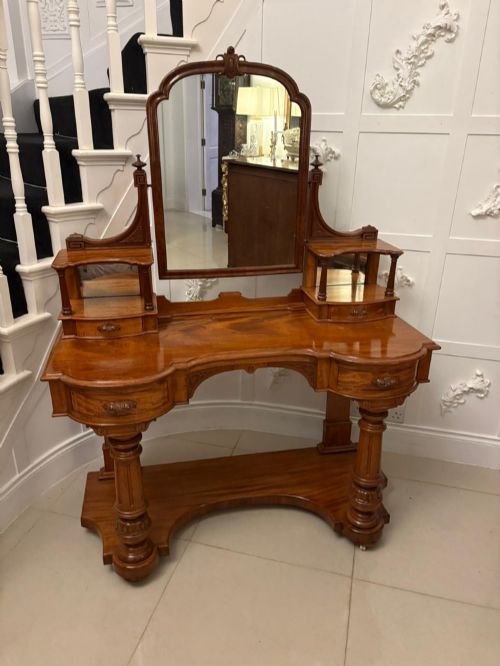
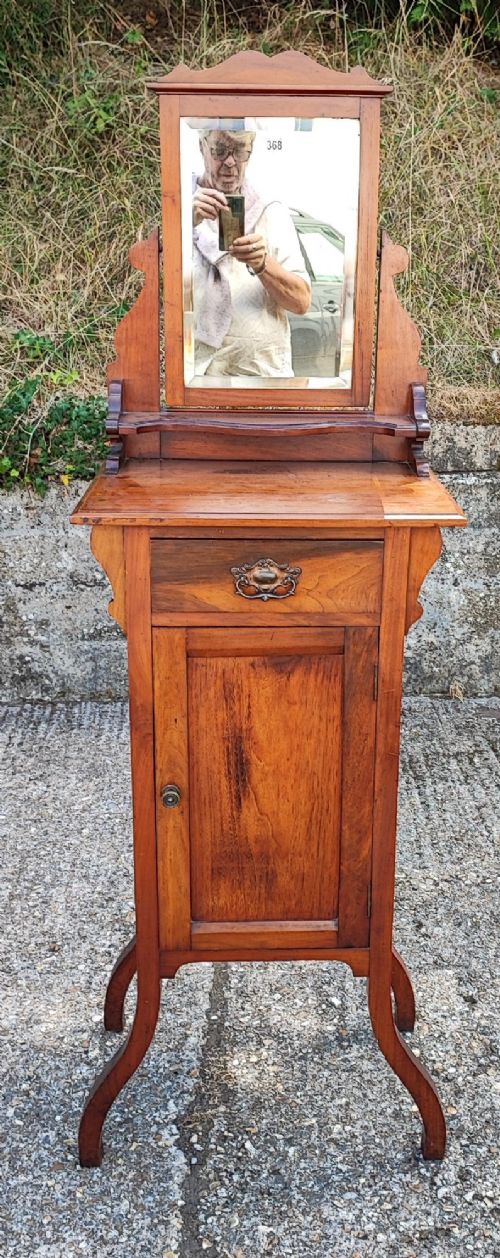
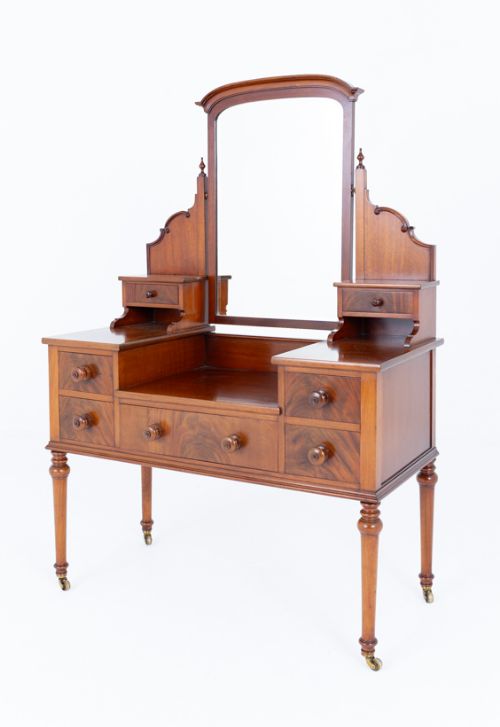
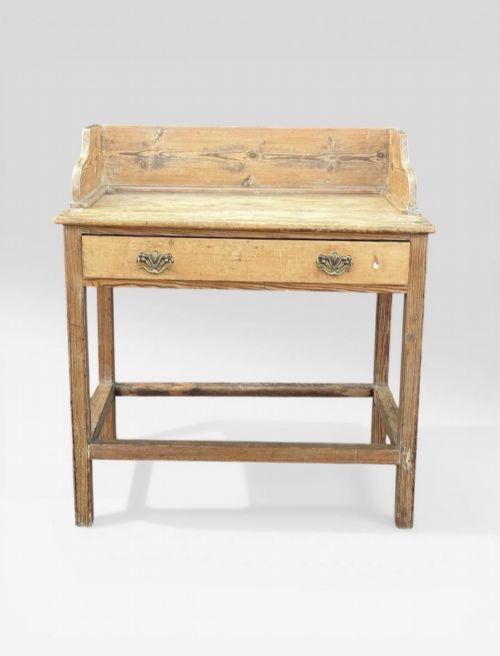
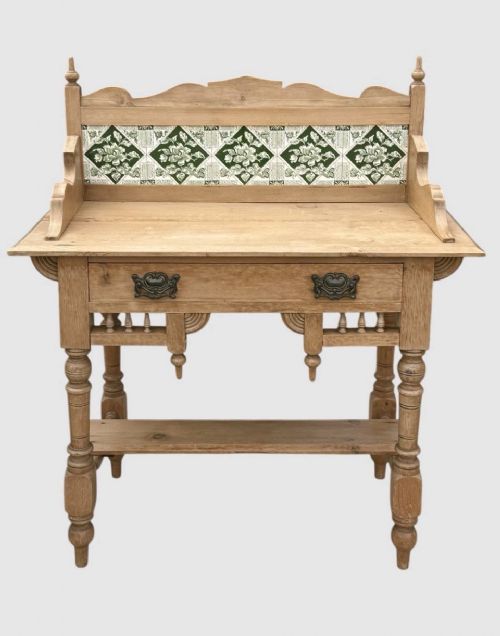
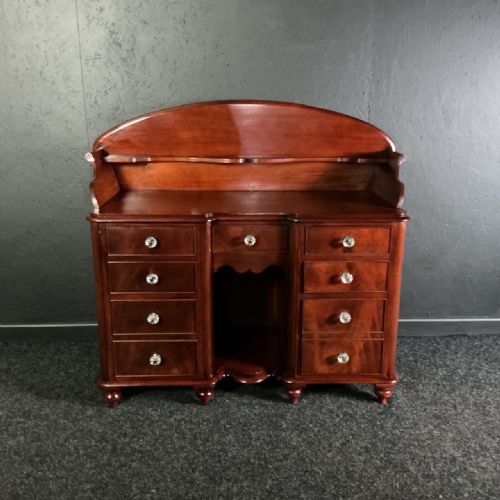
The pieces on this page appear as marble-topped washstands, mahogany dressing tables with swing mirrors, and satinwood or pine dressing chests.
Makers and retailers such as Harrods, Edwards & Roberts, Gillows, Harris Lebus and Maple & Co. provided these forms for period townhouses and country homes.
Materials and construction
Cabinetmakers utilised dense hardwoods including mahogany, walnut, rosewood, satinwood and oak, alongside lighter pine and birch.
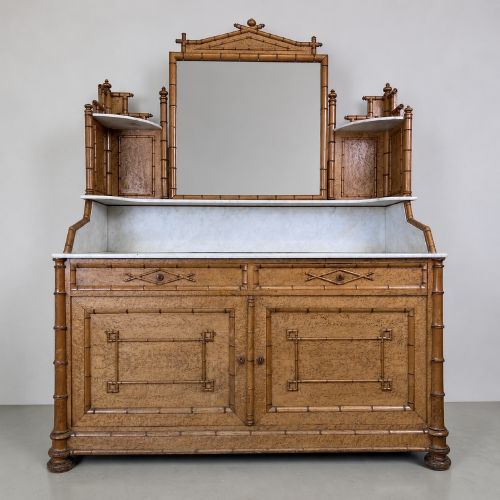
Surface decoration relies on marquetry inlay, satinwood or walnut veneers, bird's-eye maple, faux-bamboo turning and stencilled finishes.
Washstands frequently incorporate white or coloured marble tops to resist water, while dressing tables feature adjustable glass mirrors and brass hardware.
Victorian Vanity Unit Retail Price Guide 2026
Typical asking prices for victorian vanity unit among the pieces listed under this phrase on Sellingantiques today, from the lower quarter to the upper quarter. They describe what is for sale here now, not the wider market.
Listings feature woods including mahogany, walnut, satinwood, pine and oak, paired with marble and glass.
Markers of quality
The refinement of timber selection dictates the visual weight of each piece, from plain pine country furniture to figured burr walnut and satinwood.
Carved details, marquetry inlay and original stencilled decoration separate standard utility pieces from workshop-attributed commissions.
Survival of original elements such as swing mirrors, brass handles, ceramic basins and marble slabs determines the integrity of the surviving furniture.
Edwards & Roberts·Gillows·Harris Lebus·Maple & Co.
The Victorian Vanity Unit Glossary
- Dressing table
- A bedroom table fitted with drawers and an attached mirror for grooming. These range from simple pedestal forms to elaborate duchess tables.
- Washstand
- A wooden basin stand, often topped with marble or fitted with a cupboard, designed for morning ablutions before plumbed bathrooms.
- Marquetry
- Decorative veneer work forming pictures or geometric patterns by fitting together contrasting pieces of wood. It appears frequently on aesthetic and revival furniture.
- Satinwood
- A pale, lustrous hardwood imported from the tropics, prized for fine cabinetmaking and bedroom suites. It yields a distinctive golden sheen.
- Cheval mirror
- A full-length floor mirror hung in a freestanding frame that tilts on pivots. These often integrate into pedestal dressing tables.
Victorian Vanity Unit: Frequently Asked Questions
What is a victorian vanity unit?
A victorian vanity unit refers to nineteenth-century bedroom furniture designed for washing or grooming, encompassing dressing tables, washstands and dressing chests.
These pieces combine functional surfaces like marble or timber with storage drawers and mirrors.
How do I use a washstand today?
Historic washstands function well as hallway side tables, bathroom basin supports or nursery furniture.
Their marble tops and wooden shelves offer durable surfaces for modern daily use.
Are these pieces made of solid wood?
Construction methods vary by piece, utilising solid timbers like mahogany, oak and pine alongside veneered surfaces on secondary woods.
Cabinetmakers selected dense hardwoods for structural durability and figured veneers for decorative fronts.