
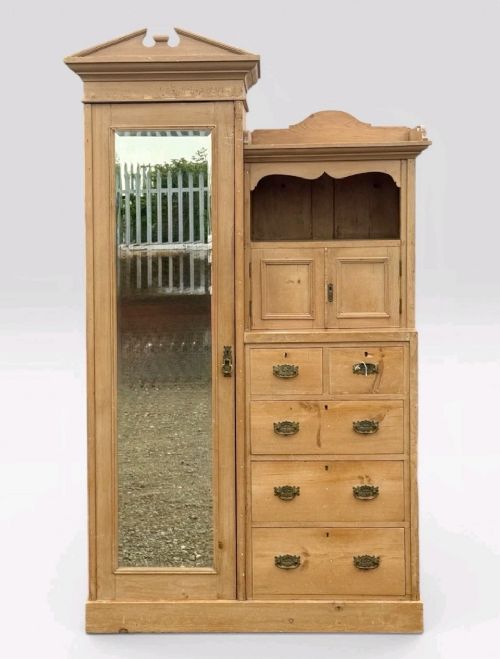


Victorian Chest with Mirror
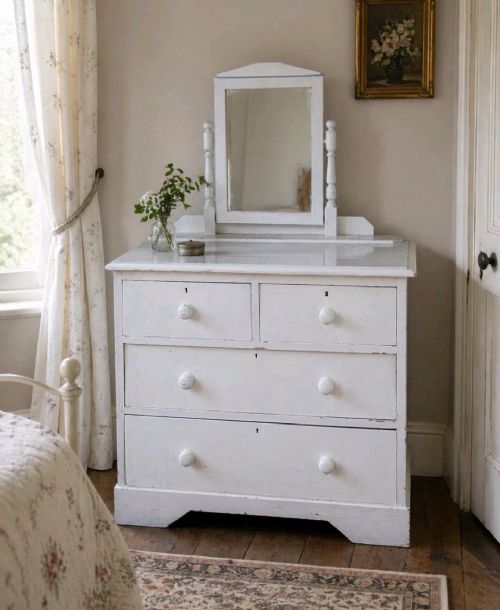
A victorian chest with mirror is a bedroom piece combining drawer storage with an attached swing glass, uniting practicality and display.
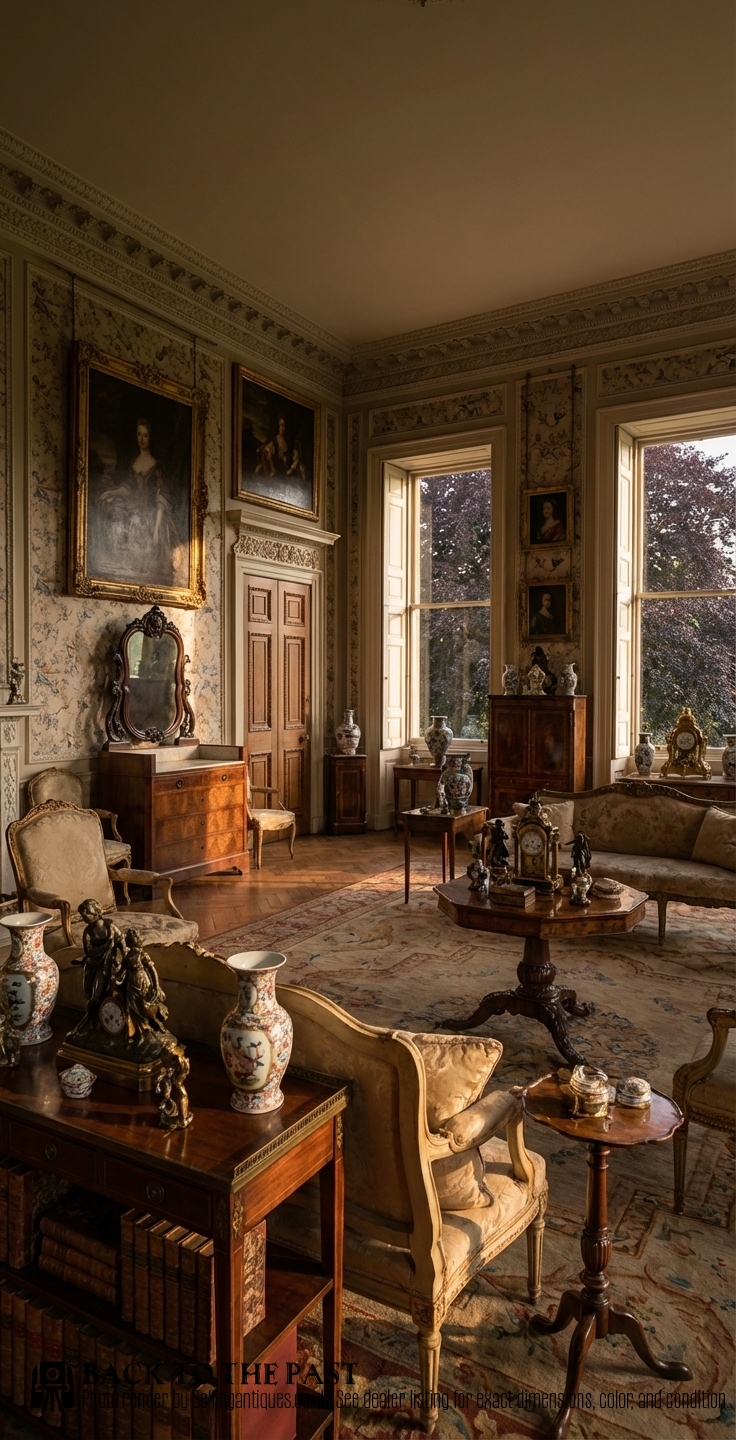
Victorian Chest with Mirror
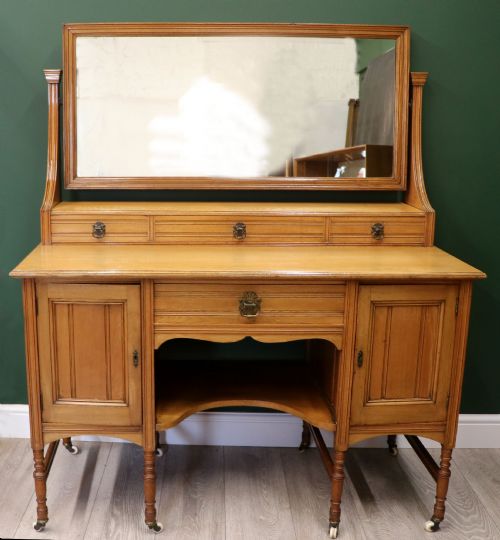
A victorian chest with mirror serves as a primary bedroom furnishing, bringing together timber drawers and a tilting glass plate for daily grooming. These pieces appear in forms ranging from simple pine dressing chests to elaborate burr walnut and mahogany pedestal designs.
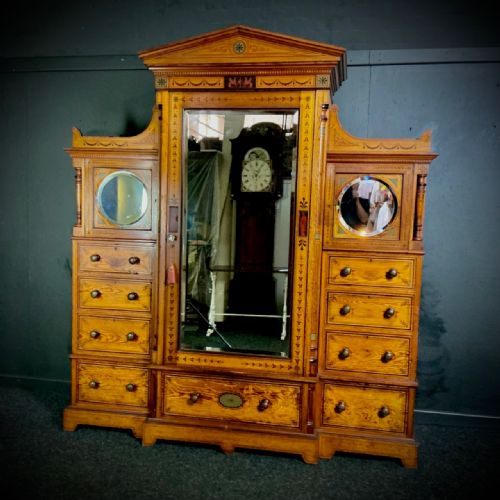
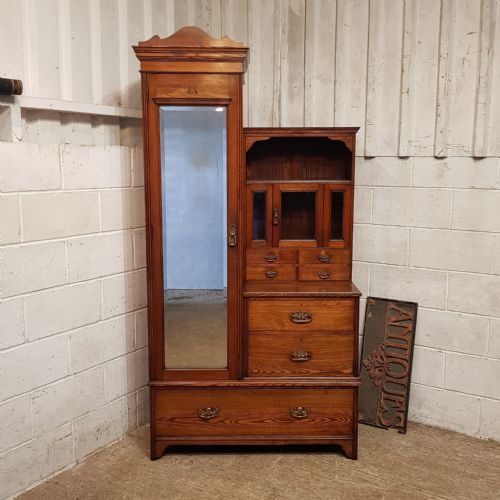
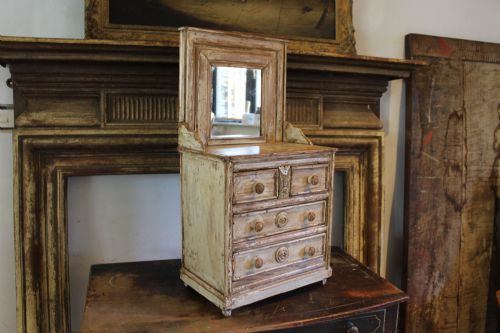
The evidence shows various iterations spanning the nineteenth century and into the Edwardian era, including pieces with candle scones, inlaid decoration, and painted finishes. Alongside dedicated dressing tables, buyers encounter wardrobe combinations and campaign or rustic farmhouse variants.
Originating predominantly in the Victorian period, these items reflect diverse stylistic movements such as Arts and Crafts, Aesthetic Movement, and Rococo Revival. They function equally well as practical storage units and focal points within traditional bedroom interiors.
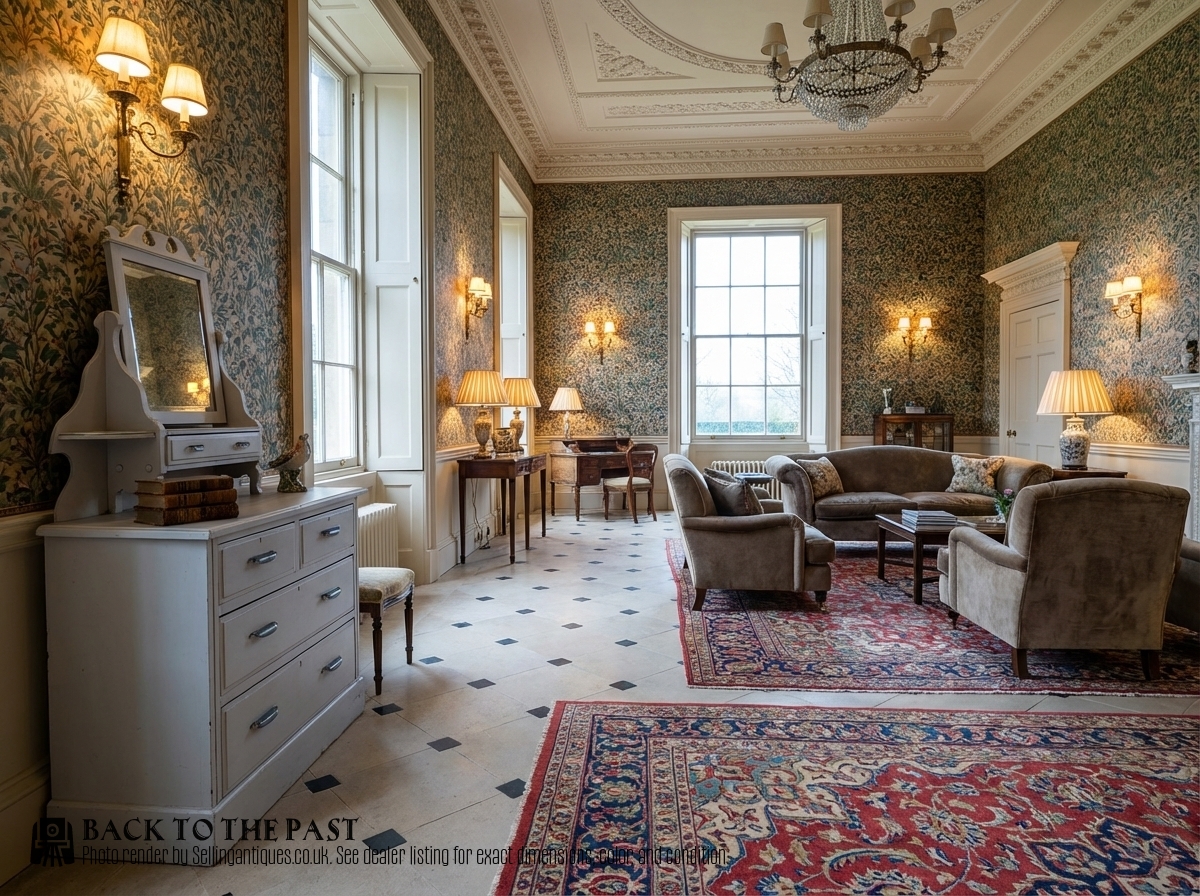
How they were made
Cabinet makers utilised a broad selection of timbers, working extensively in mahogany, walnut, burr walnut, and oak alongside more accessible softwoods like pine. Selected pieces also incorporate decorative veneers of satin walnut, maple, ash, and satinbirch to create rich surface patterns.
Glass forms the central component of the swing mirrors, mounted on pivoting wooden frames often supported by upright arms or superstructure boxes above the main drawers. Brass handles, escutcheons, and candle scones provide functional metalwork details across many surviving examples.
Victorian Chest with Mirror Retail Price Guide 2026
Typical asking prices for victorian chest with mirror among the pieces listed under this phrase on Sellingantiques today, from the lower quarter to the upper quarter. They describe what is for sale here now, not the wider market.
Design styles span from the Victorian period through Arts and Crafts, Aesthetic Movement, and Empire Revival.
What varies in quality
Quality reveals itself through the selection of timber and the sophistication of the cabinet construction, distinguishing modest painted pine from figured burr walnut and mahogany. The handling of decorative elements, such as inlaid banding, stencilled details, and the integrity of original glass, sets superior examples apart.
Proportion and the harmonious integration of the mirror superstructure with the lower chest demonstrate the maker's skill. Pieces exhibiting careful joinery and refined stylistic details from movements like Arts and Crafts represent the upper tier of surviving examples.
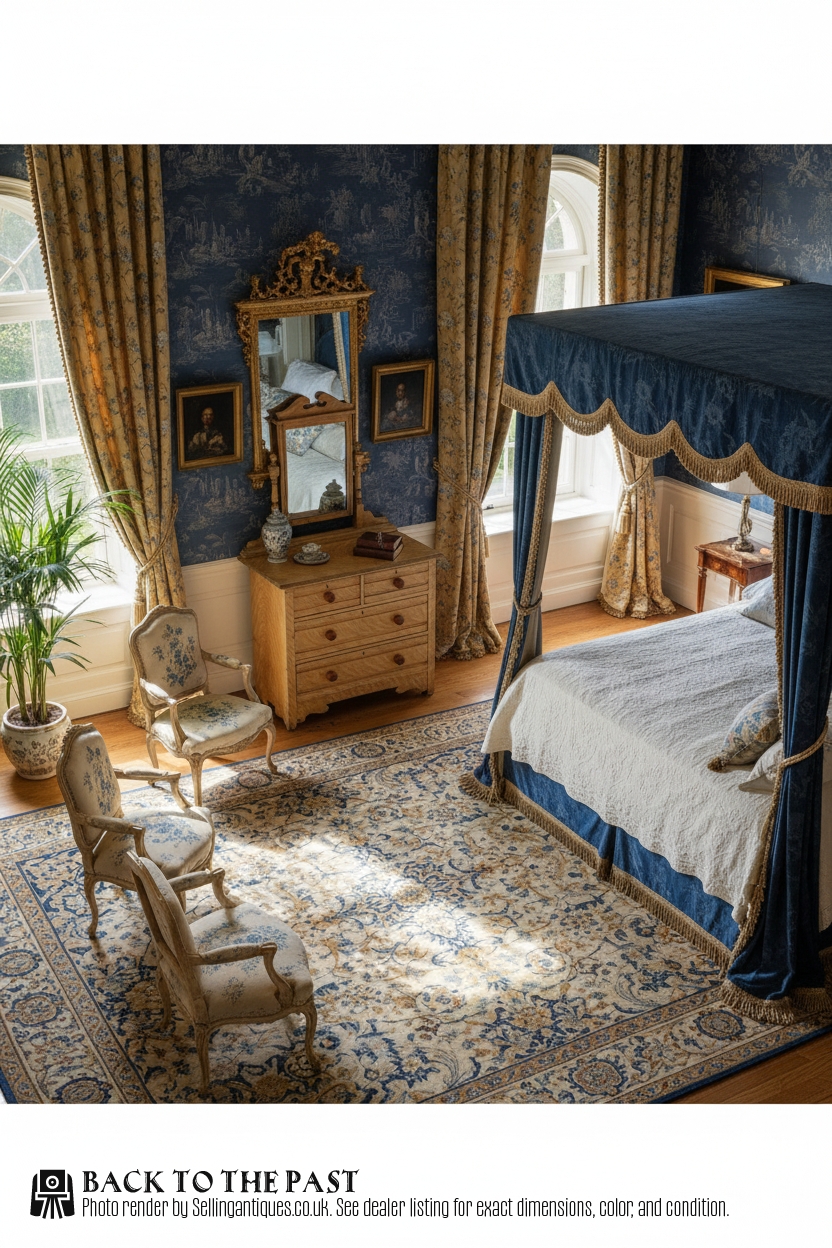
Wright & Hunter of Belfast·Harris Lebus of London
The Victorian Chest with Mirror Glossary
- Swing mirror
- A glass plate mounted within a pivoting frame that tilts to adjust the viewing angle. It is typically supported by upright arms attached to the top of the chest.
- Duchess dressing table
- An elaborate Victorian form featuring a large central mirror flanked by smaller drawers or trinket boxes above a pedestal base.
- Scumble glazed
- A decorative surface technique where a translucent coloured glaze is manipulated over a painted base to imitate the grain of more expensive timber.
- Compactum
- A fitted wardrobe or combination piece designed to maximise internal storage within a relatively compact floor footprint.
- Sentry box
- A tall, narrow wardrobe or combination furniture piece designed to house garments efficiently in limited bedroom spaces.
Victorian Chest with Mirror: Frequently Asked Questions
How do I date a Victorian chest with mirror?
Dating relies on observing timber choices, construction techniques, and stylistic markers recorded in the evidence. Earlier nineteenth-century examples often favour solid mahogany and walnut, while later decades introduce stencilled pine, lighter satinwood veneers, and Arts and Crafts influences.
Hardware styles and mirror frame designs also shift across the period, moving from heavy Rococo Revival flourishes to cleaner geometric lines by the end of the century.
Were these mirrors always attached to the chest?
Most pieces documented in the evidence integrate the mirror superstructure directly into the top of the chest or dressing table structure. Some configurations use side supports resting on the main surface, while others form part of a unified pedestal or combination wardrobe.
This physical connection allowed the furniture to serve dual purposes for storage and dressing without requiring separate wall-mounted looking glasses.
How do I care for antique painted and stencilled finishes?
Painted and stencilled surfaces require gentle dusting with a dry, soft cloth to protect the historic decoration from abrasion. Avoid modern chemical solvents or excessive moisture, which can damage delicate nineteenth-century scumble glazes and painted motifs.
Keeping the furniture away from direct sunlight and stable environmental conditions preserves the original finish and timber integrity over time.