

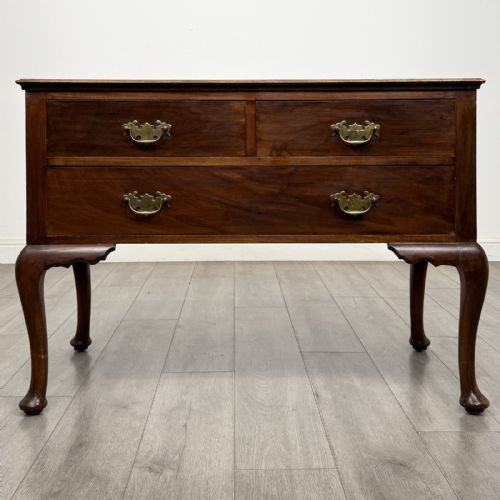
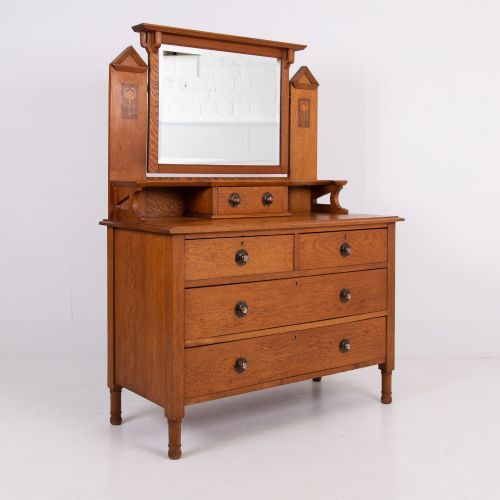
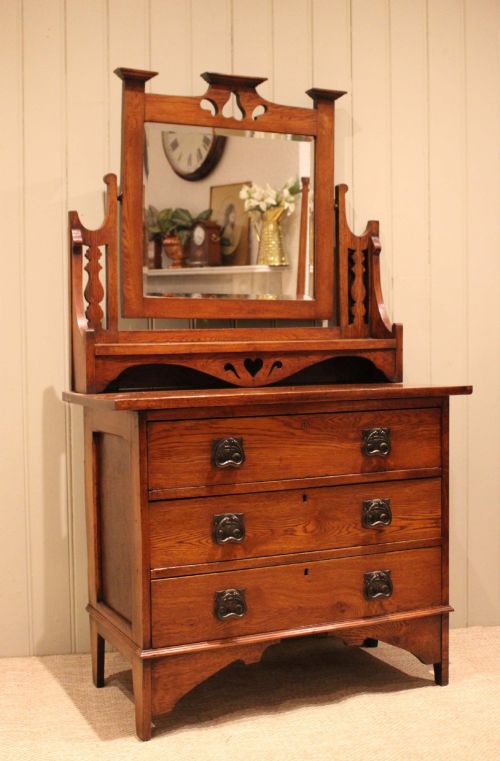

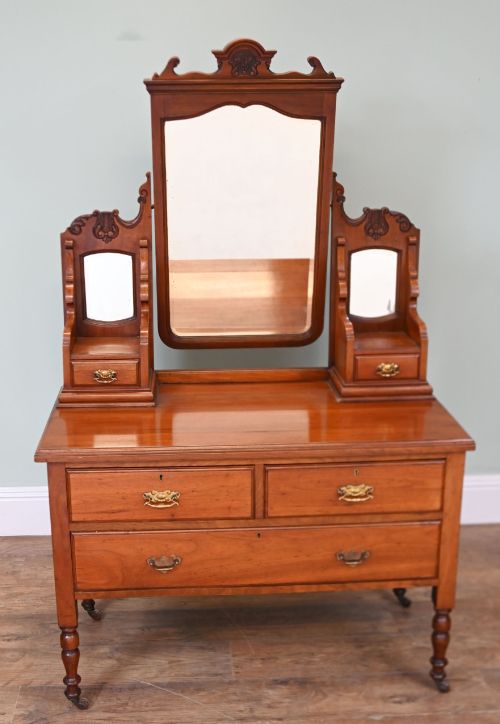
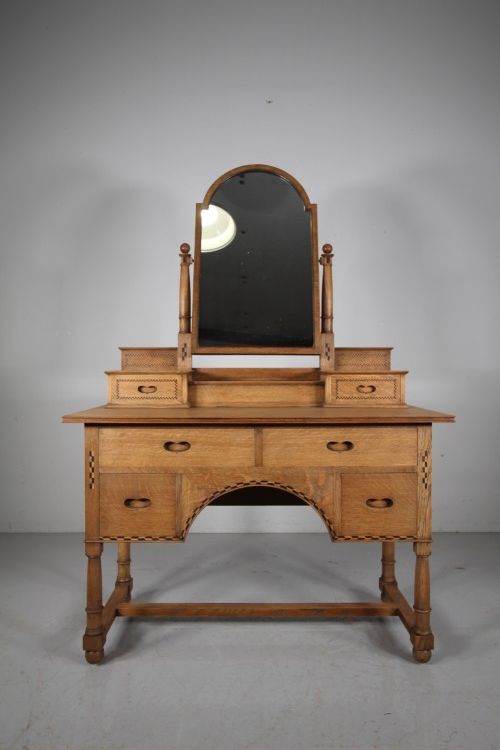


Edwardian Dressing Chest
An edwardian dressing chest combines the practical storage of a chest of drawers with the daily ritual of a mirror-topped vanity.
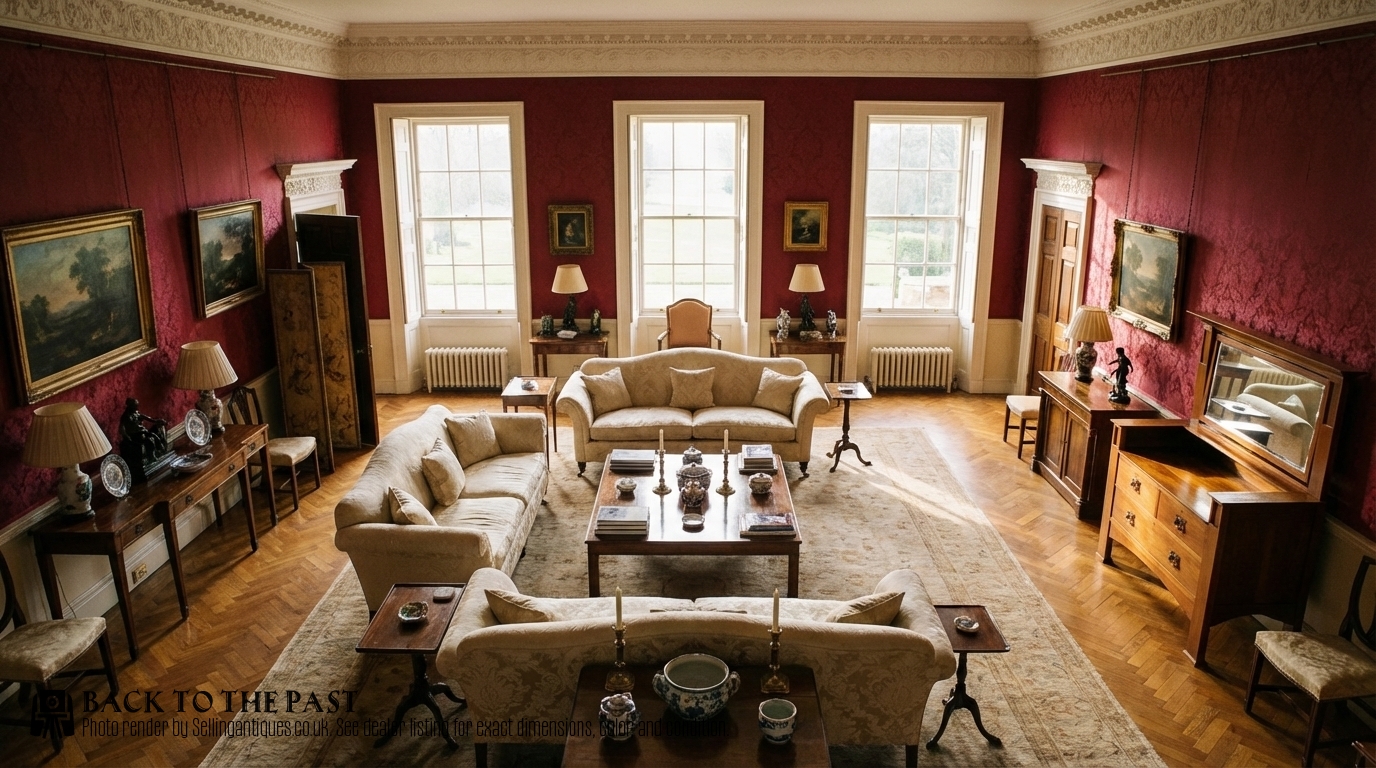
Edwardian Dressing Chest
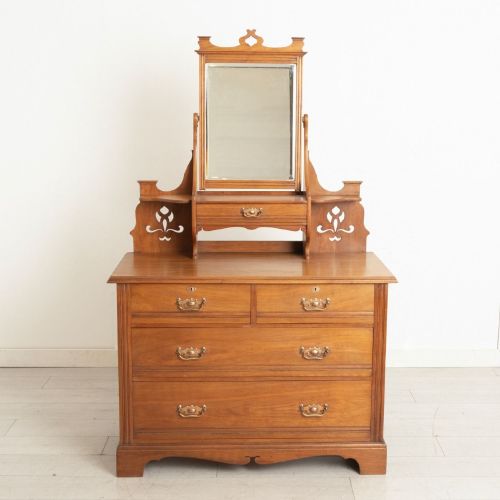
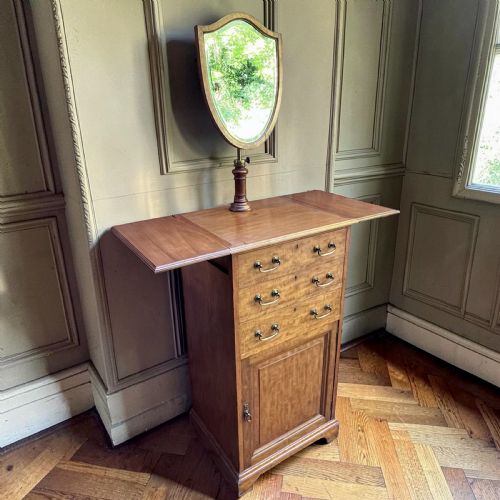
When searching for an edwardian dressing chest, buyers encounter practical bedroom furniture designed to hold garments while offering an integrated mirror for grooming.
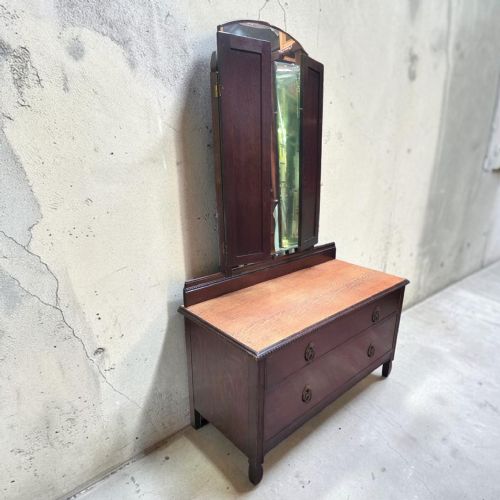
The pieces appearing on this page span the Edwardian period alongside late Victorian and early twentieth-century examples, frequently constructed in oak, mahogany, walnut, and pine.
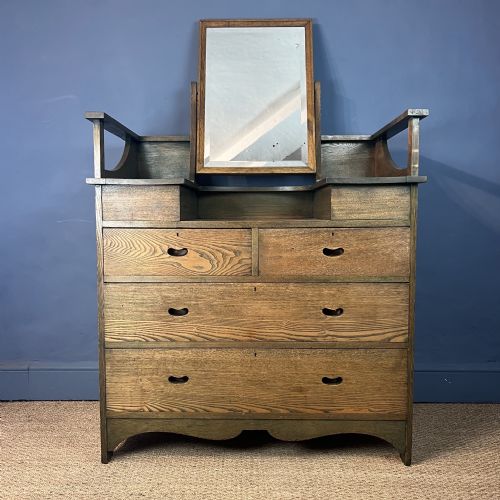
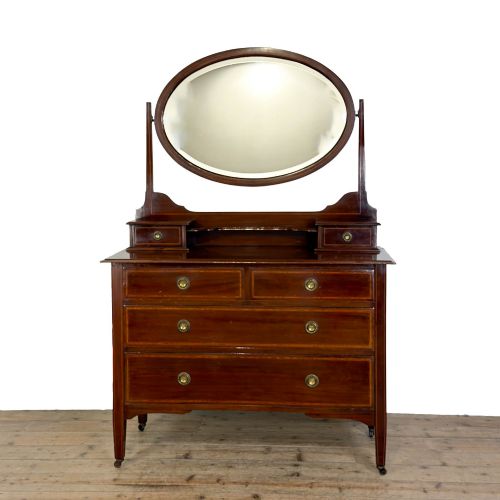
Forms range from simple pine and oak chests fitted with swivel mirrors to elaborate mahogany and satinwood pieces featuring line inlay and multiple drawers.
How They Were Made
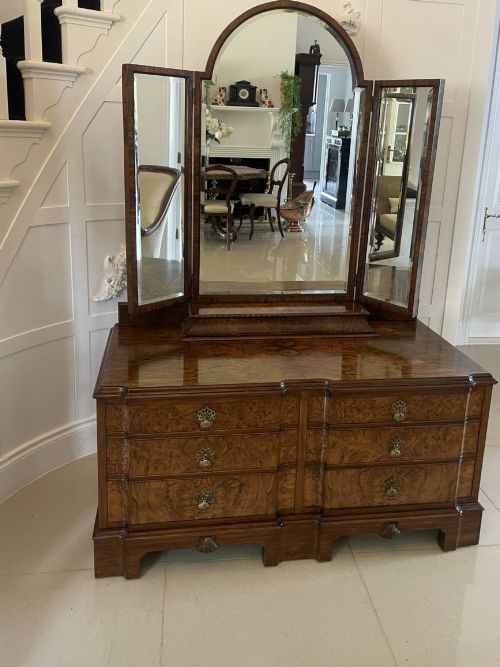
Cabinet makers utilised solid timbers such as oak, mahogany, and walnut, often applying veneers and satinwood inlay to create decorative surface patterns.
Mirrors were set into adjustable frames using brass hardware, allowing users to alter the angle for dressing and grooming.
Edwardian Dressing Chest Retail Price Guide 2026
Typical asking prices for edwardian dressing chest among the pieces listed under this phrase on Sellingantiques today, from the lower quarter to the upper quarter. They describe what is for sale here now, not the wider market.
Listings feature oak, mahogany, walnut, and pine dressing chests spanning the Victorian and Edwardian eras into the 1930s.
What Varies in Quality
Construction methods distinguish standard utility pieces from workshop-designed examples, where timber selection and drawer dovetailing show greater attention to detail.
The integration of the mirror superstructure, the precision of line inlay, and the retention of original brass handles and mirror glass define the upper tier of surviving examples.
Heals of London·Shapland and Petter·Edwards and Roberts·Gillows·Harris Lebus
The Edwardian Dressing Chest Glossary
- Dressing chest
- A low chest of drawers fitted with an upright mirror, designed for bedroom use. It combines drawer storage with a surface for grooming items.
- Cheval mirror
- A full-length mirror hung in a frame that allows it to swing. These units stand independently on tables or floors.
- Inlay
- A technique where pieces of contrasting timber or metal are inserted into depressions in the base wood to form decorative patterns. Line inlay uses thin strips to outline drawer edges.
- Satinwood
- A lustrous timber native to India and Ceylon, used extensively for banding and inlay on late nineteenth and early twentieth-century furniture.
- Dovetail
- A joint used in drawer construction formed by interlocking wedge-shaped fingers, indicating traditional hand or early machine carpentry.
Edwardian Dressing Chest: Frequently Asked Questions
How do I identify an edwardian piece?
Edwardian furniture often displays lighter timbers, subtle line inlay, and simpler lines compared to heavier Victorian designs. Oak, mahogany, and walnut are common materials.
Mirrors are frequently supported by upright arms attached directly to the main chest or a small jewellery tier.
How were these chests used?
Owners stored personal garments, linens, and daily accessories within the drawers while using the mirror for grooming. The small boxes and surface ledgers held brushes and cosmetic containers.
Many examples include small trinket drawers positioned at the base of the mirror frame for smaller items.
Where should I place one at home?
These chests fit well in bedrooms or dressing rooms where their combined drawer space and mirror remain functional. Their varied timber tones suit both traditional and contemporary interiors.
Ensure placement avoids direct sunlight to protect the polished wood surfaces and original mirror glass.