


Period Mahogany Chest
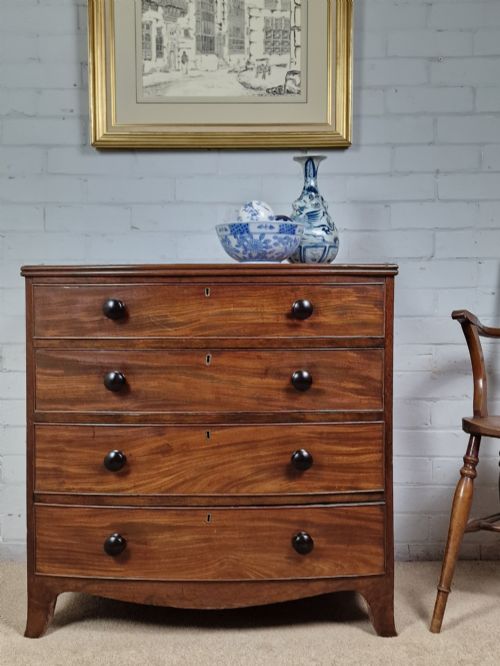
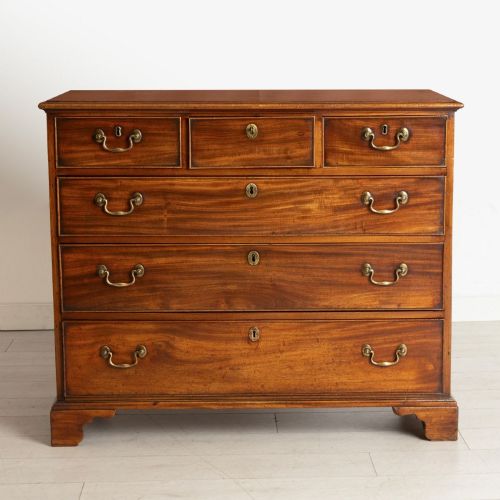
A period mahogany chest brings the rich warmth of Georgian and Regency cabinet-making into a room with understated authority.
Period Mahogany Chest
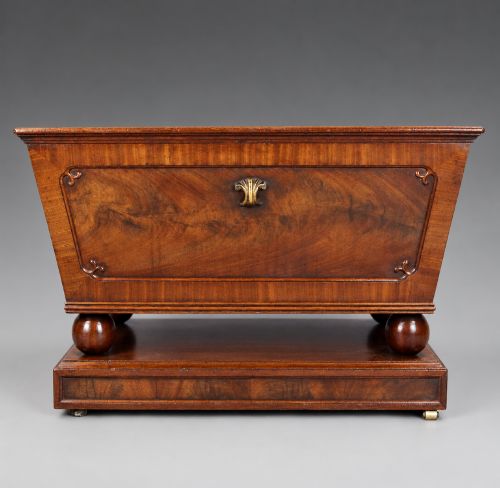
A period mahogany chest is a substantial storage piece built during the Georgian, Regency, or Victorian eras, designed primarily to hold linens or clothing.
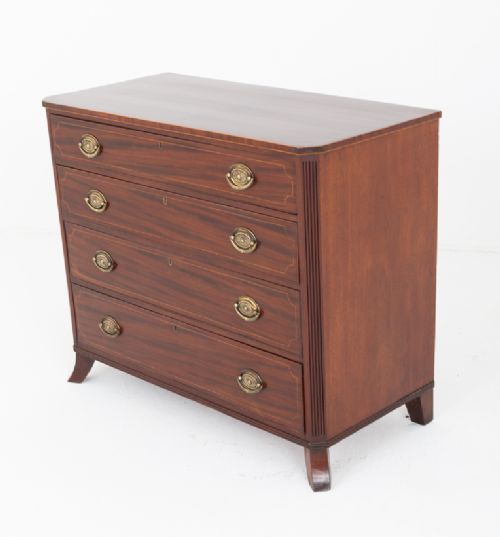
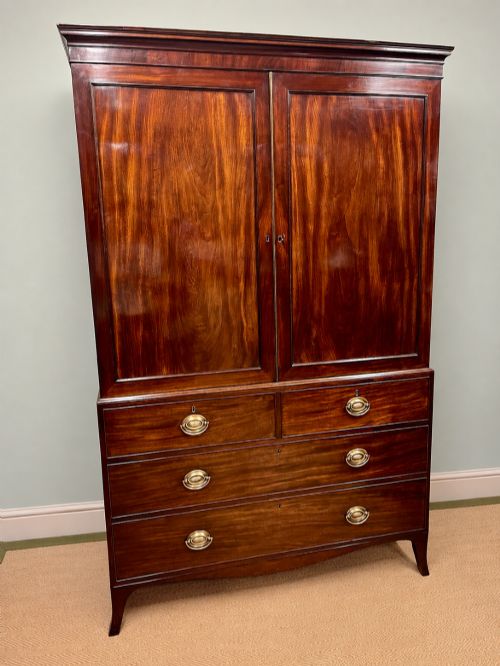
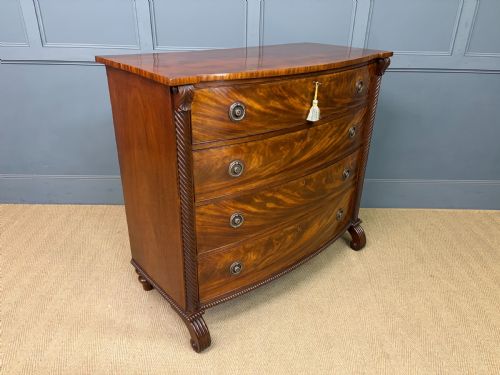
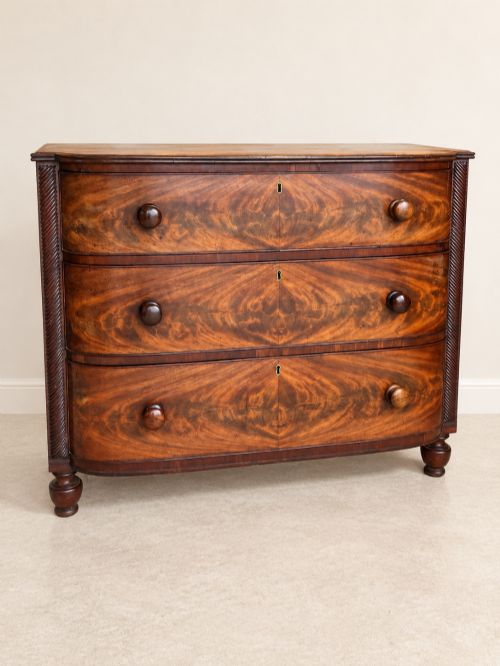
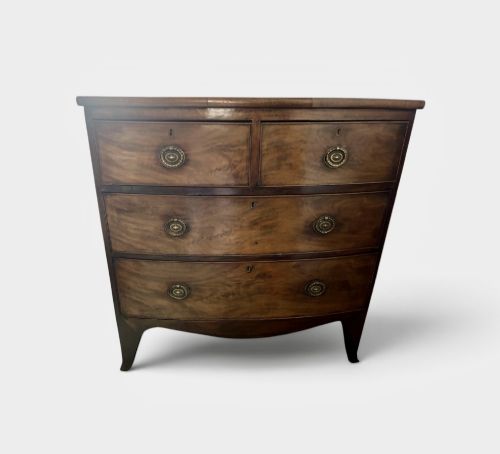
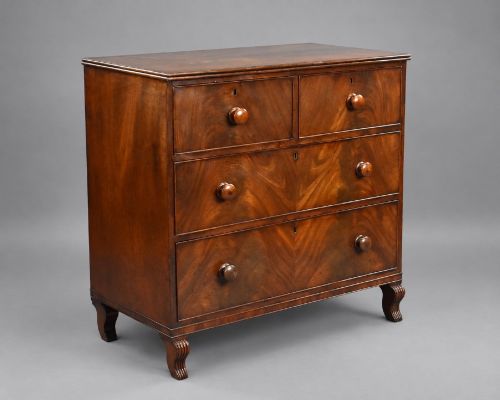
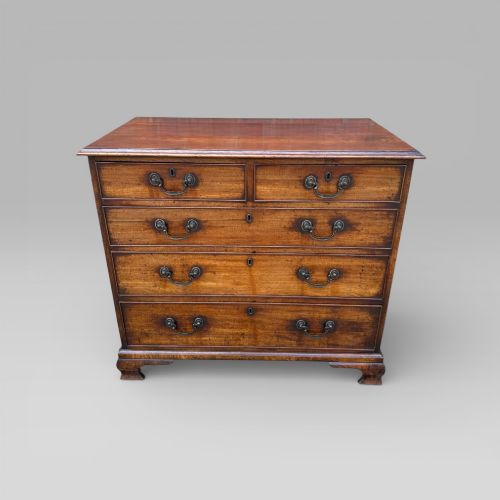
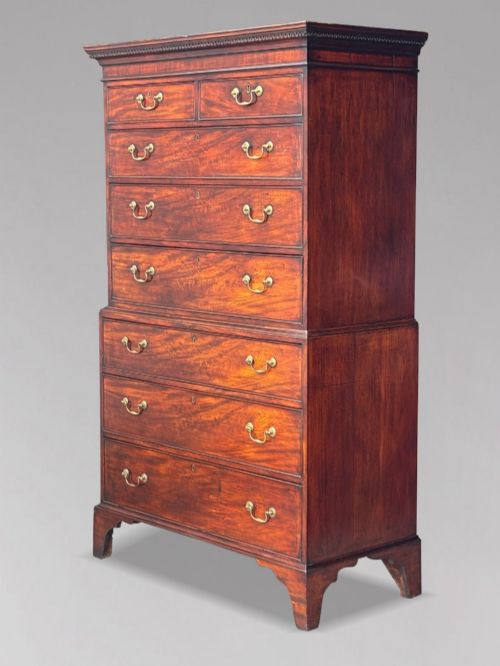
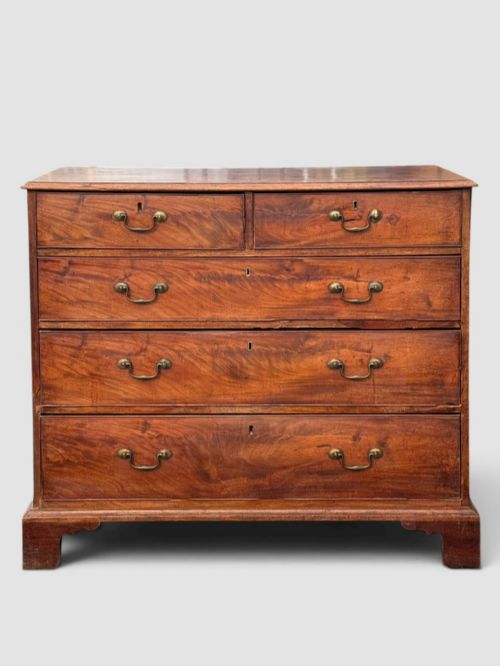
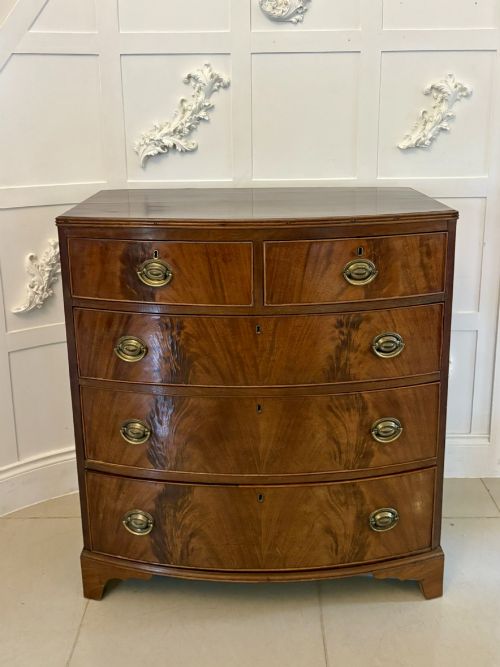
The most common form on this page is the chest of drawers, appearing in straight-front, bow-front, and serpentine shapes alongside taller chest-on-chest and linen press formats.
Originating in British workshops, these pieces range from compact bachelor's chests and hall chests to large case furniture built for principal bedrooms.
How they were made
Cabinet-makers relied on solid mahogany and flame mahogany veneer laid over secondary woods such as oak and pine, often accented with satinwood stringing and brass handles.
Construction techniques involved traditional dovetail joints for the drawer carcasses and frame-and-panel assembly for internal structures, finished with wax to develop a natural patina.
Period Mahogany Chest Retail Price Guide 2026
Typical asking prices for period mahogany chest among the pieces listed under this phrase on Sellingantiques today, from the lower quarter to the upper quarter. They describe what is for sale here now, not the wider market.
Listings span the eighteenth, nineteenth, and early twentieth centuries, incorporating Georgian, Regency, and Victorian design vernaculars.
What varies in quality
Quality rests on the selection of timber, visible in the dramatic figuration of flame mahogany veneers and the consistent grain matching across drawer fronts.
Proportion and scale dictate the tier of a piece, where finer examples display delicate bracket feet, restrained cockbeading, and original brass hardware rather than later replacements.
J Moorcroft·Thomas Chippendale
The Period Mahogany Chest Glossary
- Bow front
- A cabinet front that curves outward in a convex arc, popular during the late eighteenth and early nineteenth centuries. This shape required precise carpentry to ensure drawers operated smoothly along the curved frame.
- Cockbeading
- A narrow rounded moulding projecting around the edges of drawer openings. It protects the drawer edges from impact and adds a refined linear finish to the facade.
- Bracket foot
- A simple structural foot formed by two mitred pieces meeting at a corner, often shaped in ogee or bracket profiles. They support the weight of the chest while lifting the base off the floor.
- Wellington chest
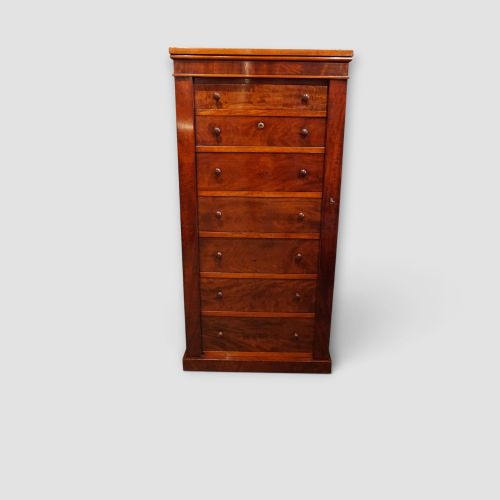
- A tall, narrow chest of drawers secured by a hinged vertical locking flap on one side. Originally designed to keep contents private and secure in gentleman's studies.
- Flame mahogany
- Timber cut from the fork of the mahogany tree where branches join the trunk, producing a rippling, flame-like grain pattern. Cabinet-makers reserved this highly decorative veneer for principal drawer fronts.
Period Mahogany Chest: Frequently Asked Questions
How do I date a mahogany chest?
Dating relies on observing construction methods, timber choices, and hardware styles across different eras. Georgian pieces often feature hand-cut dovetails and oak drawer linings, while Victorian examples introduce machine-sawn elements and different secondary woods.
Secondary indicators include foot style, handle design, and the presence of cockbeading. Comparing these physical traits to established stylistic periods narrows down the decade of manufacture.
What is a bachelor chest?
A bachelor chest is a compact drawer unit featuring a pull-out brushing slide above the main drawers. This folding board served as a writing surface or dressing shelf in smaller bedchambers.
These pieces date predominantly from the eighteenth century and are prized for their versatility and smaller proportions. They combine the storage capacity of a standard chest with an integrated writing desk.
How do I care for antique mahogany?
Maintaining antique mahogany involves feeding the wood with natural beeswax and avoiding synthetic polishes that build up over time. Keeping the piece away from direct sunlight and radiators prevents the timber and veneer from drying out and cracking.
Consistent indoor humidity protects the structural joints and prevents the secondary woods from warping. Gentle dusting with a dry cloth preserves the historic wax finish and patina.
What is a chest on chest?
A chest on chest, or tallboy, is a tall storage unit constructed in two stacked sections, placing a wider chest base beneath a slightly narrower upper chest. This configuration maximises vertical storage space without requiring a larger floor footprint.
Originating in the eighteenth century, these architectural pieces often feature proportioned cornices and graduated drawers. The two-part construction also made them easier to transport up narrow staircases.