



Victorian Twin Pedestal Desk
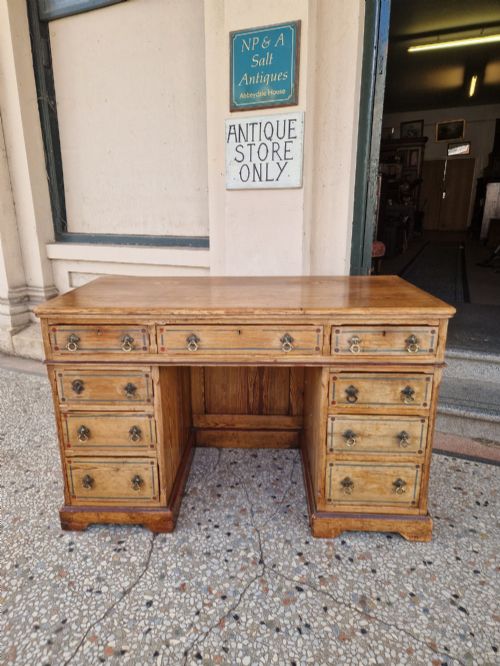
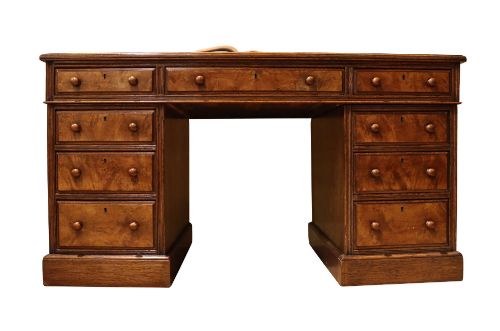
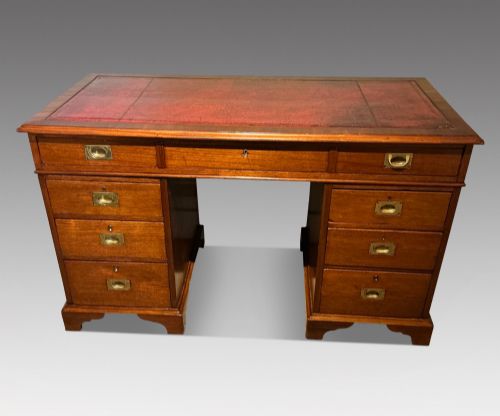
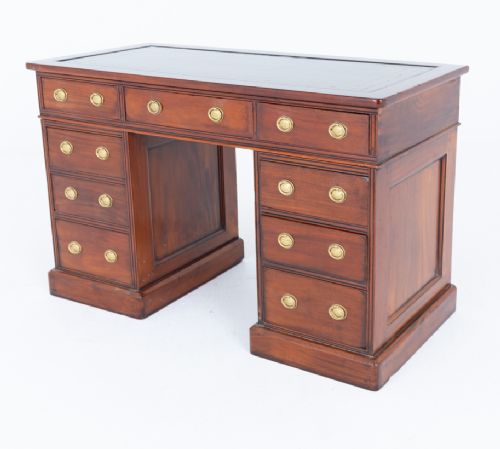
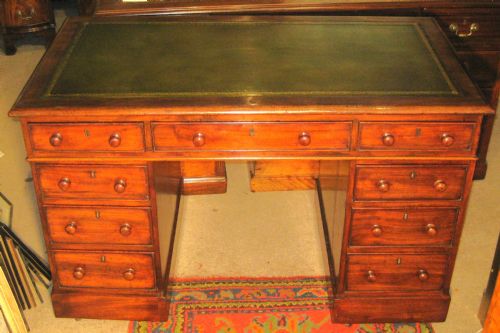
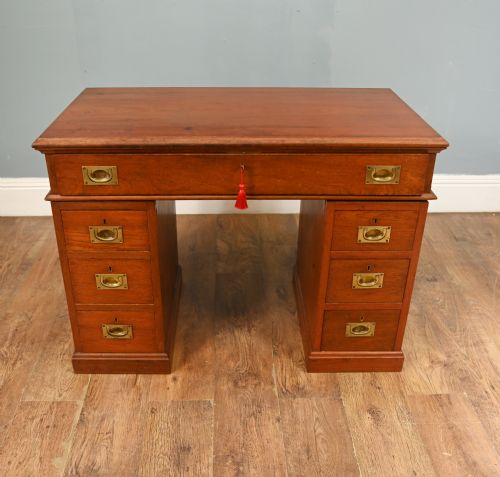
A victorian twin pedestal desk provides a commanding workspace anchored by substantial banks of drawers, uniting practical utility with period character.

Victorian Twin Pedestal Desk
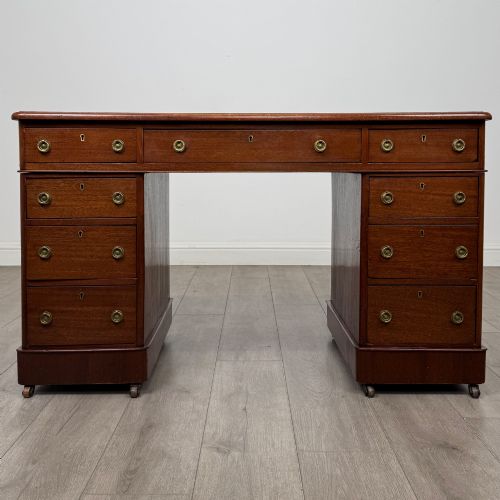
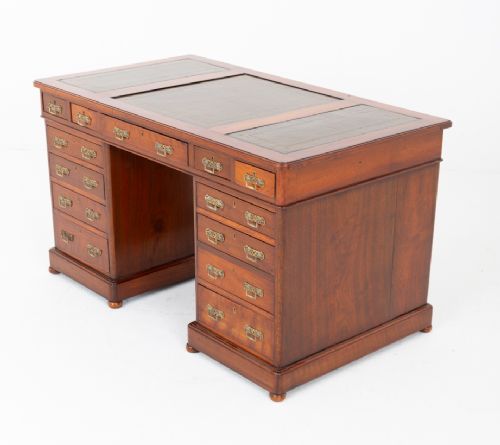
When searching for a victorian twin pedestal desk, buyers encounter robust writing furniture designed with two distinct pedestals supporting a central work surface, typically housing multiple small drawers. The form appears predominantly in nineteenth-century incarnations, spanning decades from the mid Victorian era through to the late Victorian period.
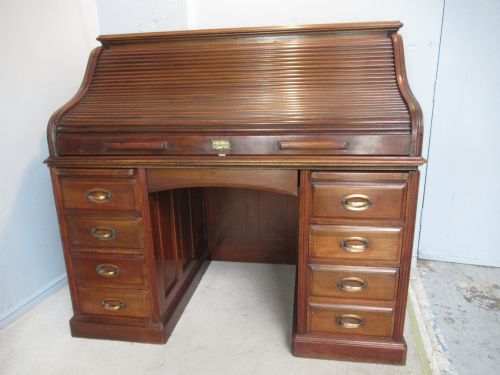
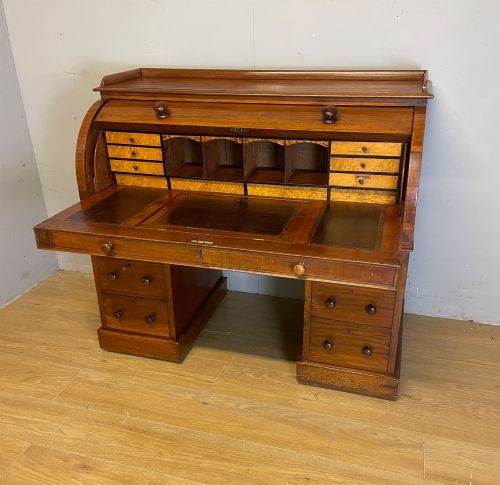
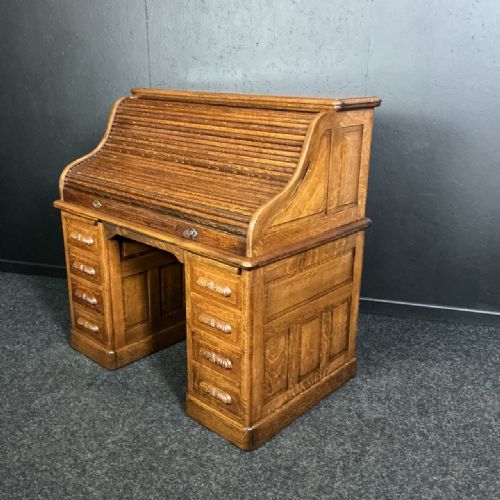
Mahogany forms the mainstay of these pieces, alongside warm burr walnut, golden oak, and pitch pine. Variations range from standard nine-drawer writing tables and partners desks finished on both sides to specialised formats including cylinder desks and roll top variants.
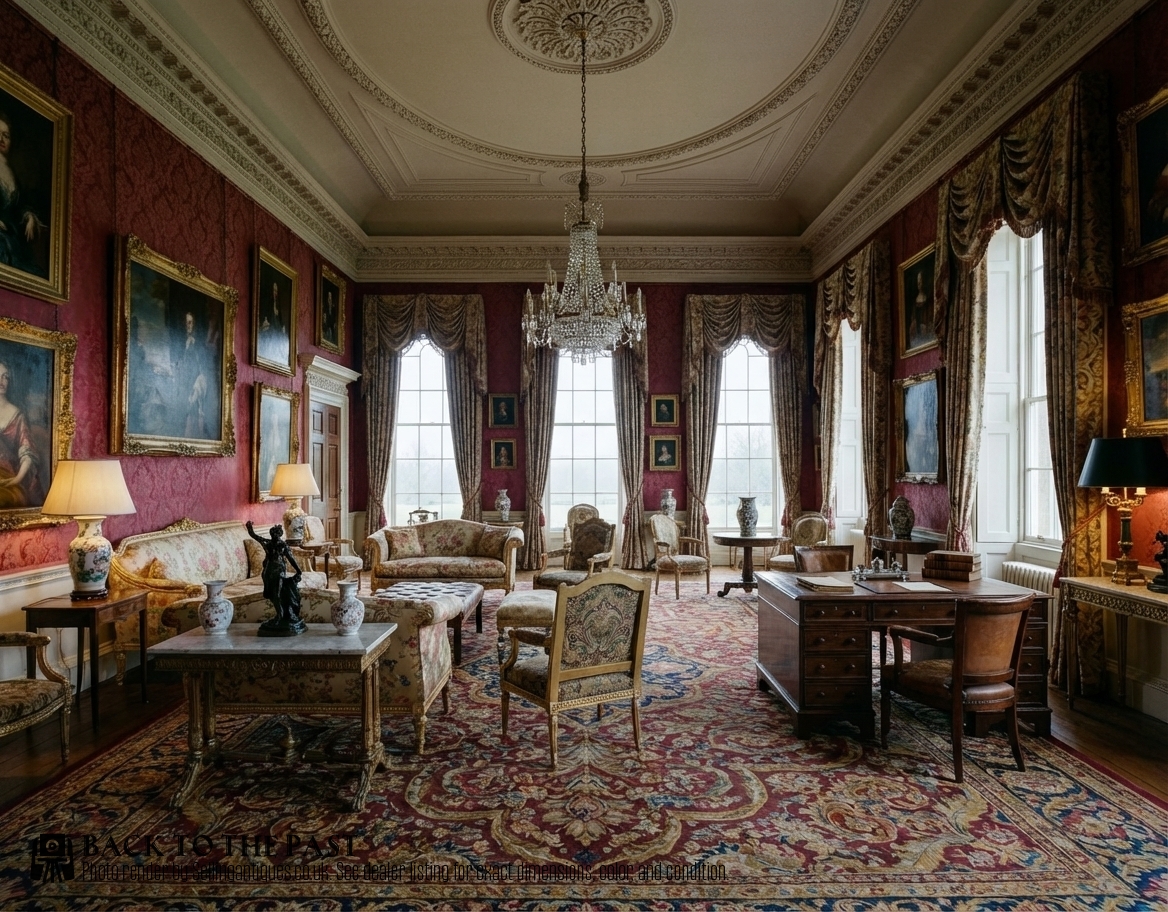
How they were made
Cabinet makers constructed these pieces using solid timbers and select veneers such as flame mahogany and burr walnut, applied to secondary woods to create rich surface figuring. Structural framing relied on traditional joinery methods to support heavy loads of books and papers within the pedestal drawers.
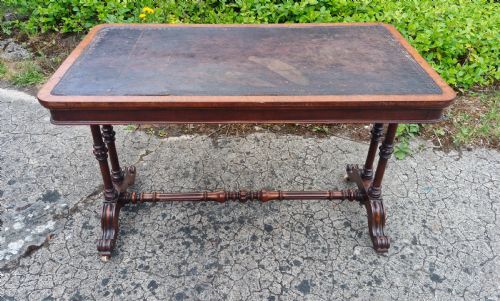
Writing surfaces were frequently inset with hand-tooled leather, often bordered with blind or gilt tooling, while brass hardware such as drop handles and drawer pulls completed the utilitarian construction.
Victorian Twin Pedestal Desk Retail Price Guide 2026
Typical asking prices for victorian twin pedestal desk among the pieces listed under this phrase on Sellingantiques today, from the lower quarter to the upper quarter. They describe what is for sale here now, not the wider market.
The archive demonstrates enduring demand for partners desks alongside compact single-sided writing tables.
What varies in quality
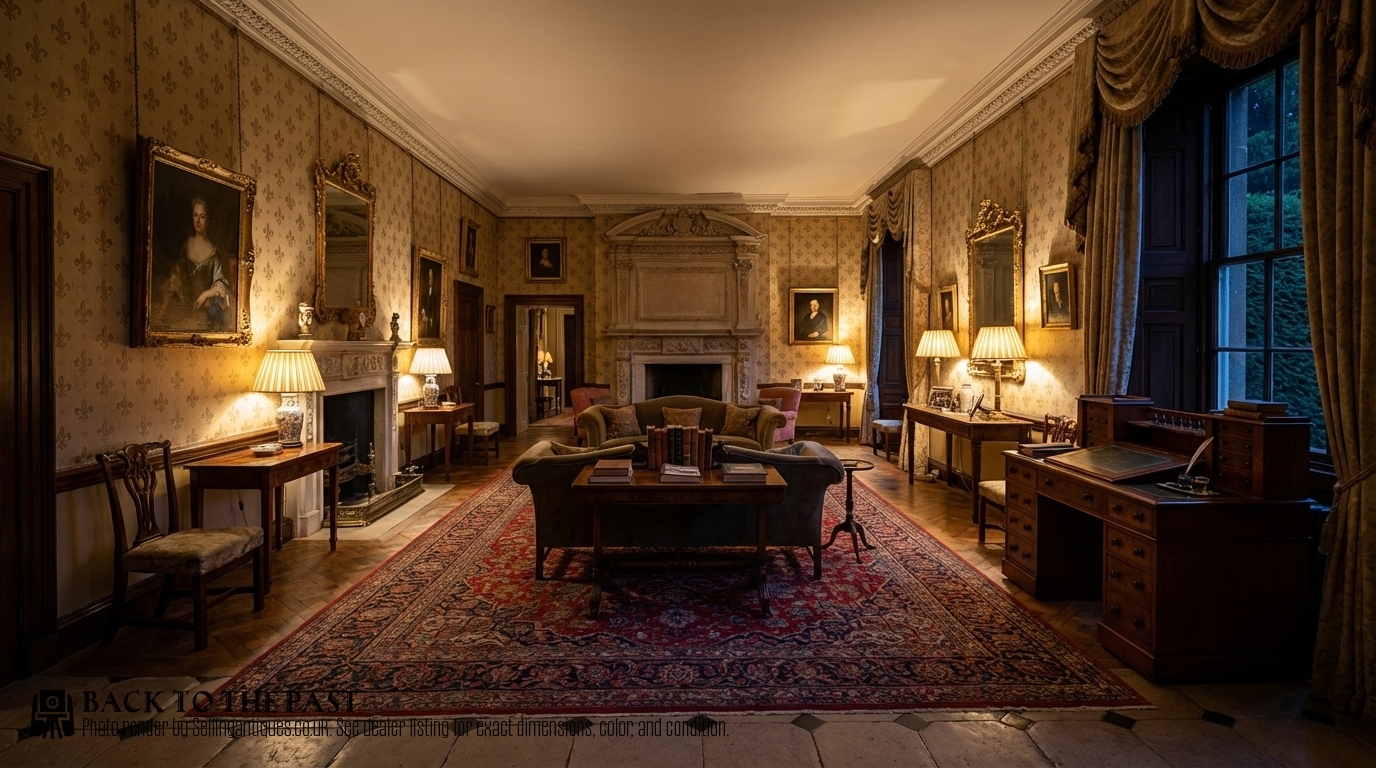
Quality differentiates standard office furniture from exceptional library pieces through the selection of timber veneers and the intricacy of secondary detailing. Superior examples exhibit matched grain patterns across the drawer fronts and thoughtful proportions that balance the bulk of the pedestals.
Internal construction standards also separate grades, visible in the use of solid drawer linings, finely cut dovetail joints, and original operational locks equipped with working keys.
Edwards & Roberts·Druce & Co.
The Victorian Twin Pedestal Desk Glossary
- Pedestal
- A structural support column containing a vertical stack of drawers. Two such units support the main writing surface.
- Partners desk
- A large double-sided desk designed for two people to work opposite one another, featuring drawers on both faces.
- Burr walnut
- A highly figured wood grain obtained from the wart-like growths on walnut trees, prized for decorative veneer work.
- Dovetail
- A traditional interlocking woodworking joint used to construct sturdy drawer boxes without mechanical fasteners.
- Tambour
- A flexible shutter formed of narrow strips of wood glued to canvas, allowing roll-top desks to open smoothly.
Victorian Twin Pedestal Desk: Frequently Asked Questions
How do I use a partners desk?
A partners desk is built to be accessed from both sides, featuring matching sets of drawers or cupboards facing each other. This allows two people to sit opposite and work independently.
Positioning the piece centrally within a room rather than against a wall lets you appreciate the finished aesthetic from all angles while preserving its original dual-sided function.
What is a Dickens desk?
A Dickens desk incorporates a raised superstructure of small pigeonholes and drawers positioned above the main writing platform, often with a sloped lid. This layout offered extensive vertical sorting space for correspondence.
The elevated compartments allowed nineteenth-century writers to organise reference materials and letters while keeping the central leather writing plane clear.
How do I care for leather desk tops?
The leather writing surface benefits from gentle dusting and occasional conditioning with specialised leather balms to prevent drying and cracking. Avoid using harsh chemical cleaners that can strip the original hand-dyed finish.
Protecting the surface from excessive moisture and direct sunlight helps maintain the integrity of the gilt tooling and the supple texture of the hide.
How do I date a pedestal desk?
Dating relies on observing wood choices, construction traits, and hardware styles across different nineteenth-century decades. Mid-century examples often favour solid mahogany, whereas later Victorian iterations frequently showcase burr walnut or oak.
Examine the drawer construction for hand-cut dovetails and inspect the locks and handles for manufacturing clues that align with the period.