



Antique Scottish Bedroom Furniture
Antique Scottish bedroom furniture brings substantial timbers and distinct regional lines into domestic spaces, offering solid storage and dressing pieces with strong regional character.
Antique Scottish Bedroom Furniture
Antique scottish bedroom furniture encompasses a robust range of storage and dressing forms designed for sleeping quarters. Buyers navigating this category encounter substantial chests of drawers, substantial wardrobes, and dressing tables originating from northern workshops. The selection leans heavily into nineteenth-century production alongside earlier revivals.
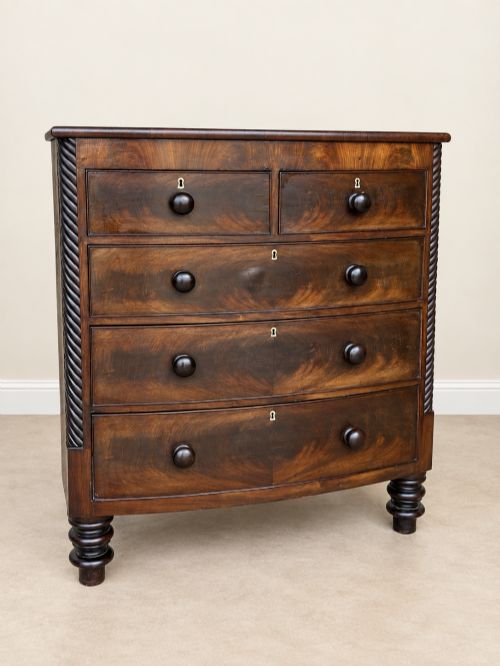
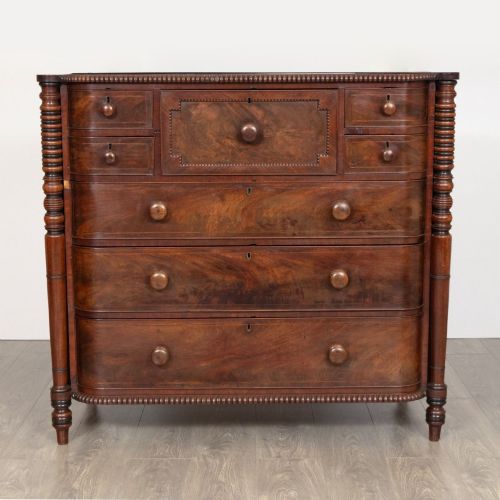
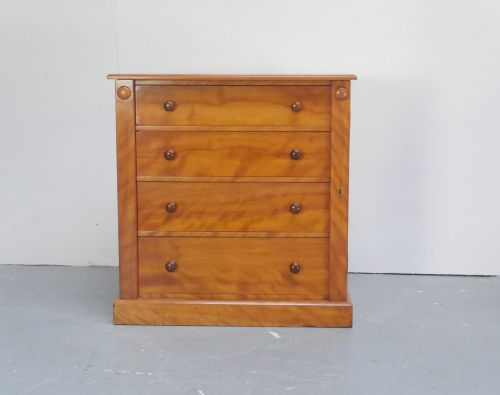
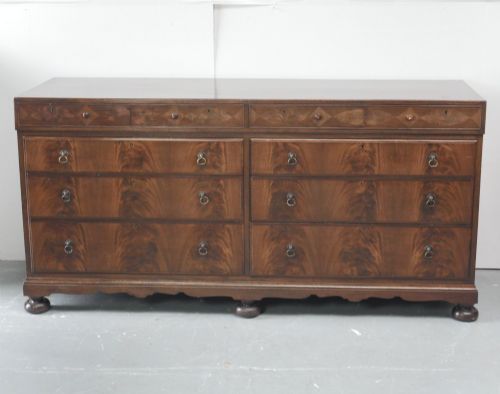
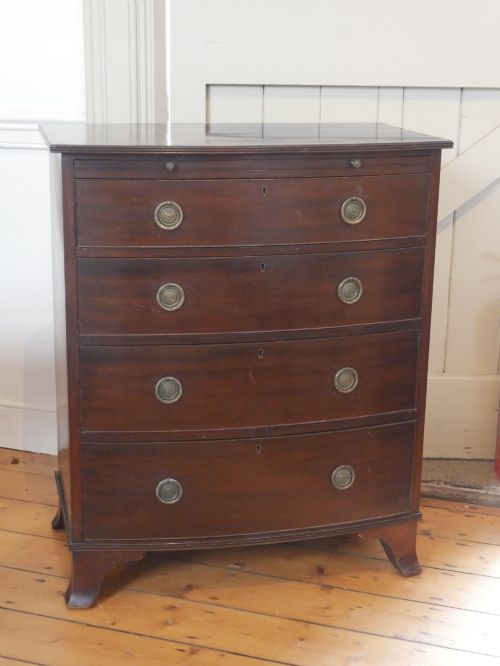
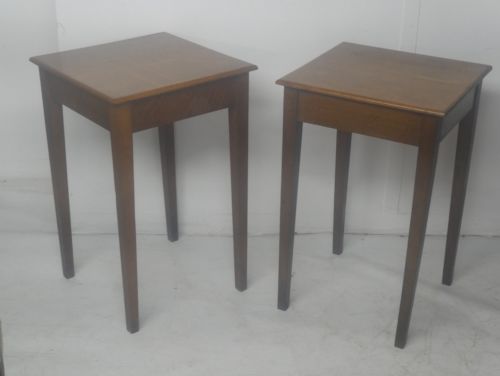
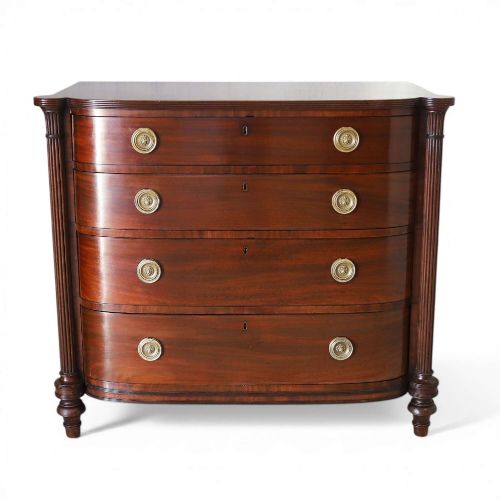
The chests of drawers form the backbone of the selection, frequently appearing in bow front and serpentine shapes. Pieces range from large flame mahogany formats to neat proportions and specialised configurations like gentleman sporran chests. Alongside these, buyers find occasional tables, gossip chairs, and vanity dressing tables in various regional styles.
Origins span vernacular country pieces to sophisticated metropolitan cabinet work from Edinburgh and beyond. Makers such as Whytock & Reid and John Taylor of Edinburgh represent the finer end of this spectrum, utilising rich local woods. The Victorian era contributes heavily to the inventory through massive flame mahogany carcases.
Materials and construction methods
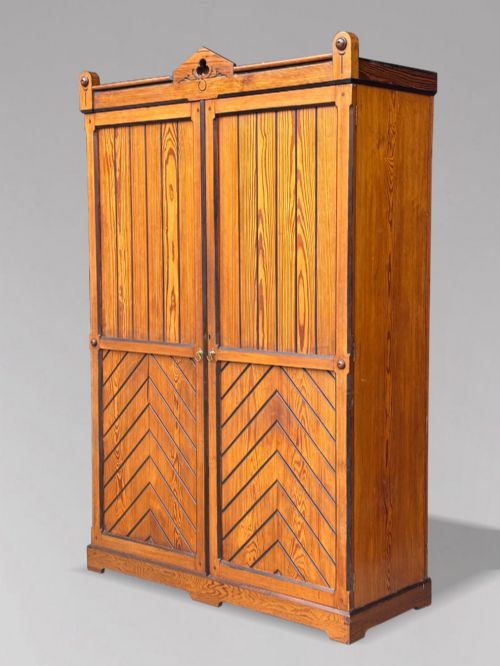
Cabinetmakers utilised heavy native and imported timbers, relying primarily on mahogany, flame mahogany veneer, oak, and pine. Pitch pine and satinwood also appear in specific regional contexts, particularly within nineteenth-century dressing tables and wardrobes. These timbers provided the dense, durable foundation required for substantial domestic storage.
Veneering techniques played a central role in surface decoration, particularly the application of figured flame mahogany across drawer fronts. Solid oak and pine served structural roles and simpler vernacular pieces, while brass hardware provided functional handles and mounts. Joinery methods reflect traditional cabinetmaking standards appropriate to each period.
Antique Scottish Bedroom Furniture Retail Price Guide 2026
Typical asking prices for scottish bedroom furniture among the pieces listed under this phrase on Sellingantiques today, from the lower quarter to the upper quarter. They describe what is for sale here now, not the wider market.
The listings here span the eighteenth, nineteenth, and early twentieth centuries, incorporating Victorian, Edwardian, and Arts and Crafts design movements.
Assessing quality in regional pieces
Quality rests upon the selection of timber veneers and the crispness of execution in regional details. Superior examples display carefully matched flame mahogany grain across multiple drawers and refined execution of serpentine or bow fronts. Simpler vernacular pine pieces rely on honest construction and sturdy proportions rather than decorative veneer work.
The integrity of secondary woods and internal drawer construction distinguishes high-workshop output from standard commercial production. Maker attribution, such as documented pieces from Edinburgh firms, elevates the standing of individual items. Proportion and the survival of original brass fittings further separate ordinary items from exceptional survivors.
Whytock & Reid·R H & J Simpson·John Taylor of Edinburgh
The Antique Scottish Bedroom Furniture Glossary
- Bow front
- A cabinet front that curves outward in a convex shape. This profile appears frequently on nineteenth-century chests of drawers.
- Flame mahogany
- Mahogany timber cut to reveal a highly figured, flame-like grain pattern. Cabinetmakers utilised this veneer on prominent surfaces like drawer fronts.
- Serpentine front
- A furniture front characterised by a central convex curve flanked by concave sweeps. This shape demands high skill in planning and construction.
- Vernacular
- Everyday objects made by local craftsmen following regional traditions rather than high-style metropolitan fashions. These pieces often employ native timbers like pine and oak.
- Satinwood
- A durable, yellowish wood used for fine furniture and decorative veneers. It appears on grand nineteenth-century dressing tables.
Antique Scottish Bedroom Furniture: Frequently Asked Questions
How do I identify Scottish chests of drawers?
Scottish chests often display distinctive proportions, deep top drawers, and regional cabinetmaking traits that differentiate them from English equivalents. Local woods and specific drawer configurations provide further clues to their northern origin.
Examination of the interior construction and secondary timbers confirms the workshop practices typical of Scottish cabinetmakers during the nineteenth century and earlier periods.
What is a sporran chest?
A gentleman sporran chest is a specialised storage piece designed for accessories and smaller garments. These items feature compartmentalized interior arrangements tailored to specific items of attire.
They represent the more unusual forms found within nineteenth-century Scottish bedroom collections, combining practical storage with distinctive regional utility.
Where were these pieces made?
Production occurred across Scotland, ranging from urban workshops in Edinburgh to rural vernacular cabinetmakers. Major firms operated alongside regional carpenters who supplied local households.
City makers utilised expensive imported veneers like mahogany and satinwood, while country makers frequently worked with native oak and pine.
How should I care for flame mahogany?
Flame mahogany surfaces require consistent indoor humidity levels and protection from direct sunlight to prevent veneer drying. Regular dusting with a soft cloth maintains the polished finish without chemical buildup.
Avoiding excessive moisture and extreme temperature shifts preserves the delicate grain patterns on these nineteenth-century drawer fronts.