

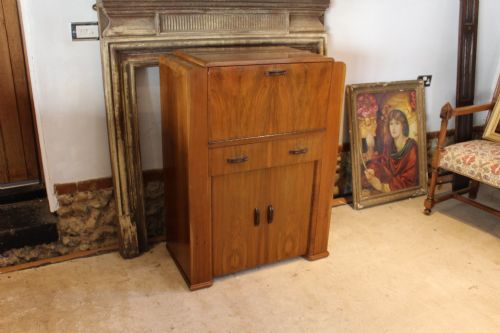

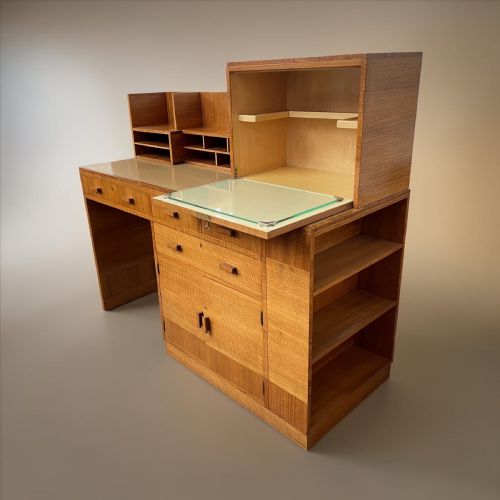


Art Deco Office Furniture
Art deco office furniture brings together bold geometric forms and rich timbers to create workspaces with genuine architectural presence.
Art Deco Office Furniture
Art deco office furniture encompasses desks, bureaus, and filing cabinets produced primarily during the 1920s and 1930s. These pieces combine functional workspace requirements with the sleek, modern aesthetic characteristic of the period.
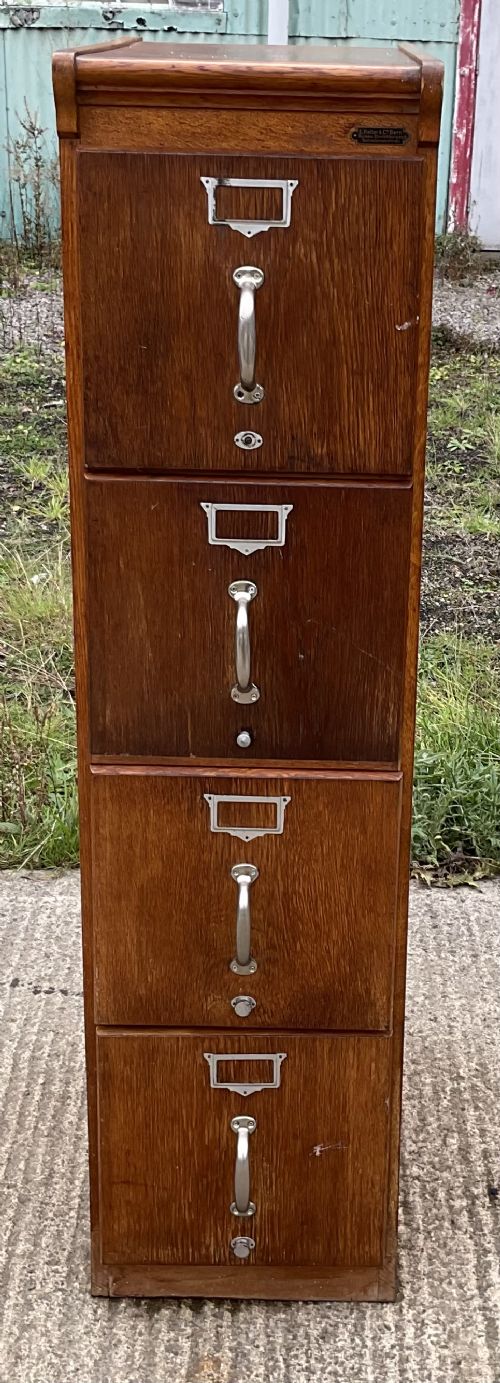
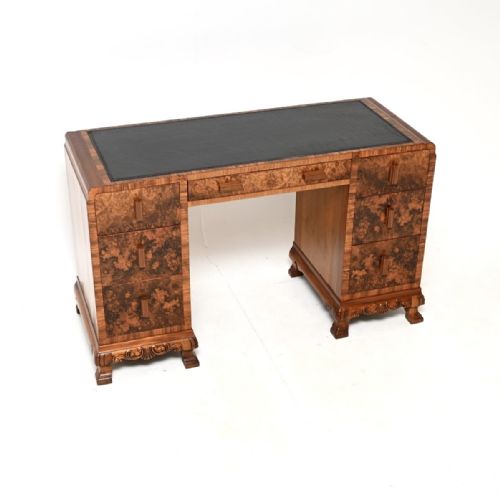
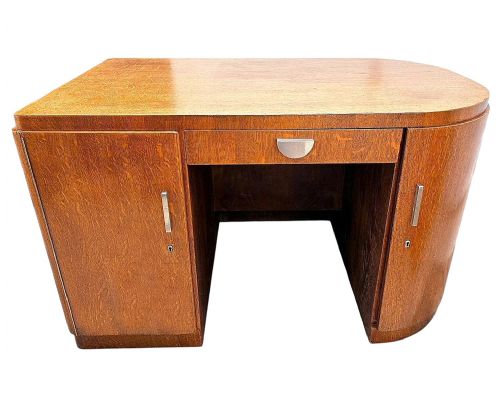
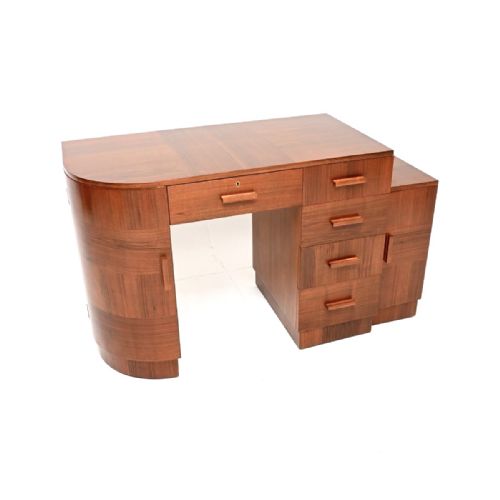
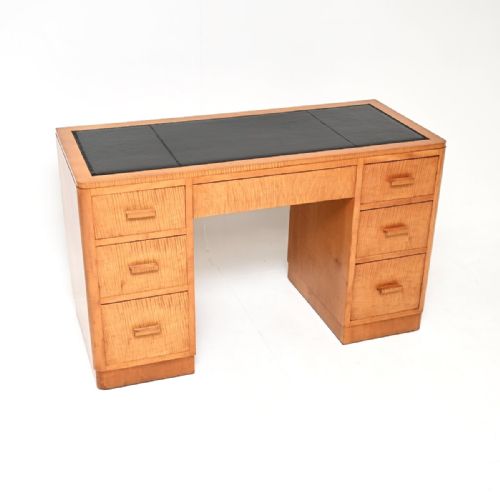
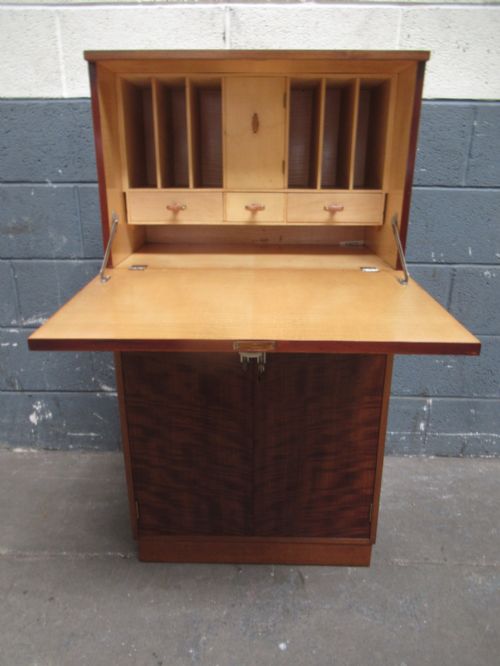
Pedestal desks and leather top writing tables form the core of what is available. Pieces range from large D-end executive desks to compact bureaus and oak filing cabinets.
Origins include English workshops and Scandinavian makers, reflecting international design movements of the interwar years. Walnut, oak, and birch are the dominant timbers encountered in these working environments.
How they were made
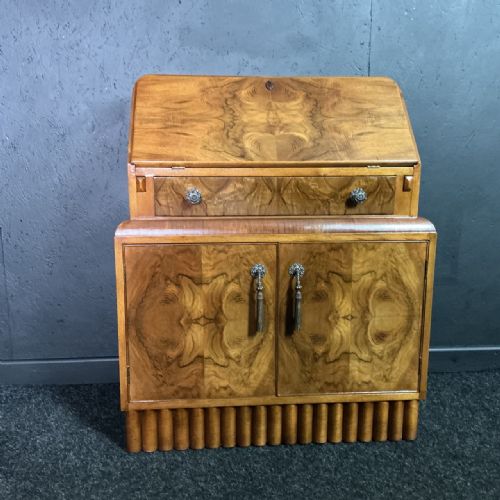
Construction relies on solid timbers and applied veneers such as burr walnut, satin birch, and plain oak over sturdy carcases. Leather inserts are frequently integrated into the writing surfaces of desks.
Metal and chrome elements appear alongside traditional woodwork to create the characteristic industrial and modern finish of the era. Tambour fronts on filing cabinets demonstrate specialised sliding slat joinery.
Art Deco Office Furniture Retail Price Guide 2026
Typical asking prices for art deco office furniture among the pieces listed under this phrase on Sellingantiques today, from the lower quarter to the upper quarter. They describe what is for sale here now, not the wider market.
The documented pieces span production dates from 1910 through 1930.
What varies in quality
The choice of veneer grain and timber selection dictates the visual impact of each piece, with figured burr walnut and satin birch sitting at the higher end of the range compared to standard oak. The presence of documented maker attributions elevates the standing of a desk significantly.
The integration of secondary materials like chrome hardware and fitted leather writing surfaces demonstrates the level of craftsmanship invested in the original commission. Clean structural lines and balanced proportions separate bespoke workshop productions from standard commercial output.
F.H. Marshall & Co Glasgow·Heal's·Betty Joel·Maurice Adams
The Art Deco Office Furniture Glossary
- Pedestal desk
- A heavy freestanding desk supported by two banks of drawers or cupboards beneath the work surface. This form provides substantial storage alongside a central writing space.
- Burr walnut
- A highly figured timber veneer taken from the growth excrescences of walnut trees. It creates complex, swirling patterns across desk tops and drawer fronts.
- Satin birch
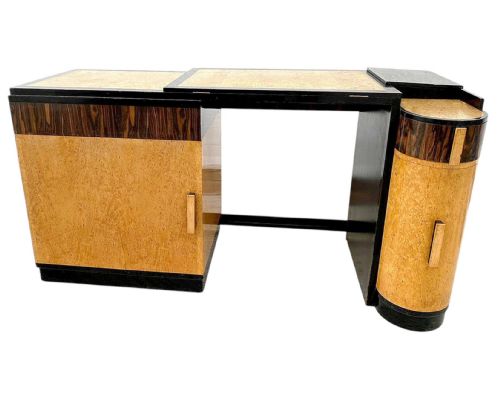
- A pale, lustrous timber utilised extensively in modernist furniture for its bright reflective surface. It provides a sharp contrast to darker woods.
- Tambour front
- A flexible door constructed from narrow strips of wood glued to a canvas backing, allowing it to slide smoothly around a curved track on cabinets and bureaus.
- D end
- A desk configuration where one or both ends of the writing surface are rounded in the shape of a semi-circle. This shape softens the profile of large office tables.
Art Deco Office Furniture: Frequently Asked Questions
What defines art deco office furniture?
Art deco office furniture is characterised by clean geometric lines, streamlined forms, and the use of modern materials alongside traditional timbers. Pieces from this era reject Victorian clutter in favour of functional elegance.
Desks and bureaus from this period often feature contrasting veneers, chrome details, and leather writing surfaces designed for executive and domestic studies alike.
Are tambour front cabinets durable?
Tambour front filing cabinets utilise a series of narrow wooden slats attached to a flexible backing, allowing the door to slide around a curved track into the cabinet body. This mechanism was designed to save space in busy offices.
Properly maintained slat systems operate smoothly, though the hidden backing tracks require occasional inspection to ensure the slats do not bind during movement.
How should I care for leather top desks?
Leather writing surfaces benefit from regular dusting and occasional treatment with appropriate leather balms to prevent drying and cracking. Keeping these inserts away from direct sunlight preserves the original dye and tooling.
When writing on older leather tops, using a blotter or pad prevents accidental impressions from heavy ballpoint pens.
What is satin birch furniture?
Satin birch is a pale, fine-grained timber that was favored by modernist designers for its bright, reflective quality. It brings a sense of light and space to office interiors.
Pieces made from this wood often rely on unadorned surfaces to showcase the natural grain patterns rather than heavy carving.