

Vintage Twin Pedestal Desk
A vintage twin pedestal desk brings sturdy grace and generous workspace to a study, built to command the room.
What a vintage twin pedestal desk is
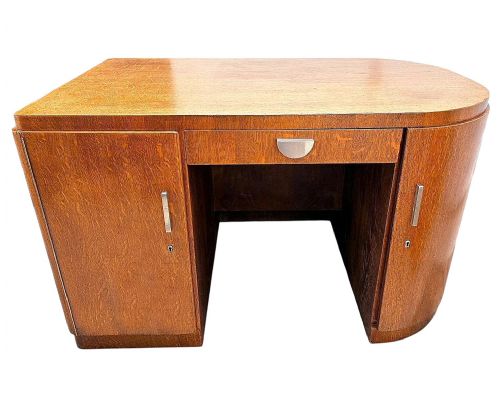
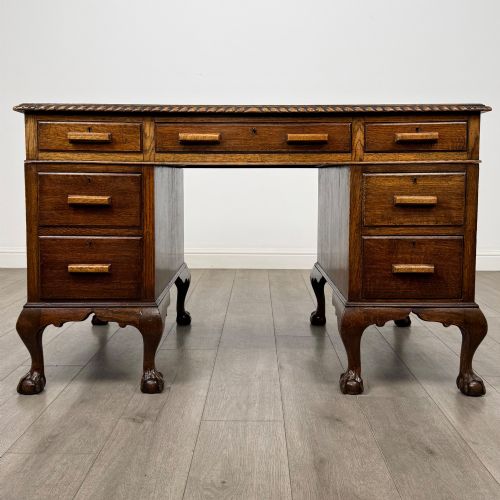
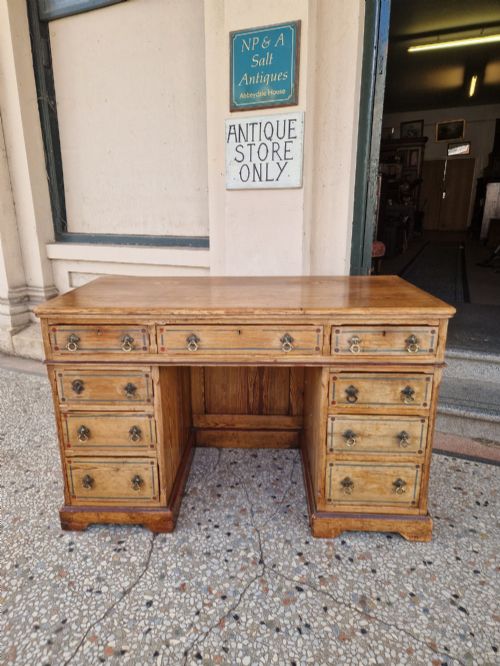
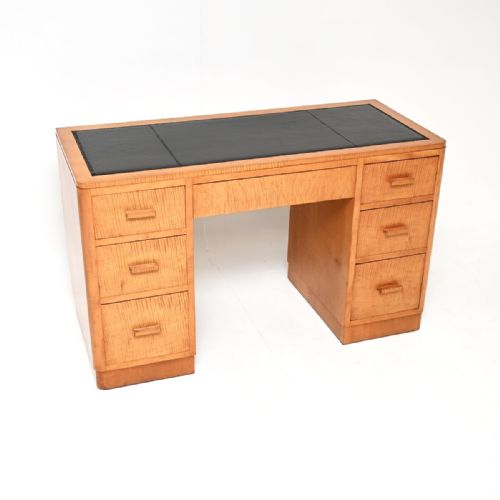
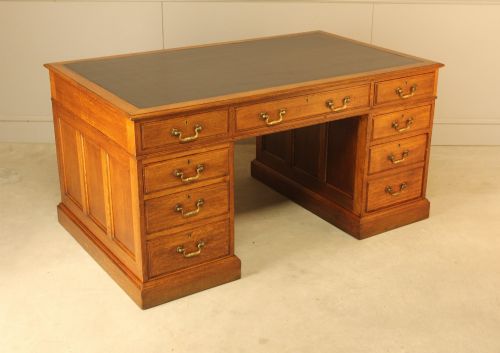
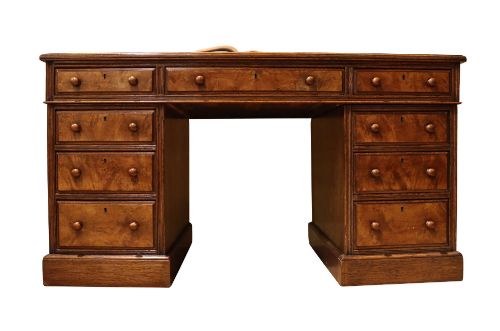
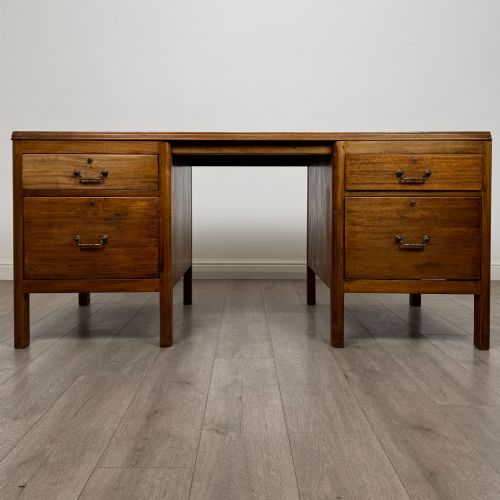
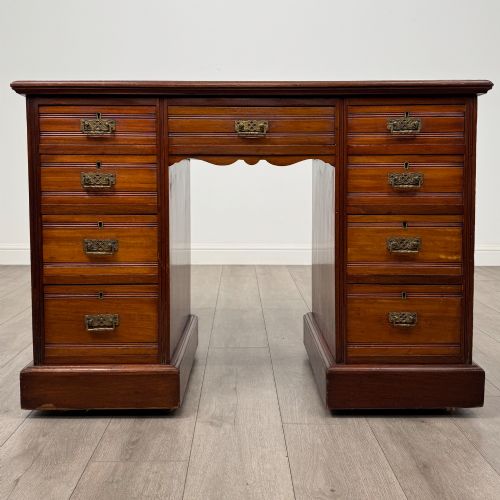
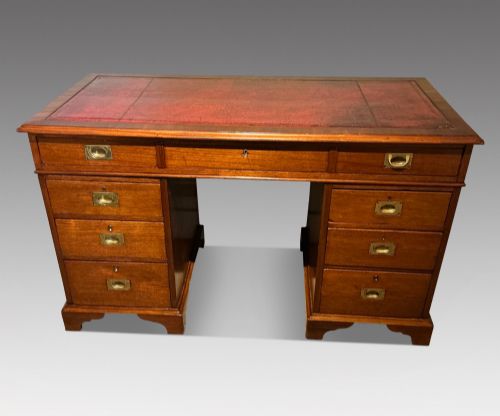
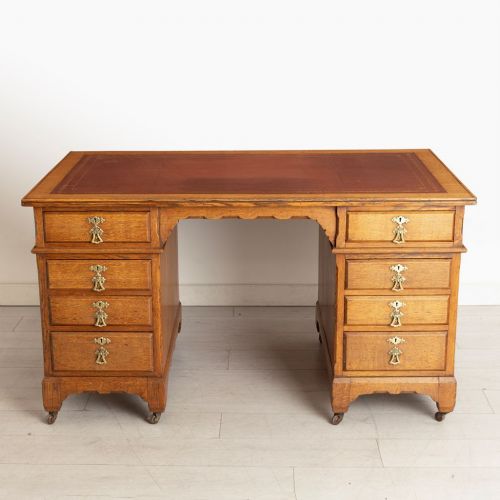
When you search for a vintage twin pedestal desk, you encounter substantial writing tables supported by two separate stacks of drawers flanking a central kneehole. The pieces on this page span from the Victorian and Edwardian eras through to Art Deco and mid-century modern designs.
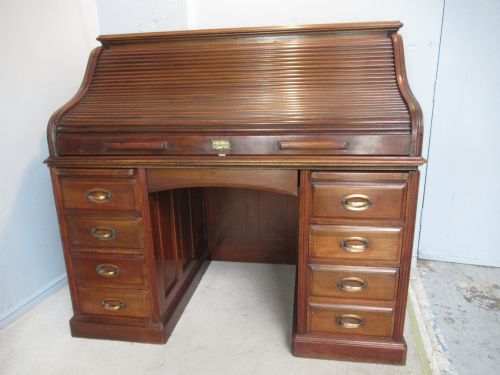
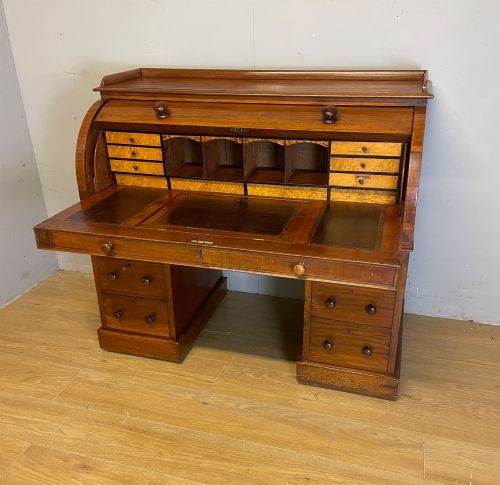
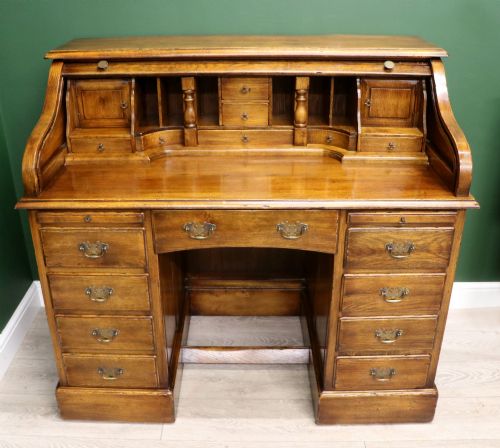
You are most likely to meet burr walnut, oak, and satin birch examples featuring fitted leather tops or gleaming chrome details. These forms vary from pedestal desks with cabinet tops to bold modernist D-end tables and classic roll-top formats.
How they were made
Cabinet makers utilised solid woods alongside decorative veneers such as burr walnut and satin birch, often pairing the wooden frames with inset leather writing surfaces. Brass hardware, ormolu mounts, and chrome details completed the construction of these substantial office and study pieces.
Joinery techniques varied according to the period, accommodating everything from elaborate Victorian nine-drawer configurations to streamlined Art Deco silhouettes and early mid-century oak construction.
Retail Price Guide 2026
Typical UK retail prices for vintage twin pedestal desk, calculated from the Sellingantiques database of over a million retail prices indexed since 2003. This retail price guide relies exclusively on Sellingantiques data; no external sources or auction records are used, so the figures do not describe the wider market.
Materials appearing across these desks include oak, burr walnut, satin birch, leather, brass, chrome, and ormolu.
What varies in quality
The distinction between the top and bottom of the range rests on the choice of timber veneer and the precision of the hardware integration. Pieces featuring carefully selected burr walnut and ormolu mounts display a higher degree of decorative ambition than standard utility pieces.
The architectural complexity of the desk also dictates its standing, moving from straightforward kneehole designs to elaborate configurations with integrated cabinet tops and two-sided D-end arrangements.
Betty Joel
The Vintage Twin Pedestal Desk Glossary
- Pedestal desk
- A large freestanding desk supported by two banks of drawers that act as columns. These pieces provide generous storage and a commanding presence in a study.
- Kneehole desk
- A smaller writing table featuring a central recess for the sitter's legs, flanked by pedestals or drawers. This classic form prioritises compact workspace utility.
- Burr walnut
- A highly figured timber veneer prized for its swirling grain patterns and rich colour. Cabinet makers select this material to create decorative focal points on drawer fronts.
- Ormolu
- Gilded bronze mounts applied to furniture for decorative effect. This technique adds metallic contrast to the timber surfaces of Victorian pieces.
- Roll-top desk
- A desk fitted with a slatted tambour cylinder that pulls down to conceal the writing surface and pigeonholes. This mechanical feature secures correspondence when not in use.
Frequently Asked Questions
What is a twin pedestal desk?
A twin pedestal desk is a large freestanding writing table supported by two separate stacks of drawers. These stacks hold up the main writing surface and leave a central space for seating.
Such desks offer substantial workspace and generous storage within their drawer columns. They are designed to stand prominently in the middle of a study or office.
How do I date a pedestal desk?
Dating relies on identifying the prevailing style, materials, and construction methods used in the piece. Victorian examples often feature burr walnut and ormolu, while 1930s pieces lean towards Art Deco modernist lines.
Examining the secondary timbers inside the drawers and the type of hardware fitted helps confirm the era. Stylistic shifts from Edwardian roll-tops to mid-century oak provide clear chronological markers.
Can these desks sit away from walls?
Many twin pedestal desks are finished on all sides to allow freestanding placement in a room. Some Art Deco and Victorian examples are explicitly two-sided, featuring drawers or panels facing both directions.
Checking the back of the pedestal units reveals whether the piece is intended to be viewed from any angle. A finished back ensures the desk looks correct when placed in the centre of a study.
How should I care for the leather top?
Leather writing surfaces require gentle cleaning with a slightly damp cloth followed by a suitable leather conditioner. Avoiding harsh chemical cleaners prevents the hide from drying out or cracking over time.
Maintaining the leather preserves both the colour and the smooth texture needed for writing. Regular light maintenance keeps the inset surface supple and resilient.