


Brown Elm Writing Table
These brown elm writing tables are sturdy vernacular pieces built for daily service, prized for their rich timber and honest grain.
Brown Elm Writing Table
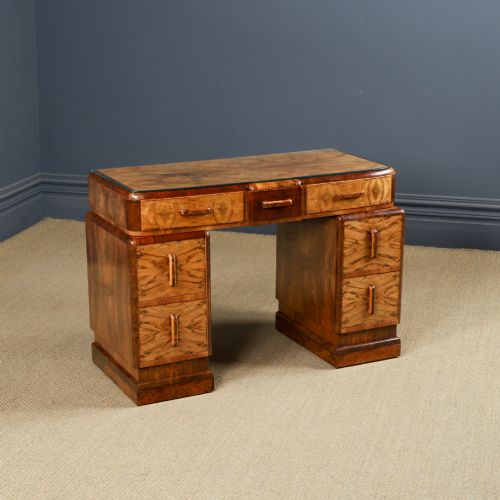
A brown elm writing table combines robust utility with rich timber figures, spanning vernacular side tables to formal kneehole desks. You will encounter pieces ranging from eighteenth-century provincial examples to nineteenth-century Chinese variants and Art Deco pedestal desks.
The form adapts to various domestic uses, appearing as compact tabletop bureaus, sofa tables, and substantial partners desks. Elm and burr elm dominate the construction, frequently paired with oak and yew to create durable surfaces for writing and administrative work.
How they were made
Cabinetmakers utilised solid elm and burr elm for their striking grain patterns, often framing the timber with oak or walnut for structural stability. Brass fittings and glass elements appear on later pedestal and skyscraper forms, while traditional joinery secures the provincial frames.
Surface treatments vary from polished burr veneers to lacquered finishes on nineteenth-century Chinese pieces. The construction relies on honest, utilitarian methods suited to heavy writing surfaces and daily office use.
Listings feature elm, burr elm, oak, walnut, and yew across eighteenth-century, Regency, and Art Deco periods.
What varies in quality
Quality rests in the selection of the timber, particularly the liveliness of the burr elm figure and how harmoniously secondary woods like oak or yew are integrated. Provincial pieces show simpler hand-carved joints, whereas formal Georgian and Regency examples display finer proportions and cabinetry.
The integrity of the construction and the preservation of the original surface determine the standing of each piece. Later Art Deco interpretations introduce glass and distinct pedestal forms that contrast with the traditional English and Chinese vernacular models.
The Brown Elm Writing Table Glossary
- Burr elm
- A growth deformity in the elm tree that produces highly figured, swirling wood grain patterns. It is sliced into veneers or utilised for prominent desk surfaces.
- Kneehole desk
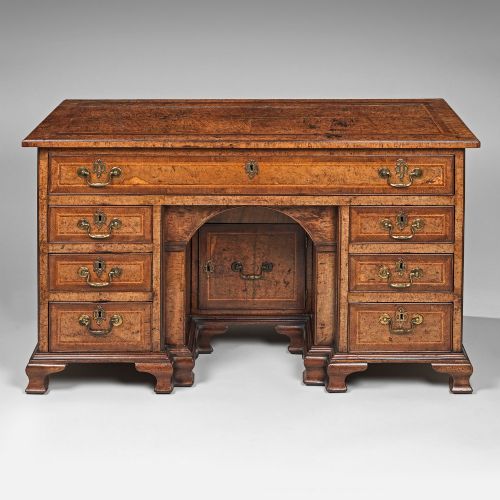
- A pedestal desk featuring a central recess for the sitter's legs, flanked by drawers. George II examples show early iterations of this form.
- Partners desk
- A large writing table designed with drawers and cupboards on both sides so two people can work opposite each other. These often appear in nineteenth-century Chinese variants.
- Sofa table
- A small, rectangular writing or occasional table designed to sit in front of a sofa. Regency pieces often incorporate drop leaves and intersecting supports.
- Tabletop bureau
- A portable or surface-standing desk with a sloping writing lid above small drawers. Georgian examples allow utilitarian writing on existing tables.
Brown Elm Writing Table: Frequently Asked Questions
What is a brown elm writing table?
It is a practical desk or table constructed primarily from elm or burr elm timber. These pieces range from provincial English side tables to formal kneehole desks and nineteenth-century Chinese partners desks.
They serve as both working surfaces and decorative furniture, valued for the distinctive, swirling grain patterns inherent to elm.
How do I date an elm writing table?
Dating relies on examining the construction methods, secondary woods like oak or walnut, and stylistic indicators such as George II proportions or Art Deco pedestal forms. Eighteenth-century pieces typically show hand-cut joinery and simpler provincial framing.
Later nineteenth-century and twentieth-century examples incorporate distinct hardware, glass panels, or lacquer finishes that reflect their specific period of manufacture.
Where were these tables made?
The selection includes both English provincial workshops and nineteenth-century Chinese makers. English pieces often utilise regional timbers like elm, oak, and yew within traditional domestic settings.
Chinese workshops produced distinct writing desks and side tables during the nineteenth and early twentieth centuries, employing local construction traditions for administrative use.
How do I care for a burr elm surface?
Burr elm benefits from stable indoor humidity and protection from direct sunlight to prevent the timber and veneers from drying out. Regular dusting with a soft, dry cloth maintains the polished finish without chemical buildup.
Applying occasional appropriate wax preserves the moisture and highlights the rich grain patterns found in the burr timber.