
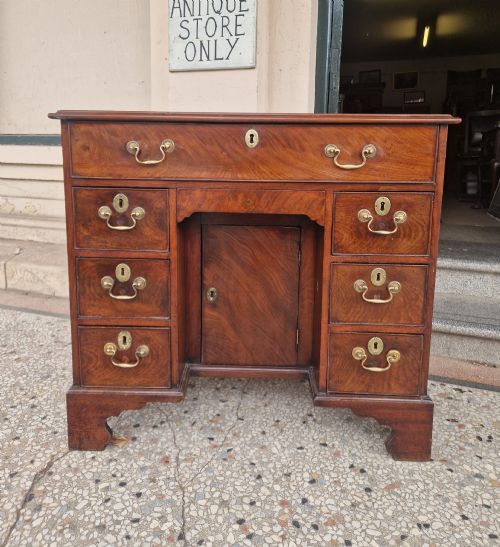

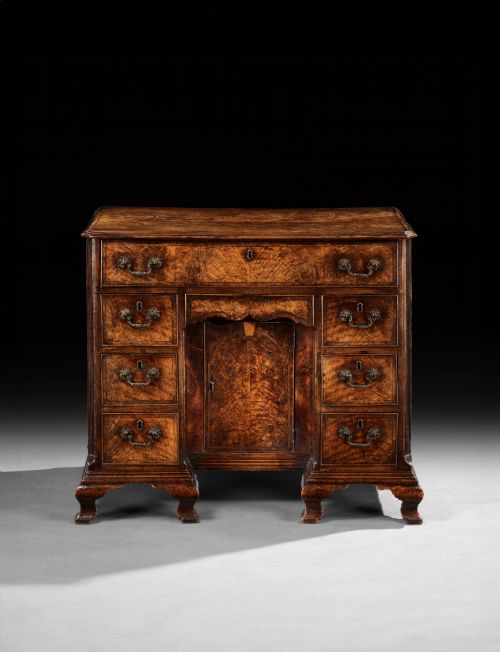
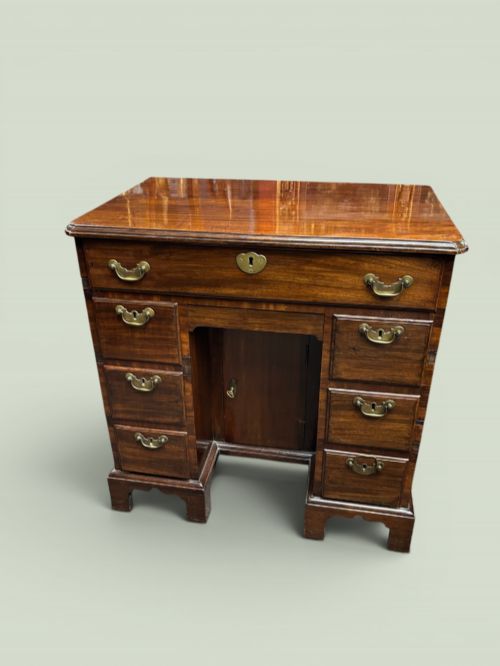
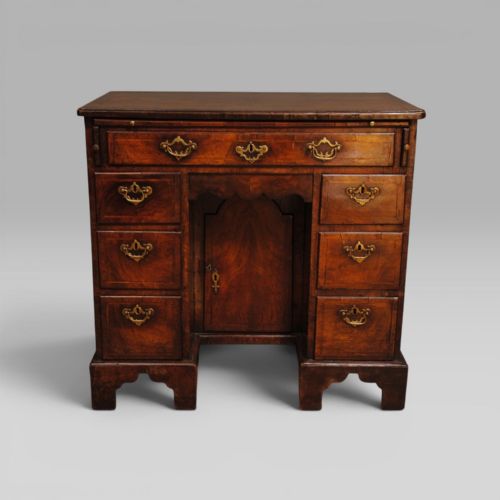


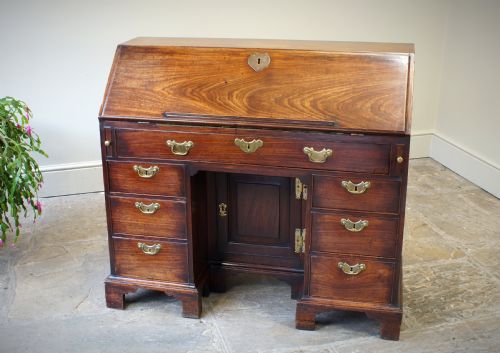


Bracket Feet Kneehole Desk
A bracket feet kneehole desk offers compact writing space with hidden drawers, uniting Georgian craftsmanship with practical elegance.
Bracket Feet Kneehole Desk
A bracket feet kneehole desk is a dedicated writing table featuring a central recessed cupboard or kneehole space, flanked by banks of small drawers. These pieces emerge predominantly from the eighteenth century, spanning the Georgian, Queen Anne, and George II eras, alongside later nineteenth century and nineteen-thirties revivals.
The form is most commonly encountered in rich timbers such as mahogany and walnut, occasionally appearing in yew or oak. Buyers frequently meet compact, small-scale versions designed for private chambers rather than grand libraries, often incorporating a pull-out slide for correspondence.
How they were made
Cabinetmakers constructed these desks using solid timbers and fine veneers, applying burr walnut or fiddleback walnut to create highly figured, decorative surfaces. Drawers feature precise dovetail joinery, while structural carcass work relies on native hardwoods like oak.
Detailing includes delicate featherbanding and inlay work, supported underneath by simple bracket feet that elevate the heavy timber frame. Brass drop handles and escutcheons complete the hardware, fixed securely to the drawer fronts.
Materials span mahogany, walnut, burr walnut, burr oak, oak, yew, brass, and leather across Georgian, Victorian, and early twentieth-century periods.
What varies in quality
Quality rests heavily on the choice of timber and the dexterity of the veneer work, where book-matched burr walnut commands greater visual presence than plain surfaces. The crispness of the bracket feet and the tightness of the drawer dovetails separate master craftsmanship from standard provincial joinery.
Proportion also dictates standing, as diminutive or exceptionally slender writing desks display a harmony of form that heavier, unrefined proportions lack. Original brass hardware and undisturbed interior drawer configurations elevate the integrity of the piece.
The Bracket Feet Kneehole Desk Glossary
- Kneehole
- A recessed space beneath the central writing surface, often concealing a small cupboard door. This arrangement allows the user to sit directly facing the desk.
- Bracket feet
- Corner supports shaped like small architectural brackets, standard on case furniture of the eighteenth century. They lift the desk cleanly off the floor.
- Featherbanding
- A decorative inlay technique using thin strips of veneer arranged in a herringbone pattern around drawer perimeters. It frames the primary wood grain.
- Fiddleback walnut
- A highly figured timber showing undulating grain patterns reminiscent of the back of a violin. Cabinetmakers utilised it on premier walnut surfaces.
- Secretaire
- A desk featuring a fitted writing drawer that drops down to reveal pigeonholes and small compartments. It combines chest storage with a writing surface.
Bracket Feet Kneehole Desk: Frequently Asked Questions
What is a kneehole desk used for?
These pieces served as private writing tables for correspondence and estate management in eighteenth-century households.
Today, they function well as compact writing desks or dressing tables in smaller domestic studies.
How do I identify a Georgian desk?
Look for timber selection, particularly dense Cuban mahogany or figured walnut, combined with hand-cut dovetails on the drawer interiors.
Bracket feet and traditional brass drop handles further point toward eighteenth-century origins.
Are all kneehole desks made of mahogany?
Mahogany appears frequently, particularly across George III and Victorian examples, but early pieces often utilise walnut or burr oak.
Yew and Virginia walnut also feature among the surviving material variations.
What is a writing slide?
A pull-out board positioned directly above the drawers, designed to extend the usable writing surface without enlarging the desk footprint.
It allows temporary workspace expansion for letters before sliding discreetly back into the carcass.