

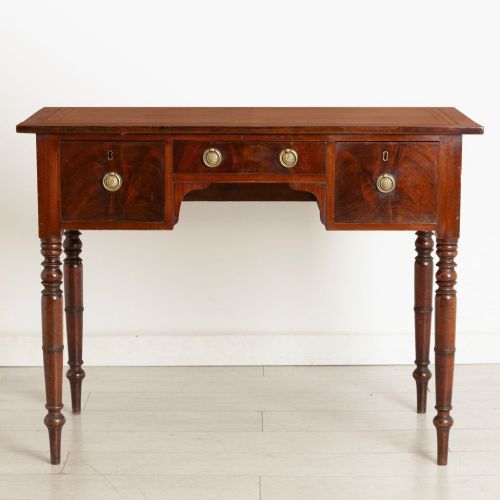
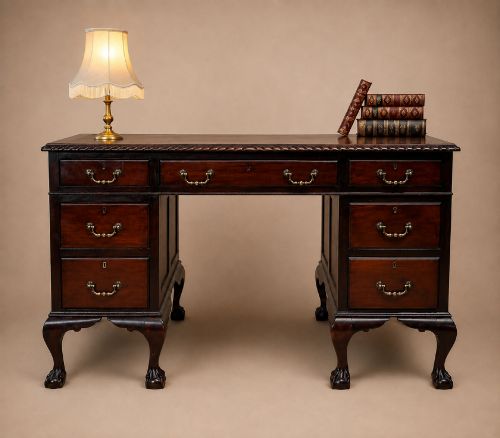
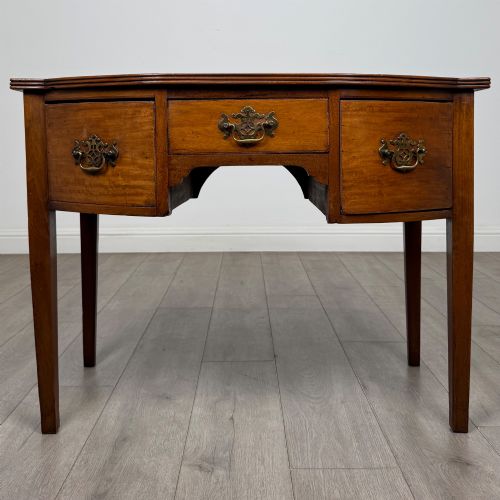
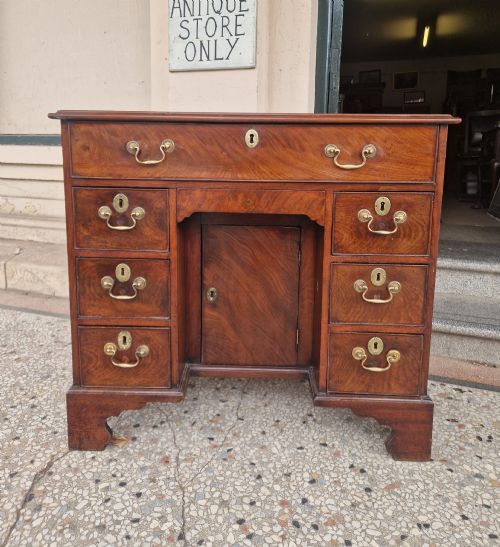
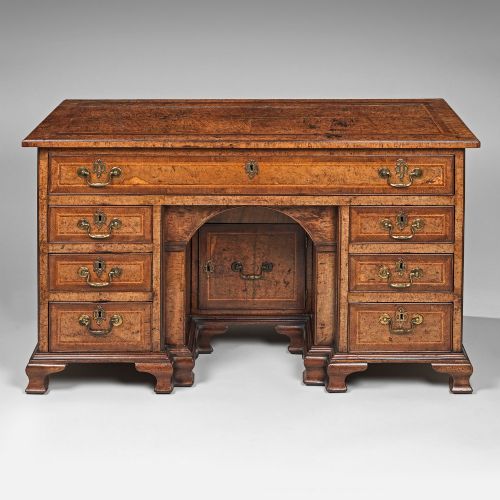
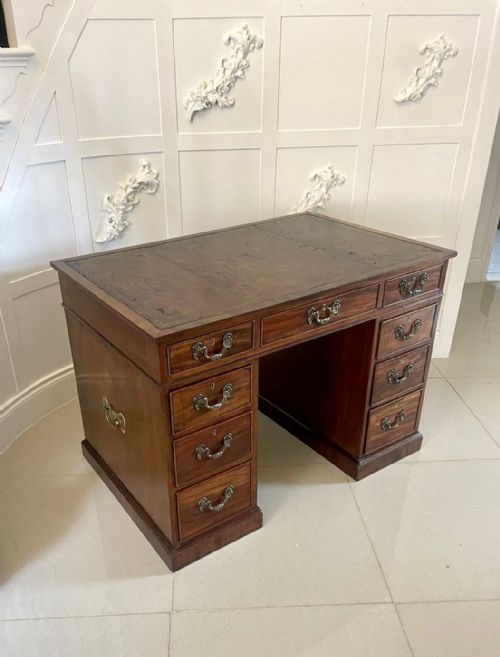
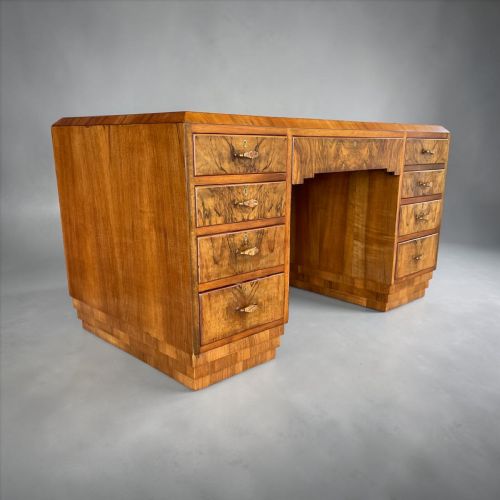

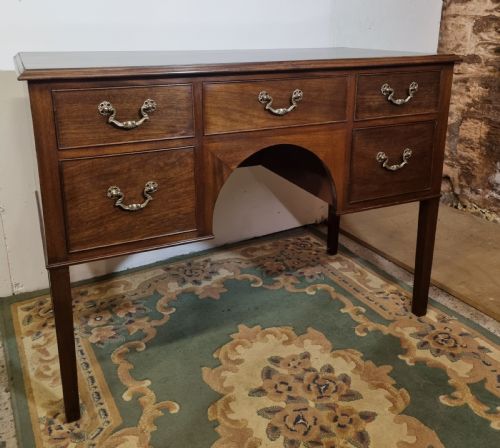
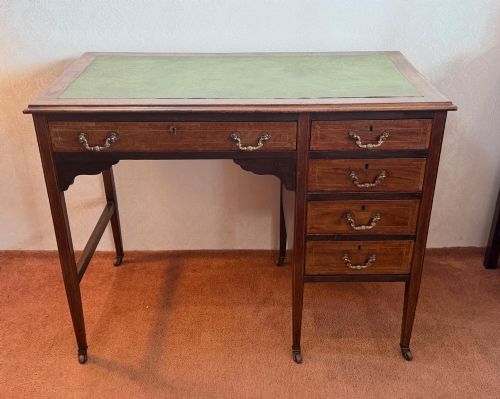
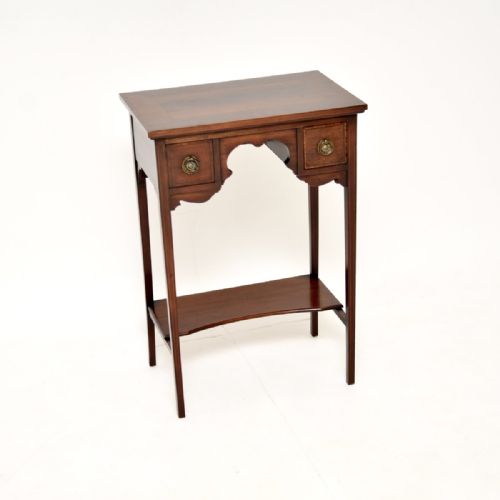
Brown Wood Kneehole Desk
These brown wood kneehole desk examples offer classic writing surfaces with central recessed cupboards, prized for their compact storage and historic proportions.
Identifying a brown wood kneehole desk
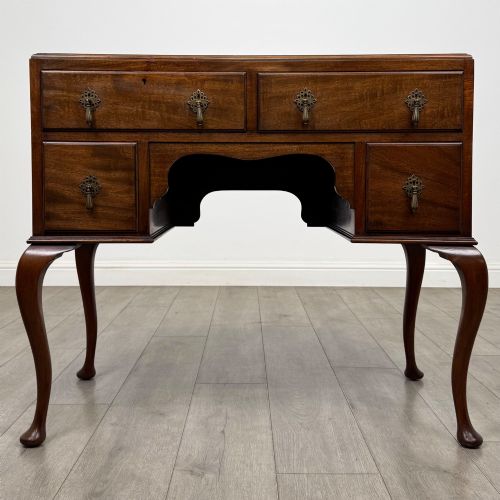
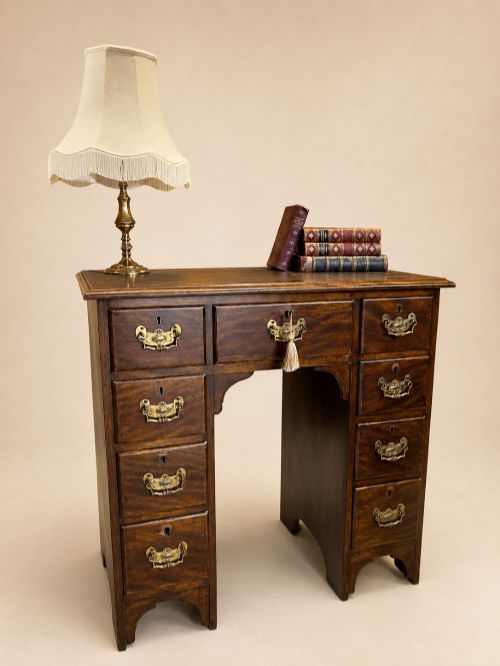
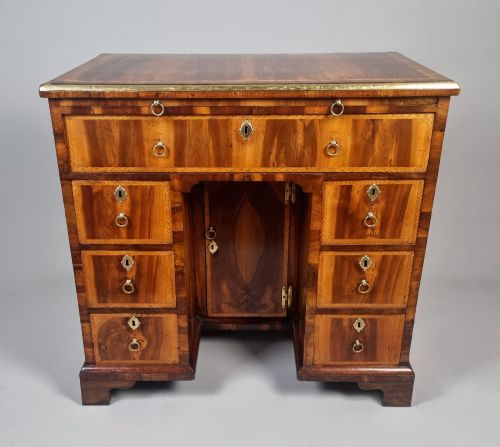
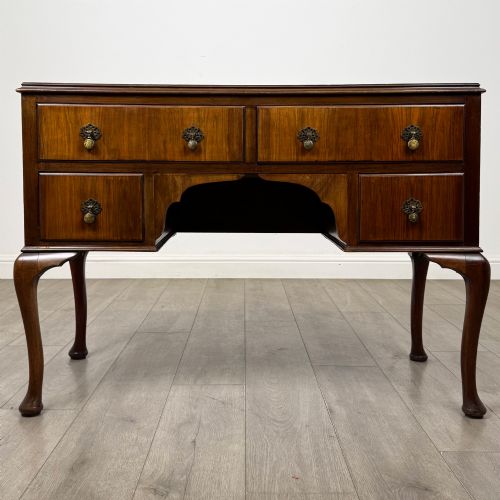
Buyers examining a brown wood kneehole desk encounter compact writing furniture designed with a central recessed knee space flanked by banks of drawers. The pieces appearing here span the Georgian period, the nineteenth century, and a nineteen-thirty Queen Anne Revival interpretation.
Most examples rely on rich timbers like mahogany or burr walnut, sometimes enhanced by boxwood inlay or brass hardware. Forms range from small Georgian writing desks and partners' desks to eighteenth-century creations attributed in style to cabinetmakers such as Grendy.
Materials and construction
Cabinetmakers constructed these desks from dense hardwoods, predominantly selecting mahogany and walnut, alongside decorative veneers such as burr walnut. Workshops integrated contrasting details including boxwood inlay to define drawer fronts and borders.
Functional metalwork formed a crucial part of the construction, with brass handles and escutcheons fitted to secure drawers. Certain later interpretations also incorporated inset leather writing surfaces on the top.
Retail Price Guide 2026
Typical UK retail prices for brown wood kneehole desk, calculated from the Sellingantiques database of over a million retail prices indexed since 2003. This retail price guide relies exclusively on Sellingantiques data; no external sources or auction records are used, so the figures do not describe the wider market.
Listings span the Georgian period, the nineteenth century, and nineteen-thirty, utilising mahogany, walnut, burr walnut, and brass.
Assessing quality in writing desks
Superior examples of a brown wood kneehole desk demonstrate refined timber selection, such as highly figured burr walnut or carefully matched mahogany grains. The crispness of the boxwood inlay and the proportion of the central cupboard relative to the flanking drawers reveal the cabinetmaker's skill.
Period authenticity in the brass hardware and the integrity of the secondary timbers elevate the standing of an individual desk. Subtle variations in scale, from miniature proportions to partners' formats, reflect the original commissioner's specific requirements rather than standardised production.
The Brown Wood Kneehole Desk Glossary
- Kneehole desk
- A writing table featuring a central recessed space for the legs, flanked by two pedestals of drawers. This configuration provides functional workspace while maintaining a compact footprint.
- Partners' desk
- A large double-sided writing table designed for two people to work opposite one another. These pieces incorporate drawers and cupboards accessible from both sides.
- Burr walnut
- A highly decorative wood veneer obtained from the deformed growth or burr of a walnut tree. It produces intricate, swirling grain patterns highly prized in fine cabinet-making.
- Boxwood inlay
- A decorative technique where small pieces of pale boxwood are inserted into recesses cut into a darker wood surface. This creates contrasting geometric or linear borders.
- Escutcheon
- A protective plate surrounding a keyhole, usually fashioned from brass. It prevents the wood around the lock from sustaining damage over repeated use.
Frequently Asked Questions
What is a kneehole desk?
A kneehole desk is a specific form of antique writing furniture featuring a central recess for the user's legs, flanked by stacked drawers on either side.
This layout allows for efficient storage underneath a practical writing surface without requiring the massive proportions of a traditional bureau bookcase.
How do I date an old desk?
Dating relies upon observing construction methods, timber choices, and stylistic markers such as inlay techniques and hardware design. Pieces from the Georgian era often display hand-cut dovetails and solid mahogany construction.
Later revivals from the twentieth century utilise historical motifs like Queen Anne styling while retaining modern manufacturing tolerances and secondary woods.
What woods were used for desks?
Cabinetmakers primarily utilised dense hardwoods such as mahogany and walnut for their strength and rich natural colouration. Burr walnut veneer provided highly figured decorative surfaces on select high-status pieces.
Inlays utilised contrasting timbers like pale boxwood to add crisp geometric detail around drawer borders and perimeters.
Are partners desks double sided?
Partners' desks are built as large double-sided writing tables intended to accommodate two users facing one another. They feature functional drawers and cupboards accessible from both the front and the back.
Smaller kneehole desks, by contrast, are designed to stand against a wall with a finished facade on only one side.