

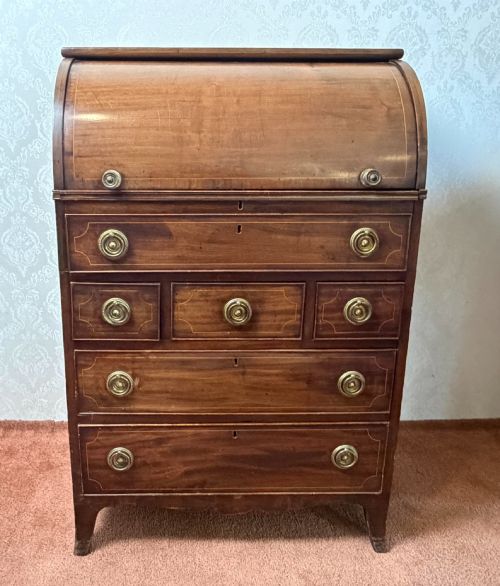
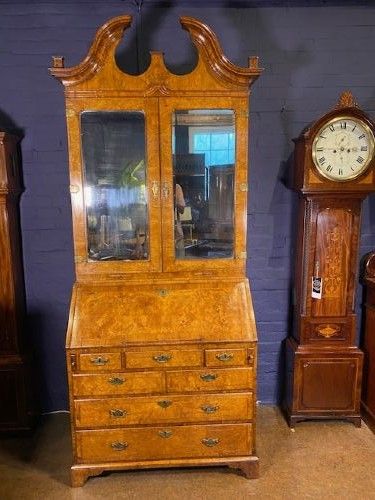
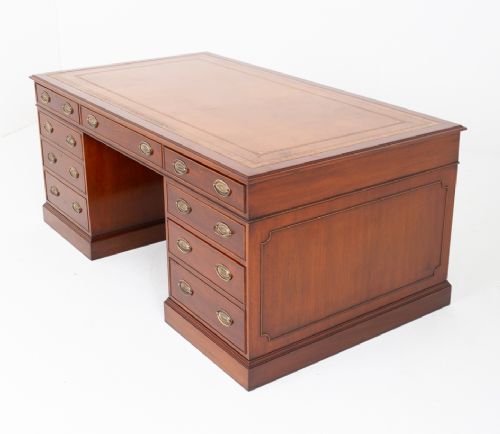
Georgian Office Desk
A georgian office desk brings tangible depth to a room, offering functional workspace rooted in eighteenth and nineteenth-century cabinet-making traditions.
Georgian Office Desk
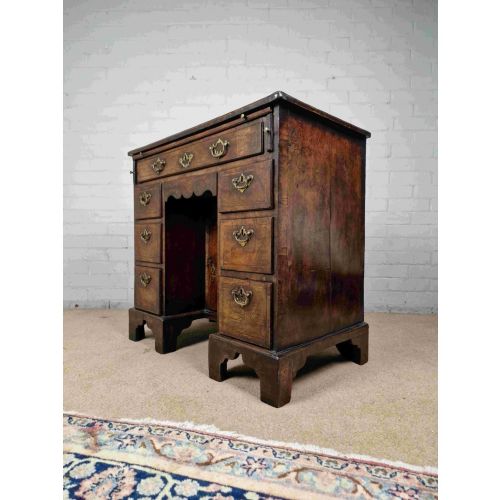
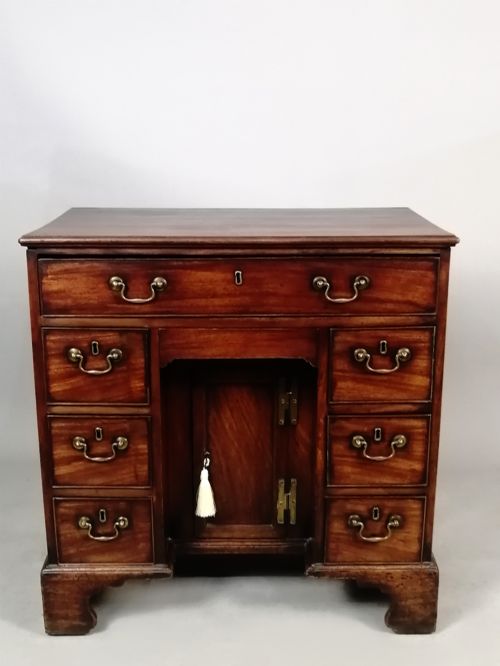
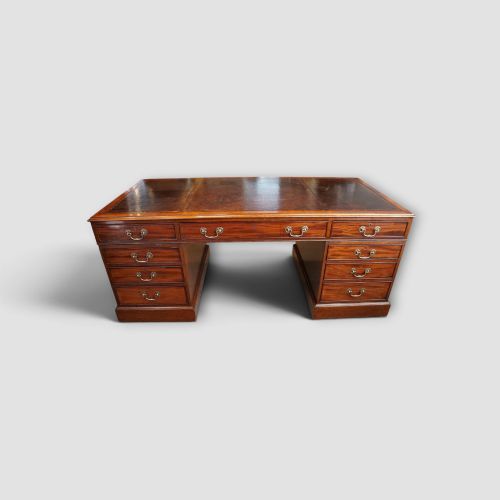
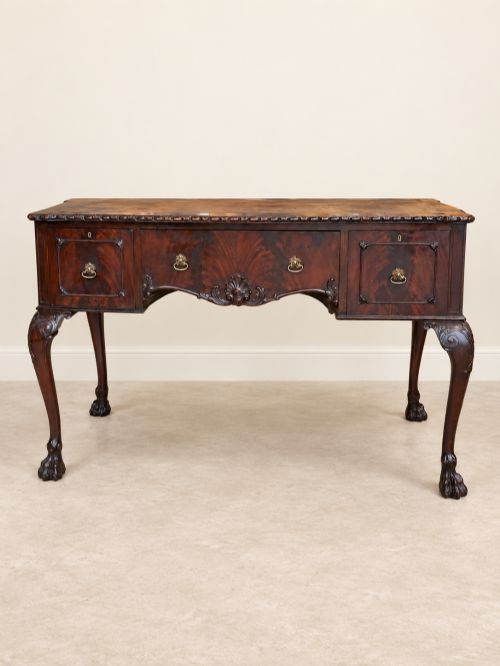
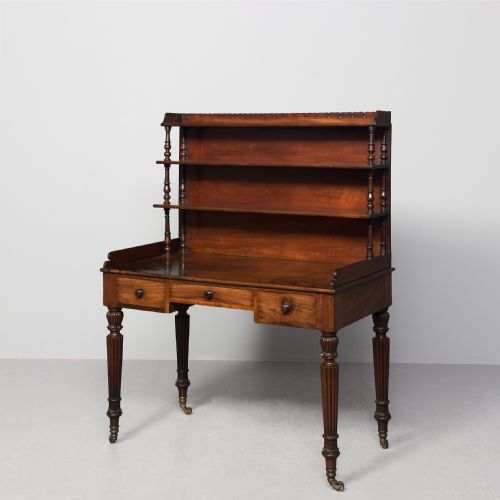
A georgian office desk encompasses diverse forms including pedestal desks, partners desks, kneehole desks, writing tables, bureaux, and bureau bookcases spanning the eighteenth century through later revival periods.
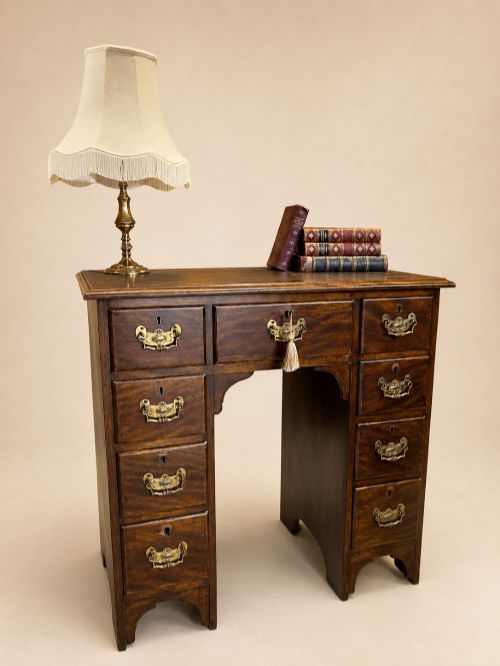
Pedestal and partners desks provide substantial double-sided working surfaces with banks of drawers, while kneehole desks and writing tables offer compact writing areas suitable for domestic studies.
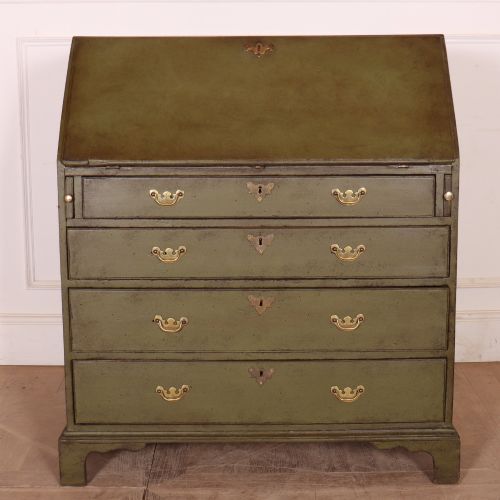
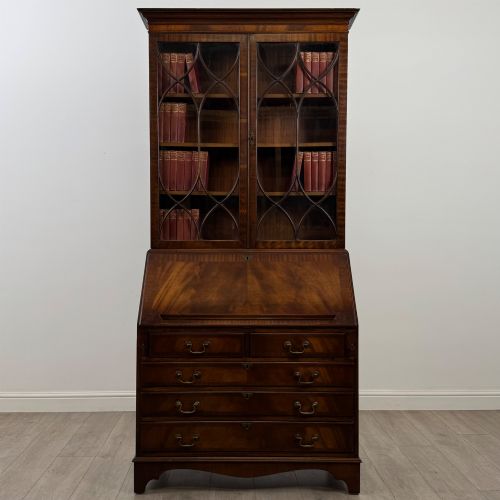
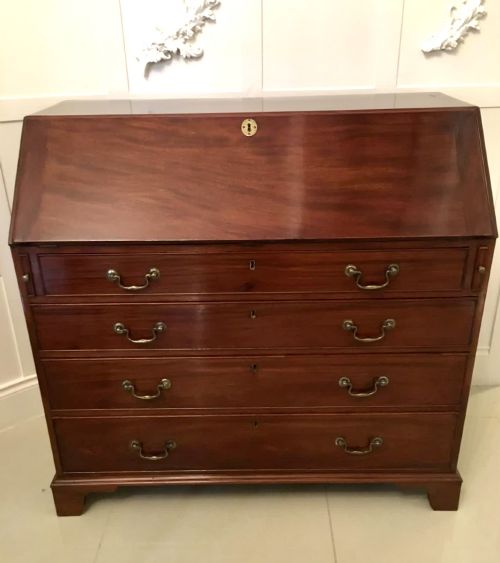
Bureaux and bureau bookcases feature drop fronts concealing fitted pigeonholes and small drawers, combining upright storage with enclosed writing compartments.
How They Were Made
Cabinet-makers relied primarily on solid timbers and veneers of mahogany, walnut, burr walnut, and oak, frequently incorporating secondary woods like pine or oak for interior drawer linings.
Writing surfaces often incorporate inset panels of tooled leather or fabric, secured with decorative brass hardware and internal brass locks.
Construction techniques involve traditional dovetail joints for drawers and panelled backs, ensuring structural rigidity across pedestal and bureau forms.
Listings feature mahogany, walnut, burr walnut, and oak across pedestal desks, partners desks, writing tables, and bureau bookcases.
What Varies in Quality
Selection of timber grain dictates visual hierarchy, with figured flame mahogany, burr walnut, and matched veneers marking superior cabinet-making over plain stock.
The refinement of carved details, such as blind fretwork, moulded cornice work, and crisp drawer framing, separates workshop standards.
Proportion and internal arrangement dictate utility, where secondary drawer configurations, original brasses, and fitted compartments elevate a piece.
James Mein of Kelso
The Georgian Office Desk Glossary
- Partners desk
- A large double-sided pedestal desk designed for two people to work opposite one another, featuring drawers and cupboards on both faces.
- Kneehole desk
- A compact writing desk with a central recessed space for the legs, flanked by single or double banks of small drawers.
- Bureau bookcase
- A two-part cabinet featuring a sloping fall-front desk section below glazed upper shelving or doors.
- Tambour
- A sliding shutter formed of narrow vertical strips of wood glued to canvas, used to enclose desk compartments.
- Pedestal desk
- A heavy freestanding desk comprising a top surface resting on two separate drawer pedestals.
Georgian Office Desk: Frequently Asked Questions
What is a partners desk?
A partners desk is a large pedestal writing table built with matching drawers and cupboards on both sides so two individuals can sit opposite each other.
These pieces were traditionally utilised in libraries, banks, and large estate offices by business partners or professionals who required shared workspace.
How do I identify a bureau?
A bureau is defined by its sloping flap that pulls down or drops forward to create a flat writing surface above a chest of drawers.
When opened, the fall-front reveals a fitted interior containing small drawers, secret compartments, and pigeonholes for stationery.
What timber was used most?
Mahogany is the predominant timber found across these desks, appearing in both solid form and decorative flame veneer from the eighteenth century onwards.
Walnut and burr walnut also appear frequently, alongside oak and satinwood utilised for structural elements and lighter decorative surfaces.
Are these desks suitable for daily use?
These desks provide robust writing surfaces and practical drawer storage that adapt easily to modern studies and home offices.
Leather and fabric writing inserts protect the wood beneath while offering a smooth, traditional surface for writing or placing a laptop.