



Small Mahogany Study Desk
A small mahogany study desk brings compact workspace and classic timber tone into a room without dominating the floor space.
Small Mahogany Study Desk
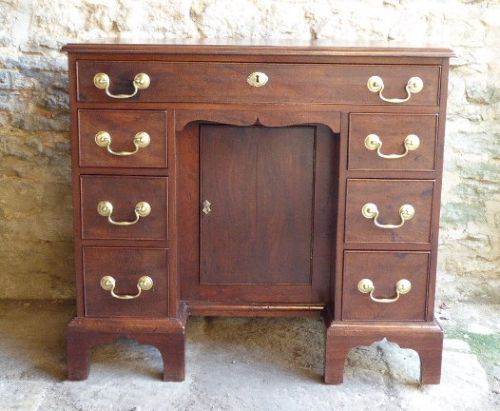
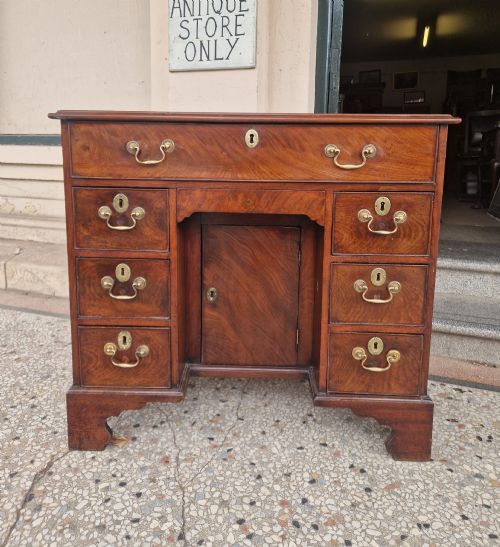
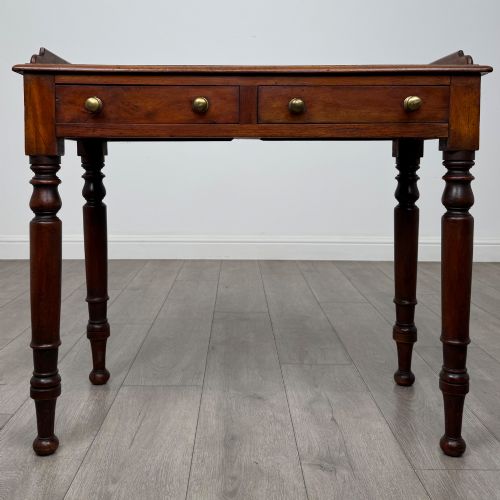
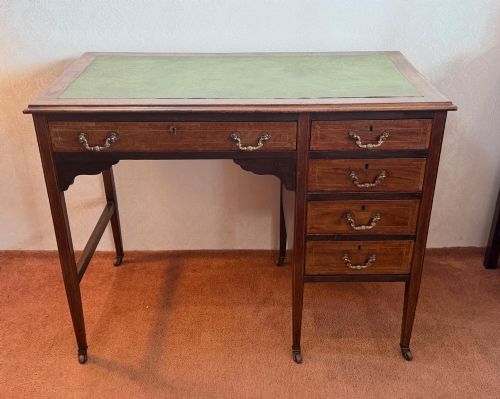
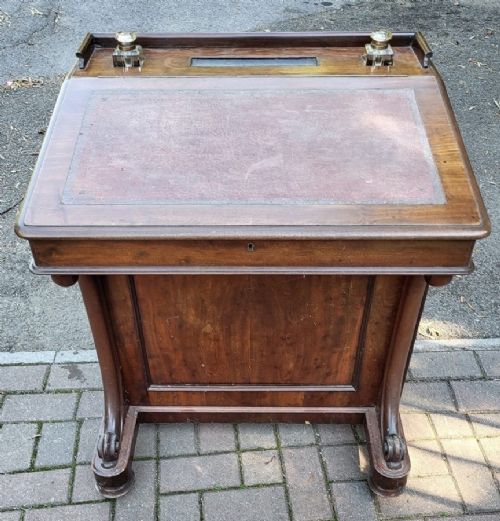
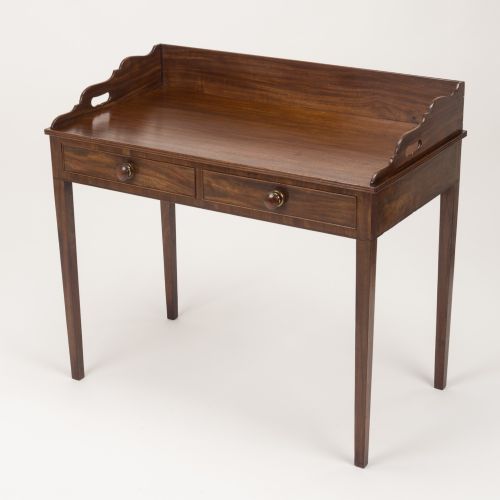
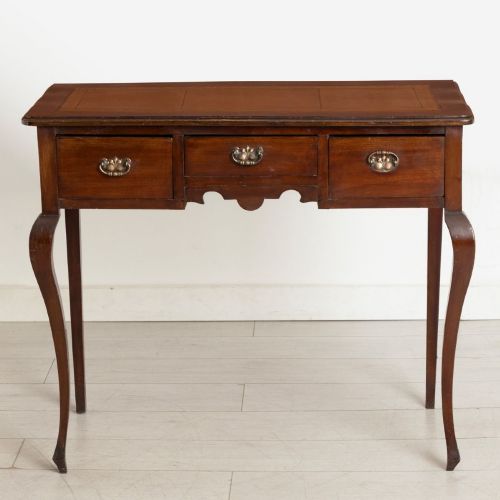
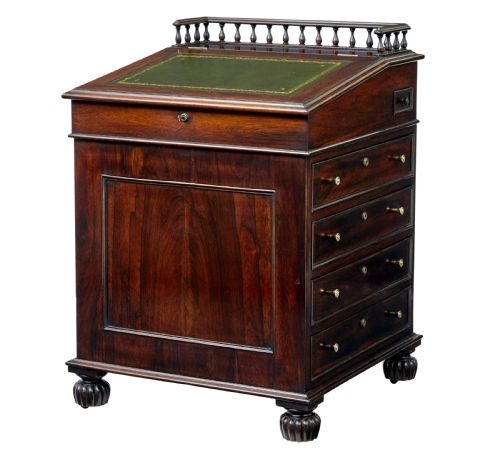
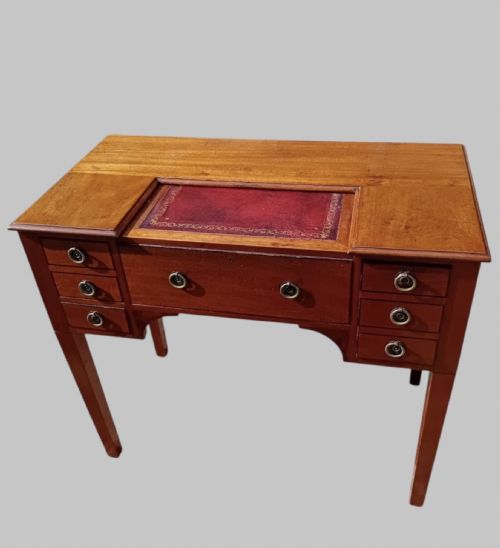
The versions most common on this page span the Georgian, Victorian, and Edwardian periods, appearing as simple two-drawer writing tables, kneehole desks, or slope-front davenports. They utilise the rich grain of mahogany, often accented with brass hardware and leather writing surfaces.
Makers ranged from notable firms to regional cabinetmakers, producing forms designed to fit modest spaces while offering functional storage with drawers, slides, or drop-side flaps.
How they were made
Cabinetmakers built these desks using solid mahogany and mahogany veneers over secondary timbers, shaping panels and framing drawers with traditional joinery. Timber selection focused on grain figure, ensuring the top surface presented an attractive colour and texture.
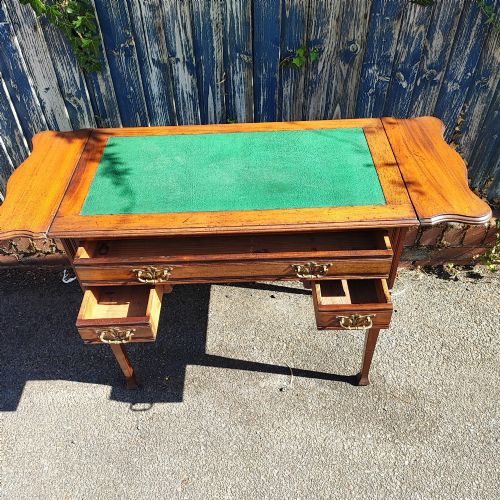
Writing surfaces frequently incorporated inset panels of tooled leather, providing a durable and smooth plane for daily correspondence. Hardware such as brass drop handles, escutcheons, and hinges completed the construction, fastened securely to drawers and fall fronts.
Inlaid examples integrated lighter woods like satinwood and boxwood into geometric or floral stringing, contrasting sharply against the dark red-brown body of the mahogany.
Listings feature mahogany desks spanning the Georgian, Regency, Victorian, and Edwardian periods, incorporating oak, brass, and leather elements.
What varies in quality
The standard of timber selection and secondary wood use defines the upper tier of these desks, where cabinetmakers chose richly figured mahogany for primary surfaces and solid oak or pine for drawer linings. Lesser examples rely on simpler, plain-grained veneers applied over hurried carcases.
Refinement in carving and inlay also separates ordinary pieces from superior ones, visible in crisp boxwood stringing, neatly dovetailed drawer construction, and well-cast brass hardware rather than stamped replacements.
Proportion and functional integrity dictate lasting worth, where neat-sized desks maintain balanced dimensions and drawers run smoothly within their respective channels without binding.
James Shoolbred·Gillows
The Small Mahogany Study Desk Glossary
- Kneehole desk
- A writing desk featuring a central recess for the user's legs, flanked by pedestals of small drawers. This form became popular during the Georgian period for domestic studies.
- Davenport
- A compact writing desk with a sloping, hinged writing surface above a pedestal of drawers. The side often incorporates a pen tray and stationery compartment.
- Bonheur de Jour
- A light lady's writing desk featuring a superstructure of small drawers and pigeonholes above the main writing surface. Originating in France, it gained favour in Edwardian drawing rooms.
- Satinwood inlay
- Decorative woodwork where contrasting light satinwood is inserted into recesses in the darker mahogany surface. This technique creates delicate borders and geometric motifs.
- Partners' desk
- A large desk designed to be used from both sides simultaneously, featuring banks of drawers or cupboards below two opposing workspaces. Smaller variants adapt this format for shared residential studies.
Small Mahogany Study Desk: Frequently Asked Questions
What is a davenport desk?
A davenport is a compact, pedestal-style writing desk featuring a sloping top for correspondence and a set of side drawers. These pieces provide a writing surface while occupying minimal floor space.
Cabinetmakers designed them with hinged lids that lift to reveal storage for paper and writing implements, often paired with stationary boxes mounted on top.
How do I date a mahogany desk?
Dating relies on observing construction methods, timber choices, and hardware styles across different eras. Georgian desks often display hand-cut dovetails and simpler framing, while Victorian and Edwardian examples may show machine-sawn elements and factory-cast handles.
Inlay patterns and secondary woods also offer clues, as satinwood stringing and mahogany veneers shifted in popularity from the eighteenth century into the early twentieth century.
Are these desks suitable for modern laptops?
Most small mahogany study desks accommodate laptops easily upon their primary writing surfaces or pull-out leather slides. Their modest dimensions make them practical for contemporary home office layouts.
Drawers and compartments provide storage for modern stationery, though internal dimensions suit historical paper sizes rather than bulky modern office equipment.
What is a kneehole desk?
A kneehole desk is a freestanding form with a recessed central opening for seating, flanked by vertical columns of small drawers. This layout allows comfortable legroom while maintaining ample storage capacity.
They appear across Georgian, Victorian, and Edwardian periods, built with modest proportions suited for residential studies and bedrooms.