
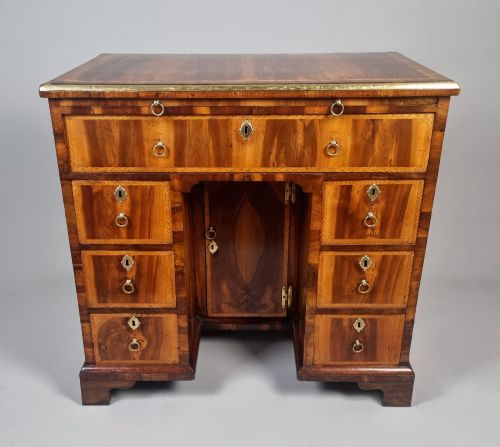
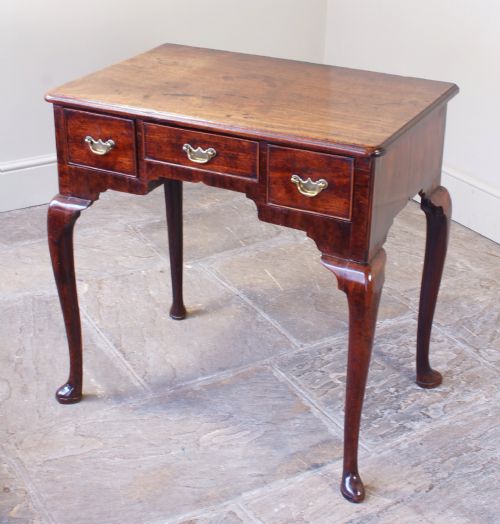


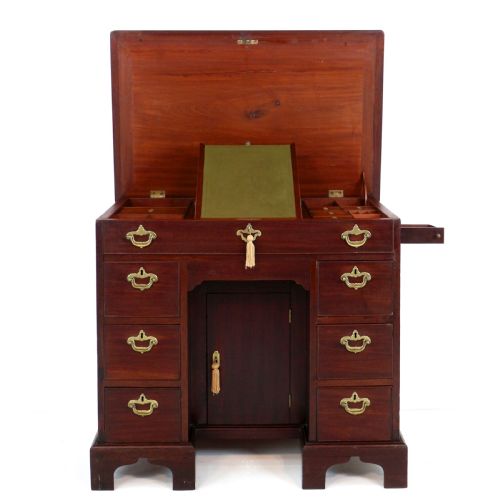

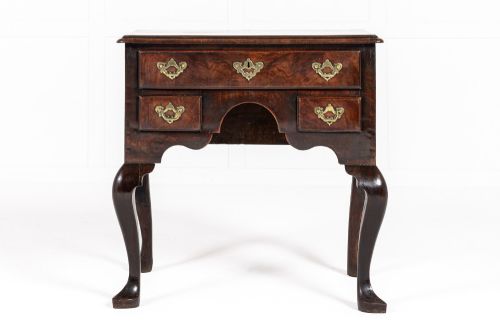


George II Dressing Chest
A george ii dressing chest offers compact 18th-century utility with concealed compartments and rich timber grain.
George II Dressing Chest
A george ii dressing chest combines the functions of a writing desk, a dressing table, and a small chest of drawers within a single compact footprint. These pieces emerge primarily from the 18th century, though Victorian revival interpretations also appear on the market.
Buyers encounter several variations including kneehole desks, lowboys, and fitted dressing tables. The form often incorporates recessed central cupboards flanked by banks of small drawers.
Originating in English workshops, these pieces serve as versatile functional furniture suitable for period and traditional interiors.
Assessing Quality and Construction
The division between standard and superior pieces rests on the choice of timber and the precision of the cabinetwork. Grain selection, such as burr walnut or flame mahogany veneers, dictates the visual impact of the piece.
Originality of the brass hardware, stability of the kneehole door fittings, and integrity of the internal pigeonholes and compartments distinguish higher-tier examples from heavily restored or altered pieces.
Listings for this phrase feature pieces constructed from mahogany, walnut, oak, cherrywood, yew wood, fruitwood, and leather.
The George II Dressing Chest Glossary
- Kneehole desk
- A compact desk or dressing chest featuring a central recessed space for the legs, enclosed by small side drawers and a central cupboard door. This form became popular during the early 18th century.
- Lowboy
- A small table with one or more rows of drawers, commonly used as a dressing table or side table during the Georgian period. They typically stand on cabriole or straight legs.
- Featherbanding
- A form of decorative inlay where veneer strips are cut and arranged diagonally to resemble the bones of a feather, framing drawer fronts. It requires high precision from the cabinetmaker.
- Escutcheon
- A protective plate surrounding the keyhole of a drawer or cabinet door, usually cast in brass. These plates prevent the timber from splitting around the lock.
- Veneer
- A thin layer of figured timber applied to a secondary wood ground to provide an ornate exterior surface. Walnut and mahogany were frequently utilised in this manner.
George II Dressing Chest: Frequently Asked Questions
What is a kneehole dressing chest?
A kneehole dressing chest is a compact 18th-century furniture form designed for grooming and writing, featuring a recessed central cupboard beneath a drawer, flanked by small drawers on either side.
This layout allowed the user to sit comfortably while accessing personal items or writing correspondence.
How do I care for antique timber?
Maintain antique mahogany and walnut surfaces by keeping them away from direct sunlight and sudden temperature changes. Apply natural beeswax sparingly to nourish the wood grain.
Avoid modern liquid polishes containing silicone, which can penetrate porous historical finishes and damage the timber over time.
Are the brass handles original?
Original brasses leave specific ghost marks, old fastener holes, and natural patination on the timber surrounding the hardware. Replacement handles often leave extra filled holes behind the plate.
Examining the interior of the drawer reveals whether the original mounting pins or modern screws secure the hardware.
Where were these pieces used?
These pieces were originally placed in private bedchambers and dressing rooms by wealthy homeowners for personal grooming and private correspondence. Their compact size allowed them to fit into smaller domestic spaces.
Today, buyers utilise them as hallway consoles, bedroom desks, or statement storage pieces in living areas.