
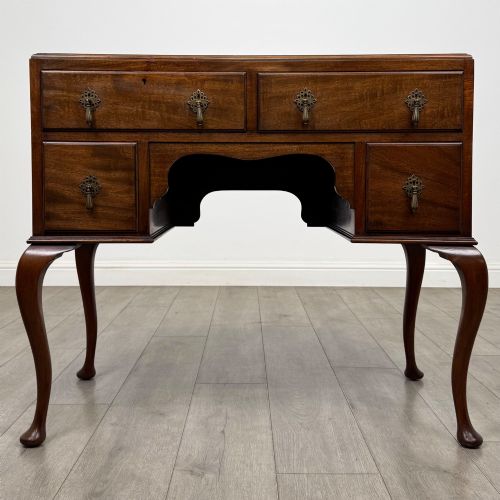
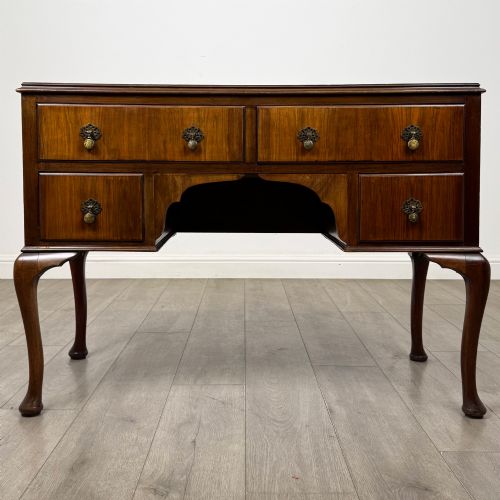
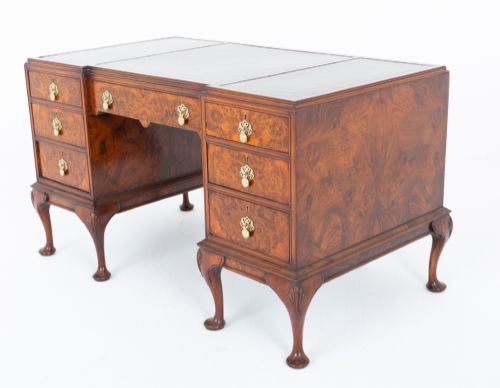
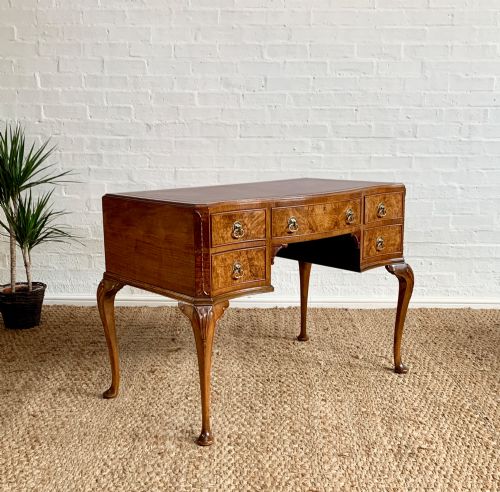


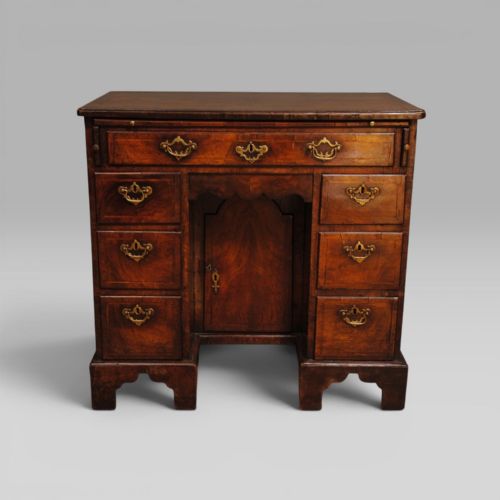

Queen Anne Kneehole Desk
A queen anne kneehole desk is a compact writing table with a central recess, offering refined symmetry and fitted drawers for domestic study.

What these desks are
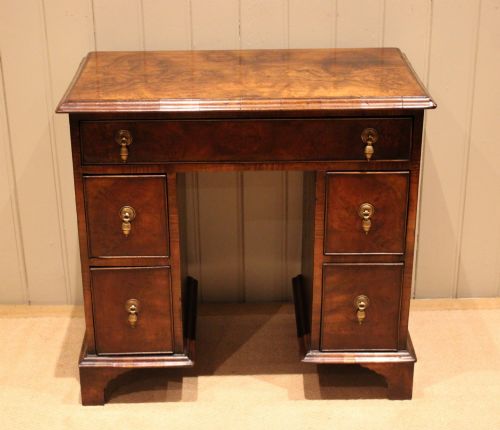
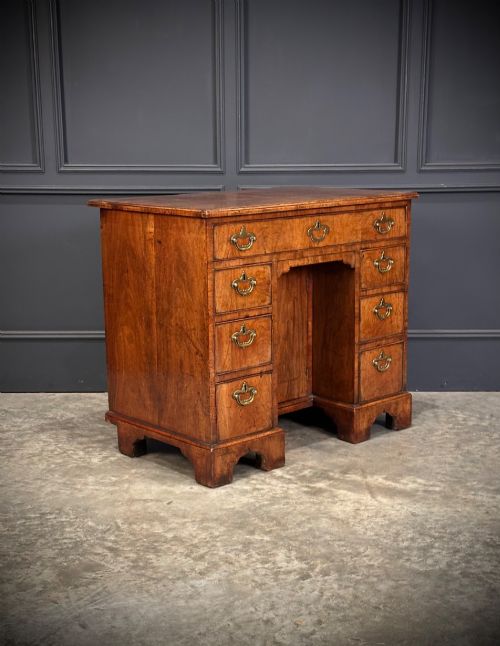
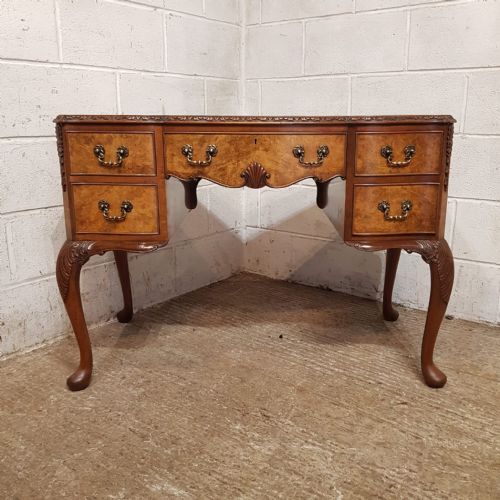
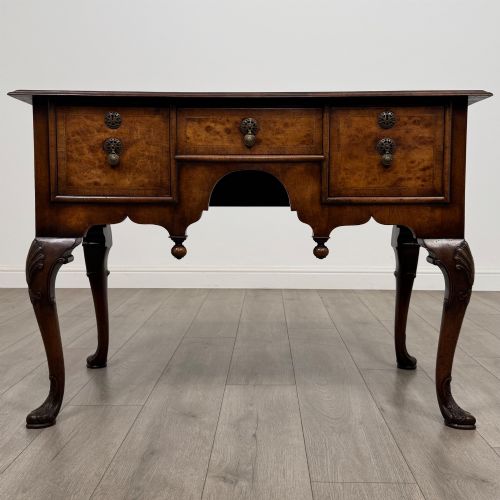
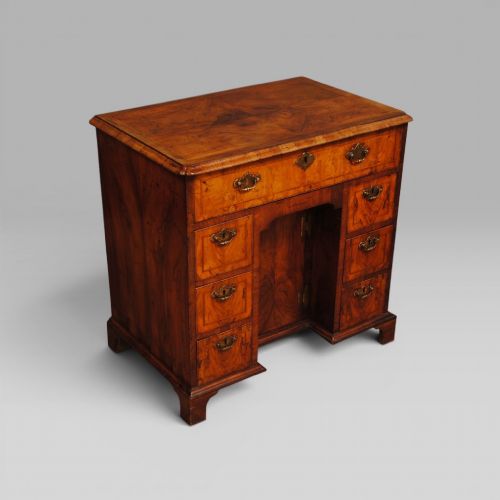
A queen anne kneehole desk combines a recessed cupboard or kneehole space flanked by banks of small drawers, set beneath a rectangular writing surface. These pieces emerge primarily from the eighteenth century and subsequent revival periods, notably around nineteen thirty and the late nineteenth century.
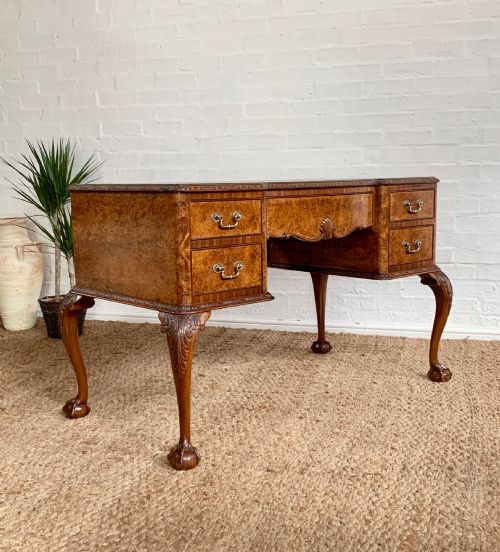
The form appears in walnut, burr walnut, oak, and occasionally mahogany, often built to small proportions suitable for domestic writing and dressing tasks. Examples range from eighteenth-century originals with crossbanding to later revival interpretations.
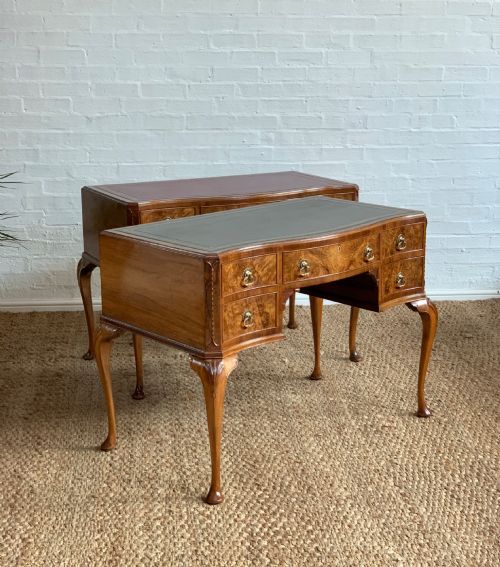
Buyers encounter both period originals and later Queen Anne style iterations featuring green tooled leather writing surfaces and fitted drawers. The nomenclature spans Georgian pieces and dressing chests designed in the characteristic manner.
How they were made
Cabinetmakers construct these desks using timber carcasses faced with figured veneers, incorporating crossbanding and feather banding to accentuate drawer fronts. Oak often forms the secondary timber for drawer linings and internal framing.
Surfaces frequently feature inset tooled leather writing panels, while drawer construction relies on traditional joinery methods. Brass hardware, including drop handles and escutcheons, secures the openings.
Retail Price Guide 2026
Typical UK retail prices for queen anne kneehole desk, calculated from the Sellingantiques database of over a million retail prices indexed since 2003. This retail price guide relies exclusively on Sellingantiques data; no external sources or auction records are used, so the figures do not describe the wider market.
Listings span the eighteenth century, the year nineteen thirty, and the Georgian period, utilising walnut, burr walnut, oak, brass, and leather.
What varies in quality
The choice and figuring of the walnut veneer dictate visual presence, with burr walnut and symmetrical grain patterns representing the higher end of the craft. Preservation of original brass hardware and untouched timber surfaces distinguishes period survivals from later alterations.
Proportion and scale define the architecture of the piece, where diminutive dimensions and crisp crossbanding reflect superior cabinetmaking ambition.
The Queen Anne Kneehole Desk Glossary
- Kneehole
- A recessed space beneath the central writing surface of a desk, often flanked by small drawers or a small cupboard door. This arrangement provides comfortable clearance for the user's legs while seated.
- Crossbanding
- A narrow strip of veneer laid perpendicularly to the surrounding grain along the borders of a drawer front or top. This technique creates a neat framing effect that highlights the primary timber.
- Feather banding
- Two strips of veneer laid diagonally to meet at a central point, creating a chevron or herringbone pattern. It requires precise cutting and adds ornamental depth to drawer surrounds.
- Burr walnut
- Timber taken from a growth deformity on a walnut tree, yielding swirling, highly figured grain patterns. It is sliced into thin veneers for decorative surfaces.
- Dressing chest
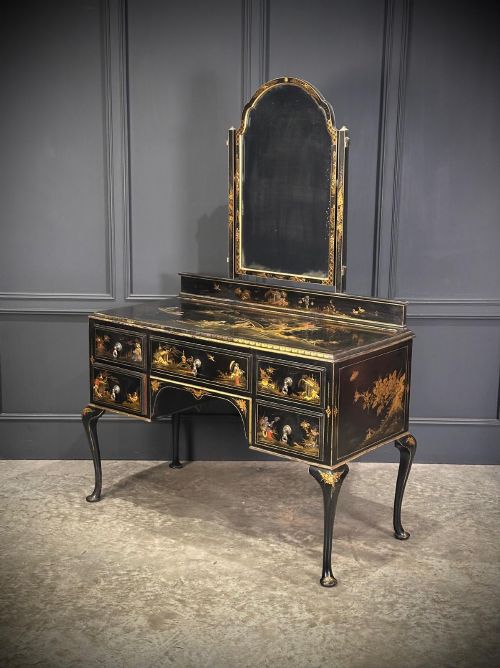
- A low chest of drawers, sometimes adapted or designed with a kneehole recess, used for personal grooming and writing. The form frequently shares dimensions with small writing desks.
Frequently Asked Questions
What is a kneehole desk?
A kneehole desk is a small writing table featuring a central recessed space beneath the top, flanked by two banks of drawers. This configuration allows a person to sit closely to the writing surface.
The design dates back to the early eighteenth century and remains popular for its compact footprint in smaller rooms.
How do I tell an eighteenth-century desk from a revival piece?
Eighteenth-century desks exhibit period construction methods, timber oxidation, and hand-cut joinery that reflect the technology of the original era. Revival pieces from periods like nineteen thirty often display machine-cut elements and different internal wood species.
Examining the secondary timbers and backboards helps determine the precise age of the cabinetwork.
Were these desks used for writing or dressing?
Historical examples served multiple domestic functions, operating as writing tables, private study desks, or dressing chests with drawers for personal items. The inclusion of a central cupboard behind the kneehole often concealed a shelf or a space for storage.
Over time, many of these pieces acquired the primary designation of writing desks due to their leather-inset tops.
What woods were used in these desks?
Walnut and burr walnut dominate the exterior surfaces of these pieces, providing rich brown tones and decorative grain figures. Secondary woods such as oak appear in the drawer linings and internal partitions.
Later revival iterations also incorporate mahogany alongside traditional walnut.