




Small Walnut Dressing Table
A small walnut dressing table offers compact surface space and rich grain figure, bringing period character to a bedroom or hall.
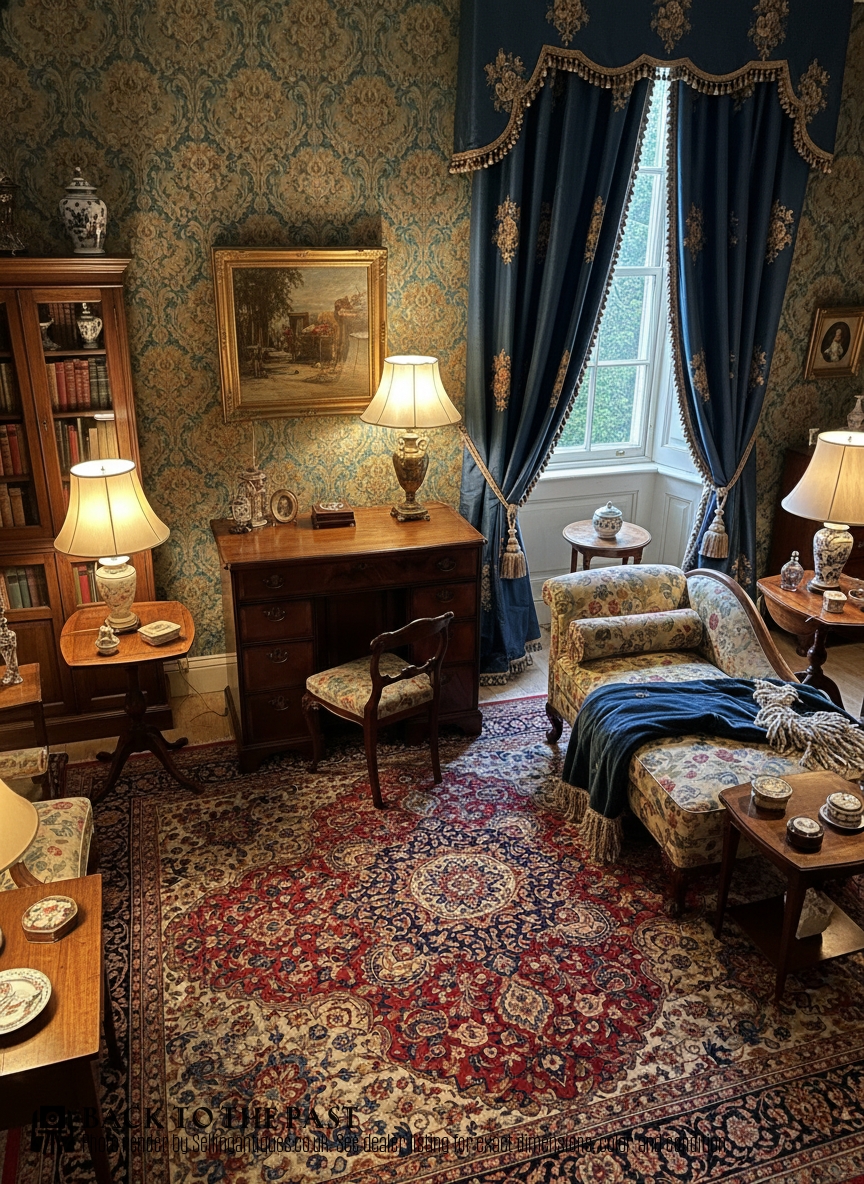
Small Walnut Dressing Table
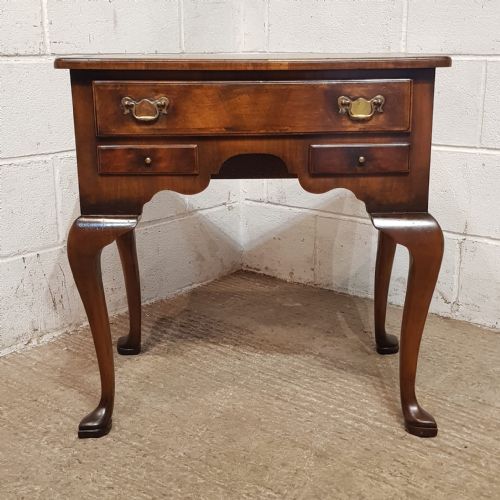
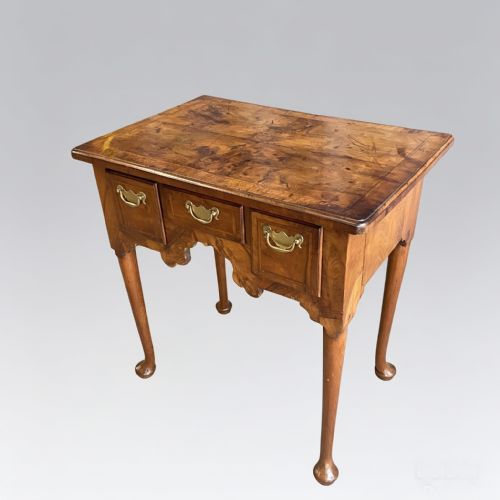
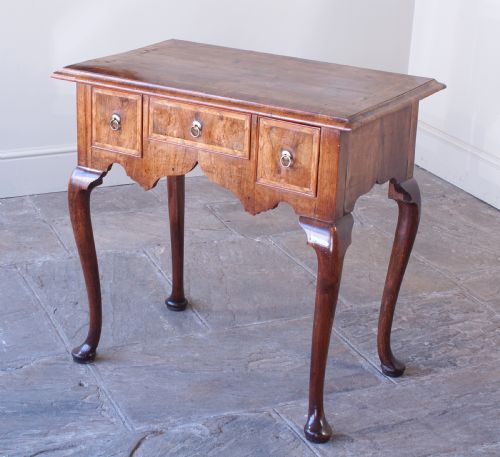
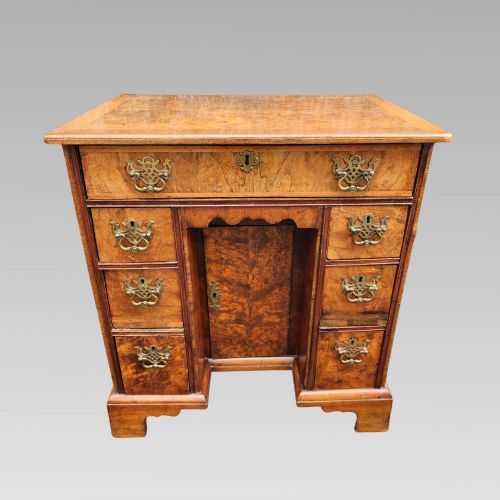
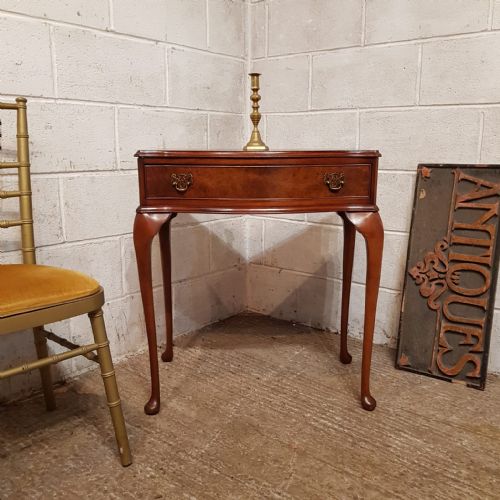
When you search for a small walnut dressing table, you encounter lowboys, kneehole desks, and side tables that served for grooming and correspondence. The pieces meeting this description span the eighteenth century up to the nineteen-twenties, incorporating revival movements alongside earlier periods.
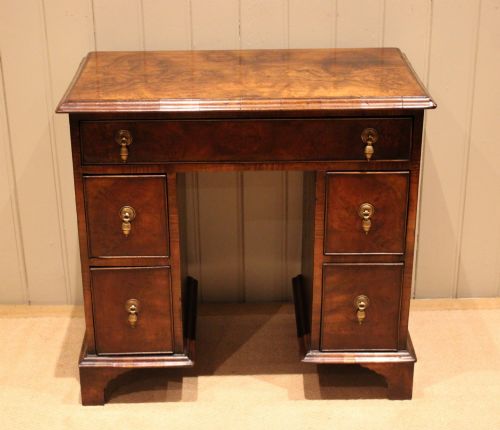
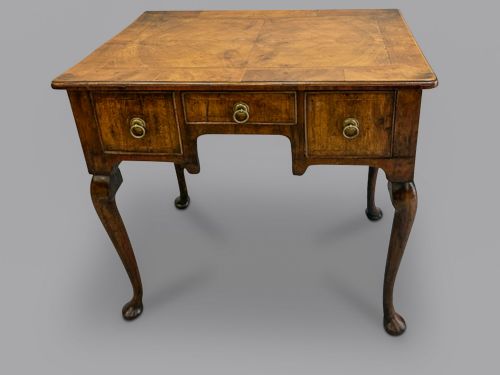
The lowboy emerges frequently as a primary form, featuring modest proportions and drawer storage beneath a flat top. Kneehole desks and side tables also populate this category, constructed in walnut, burr walnut, and satin walnut.
Earlier examples display eighteenth-century origins in Queen Anne and George II styles, while later variations include Victorian and Edwardian interpretations. These compact pieces suit smaller rooms while providing surface utility and traditional craftsmanship.
Judging quality and proportion
Quality rests upon the selection of timber veneers and the crispness of execution in details such as drawer linings and brass mounts. Superior examples maintain balanced proportions and retain their original surface patination rather than over-restored finishes.
The integration of period characteristics, whether genuine eighteenth-century construction or precise revival work, distinguishes finer items from standard commercial pieces.
Several lowboys masquerade as desks, proving that eighteenth-century ancestors were just as keen on multi-tasking furniture as we are today.
The Small Walnut Dressing Table Glossary
- Lowboy
- A small table with drawers, typically raised on four legs, used from the early eighteenth century onward for writing or grooming. This form forms a large portion of the available selection.
- Kneehole desk
- A compact desk featuring a recessed central cupboard flanked by pedestals of small drawers. Such pieces often serve dual functions as writing tables or dressing surfaces.
- Burr walnut
- A veneer sliced from walnut tree growths, producing an intricate, swirling grain pattern. Cabinetmakers selected this material to adorn drawer fronts and primary surfaces.
- Marquetry veneer
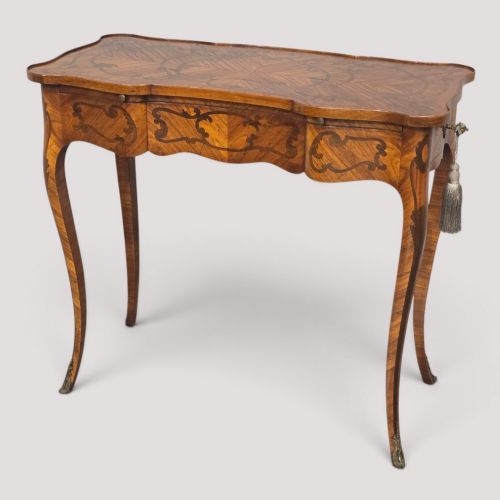
- Inlays of contrasting woods arranged in pictorial or geometric patterns. This technique appears on French writing tables from around nineteen hundred.
- Queen Anne style
- A design movement characterised by cabriole legs, pad feet, and curved outlines. Revival versions of this style appear frequently in twentieth-century pieces.
Small Walnut Dressing Table: Frequently Asked Questions
What is a lowboy?
A lowboy is a small table equipped with one or more tiers of drawers beneath the top surface. Historically utilised for dressing or writing, these compact tables fit easily into hallways and bedrooms.
They share physical characteristics with the small walnut dressing table category, offering surface space and concealed storage without dominating a room.
How do I identify eighteenth century pieces?
Eighteenth-century pieces display period construction methods, timber patination, and stylistic markers specific to the reigns of Queen Anne or the early Georges. Hand-cut dovetails and timber shrinkage offer clues to age.
Comparison with later revival items from the nineteenth and twentieth centuries helps clarify the exact period of manufacture.
Where should I place a small dressing table?
These compact tables suit bedrooms, dressing rooms, or entrance halls where floor space is limited. Their modest footprint allows them to function as writing desks or display surfaces.
Pairing them with a matching chair or mirror creates a dedicated grooming or correspondence station.
What is the difference between walnut and burr walnut?
Standard walnut timber provides a straight, rich brown grain pattern across larger surfaces. Burr walnut derives from tree excrescences that create dense, swirling patterns used mainly for decorative veneer.
Both materials appear across the listed pieces, with burr walnut typically reserved for prominent drawer fronts and top panels.