
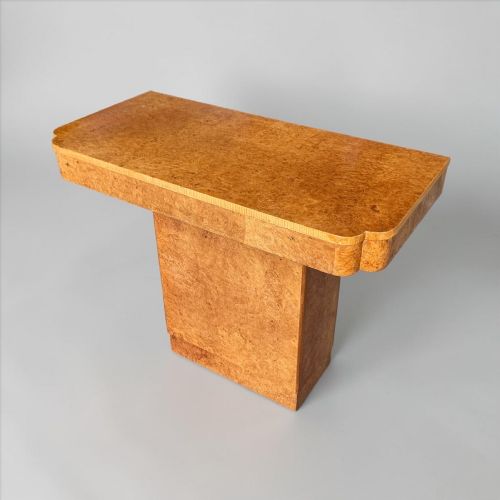
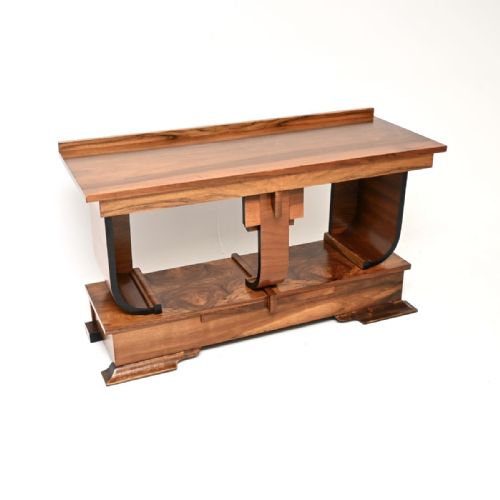
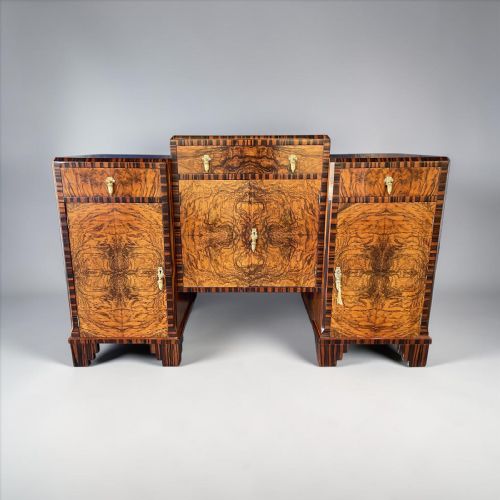
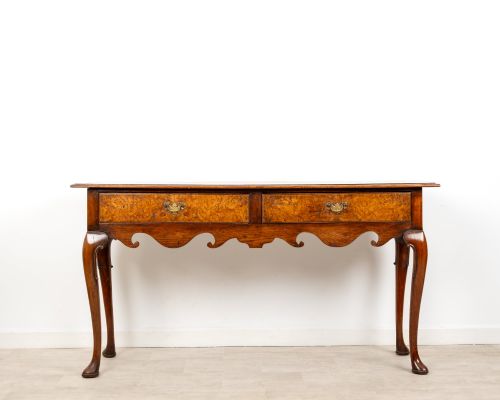




1920s Walnut Console
A 1920s walnut console brings rich grain and practical surface area to a hallway, grounding an interior with period warmth.
1920s Walnut Console
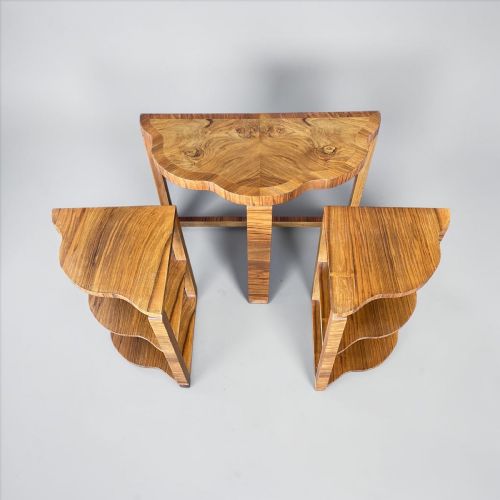
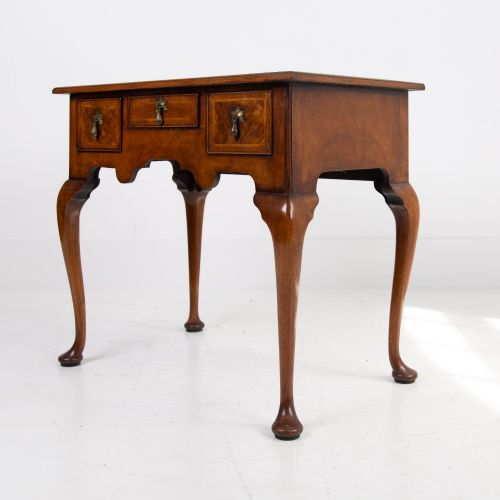
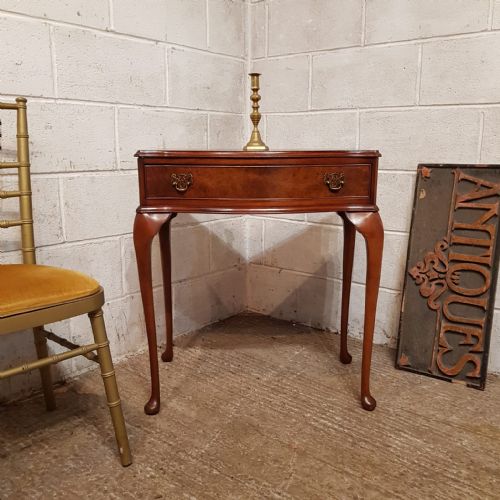
A 1920s walnut console table is a narrow surface designed to stand against a wall, frequently seen in forms such as demi-lune folding card tables, serpentine fronted designs, and lowboys from the Edwardian period through to the 1930s and 1940s. These pieces often arrive in revival designs like Queen Anne Style alongside striking Art Deco interpretations.
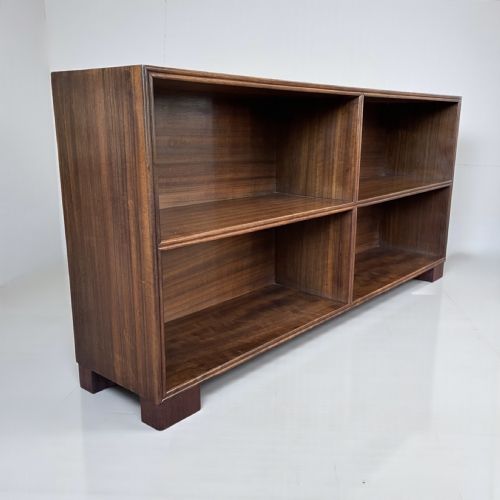
Buyers seeking this phrase encounter console tables alongside related forms like side tables, sideboards, and sewing machine cabinets that share the same period vocabulary. The material palette relies heavily on walnut, burr walnut, figured walnut, and walnut veneer combined with ebonised wood and brass details.
The origin of these pieces spans English workshop production and Italian makers, reflecting varied regional interpretations of the decade's prevailing aesthetic. Selecting a piece involves weighing the proportions of a bow front or serpentine shape against the available space in a hall or living room.
How they were made
Cabinet makers of the period utilised solid timber carcasses overlaid with carefully selected veneers, deploying figured walnut and burr walnut across tabletops to showcase complex natural grain patterns. This technique maximised the visual impact of the wood.
Construction frequently incorporated secondary supports in ebonised wood alongside functional brass hardware such as hinges and handles. The application of polished finishes protected the delicate veneers while deepening the warm brown tones characteristic of the timber.
Among the console tables hides a working sewing machine cabinet disguised as a polished walnut side table.
What varies in quality
The tier of a piece rests on the choice of veneer selection and the symmetry achieved in matching the grain across expansive surfaces like a console top or folding card table leaf. Superior examples demonstrate a disciplined hand in cutting and laying burr walnut to create harmonious patterns.
Construction integrity in the joints and the crispness of carved details in Queen Anne style cabriole legs or Art Deco geometric framing set finer cabinet work apart from standard production. The quality of the underlying wood and the retention of original brass fittings also dictate the standing of an individual table.
Maurice Adams
The 1920s Walnut Console Glossary
- Burr walnut
- A prized timber harvested from growth excrescences on walnut trees, yielding intricate, swirling grain patterns that are sliced into veneers for decorative tabletops.
- Demi-lune
- A half-moon shape characteristic of console and card tables designed to sit flush against a wall while occupying minimal floor depth.
- Lowboy
- A small dressing or side table featuring a low set of drawers, appearing in period walnut listings alongside traditional console forms.
- Serpentine front
- A furniture front characterised by a wavy outline with a convex centre flanked by concave curves, demanding high skill in veneer application.
- Veneer
- A thin layer of figured walnut or burr birch applied over a stable wood base to display decorative grain without structural warping.
1920s Walnut Console: Frequently Asked Questions
What is a 1920s walnut console used for?
These tables provide a narrow surface for displaying lamps or decorative objects in hallways, living rooms, and narrow circulation spaces. Their shallow depth allows them to furnish compact areas without obstructing movement.
Certain variations include folding mechanisms for card tables, adding convertible utility to the primary surface function.
How do I identify Art Deco style?
Art Deco pieces from this era lean towards streamlined silhouettes, geometric symmetry, and the dramatic use of figured walnut veneers. They step away from historic revival ornamentation in favour of clean architectural lines.
Details often include contrasting ebonised wood elements and simplified hardware rather than traditional carving.
Are Queen Anne style consoles from the 1920s genuine antiques?
Pieces built during the 1920s and 1930s in earlier idioms are revival works rather than original eighteenth-century furniture. They adopt historical characteristics like cabriole legs while retaining early twentieth-century construction methods.
Recognising this distinction helps place the object accurately within its true manufacturing period.
How should I care for walnut veneer surfaces?
Walnut veneer requires protection from direct sunlight and excessive moisture to prevent fading and lifting of the thin wood layers. Regular dusting with a dry, soft cloth maintains the polished finish safely.
Avoiding silicone-based polishes preserves the integrity of the historical polish used on these surfaces.