

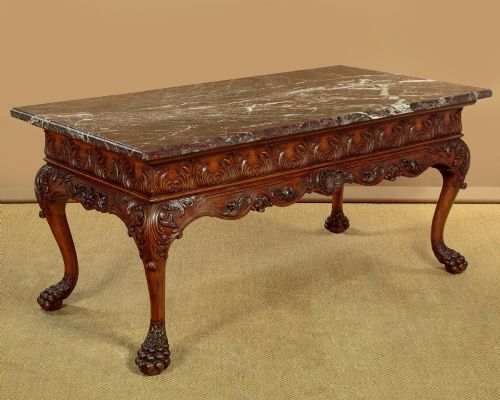
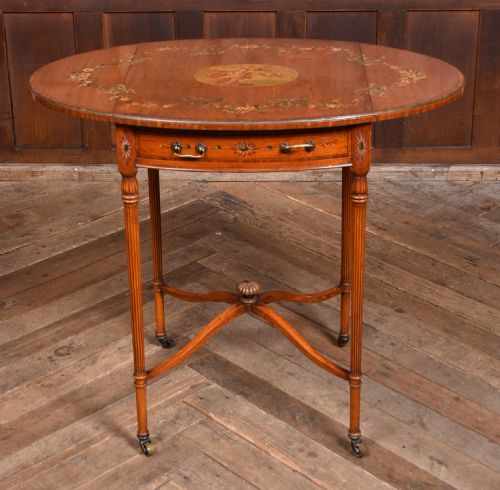

Georgian Revival Side Table
A georgian revival side table brings eighteenth-century elegance into twentieth-century rooms with timeless proportions and rich cabinet timbers.
Understanding Georgian Revival Side Tables
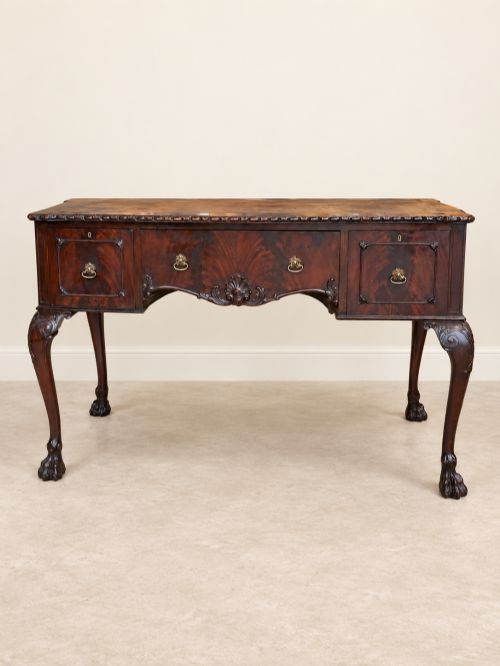
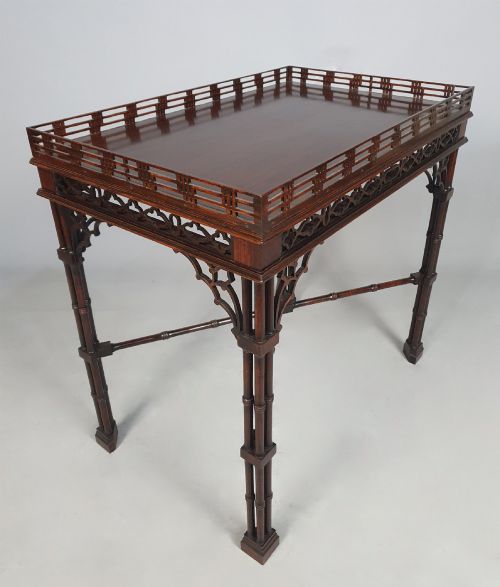
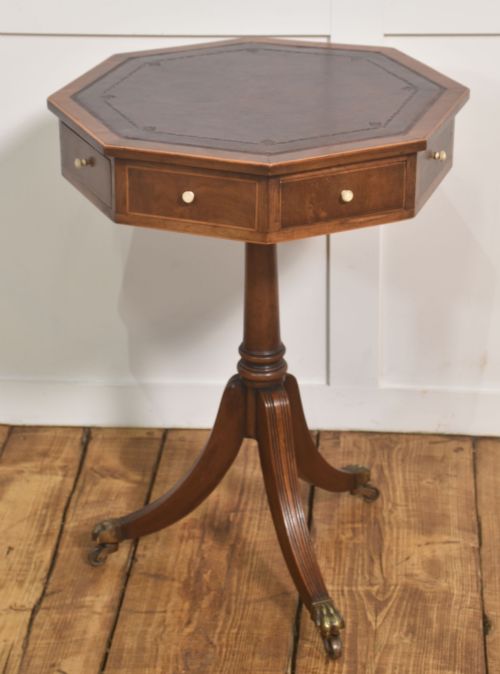
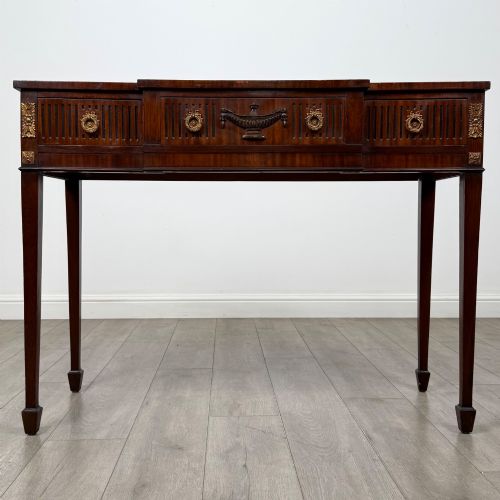
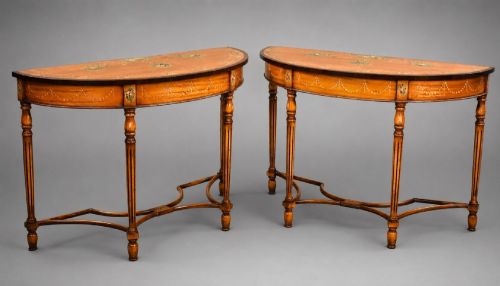
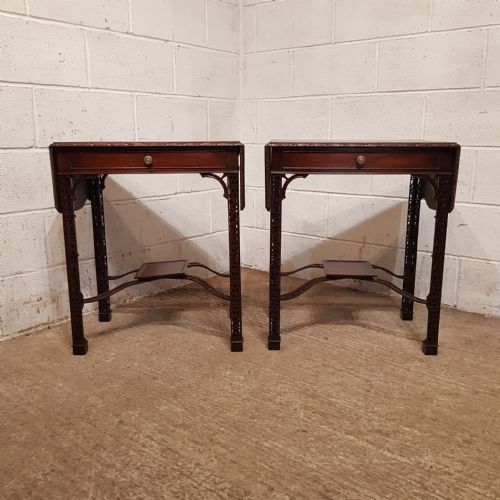
A georgian revival side table copies the graceful lines of eighteenth-century English furniture, constructed primarily during the late nineteenth and early twentieth centuries. These pieces appear as occasional tables, console tables, serving tables, and compact lamp or bedside tables.
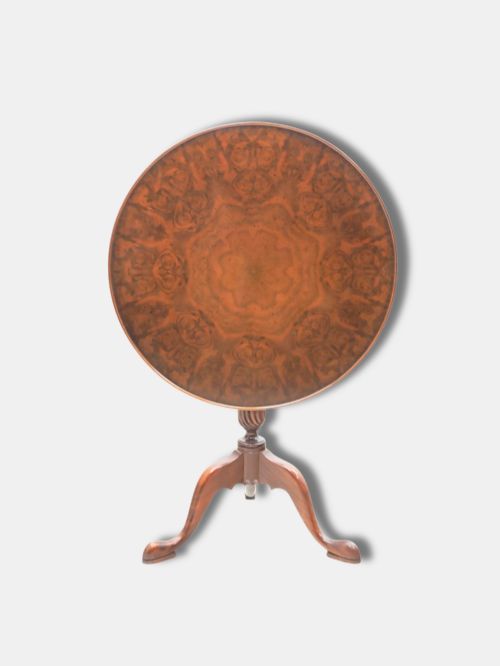
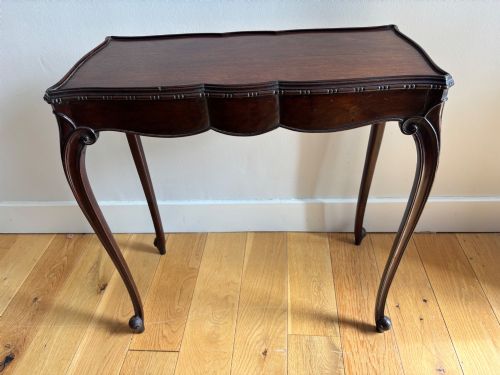
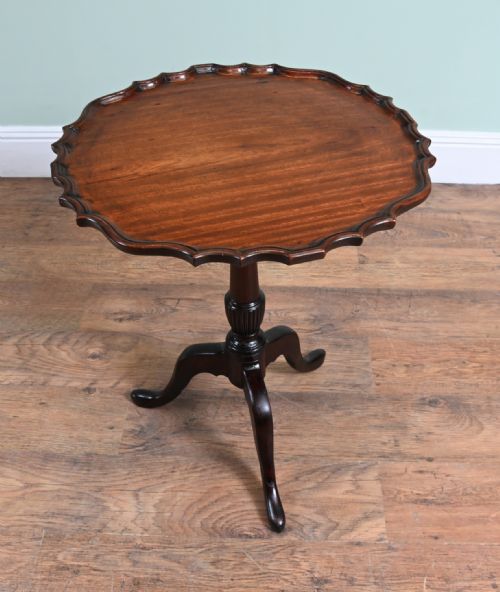
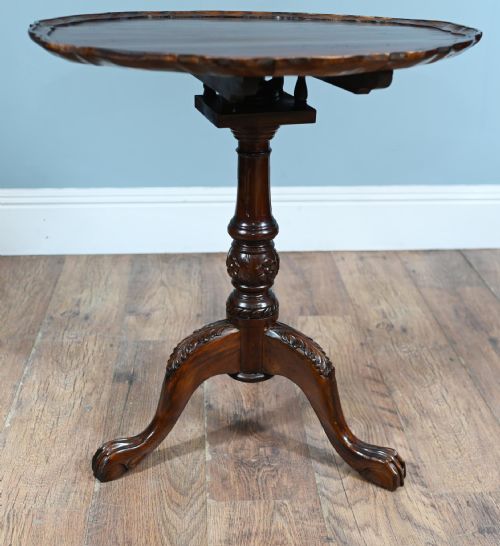
Makers drew heavily on earlier cabinetmaking traditions, producing tripod wine tables, tilt-top designs, and serpentine fronted pieces. The selection commonly includes mahogany and walnut examples, alongside occasional lighter tones such as bleached oak.
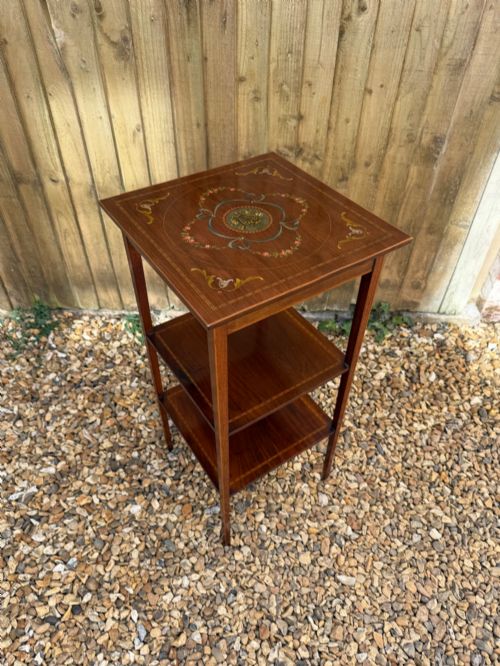
Buyers encounter variations spanning Queen Anne revival influences and Adam style details alongside straightforward georgian revival forms. These tables function practically as bedside surfaces, lamp stands, or decorative hallway consoles.
Materials and Construction
Workshops relied on solid timber and decorative veneers, selecting mahogany, walnut, and burr walnut veneer for polished surfaces. Selected pieces incorporate brass hardware and intricate inlaid details.
Joinery techniques mirrored earlier periods, utilising tripod bases, tilt mechanisms, and shaped pie crust edges. Cabinetmakers shaped serpentine and bowfront structures with curved wooden panels and fitted drawer compartments.
Retail Price Guide 2026
Typical UK retail prices for georgian revival side table, calculated from the Sellingantiques database of over a million retail prices indexed since 2003. This retail price guide relies exclusively on Sellingantiques data; no external sources or auction records are used, so the figures do not describe the wider market.
Some tilt-top tables cleverly double as impromptu dining surfaces for solitary tea drinkers.
Assessing Quality and Execution
Quality rests in the selection of timber veneers and the precision of the cabinetwork. Burr walnut veneer displays complex grain patterns, whilst solid mahogany supports stable, well-proportioned frames.
Refined pieces show careful attention to edge profiles, such as pie crust carving and smooth mechanical actions on tilt-top or tripod bases. Superior examples maintain balanced proportions and crisp mouldings without heavy or clumsy joints.
Edwards and Roberts
The Georgian Revival Side Table Glossary
- Tripod table
- A small freestanding table supported by a central pillar on three legs. These versatile surfaces often feature tilt-top mechanisms for easy storage.
- Serpentine front
- A furniture front characterised by a curved outline that is convex at the centre and concave at the ends. This shape requires advanced woodworking skill to execute cleanly.
- Pie crust edge
- A raised, carved tabletop border shaped in gentle undulating curves resembling pastry edges. This decorative detail typically appears on small wine or occasional tables.
- Burr walnut veneer
- A thin slice of wood cut from a walnut tree outgrowth, prized for its swirling, highly figured grain pattern. Cabinetmakers apply this veneer to primary surfaces for visual impact.
- Console table
- A table designed to stand against a wall, frequently supported by brackets or legs. These tables serve a primarily decorative or surface role in hallways and principal rooms.
Frequently Asked Questions
What is a georgian revival side table?
A georgian revival side table is a piece of furniture made in the late nineteenth or early twentieth century that imitates eighteenth-century English design. These tables adopt classic forms such as tripod bases, console shapes, and serpentine fronts.
They serve as practical occasional surfaces in modern homes while retaining traditional cabinetmaking aesthetics. Walnut and mahogany are the predominant timbers used in their construction.
How were these tables used originally?
These tables served multiple domestic functions in drawing rooms, bedrooms, and dining spaces. Smaller tripod and wine tables held drinks, lamps, or books.
Larger console and serving tables functioned as decorative display ledges or sideboards during meals. Bedside variants provided convenient enclosed storage next to sleeping quarters.
How do I distinguish walnut from mahogany?
Walnut displays a rich, brown tone often featuring intricate grain patterns or burr figures that create a mottled appearance. It was frequently used for veneered surfaces on high-end occasional tables.
Mahogany exhibits a denser, reddish-brown colour with a straight, uniform grain. It provides exceptional structural stability for solid frames and carved edges.
Where should I place a side table?
These compact tables fit easily beside sofas, armchairs, or beds as functional surfaces for lamps and small objects. Console and serving tables suit hallways and living room walls where floor space is limited.
Their decorative timber grains and traditional silhouettes complement both antique-filled interiors and contemporary neutral spaces.