
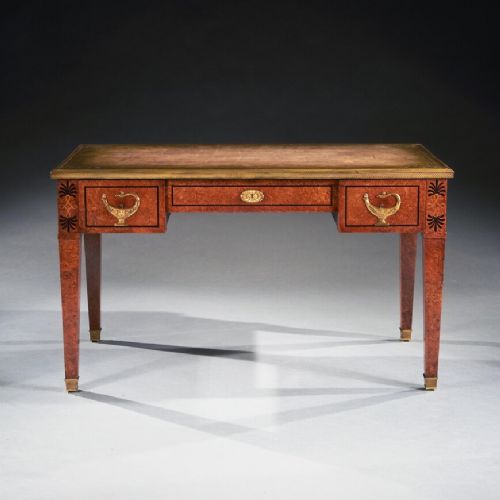
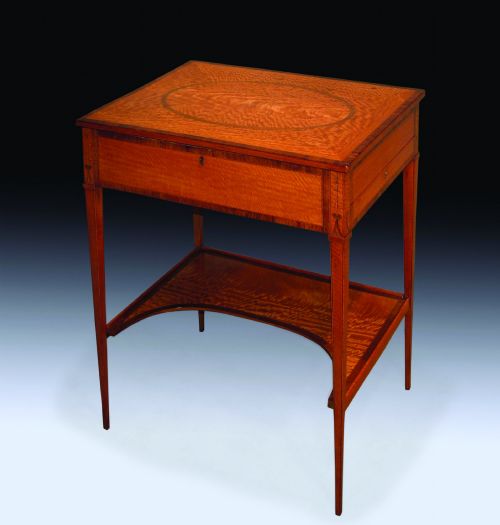
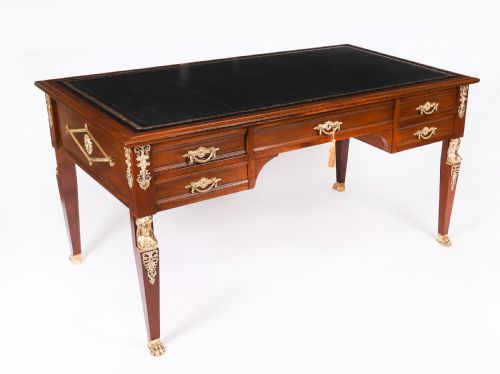
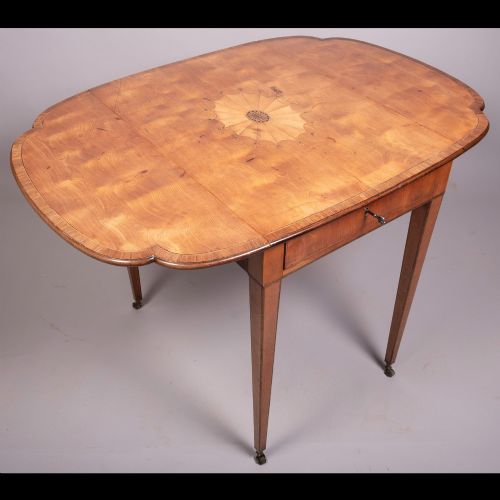
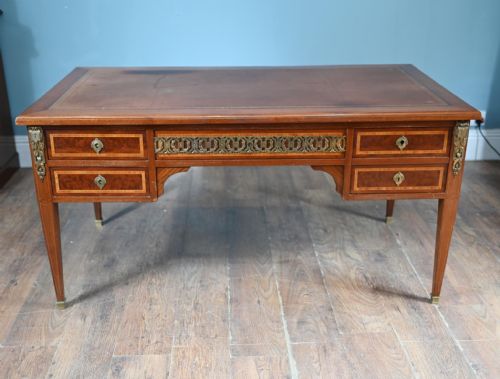
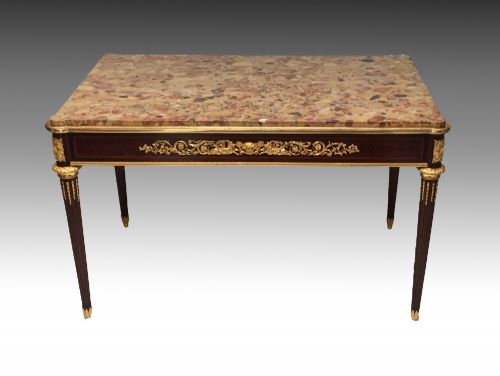
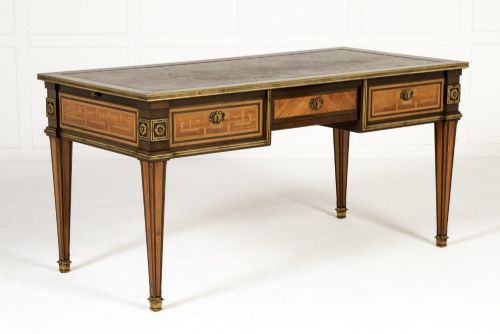

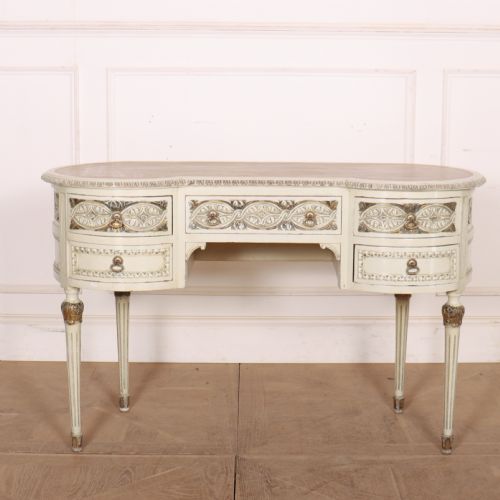
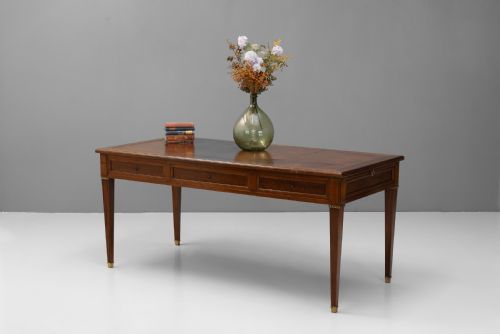
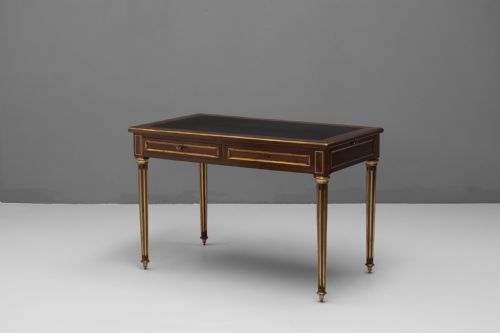
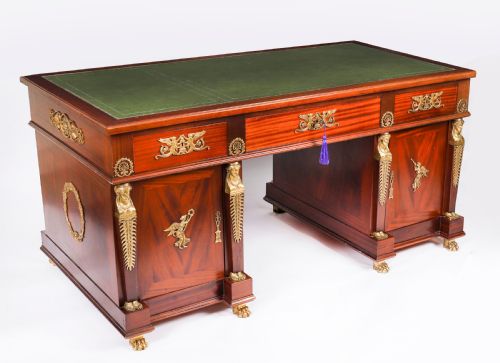
Neoclassical Writing Table
These neoclassical writing tables balance architectural restraint with refined craftsmanship, offering an enduring centrepiece for daily correspondence.
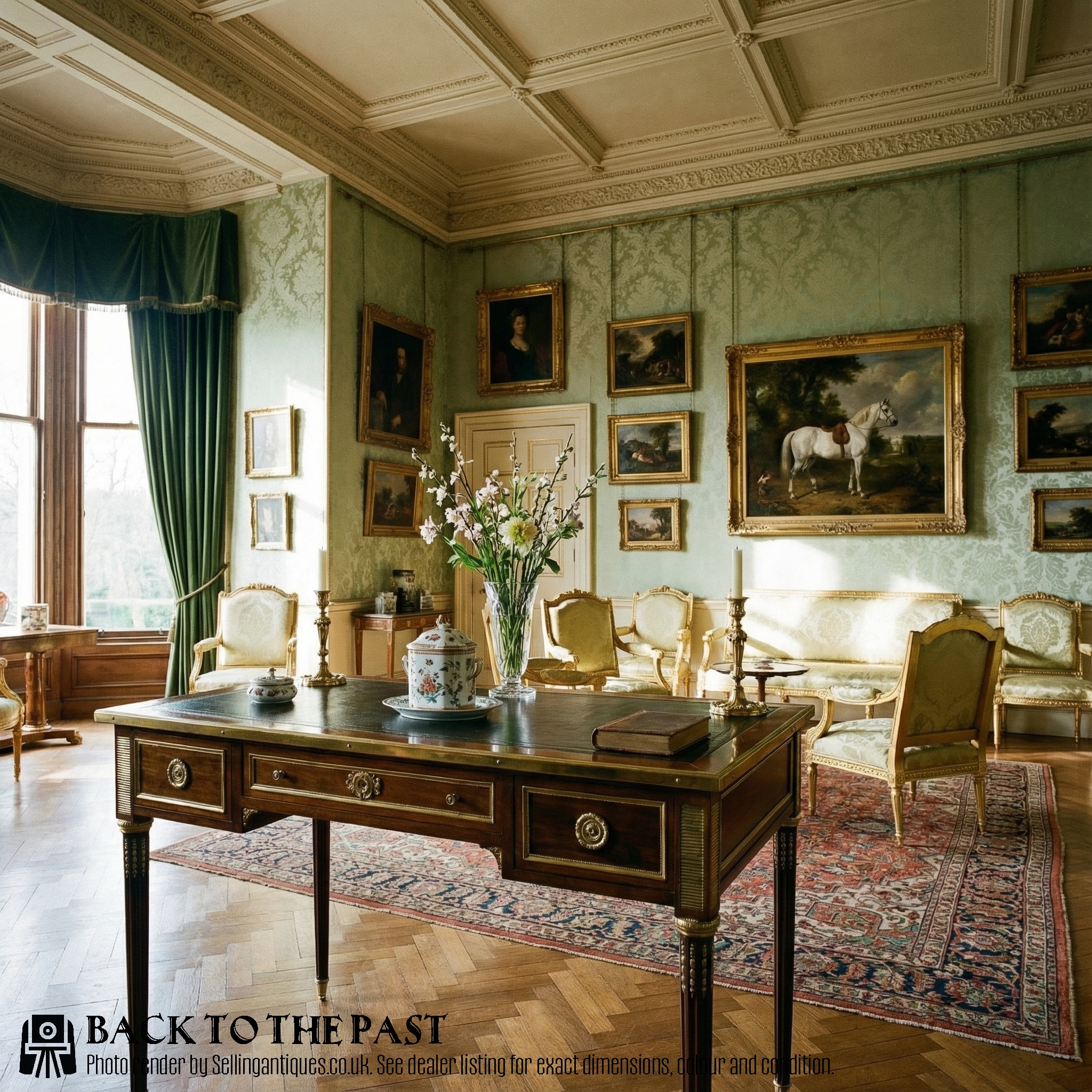
Neoclassical Writing Tables
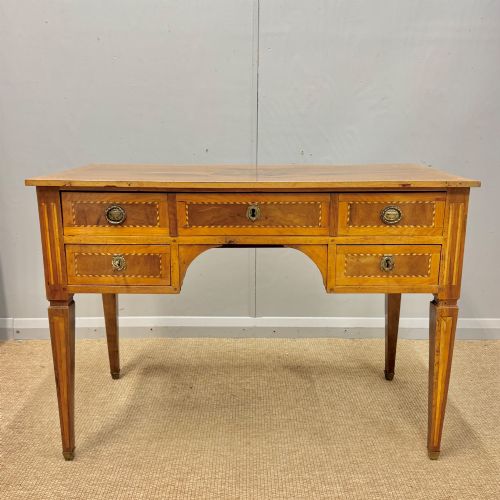
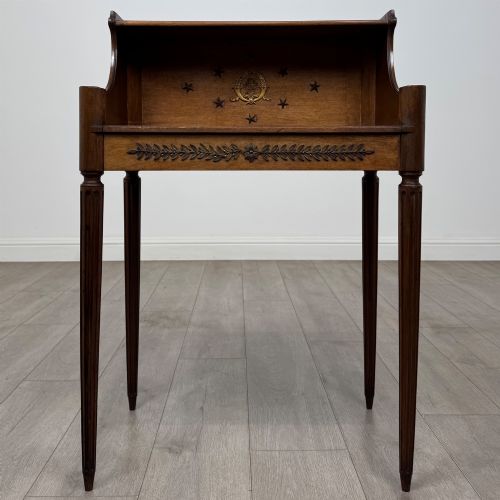
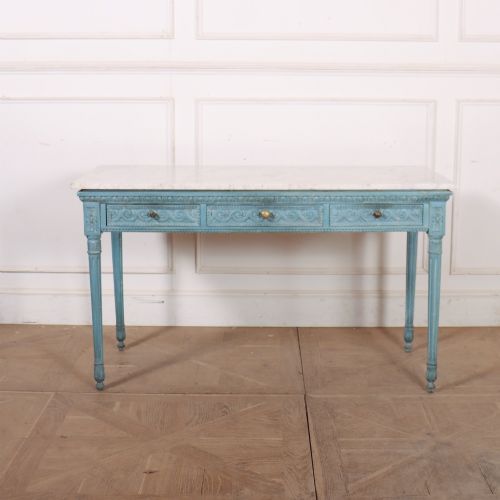
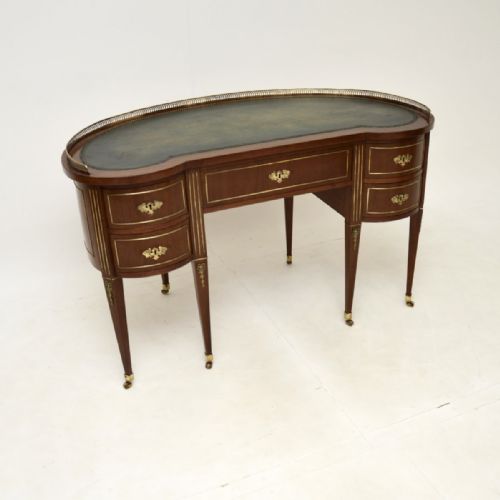
A neoclassical writing table combines classical symmetry and proportion with functional workspace, appearing in forms such as compact ladies' writing cabinets, console tables, and freestanding bureau plats. These pieces draw upon Georgian, George III, and Louis XVI design vocabularies, translating ancient architectural motifs into domestic furniture.
Buyers frequently encounter English Sheraton and Georgian Revival interpretations alongside French examples like the bonheur du jour. Materials span from figured mahogany and burr walnut to satinwood, embellished with boxwood inlay and brass mounts.
The objects serve primarily as refined desks or writing surfaces, originating from the eighteenth, nineteenth, and early twentieth centuries. Each piece reflects the enduring appeal of classical revival aesthetics in domestic interiors.
Materials and Construction
Cabinetmakers utilised dense timbers including mahogany, walnut veneer, and satinwood, often applying contrasting boxwood inlay to delineate geometric panels and borders. Structural elements incorporate secondary woods appropriate to the period of manufacture.
Surfaces frequently feature inset leather writing panels framed by banded wood borders. Brass mounts, handles, and gallery rails are cast or chased, accentuating the linear symmetry characteristic of the style.
Retail Price Guide 2026
Typical UK retail prices for neoclassical writing table, calculated from the Sellingantiques database of over a million retail prices indexed since 2003. This retail price guide relies exclusively on Sellingantiques data; no external sources or auction records are used, so the figures do not describe the wider market.
Listings span the eighteenth to the early twentieth century, incorporating Georgian, Victorian, and Georgian Revival periods alongside Louis XVI styles.
Judging Quality
Quality rests in the precision of the cabinetwork, particularly the crispness of the boxwood inlay and the selection of figured veneers such as burr walnut and satinwood. Superior examples maintain balanced proportions and integration between decorative brass elements and the underlying timber.
The treatment of secondary surfaces and the retention of original brass hardware distinguish finer pieces. Construction methods reveal the maker's adherence to period techniques, ensuring structural integrity alongside decorative refinement.
The Neoclassical Writing Table Glossary
- Bureau plat
- A freestanding double-sided writing table, usually fitted with drawers in the frieze and originating from French tradition. This form prioritises symmetrical design and provides an expansive leather-lined top.
- Bonheur du jour
- A light lady's writing desk featuring a small cabinet or set of drawers superstructure above the main writing surface. Originating in mid-eighteenth-century France, it became popular in various revival styles.
- Satinwood
- A durable, lustrous timber native to tropical regions, prized for its pale golden yellow colour and subtle sheen. Cabinetmakers utilised veneers of this wood for contrasting banded borders and marquetry panels.
- Boxwood inlay
- The technique of embedding narrow strips of pale boxwood into contrasting darker timbers to create geometric stringing or floral motifs. This meticulous work defines the linear borders on neoclassical case furniture.
- Sheraton style
- A neoclassical furniture style inspired by designer Thomas Sheraton, characterised by straight tapered legs, restrained classical ornamentation, and delicate inlay. It represents the lighter aesthetic of the late eighteenth century.
Frequently Asked Questions
What is a bureau plat?
A bureau plat is a freestanding writing table designed to be viewed from all sides, typically featuring drawers integrated into the frieze. These tables often stand on slender tapering legs and carry leather inset tops.
Originating in France, the form became central to neoclassical interiors across Europe. They served as formal desks for correspondence rather than storage units.
How do I style a neoclassical desk?
These tables function effectively as standalone statement pieces within a study, living room, or bedroom. Their balanced proportions allow them to sit comfortably away from walls.
Pair the desk with a simple, understated chair to maintain the visual focus on the timber and inlay work. Avoid overcrowding the surface to preserve the clean architectural lines characteristic of the period.
What is satinwood?
Satinwood is a hard, dense timber yielding a distinctive golden-yellow surface with a natural chatoyant sheen. It was widely adopted by eighteenth-century cabinetmakers for high-status neoclassical pieces.
The wood takes a fine polish and provides a bright contrast when used alongside darker timbers like mahogany and rosewood in stringing and inlay.
How do I identify Louis XVI style?
Louis XVI style furniture is defined by straight lines, right angles, and classical architectural motifs such as fluted columns and acanthus leaves. This aesthetic replaced the curving asymmetry of the preceding rococo period.
Look for tapered cylindrical legs and restrained brass mounts. The overall impression is one of geometric rigour and classical proportion.
Where were these tables used?
Neoclassical writing tables were originally placed in private studies, drawing rooms, or boudoirs of grand residences. They provided a dedicated surface for letter writing and estate management.
Their finished backs meant they could float in the centre of a room rather than being pushed against a wall. Today, they transition easily into modern home offices.