
English Writing Table
An english writing table combines functional workspace with period cabinetmaking, offering a surface for correspondence supported by drawers and classical timber framing.
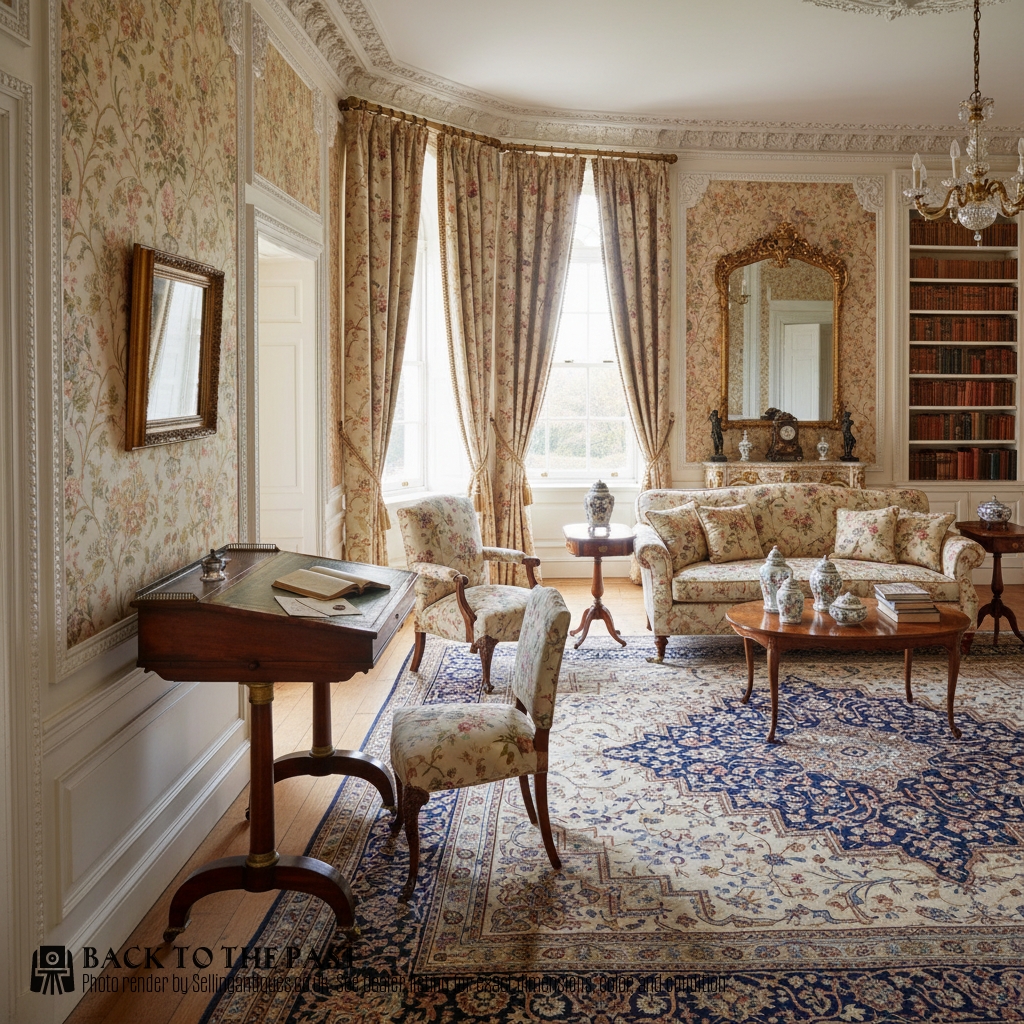
English Writing Table
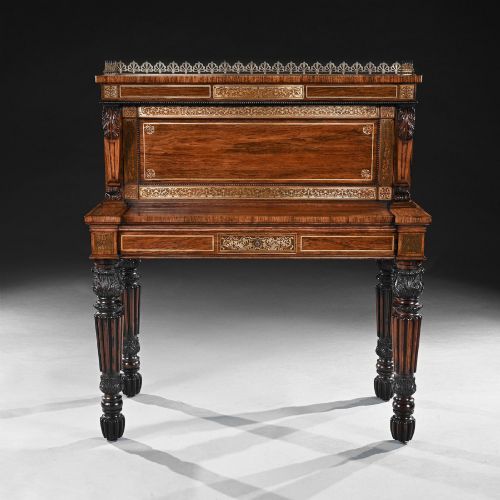
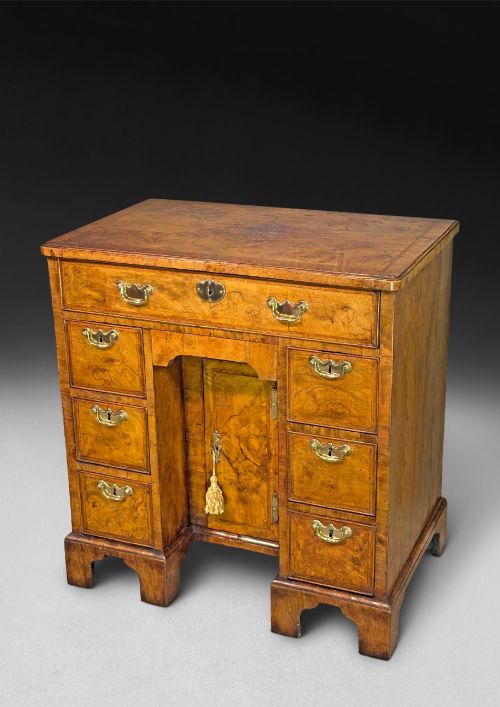
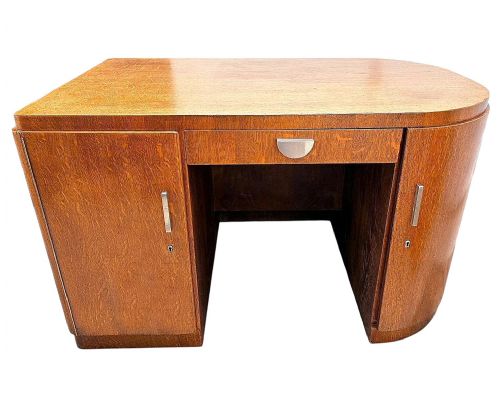
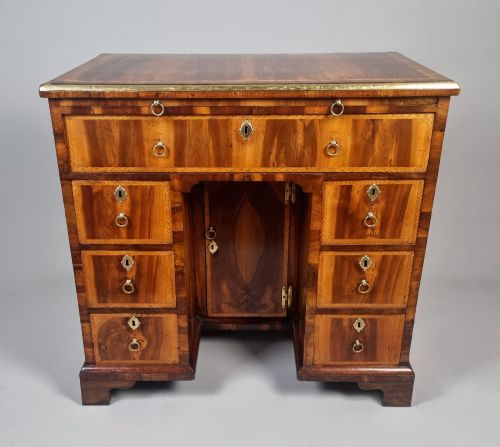
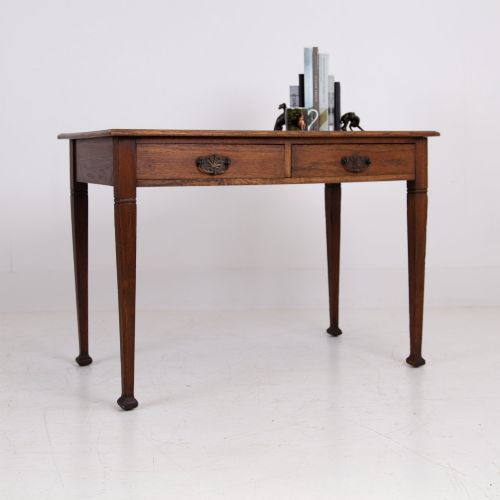
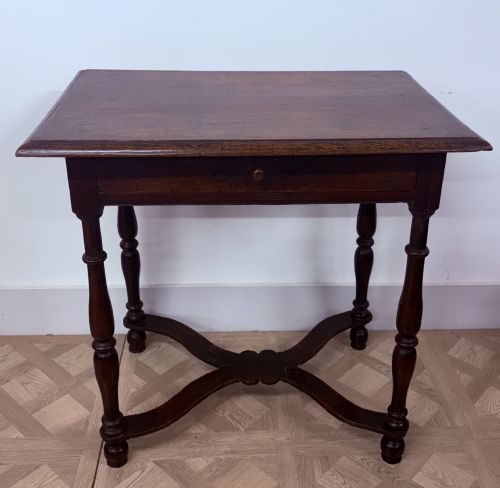
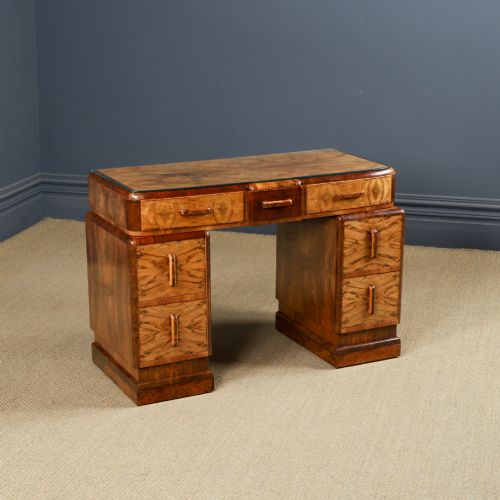
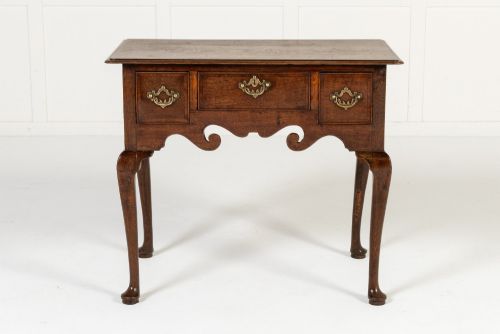
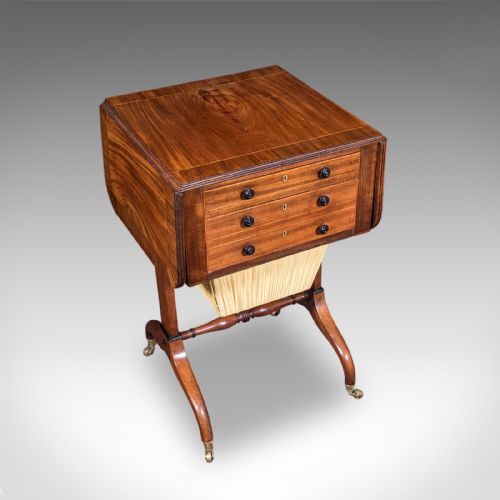
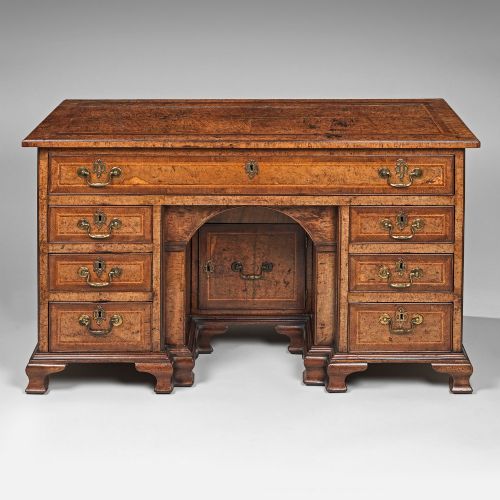
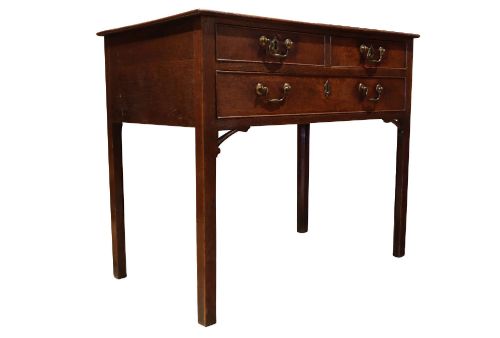
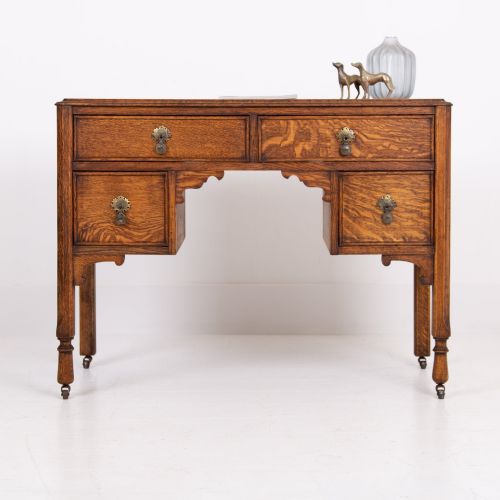
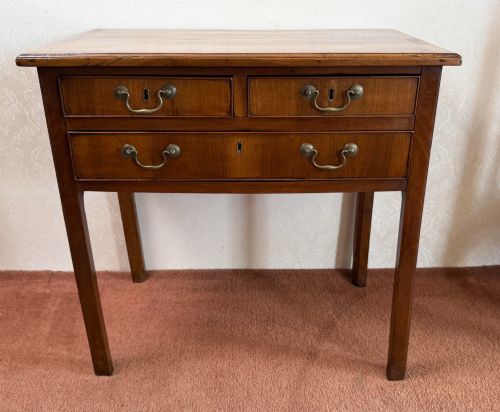
An english writing table encompasses varied freestanding domestic forms spanning the 17th century through the 1930s, including compact lowboys, twin pedestal desks, and kidney shapes.
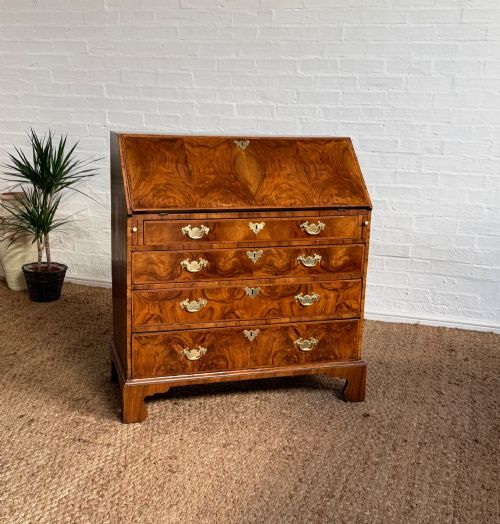
Early pieces originate in provincial oak and walnut from the Georgian and William and Mary eras, whilst later examples utilise mahogany, rosewood, and pollard oak.
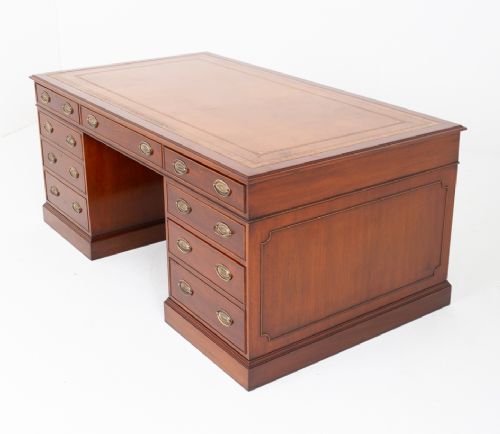
The version most commonly met on this page is the 19th-century mahogany or oak desk, often fitted with inset leather surfaces and multiple working drawers.
Construction and Timber
Joinery relies on solid native and imported hardwoods like oak, walnut, and mahogany, shaped into framing and dovetailed drawer boxes.
Surface enhancement involves brass hardware, string inlay, or contrasting veneers such as burr elm, rosewood, and satinwood applied over secondary timbers.
Writing surfaces frequently integrate tooled leather panels set within banded borders, paired with turned or tapering legs characteristic of each stylistic period.
A tiny cedar-lined drawer designed for sealing wax often hides quietly inside the kneehole of a walnut desk.
Craftsmanship and Proportion
Superior examples demonstrate careful timber selection, such as figured walnut or faded mahogany with harmonious grain matching across top boards and drawer fronts.
Structural integrity shows in tight joinery, smooth drawer operation, and retention of original hardware, brasses, and leather inserts rather than later replacements.
Gillows Oxford Street Workshop·Hubert Simpson of Kendal·Spillman and Co
The English Writing Table Glossary
- Lowboy
- A small oak or walnut table featuring one or more drawers, standing on four legs and commonly utilised for writing or dressing.
- Partners desk
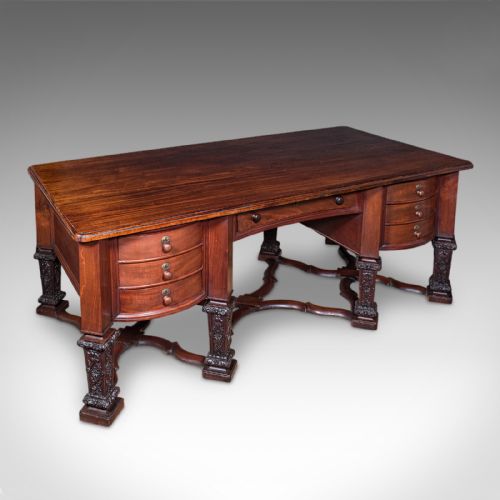
- A large double-sided desk designed for simultaneous use from both faces, equipped with opposing sets of drawers and cupboards.
- Bureau
- A desk form featuring a sloping hinged fall-front that opens to reveal internal pigeonholes and small compartments.
- Kneehole desk
- A compact desk style containing a central recessed opening flanked by pedestals of smaller drawers.
- Inlay
- A decorative technique where contrasting woods, brass, or shell are fitted flush into the primary surface timber.
English Writing Table: Frequently Asked Questions
What is an english writing table?
An english writing table is a freestanding piece of antique furniture built specifically to provide a flat working surface for letters and paperwork. These tables usually feature one or more drawers beneath the top and stand on four legs or twin pedestals.
They emerged in various domestic forms across several centuries, ranging from simple oak lowboys to grand mahogany library desks. Each period introduced distinct proportions and decorative treatments while keeping the primary focus on utility.
How do I date an antique desk?
Dating relies on examining the structural timber, secondary woods, and hardware construction methods visible inside the drawers and beneath the top. Joinery styles like hand-cut dovetails and timber seasoning traits provide key chronological indicators.
Stylistic details such as cabriole legs, brass bail handles, and string inlay correspond to specific reigns and design movements like Georgian or Regency. Comparing these physical characteristics against documented regional cabinetmaking traditions narrows the production window.
Where should I place a writing table?
These tables adapt well to studies, living rooms, and bedrooms, functioning as functional desks or decorative side surfaces. Freestanding models with finished backs suit placement in the centre of a room rather than pressed flat against a wall.
When positioning pieces with leather inserts, keep them away from direct sunlight to prevent fading and drying of the hide. Adequate surrounding clearance allows comfortable use of the drawers and chairs.
What is the difference between a lowboy and a desk?
A lowboy is a compact, low-standing table featuring a shallow drawer configuration, historically used for dressing, serving, or writing. Desks generally offer more substantial storage capacity through pedestal drawer arrangements or fitted superstructures.
While a lowboy relies on simpler table framing, traditional desks often incorporate internal partitions, pigeonholes, or double-sided writing access for partners.