

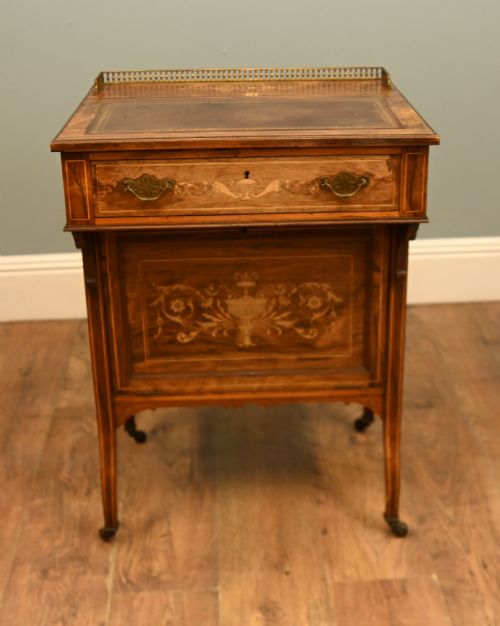
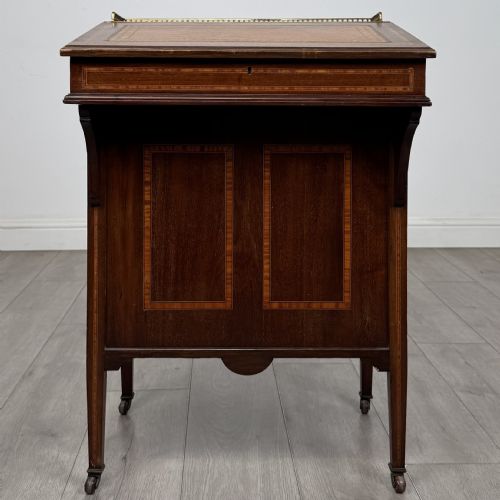
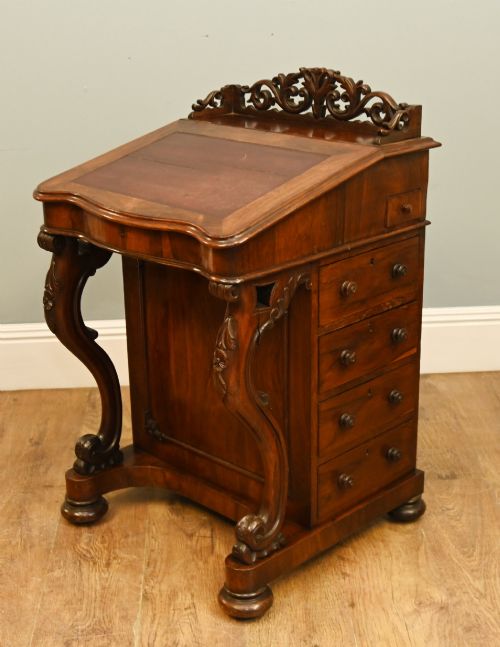
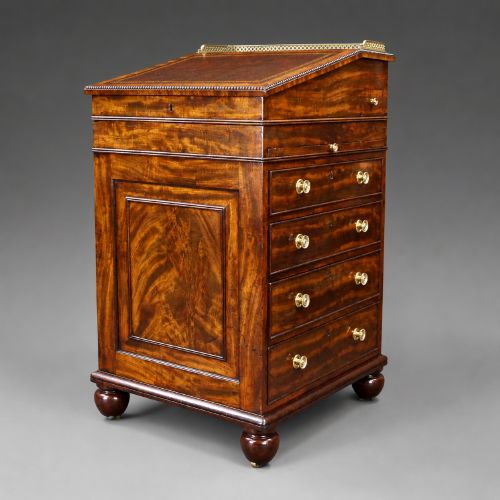


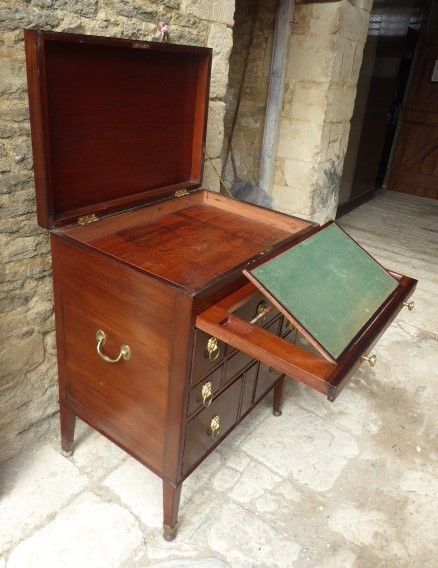


Brown Mahogany Davenport
These brown mahogany davenport desks are compact writing cabinets offering concealed storage, prized for their intelligent use of space.
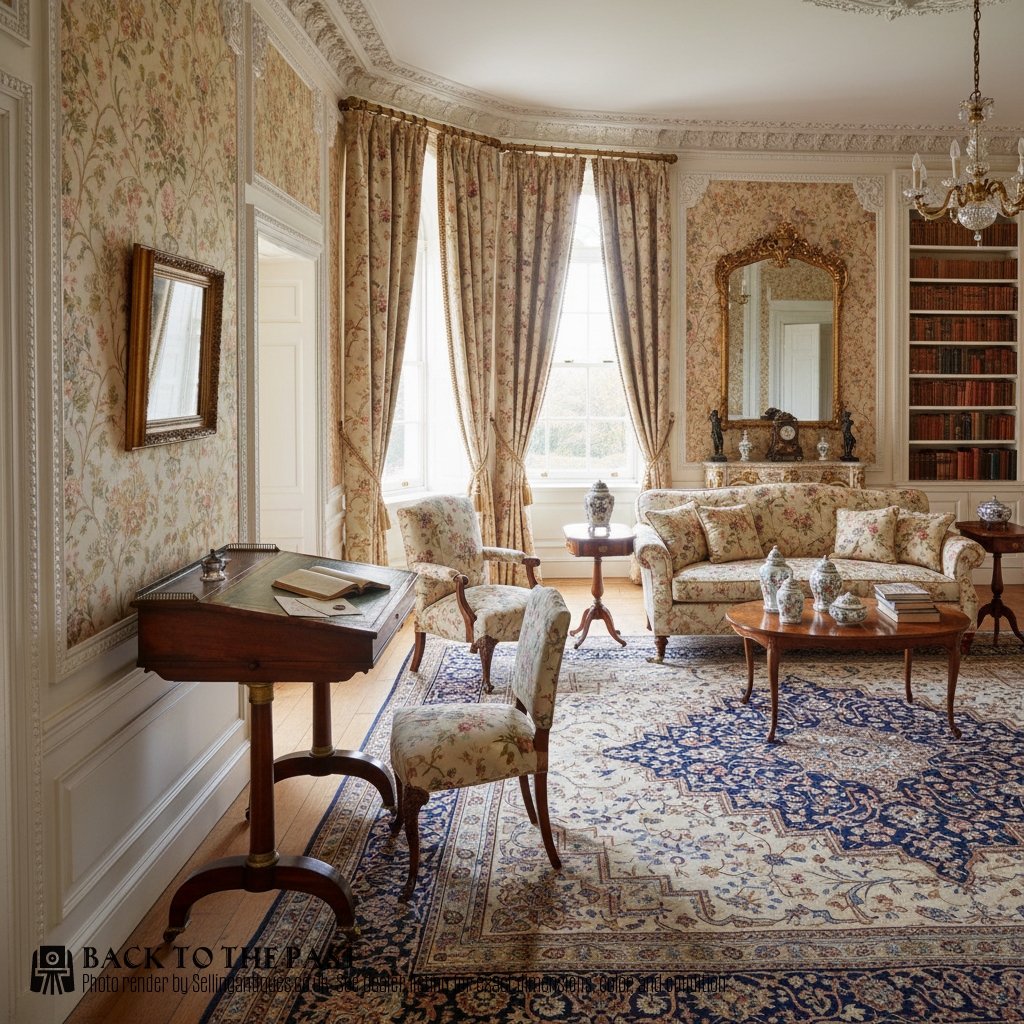
Brown Mahogany Davenport
A brown mahogany davenport is a compact writing desk designed with a sloping top and internal compartments, originating in the Georgian and Regency periods. These pieces combine a small footprint with functional storage, making them popular solutions for writing and correspondence in period interiors.
Most examples found here date from the 19th Century, spanning the Regency, William IV, and Victorian eras, with occasional Edwardian pieces appearing. Alongside traditional desks, the selection includes related forms such as campaign chests and writing tables.
How They Were Made
Makers utilised solid mahogany and flame mahogany veneers over secondary timbers, often incorporating brass hardware for handles, casters, and gallery rails. Writing surfaces were typically lined with leather or baize, providing a durable platform for correspondence.
Interiors frequently featured satinwood inlay alongside fitted stationery compartments, while structural designs included sliding tops and side drawers. These construction methods balanced aesthetic richness with practical utility for the writer.
Brown Mahogany Davenport Retail Price Guide 2026
Typical asking prices for brown mahogany davenport among the pieces listed under this phrase on Sellingantiques today, from the lower quarter to the upper quarter. They describe what is for sale here now, not the wider market.
Keys still turn in some of the 1840 desk drawers, guarding contents forgotten over a century ago.
What Varies in Quality
The choice of timber creates a distinct separation in visual depth, with figured flame mahogany veneer commanding greater attention than plain grain surfaces. Superior cabinetmaking is evident in the precision of the satinwood inlay and the integration of sliding writing sections.
Attribution to known makers elevates an example, as demonstrated by pieces bearing signatures or stamps from established workshops. The preservation of original brass fittings and leather inserts further distinguishes finer specimens from heavily restored ones.
Gillows·Hampton and Sons·James Shoolbred
The Brown Mahogany Davenport Glossary
- Flame mahogany
- A veneer cut from the fork of the mahogany tree to produce a distinctive, flickering flame pattern. This highly decorative grain was favoured for the primary surfaces of superior desks.
- Satinwood inlay
- A contrasting light wood used for decorative banding and geometric stringing on darker mahogany grounds. It highlights the edges and drawers of finer period pieces.
- Sliding top
- A mechanism allowing the upper writing desk section to move forward over the seat. This adjustable feature provided greater comfort for the writer.
- Campaign chest
- A modular chest of drawers designed to dismantle for military transport during the Georgian and Victorian eras. These pieces typically feature brass corner brackets and flush carrying handles.
- Baize
- A coarse woollen material woven to resemble felt, frequently used as a writing surface lining. It offers a soft, textured pad beneath paper.
Brown Mahogany Davenport: Frequently Asked Questions
What is a brown mahogany davenport?
A brown mahogany davenport is a small, pedestal-style writing desk featuring a sloping desktop and drawers opening to the side.
These pieces were originally designed for domestic study or boudoir use, offering writing storage in a compact footprint.
How do I date a davenport desk?
Dating relies on stylistic markers from periods such as Regency, William IV, and Victorian.
Earlier Regency examples often display elegant proportions and classical brass mounts, while Victorian pieces tend to be larger with heavier mouldings.
Where were davenports used in a home?
They were primarily placed in drawing rooms, sitting rooms, or bedrooms as personal writing desks.
Their compact size allowed them to sit comfortably away from walls where light was favourable.
How do I care for mahogany and leather?
Mahogany surfaces benefit from gentle dusting and occasional application of appropriate wax polish to maintain the finish.
Leather writing inserts should be kept dry and treated sparingly with neutral balms to prevent cracking.