


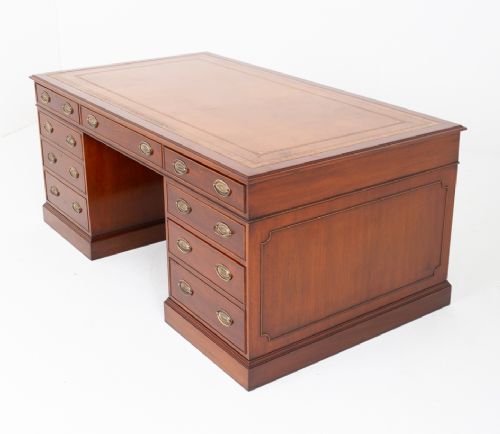
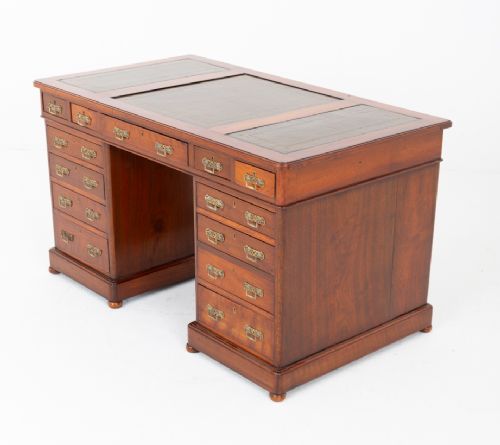
Mahogany Office Table
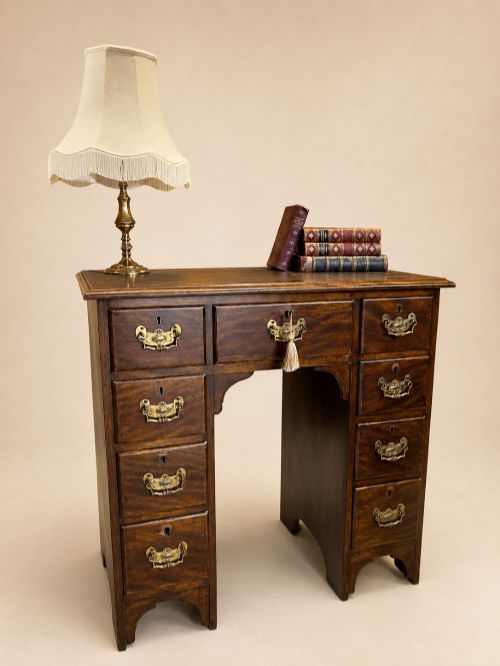
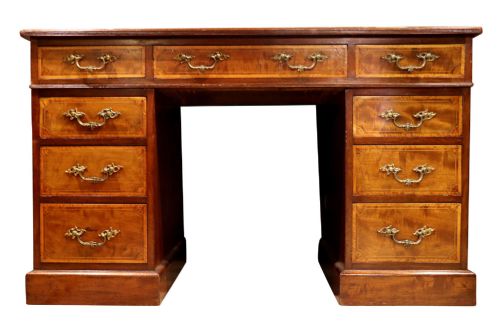
A mahogany office table offers a sturdy workspace with rich timber grain, serving as a functional centrepiece for any study.
Mahogany Office Table
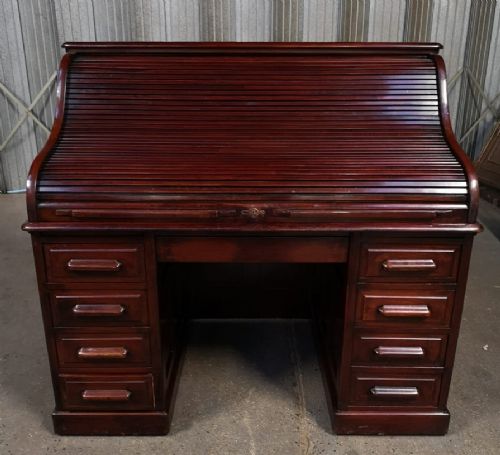
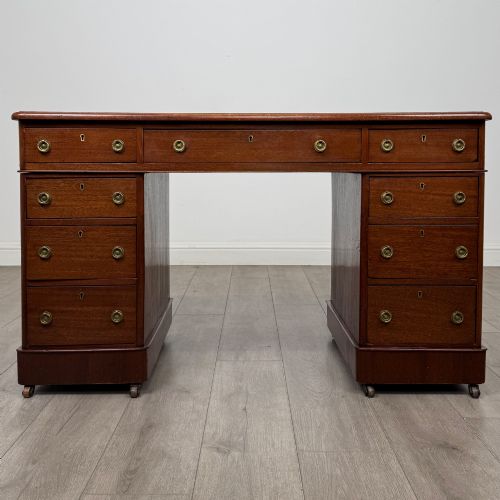
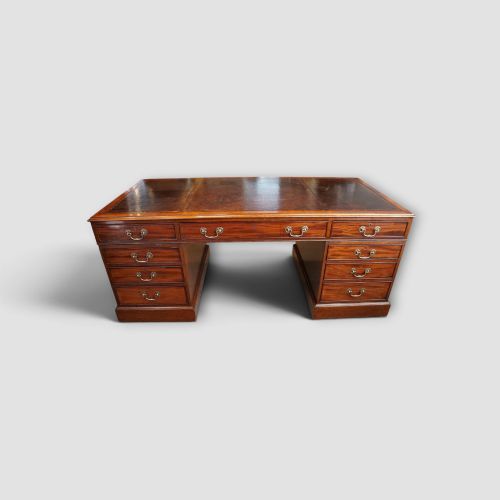
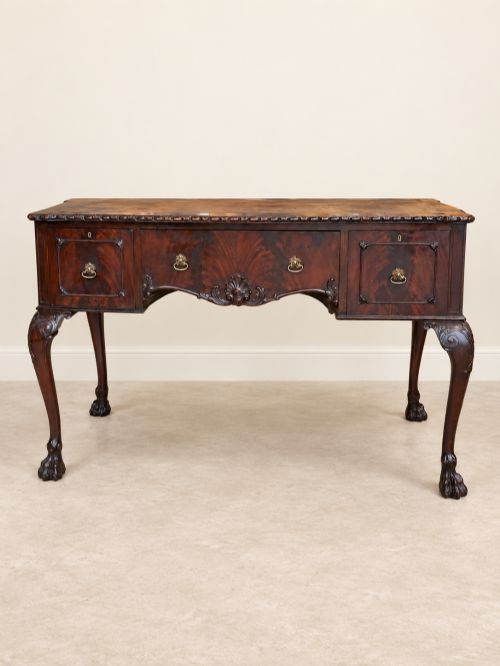
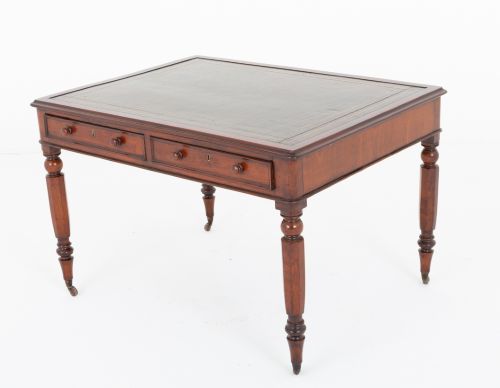
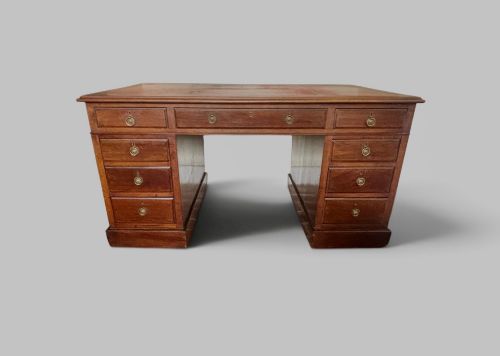
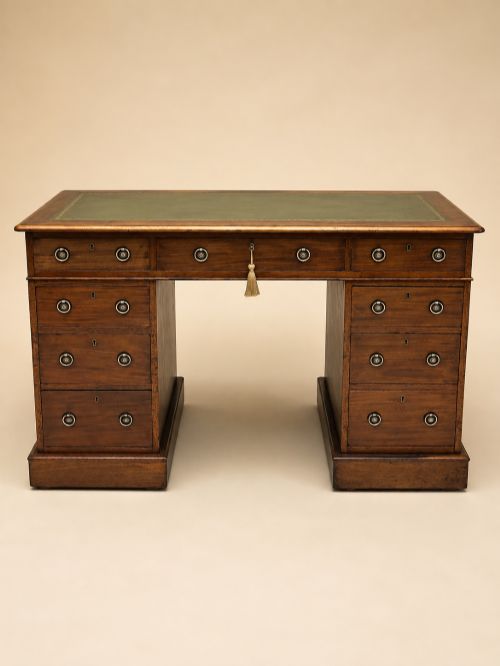
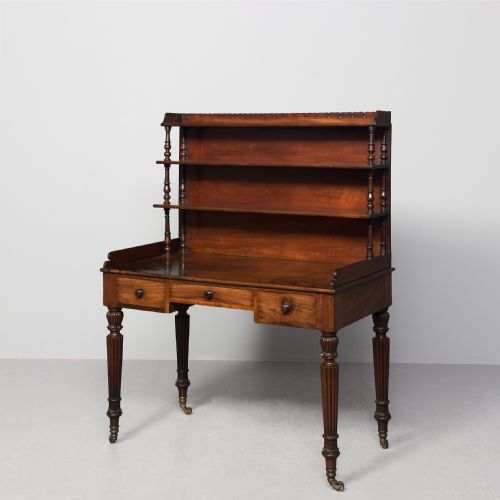
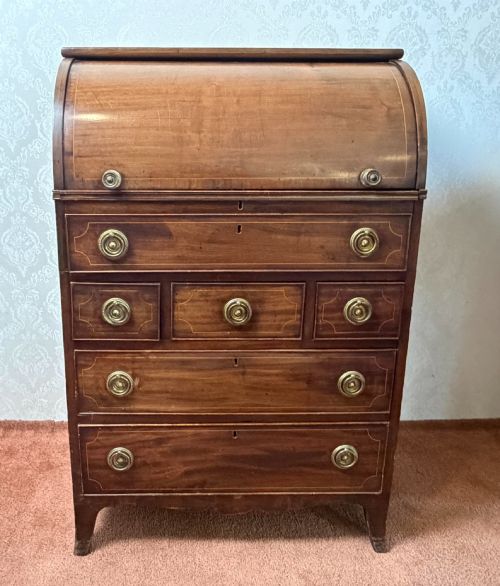
A mahogany office table spans several distinct periods, with Edwardian, Georgian, Regency, and Victorian examples appearing across the inventory. These sturdy furnishings take the form of pedestal desks, partners desks, and writing tables designed for administrative or library use.
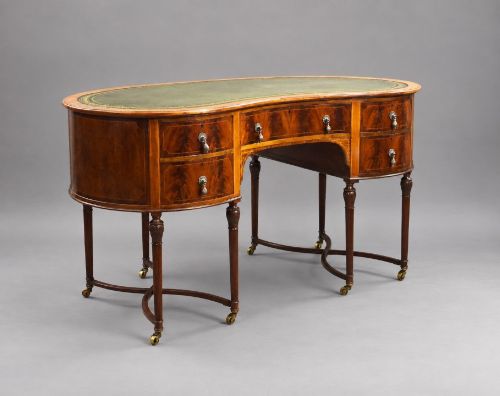
The pieces often feature useful additions such as green leather writing surfaces and brass hardware, reflecting their working origins. Buyers frequently encounter solid mahogany or flame mahogany constructions built to withstand daily clerical tasks.
Makers and workshops from the late eighteenth century through to the early twentieth century produced these practical tables in styles ranging from George III and William IV to Chippendale Revival and Late Victorian.
Materials and construction
Makers utilised dense timber such as Cuban mahogany and flame mahogany to build these large writing tables and pedestal desks, ensuring longevity and a deep red-brown tone. Selected pieces incorporate brass inlays and brass fittings to accent the wood.
Writing surfaces were frequently inset with green leather to provide a smooth, durable plane for writing and administrative work. Joinery techniques from the Georgian, Regency, and Edwardian eras ensured the heavy pedestals and writing boxes remained stable.
Retail Price Guide 2026
Typical UK retail prices for mahogany office table, calculated from the Sellingantiques database of over a million retail prices indexed since 2003. This retail price guide relies exclusively on Sellingantiques data; no external sources or auction records are used, so the figures do not describe the wider market.
One unusual survivor is a Victorian table later sign-written for use as a booking office.
Assessing quality
The fineness of a mahogany office table depends upon the selection of timber, with highly figured flame mahogany and Cuban mahogany commanding attention for their striking grain patterns. Superior examples display thoughtful proportions and careful execution of period styles such as Chippendale Revival or George III.
Integration of secondary materials like tooled green leather and quality brass hardware elevates an ordinary desk into a distinguished library or partners table. The balance of scale and the preservation of original timber surfaces distinguish the finest pieces from more utilitarian workshop output.
The Mahogany Office Table Glossary
- Partners desk
- A large double-sided desk designed so two people could work opposite each other, featuring drawers on both faces. These pieces were standard in boardrooms and large offices.
- Pedestal desk
- A heavy freestanding desk supported by two banks of drawers or cupboards flanking the central sitting space. They offer substantial storage capacity beneath the writing surface.
- Flame mahogany
- A veneer cut from the fork of the mahogany tree where the branches join the trunk, producing a distinctive, fiery rippled grain pattern. This decorative treatment was favoured for prominent desk surfaces.
- Campaign desk
- A portable writing table made in sections with brass corners and recessed handles designed for easy transport by military officers. Surviving examples retain robust folding or dismantling mechanisms.
- Writing table
- A freestanding table with one or more drawers beneath the top, built primarily for correspondence rather than heavy clerical storage. They typically feature slenderer legs than heavy pedestal desks.
Frequently Asked Questions
What is a partners desk?
A partners desk is a large double-sided desk featuring drawers and cupboards on both the front and the back. This configuration allowed two people to sit opposite each other and work simultaneously.
These pieces were commonly utilised in nineteenth-century offices, banks, and large libraries where administrators needed shared access to workspace and storage.
How do I identify a Georgian desk?
Georgian desks are characterised by solid proportions, classical architectural details, and the use of dense timbers such as mahogany. They predate the heavier Victorian and Edwardian office furniture.
Look for hand-cut dovetails in the drawer construction and period brass hardware that shows appropriate signs of age and wear.
Why is green leather used on desks?
Green leather provided a smooth, glare-reducing surface that was ideal for writing and reading by candlelight or natural light. It also protected the wooden top from ink spills and daily wear.
Many period writing tables and pedestal desks retain or have been fitted with traditional tooled green leather inserts to preserve their authentic appearance.
What is flame mahogany?
Flame mahogany is a highly figured veneer harvested from the fork where a tree branch meets the main trunk. The cutting process reveals a dramatic, swirling grain pattern that resembles flickering flames.
Cabinet makers utilised this striking timber on the primary surfaces of superior desks to showcase the natural beauty of the wood.