




Compact Walnut Study Desk
A compact walnut study desk gives you a dedicated work space with rich grain and proportion, fitted for small rooms.
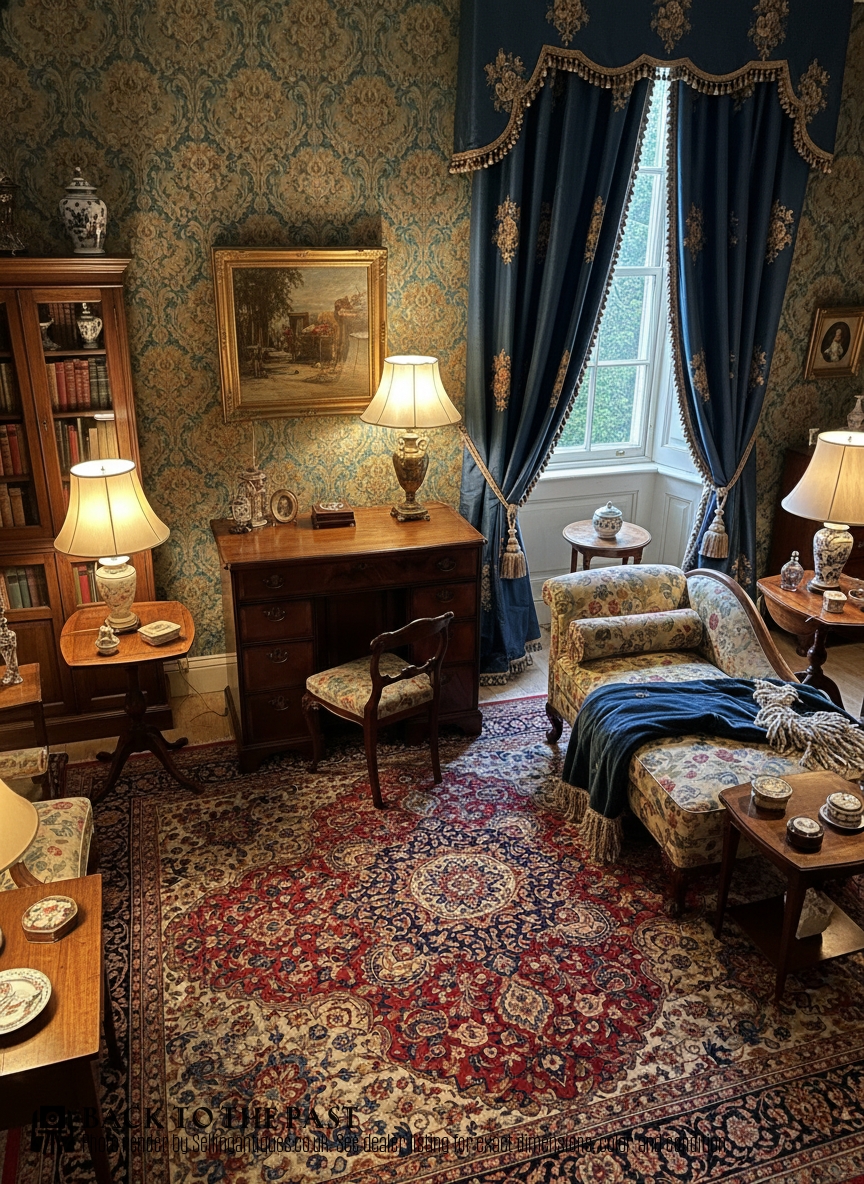
Compact Walnut Study Desk
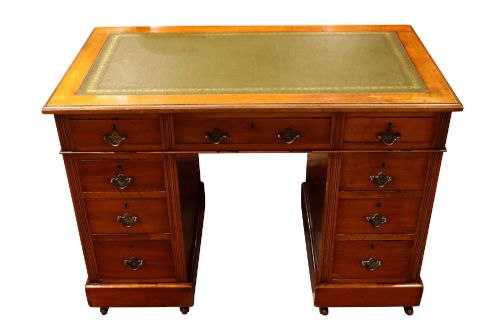
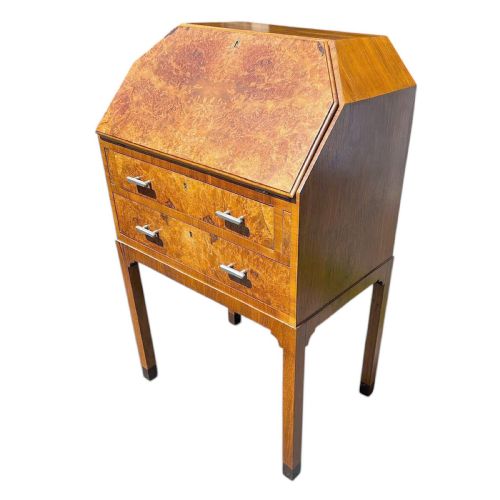
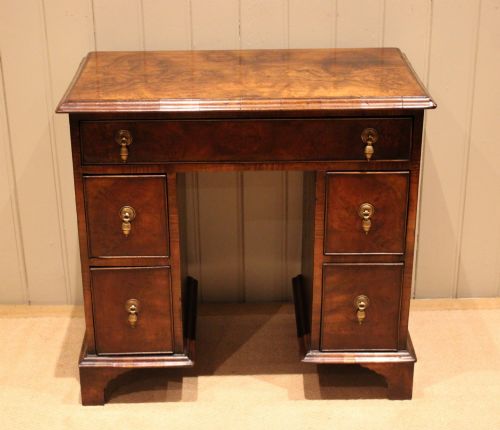
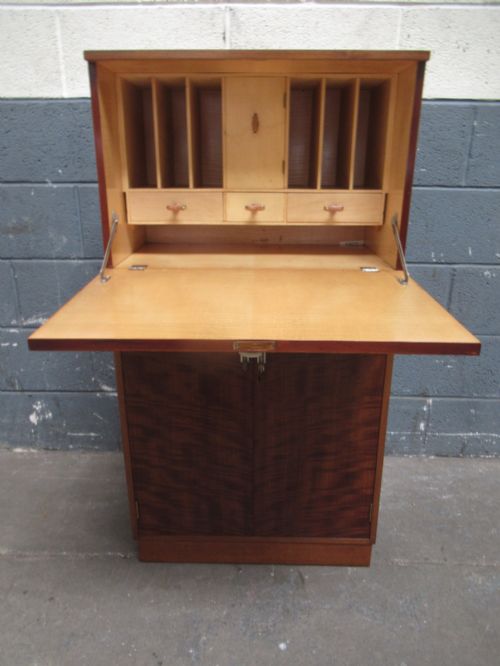
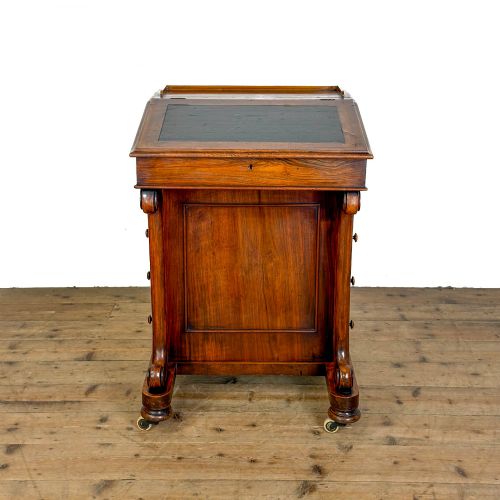
A compact walnut study desk is what you turn to when floor space is tight but you refuse to compromise on timber and presence. You will most frequently meet Victorian Davenport desks and pedestal forms on this page, alongside Art Deco writing desks from the nineteen thirties.
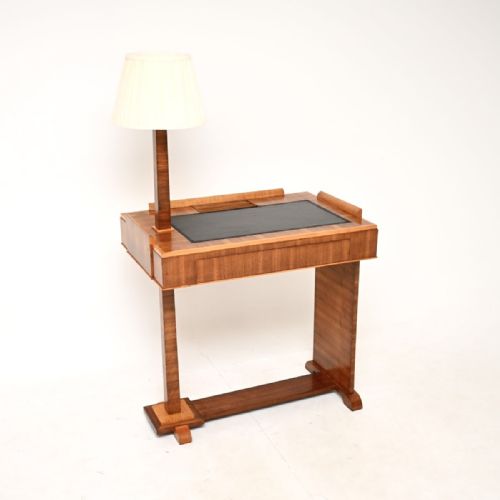
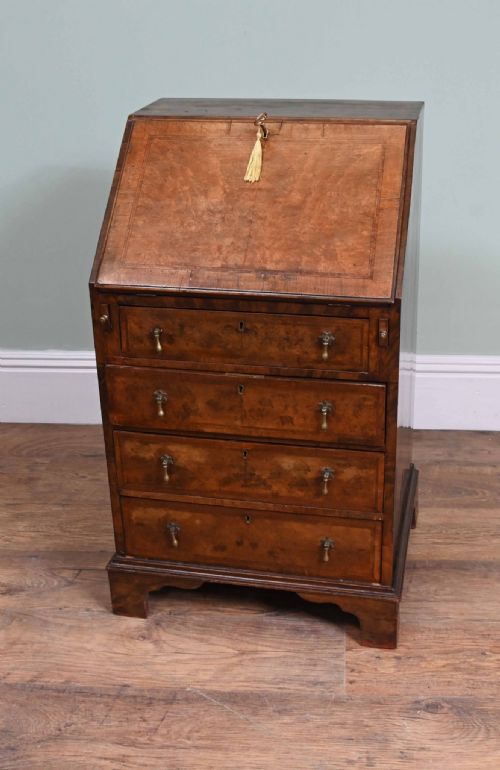
The nineteenth century examples bring slope fronts, stationery compartments and pedestals with drawers, while the later twentieth century pieces lean towards clean writing surfaces integrated with sycamore or built-in lighting. Each form answers the persistent demand for a hardworking surface that fits modest rooms.
Origins stretch from English workshops of the mid nineteenth century through to Edwardian interpretations and revival styles. Selecting one means weighing whether you need the compact stationary storage of a Davenport or the open kneehole of a pedestal desk.
Materials and construction
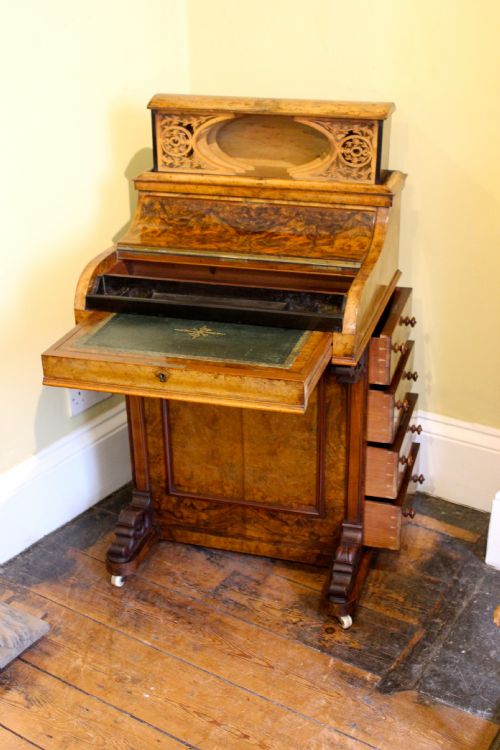
Cabinet makers relied primarily on walnut and burr walnut veneers applied to stable secondary timbers like oak, often accented with marquetry inlay or banding in satinwood. The distinct swirling figures of burr walnut were selected for writing slopes and drawer fronts to catch the light.
Brass handles, galleries and hinges provide functional hardware, while leather inserts with gilt tooling supply the traditional writing surface. Joinery techniques balance structural rigidity with decorative restraint, allowing the natural figuring of the wood to dominate the aesthetic.
Several Davenport desks include hidden pop-up stationery compartments that spring into action when you least expect it.
Judging quality
Quality rests upon the selection of the timber veneers and the precision of the marquetry work, where tighter, more varied burr patterns separate finer examples from plain stock. The integration of secondary woods and the crispness of turned or carved details indicate the maker's hand.
Proportion and interior arrangement also dictate worth, with fitted stationery drawers and well-organised internal compartments showing superior design. Original hardware and matching timber grains across drawer banks point to a cohesive, higher tier build.
Gillows Designed·James Winter and Son
The Compact Walnut Study Desk Glossary
- Davenport
- A small compact desk featuring a sloping desktop hinged to lift over a set of side drawers. It gained popularity in the nineteenth century for letter writing and correspondence.
- Burr walnut
- Timber taken from a tree growth or burl, yielding complex and swirling grain patterns. It is sliced into veneer and applied to furniture surfaces for decorative impact.
- Pedestal desk
- A freestanding desk supported by two banks of drawers forming pedestals with a central kneehole. These offer more legroom than traditional cabinet-style desks.
- Marquetry
- The art of applying pieces of veneer to a structure to form decorative patterns and pictures. Makers used contrasting timbers like satinwood to achieve pictorial depth.
Compact Walnut Study Desk: Frequently Asked Questions
What is a Davenport desk?
A Davenport is a compact form of writing desk featuring a sloped, leather-lined writing surface that lifts to reveal storage. The body typically incorporates a bank of side drawers rather than a standard kneehole space.
Cabinet makers designed them for domestic correspondence in the nineteenth century, making them ideal for smaller drawing rooms or studies where floor space was restricted.
How do I care for walnut veneer?
Walnut furniture requires protection from direct sunlight and excessive heat fluctuations to prevent the veneer from drying out or lifting. Regular dusting with a soft, dry cloth maintains the finish without chemical buildup.
Apply occasional traditional wax polish to nourish the timber and preserve the natural sheen of the grain. Avoid placing damp items directly onto antique leather or polished wooden surfaces.
Are Art Deco desks different from Victorian ones?
Art Deco desks from the nineteen thirties favor streamlined silhouettes, geometric simplicity and contrasting timbers like sycamore, sometimes incorporating integrated lighting. Victorian models rely on ornate burr veneers, turned details and traditional stationery compartments.
While both serve the purpose of a compact study space, the Victorian pieces emphasise historic revival styles whereas the Art Deco designs look toward modernism.
How can I tell the period of a desk?
Dating relies on examining construction methods, timber selection, hardware types and stylistic clues inherent to the era of manufacture. Victorian pieces often show heavier proportions and detailed marquetry, while Edwardian versions tend to be lighter in scale.
Internal drawer construction, dovetailing techniques and secondary woods provide further physical evidence to help narrow down the decade of production.