


Antique Walnut Computer Desk
These antique walnut computer desk pieces are robust workspace furnishings built from rich timber, offering a handsome surface for modern technology.
Antique Walnut Computer Desk
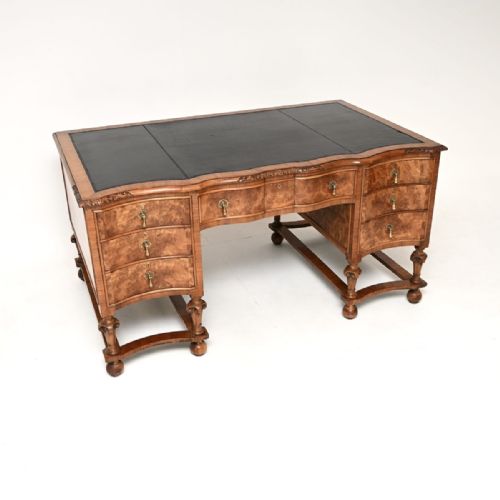
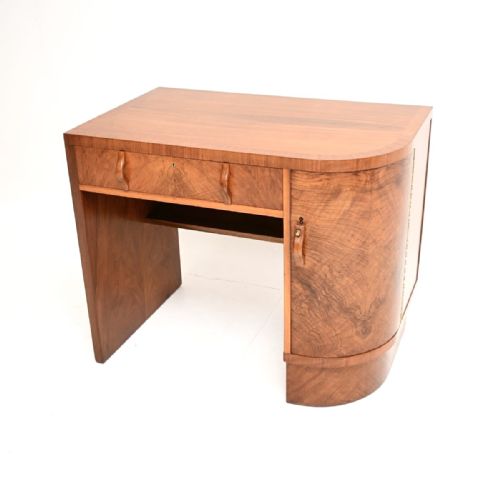
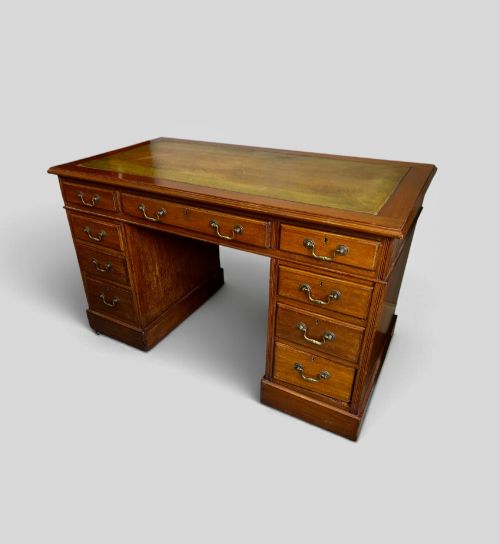
An antique walnut computer desk combines traditional cabinet-making with functional workspace layouts, appearing across periods from the Victorian era into the Art Deco style of the 1930s. Buyers searching for an antique walnut computer desk will encounter pedestal forms, writing tables, and partners desks designed for functional daily tasks.
The selections span the Victorian period, Edwardian era, and 1930s designs, incorporating historical influences such as the Queen Anne style and Georgian revival. These pieces utilise sturdy timbers and provide dedicated surfaces that accommodate contemporary equipment while retaining historic character.
How They Were Made
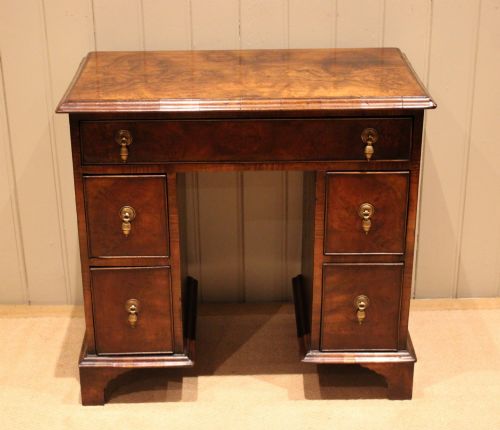
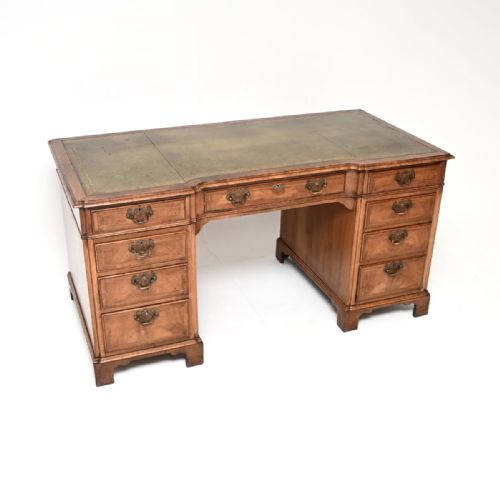
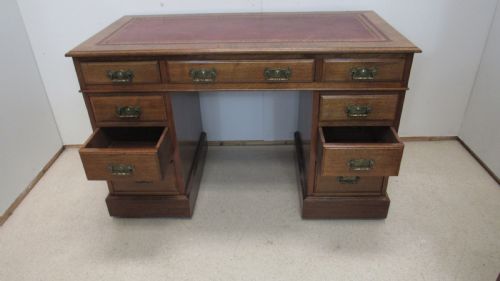
Cabinet-makers constructed these desks using solid walnut, burr walnut, burr elm, and mahogany, often applying decorative veneers over secondary woods to highlight intricate grain patterns. Many examples feature inset leather writing surfaces framed by detailed woodwork.
Hardware details rely on brass for handles, escutcheons, and structural fittings, complementing the dark tones of the wood. Construction techniques focus on durability, combining pedestal frameworks with fitted drawers and panelled modesty backs.
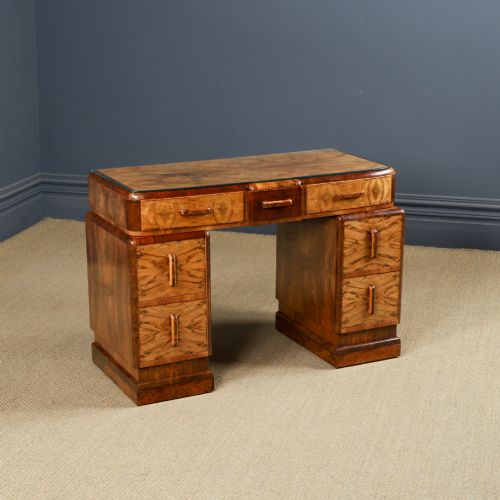
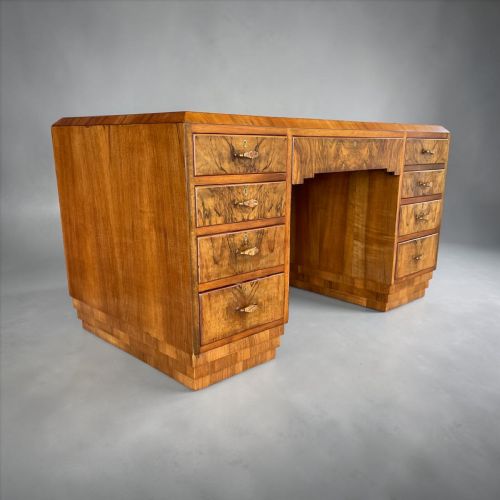
Some 1930s desks adopt skyscraper silhouettes, letting towering office architecture inspire your home study.
What Varies in Quality
Quality rests upon the choice of timber figure, particularly the richness of burr walnut veneers and the depth of the red walnut tones. Superior examples display careful book-matching on drawer fronts and smooth integration of secondary timbers like oak.
The refinement of period styling, from restrained Victorian proportions to bold Art Deco skyscraper silhouettes, dictates the distinction between standard utilitarian items and masterworks. Original brass hardware and well-preserved leather inserts further distinguish the finer pieces.
Maple and Co
The Antique Walnut Computer Desk Glossary
- Pedestal desk
- A heavy table form featuring two banks of drawers supporting a single top. These items provide generous storage alongside a large writing surface.
- Burr walnut
- A highly figured wood grain harvested from the growth warts of walnut trees. It creates intricate, swirling patterns across drawer fronts and desk surfaces.
- Partners desk
- A double-sided workstation built with drawers and cupboards on both faces. This configuration allows two people to sit opposite one another.
- Veneer
- A thin layer of choice timber applied over a more stable secondary wood. This method displays expensive grain patterns without warping the structure.
- Skyscraper pedestal
- An architectural Art Deco silhouette characterised by stepped vertical lines. This form reflects modernist design influences of the 1930s.
Antique Walnut Computer Desk: Frequently Asked Questions
What is an antique walnut computer desk?
These furnishings are historic wooden tables and pedestal desks adapted or utilised to hold modern computer equipment.
They combine period craftsmanship in walnut, burr walnut, and mahogany with practical workspace surfaces.
How do I date an antique walnut desk?
Dating relies on stylistic clues, ranging from carved Victorian details and Edwardian Queen Anne revivals to geometric 1930s Art Deco forms.
Construction methods and secondary woods like oak also help establish the approximate period of manufacture.
Are these desks suitable for daily work?
Many buyers place modern computer setups, monitors, and keyboards directly onto the historic leather or timber tops.
The sturdy pedestal construction offers substantial knee clearance and generous drawer space for office supplies.
What wood types are used?
The primary timber is walnut, frequently seen in highly figured burr walnut veneers and red walnut variations.
Makers also incorporated secondary woods such as oak, mahogany, and burr elm alongside brass hardware.