



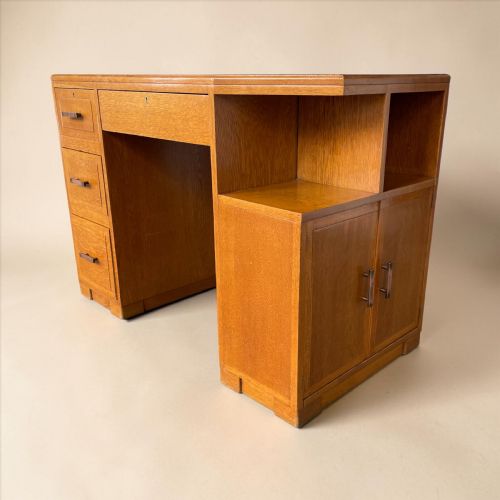

1930s Writing Table
A 1930s writing table brings modernist lines and figured veneers into a room, offering a practical workspace shaped by Art Deco design.
1930s Writing Table
When you search for a 1930s writing table, you encounter workspace furniture shaped primarily by Art Deco and modernist principles from the interwar decades. The selection spans compact writing desks, pedestal office furniture, and occasional console tables from periods including the 1930, 1920, and Edwardian eras.
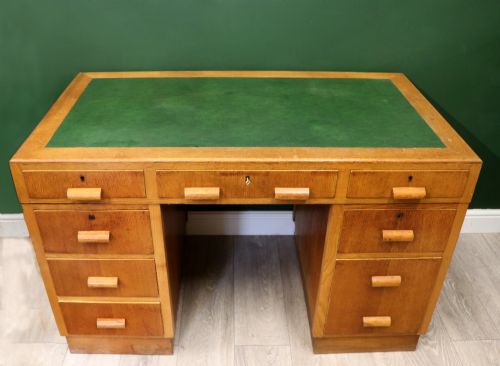
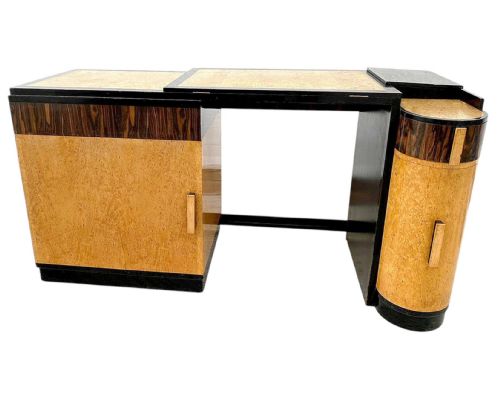
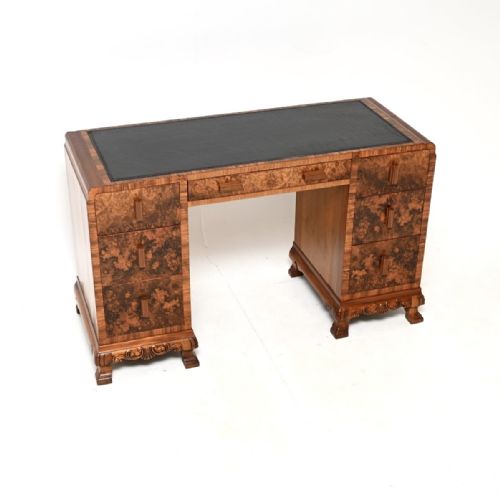
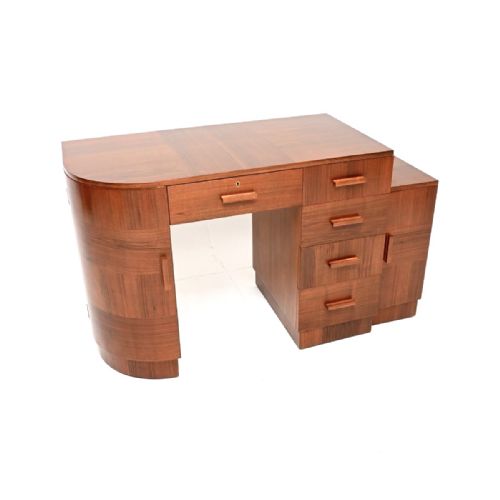
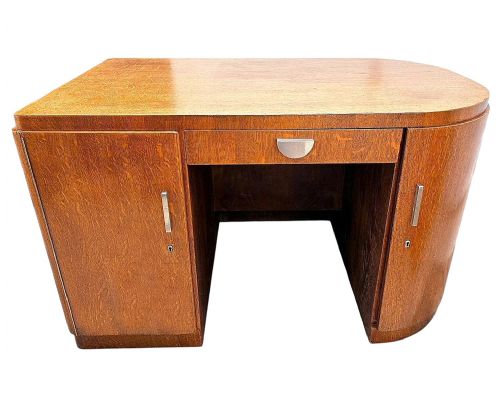
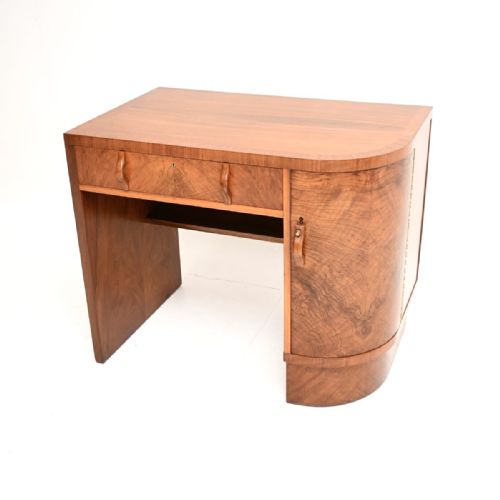
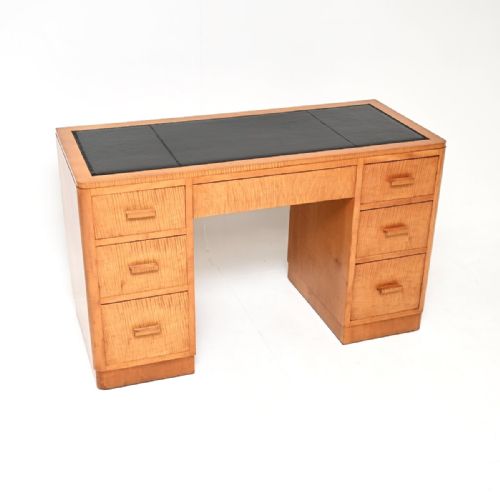
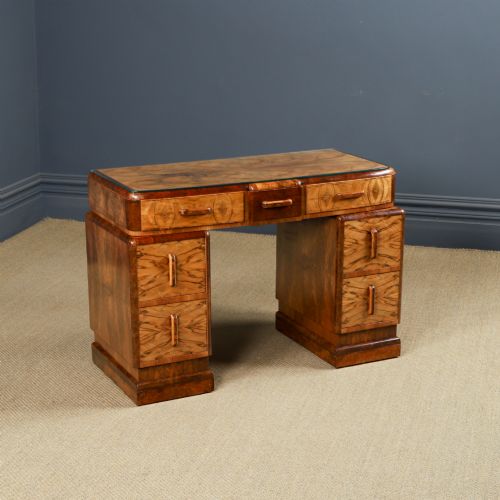
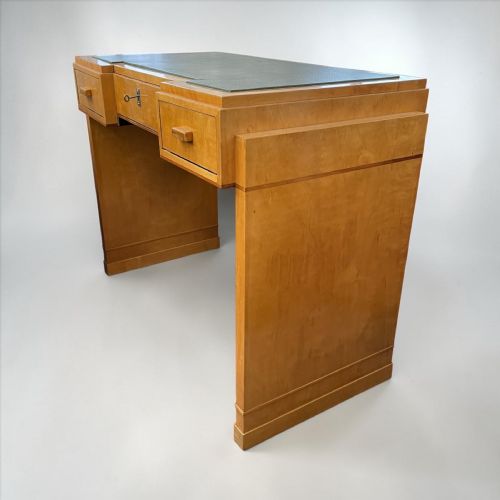
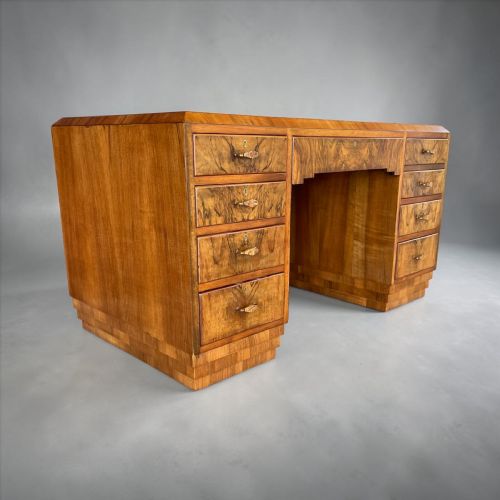
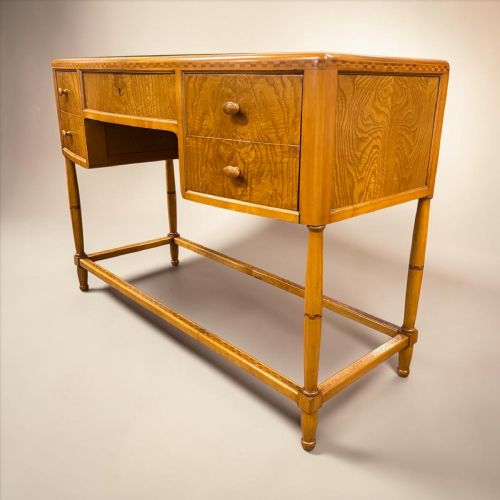
The most frequent version on this page is the walnut or burr walnut desk, often featuring inset leather tops, pedestals, or streamlined D-end profiles. Alongside these English and French forms, variations appear in oak, satin birch, and elm, reflecting diverse European design influences of the period.
How They Were Made
Cabinet makers utilised choice hardwoods and decorative veneers such as walnut, burr walnut, rosewood, and satin birch over sturdy timber frames. Grain patterns were matched across drawers and panels to create striking geometric surface designs.
Functional details integrated brass hardware, glass elements, and contrasting inlays of sycamore or ebony. Leather writing surfaces were frequently tooled and bordered, whilst pedestal and pedestal-skirt structures provided robust support for daily office tasks.
1930s Writing Table Retail Price Guide 2026
Typical asking prices for 1930s writing table among the pieces listed under this phrase on Sellingantiques today, from the lower quarter to the upper quarter. They describe what is for sale here now, not the wider market.
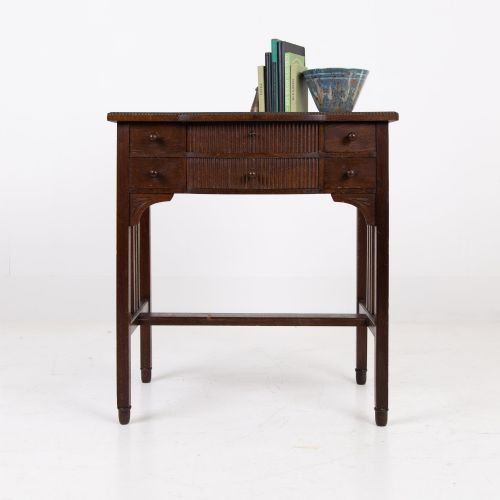
Desk forms range from compact campaign-style folding writing tables and pedestal office desks to console tables and integrated lamp designs.
What Varies in Quality
Quality rests upon the selection and handling of veneers, where book-matched burr walnut or exotic hardwoods demonstrate superior craftsmanship compared to plain timber surfaces. The integration of maker attributions or original brass and glass fittings elevates certain pieces above standard commercial production.
Heal's·Betty Joel·Maurice Adams·Maurice Dufrêne·Étienne Kohlmann·Hubert Simpson
The 1930s Writing Table Glossary
- Pedestal desk
- A freestanding writing table supported by two columns of drawers or cupboards flanking a central kneehole.
- Burr walnut
- Timber taken from a tree growth that produces swirling, highly decorative grain patterns prized in fine cabinet making.
- Art Deco
- A design style dominant in the 1920s and 1930s characterised by streamlined geometric forms, stylised motifs, and modern materials.
- D-end
- A furniture profile where one or both ends are rounded in the shape of a capital letter D.
- Bonheur du jour
- A small, light lady's writing desk featuring a tiered superstructure with drawers, shelves, or a cabinet above the writing surface.
1930s Writing Table: Frequently Asked Questions
What defines a 1930s writing table?
These pieces are defined by interwar modernist and Art Deco aesthetics, favouring clean geometrical lines, geometric veneers, and functional pedestal or compact forms. They reflect a departure from heavy historicism towards streamlined efficiency.
Craftsmen utilised woods like walnut, oak, and satin birch, often pairing them with contrasting inlays, glass panels, or leather inserts to create sophisticated surfaces for domestic and office use.
How do I distinguish French and English pieces?
English examples tend to rely on figured walnut, oak, and structured pedestal configurations designed for formal offices and studies. They emphasise architectural presence and robust utility.
French pieces frequently incorporate exotic timbers like rosewood or kingwood, elaborate lacquer, and painted plaques, leaning towards decorative elegance and lighter, sculptural silhouettes.
Where were these tables used originally?
They served as functional workspaces in executive offices, domestic studies, and private libraries during a period when interior design embraced functionalism. Compact versions also suited bedroom dressing areas or boudoirs.
Many designs doubled as console tables or dual-sided desks, accommodating the evolving spatial needs of modern homes in the interwar decades.
How do I care for a veneer surface?
Maintain the wood by keeping the table away from direct sunlight and steady heat sources, which can dry out and split historic veneers. Dust regularly with a soft, dry cloth.
Apply occasional appropriate wax polish to nourish the timber, and protect leather writing surfaces from moisture and ink spills using proper blotters.