


Queen Anne Style Desk
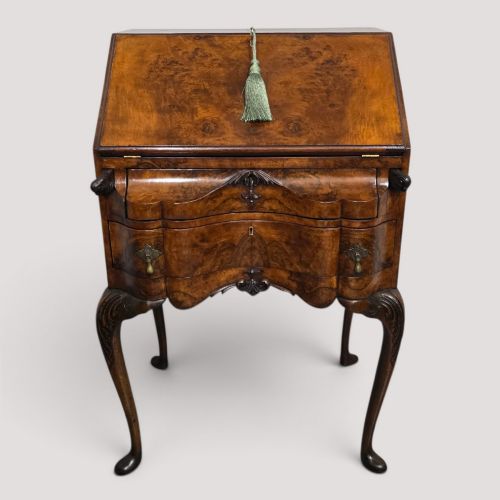
When choosing a queen anne style desk, you invite a lineage of figured timber and graceful cabriole lines into your study.
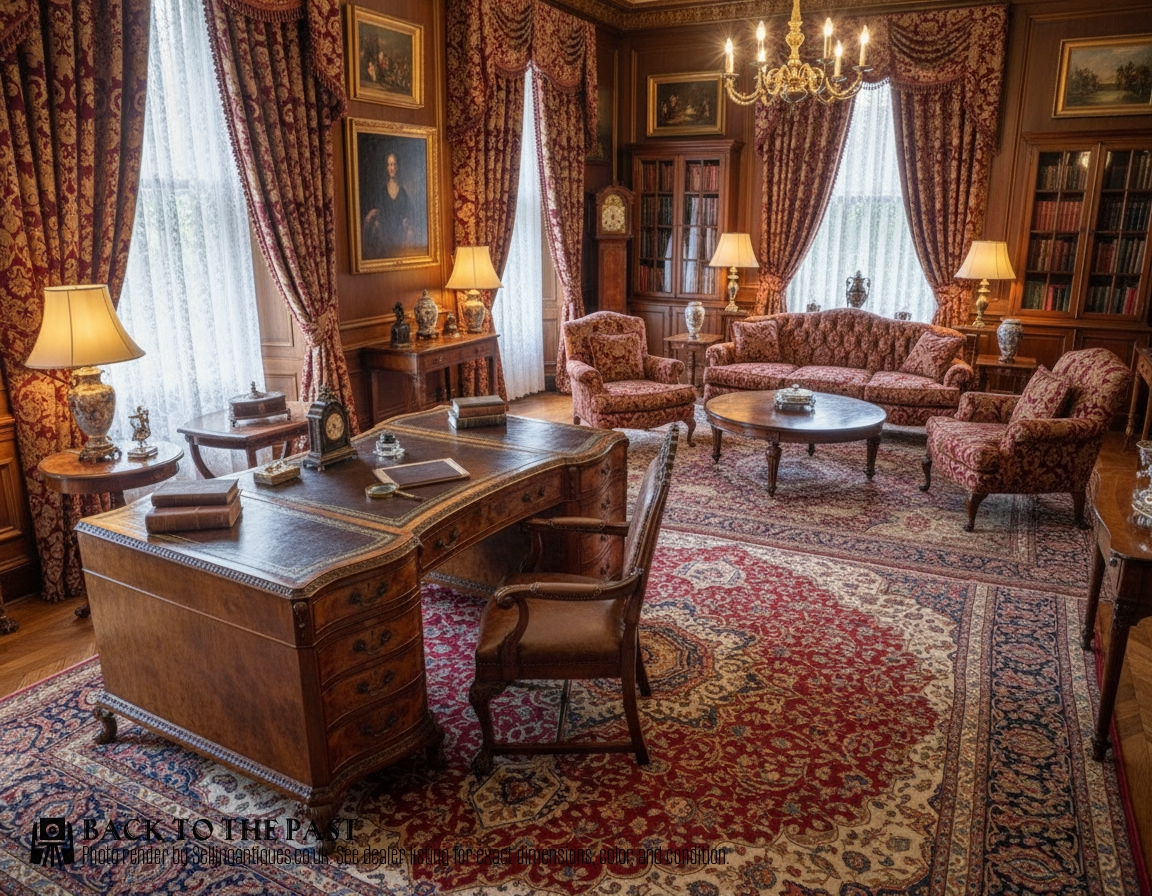
Queen Anne Style Desk
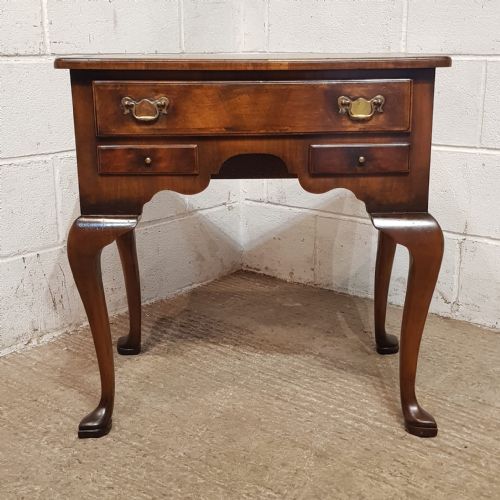
A queen anne style desk embodies the elegant proportions and curved silhouettes associated with early eighteenth-century English furniture, reinterpreted during later periods of revival. On this page, the search phrase most commonly leads to Edwardian and early twentieth-century interpretations, alongside nineteenth-century examples and George I style pieces.
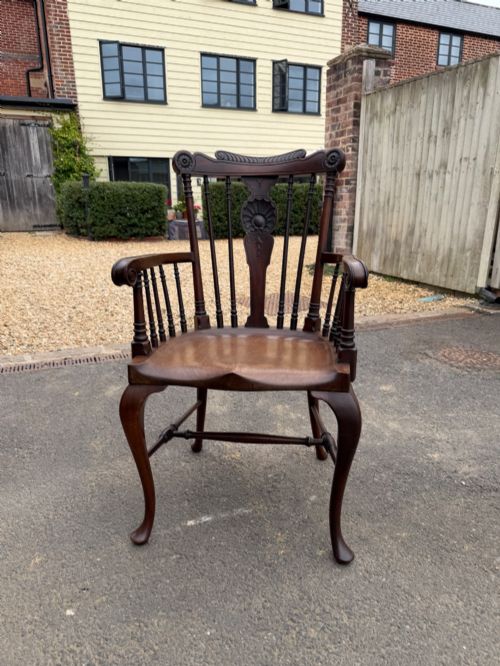
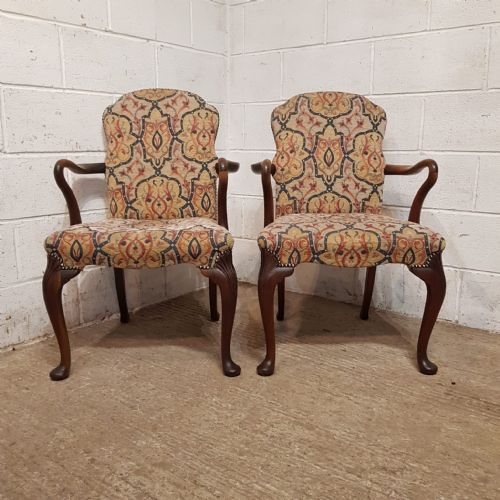
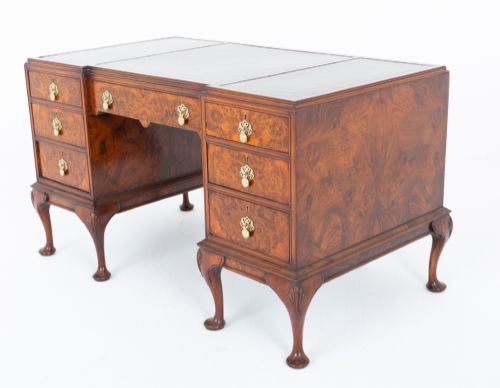
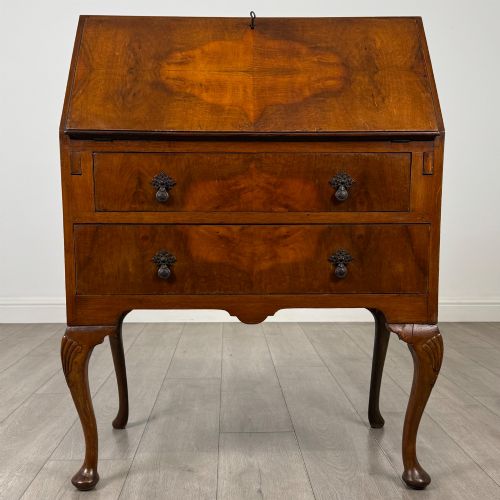
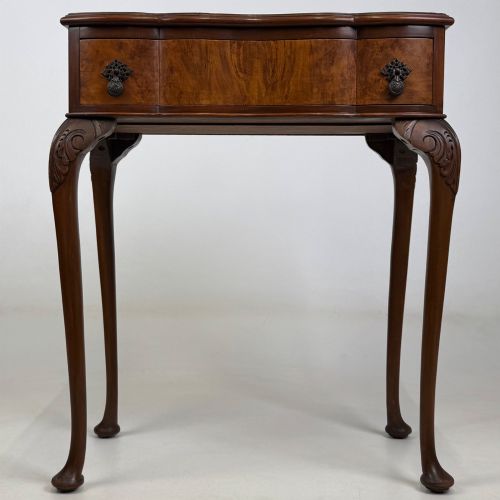
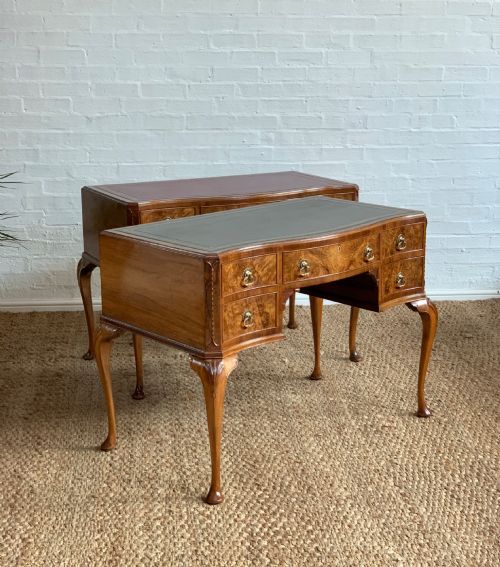
The inventory encompasses diverse forms designed for workspace and correspondence, ranging from pedestal desks and kneehole desks to writing tables, bureaux, and bureau bookcases. Accompanying seating frequently appears in the listings, including desk chairs, armchairs, and library chairs upholstered in leather, fabric, or textile.
Makers and retailers of the revival eras, such as Gill & Reigate, Wylie & Lochhead, and Shoolbred and Co, adapted these traditional forms for Edwardian and interwar homes. These pieces combine period aesthetics with the functional requirements of nineteenth and twentieth-century studies.
How they were made
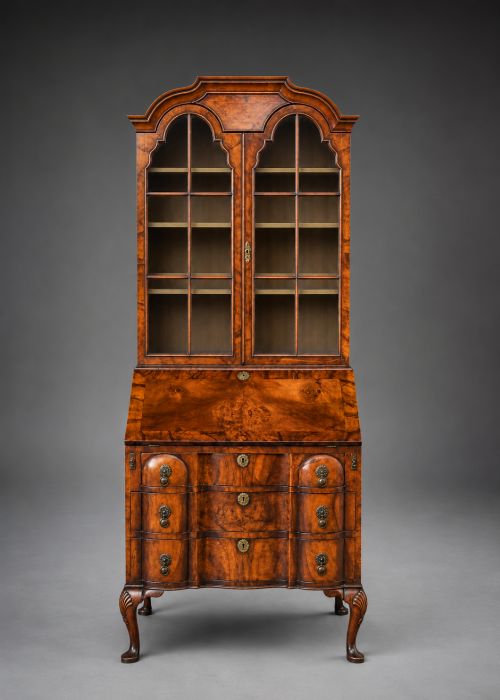
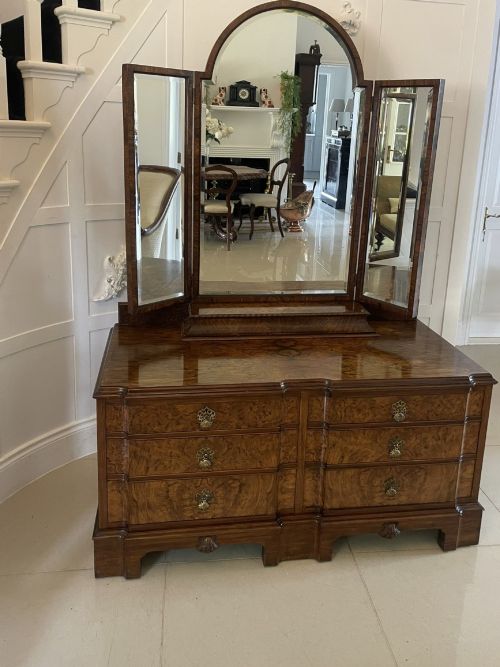
Cabinet makers utilised choice hardwoods like walnut, burr walnut, mahogany, and yew wood, often applying figured veneers to create striking symmetrical patterns across writing surfaces and drawer fronts. Secondary timbers such as elm provide structural support within drawer linings and frames.
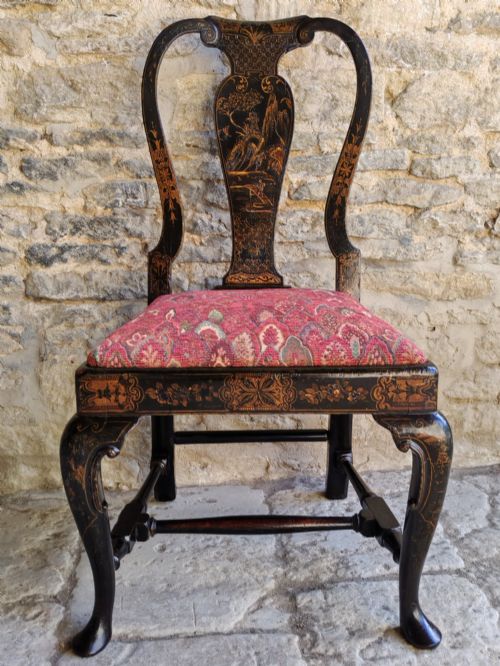
Writing surfaces were frequently inset with tooled leather to provide a durable and tactile working area, complemented by brass handles, escutcheons, and occasional glass elements. Marquetry inlay and lacquered chinoiserie finishes further distinguish the decorative surface techniques found across the selection.
Queen Anne Style Desk Retail Price Guide 2026
Typical asking prices for queen anne style desk among the pieces listed under this phrase on Sellingantiques today, from the lower quarter to the upper quarter. They describe what is for sale here now, not the wider market.
Several desks come with matching chairs upholstered in William Morris fabric, proving that Victorians and Edwardians also loved a coordinated work-from-home aesthetic.
What varies in quality
The distinction between ordinary and exceptional examples rests upon the selection and matching of the timber veneers, particularly the richness of the burr walnut figure across large flat surfaces. Superior cabinet work shows meticulous grain alignment and tight joinery that remains stable through changing humidity.
Charles Tozer·Wylie & Lochhead Glasgow·maples of London·Gill & Reigate·Shoolbred and Co·Gillows·Morris Of Glasgow
The Queen Anne Style Desk Glossary
- Cabriole leg
- A furniture leg that curves outward at the knee and tapers inward toward the foot, mimicking animal limbs. This defining feature of the style typically terminates in pad or claw-and-ball feet.
- Burr walnut
- A veneer sliced from the knotty growth of a walnut tree, prized for its swirling, highly figured grain patterns. Cabinet makers selected burr veneers for the primary decorative surfaces of high-end desks and bureaux.
- Kneehole desk
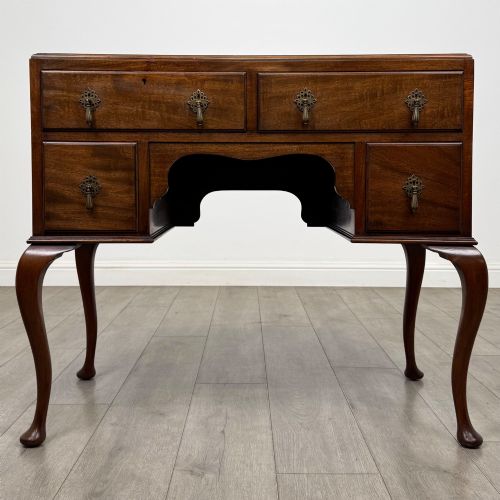
- A compact writing desk featuring a central recessed space for the user's legs, flanked by pedestals of small drawers. This form became particularly popular during the early eighteenth century and subsequent revivals.
- Bureau on stand
- A sloping-lid writing cabinet raised upon an open frame with legs, combining storage with a lightweight visual profile. The form evolved from earlier desk boxes by elevating the compartment off the floor.
- Chinoiserie
- European decorative imitation of traditional Chinese artistic styles, featuring hand-painted or lacquered motifs in gold on dark backgrounds. Such decoration occasionally graces the surfaces of writing tables and side furniture.
Queen Anne Style Desk: Frequently Asked Questions
How do I identify a revival desk?
Revival desks display the characteristic cabriole legs and veneered surfaces of the early eighteenth century, but often betray their later manufacturing date through secondary timbers, machine-cut dovetails, or twentieth-century hardware finishes.
Examining the interior drawer construction and underside framework usually reveals the construction methods typical of the Edwardian period or the nineteen-twenties rather than the Georgian era.
What is a kneehole desk used for?
A kneehole desk provides a compact writing and administrative station with dedicated drawer storage arranged around a central leg space. These pieces served as domestic writing tables for correspondence and household accounts.
Their modest proportions allowed them to fit comfortably into smaller studies and bedrooms where larger partners desks would prove impractical.
How should I care for a walnut surface?
Burr walnut and figured veneers require protection from direct sunlight and excessive temperature fluctuations to prevent timber movement and veneer lifting. Regular dusting with a soft, dry cloth preserves the polished finish without chemical buildup.
Leather writing inserts benefit from occasional treatment with appropriate specialist balms to keep the material supple and prevent cracking.
Are these desks suitable for daily work?
Many Edwardian and interwar writing tables accommodate modern laptops and paperwork while offering traditional craftsmanship and aesthetic warmth. Their drawers provide practical storage for stationery and contemporary office accessories.
Buyers should verify the writing height and knee clearance dimensions to ensure comfort during extended periods of daily use.