





Double Sided Partners Desk
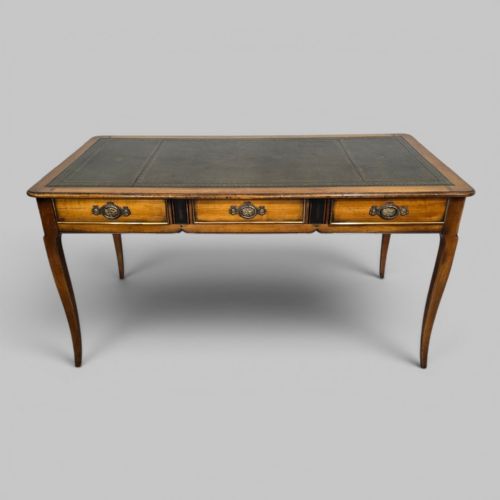
A double sided partners desk is a substantial workspace built for two, offering ample drawers on both faces to anchor a study.
What they are
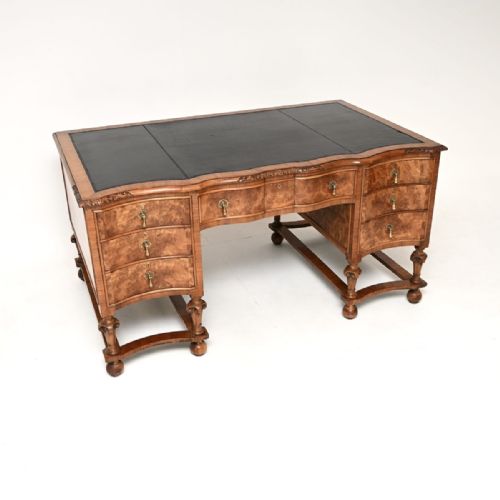
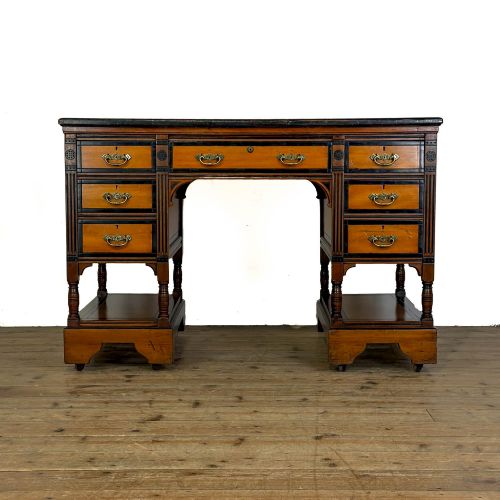
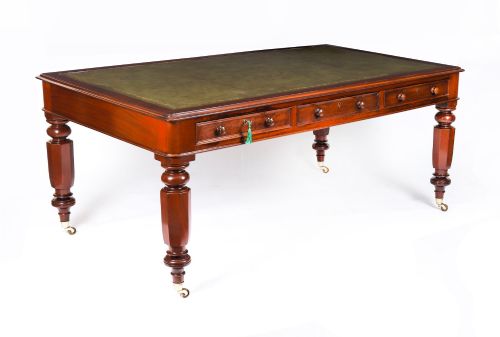
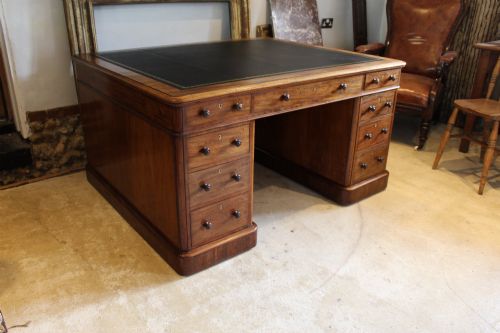
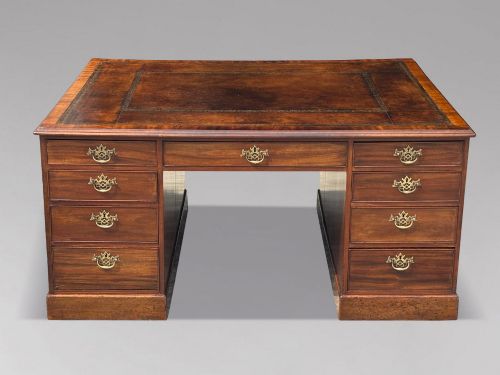
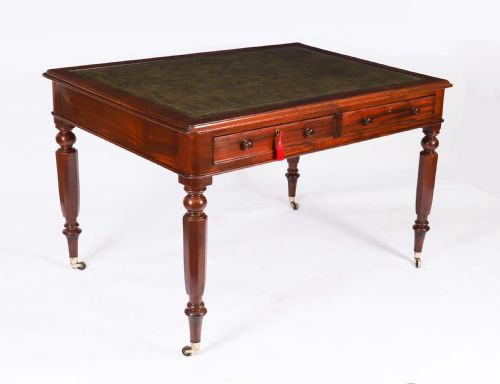
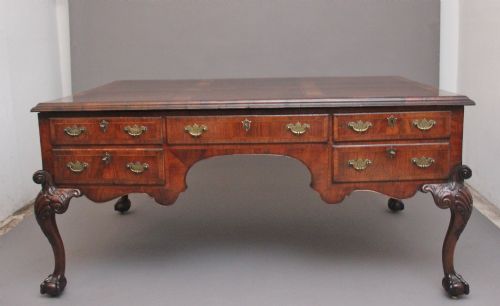
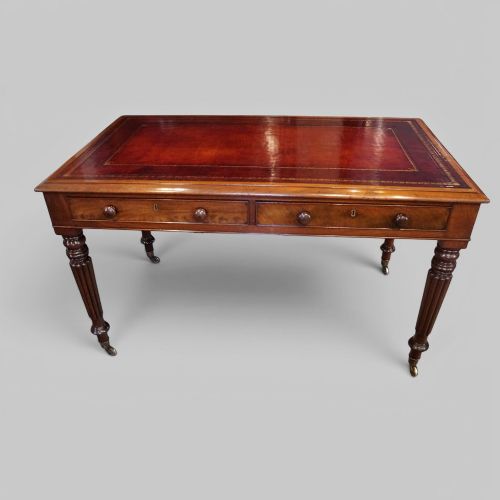
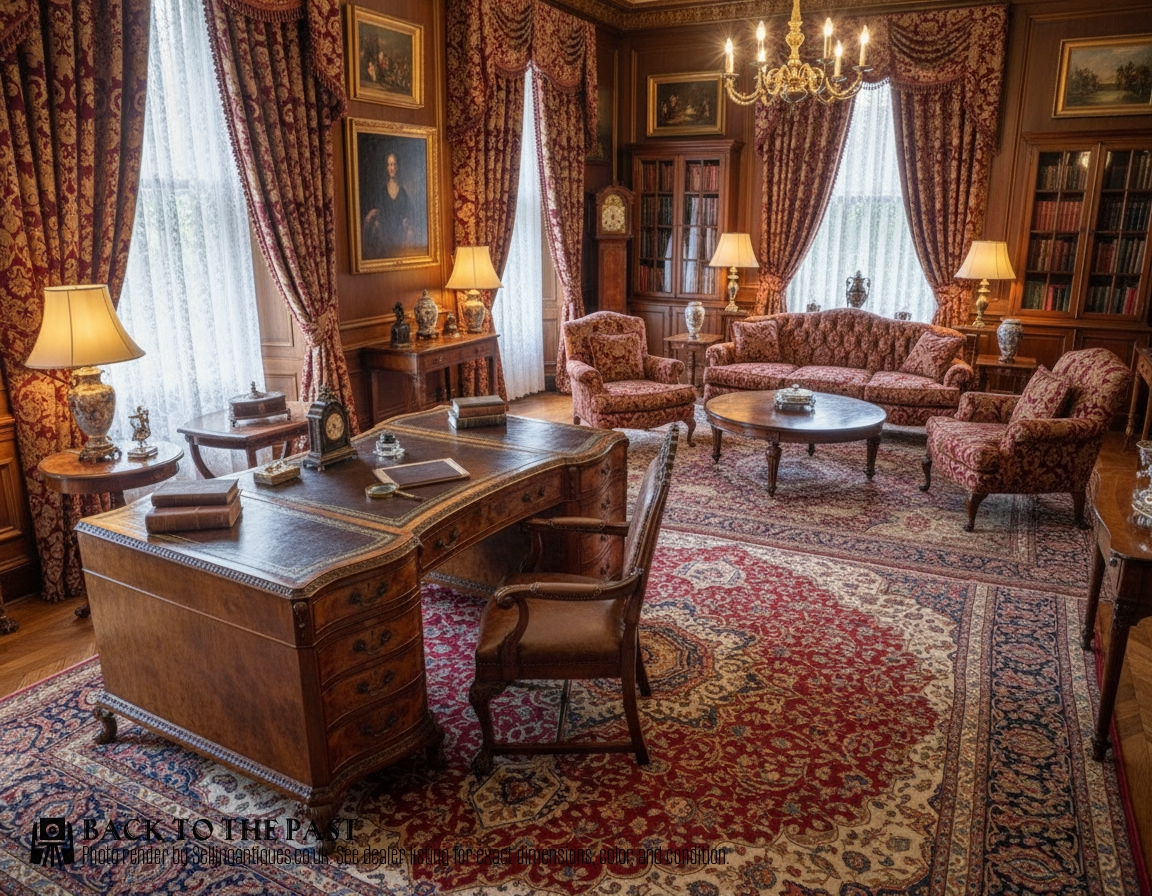
A double sided partners desk provides simultaneous workspace for two people facing one another, featuring opposing banks of drawers or cupboards beneath a large writing surface. These pieces appear in forms such as pedestal desks, library desks, and writing tables.
The versions most commonly met on this page span several centuries and styles, including Victorian, Georgian, Regency, and Edwardian eras. Makers constructed them in oak, mahogany, burr walnut, and ebonised wood.
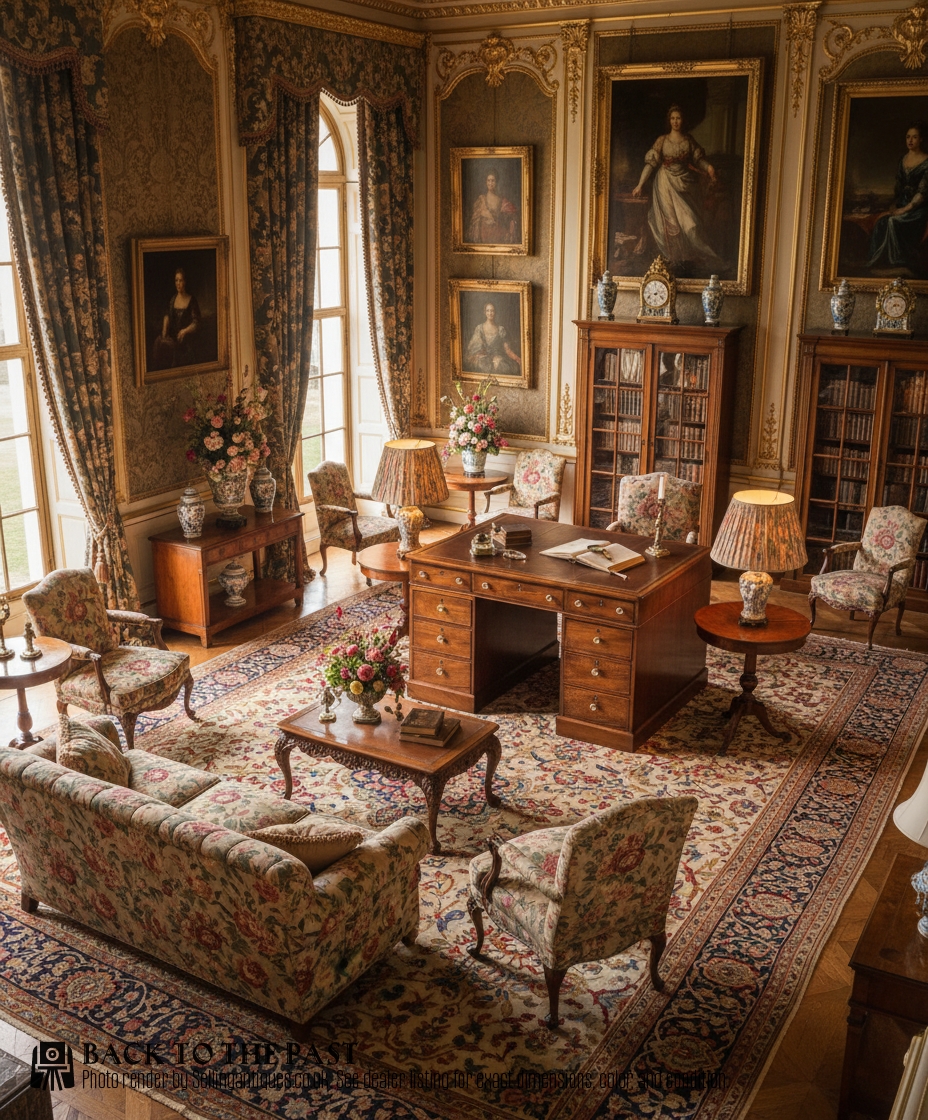
Originating in professional studies and administrative offices, these desks serve modern homes as freestanding centrepieces in large rooms. Their dual-access design means they demand considerable floor space to be appreciated from every angle.
How they were made
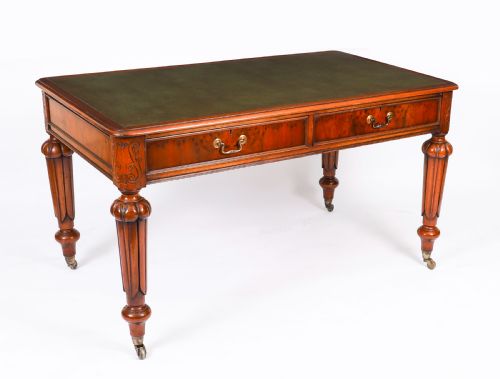
Cabinet makers utilised dense hardwoods such as mahogany and oak, frequently selecting figured veneers like burr walnut and burr oak for the primary surfaces. Many examples incorporate inset leather writing surfaces framed by timber mouldings.
Construction methods involved substantial multi-part carcasses, often separating into three distinct sections for transport and installation. Drawers feature traditional joinery and house brass handles or pulls.
Retail Price Guide 2026
Typical UK retail prices for double sided partners desk, calculated from the Sellingantiques database of over a million retail prices indexed since 2003. This retail price guide relies exclusively on Sellingantiques data; no external sources or auction records are used, so the figures do not describe the wider market.
Several examples retain enough secret drawers to hide a small library of scandalous memoirs from your co-worker.
What varies in quality
The distinction between standard commercial pieces and finer examples rests on the choice of timber and the depth of carving. Grain matching across opposing drawer fronts and finely figured burr veneers separate exceptional items from simpler workshop output.
Hardware and internal construction also define the grade of the piece, with substantial brass fittings and secondary timbers of similar quality indicating superior craftsmanship. The handling of corner mouldings and leg carving reveals the competence of the maker.
T Wilson·M.Willson
The Double Sided Partners Desk Glossary
- Pedestal desk
- A freestanding writing table comprising two separate pedestals of drawers supporting a single top. This form allows a seated person legroom in the centre.
- Burr walnut
- A prized timber cut from the abnormal growth knots of walnut trees, yielding intricate swirling patterns. Cabinet makers used it selectively for high-status furniture surfaces.
- Ebonised wood
- Timber treated with a chemical stain or pigment to imitate ebony. This dark finish gained popularity during the nineteenth century for formal or dramatic effect.
- Kneehole
- The recessed central space beneath a desk top designed to accommodate the user's legs. In partners desks, this space appears on both sides.
- Library desk
- A large freestanding table used primarily for reading and writing rather than storage. These pieces often feature simplified pedestal arrangements or open shelving.
Frequently Asked Questions
Where should I place a partners desk?
These large pieces require a central position in a room rather than being pushed against a wall, as drawers and kneeholes appear on both faces.
Allow sufficient clearance around all sides to permit chairs to pull out and users to access both working faces comfortably.
How do I care for the leather top?
Keep the inset leather surface clean by dusting regularly with a dry cloth and occasionally treating it with neutral leather balms.
Avoid placing damp items or hot cups directly onto the leather to prevent staining or marking the historical hide.
Are these desks easy to move?
Many larger examples separate into three distinct modules, usually two pedestals and a top, making transport through doorways manageable.
Enlist assistance when moving these heavy hardwood structures to avoid damaging joints or timber bases.
How do I distinguish Regency from Victorian desks?
Regency pieces often display cleaner classical lines, brass inlay, and restrained mahogany veneers characteristic of the early nineteenth century.
Victorian examples frequently present heavier proportions, deeper mouldings, and more elaborate carved details or burr timbers.