
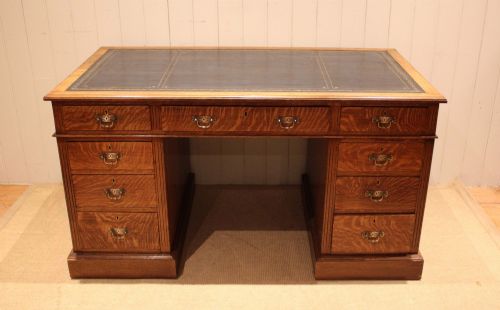
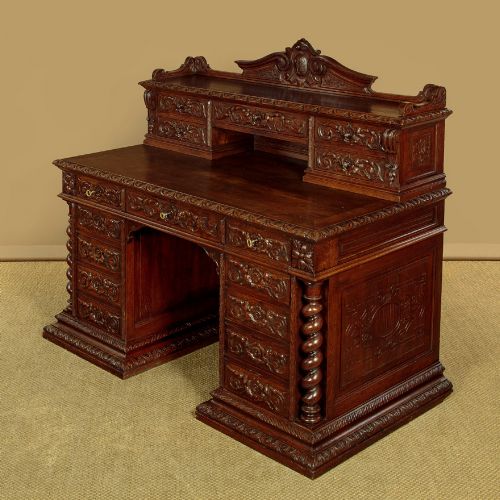


Carved Oak Partners Desk
A carved oak partners desk is a substantial double-sided working table built for two people to sit opposite each other.
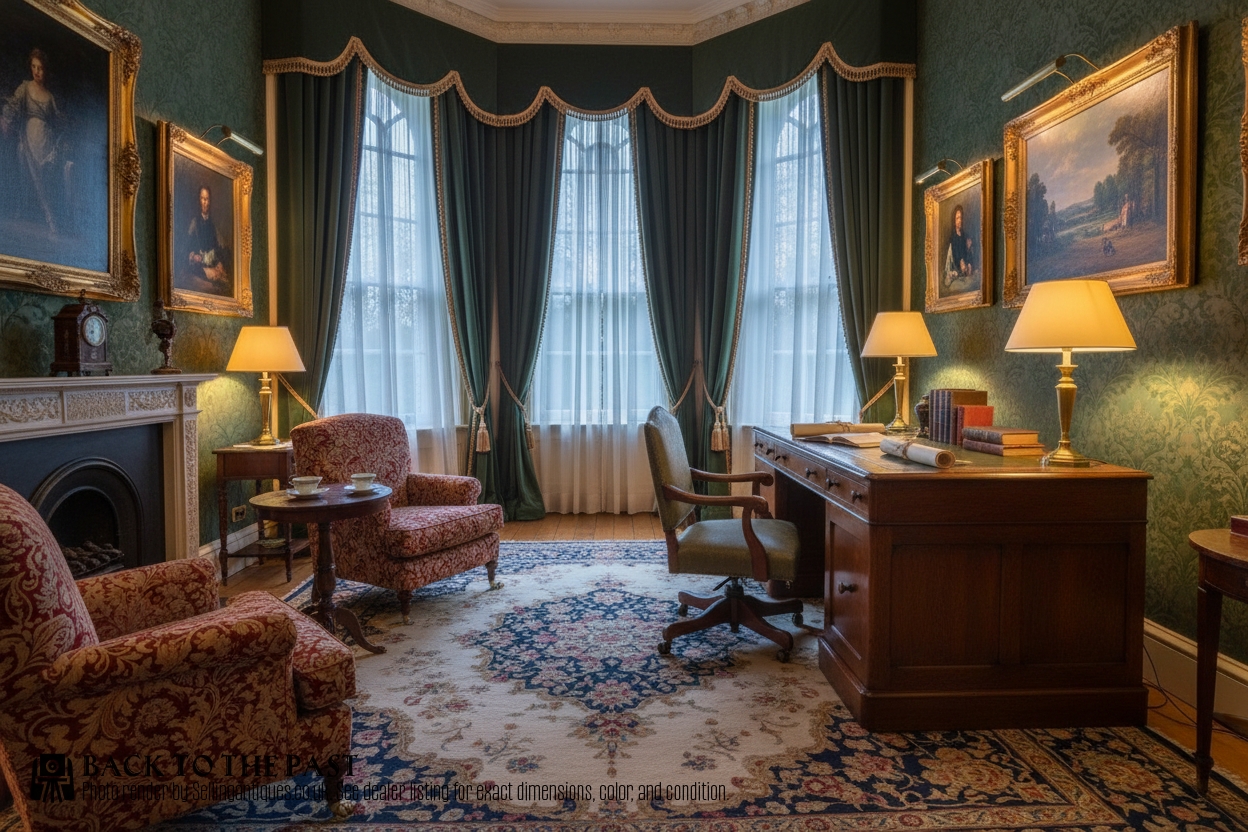
Carved Oak Partners Desk
A carved oak partners desk is typically encountered in Victorian and Edwardian iterations, spanning the nineteenth and early twentieth centuries. These large writing tables feature banks of drawers or cupboards on both sides, allowing two users to work face-to-face.
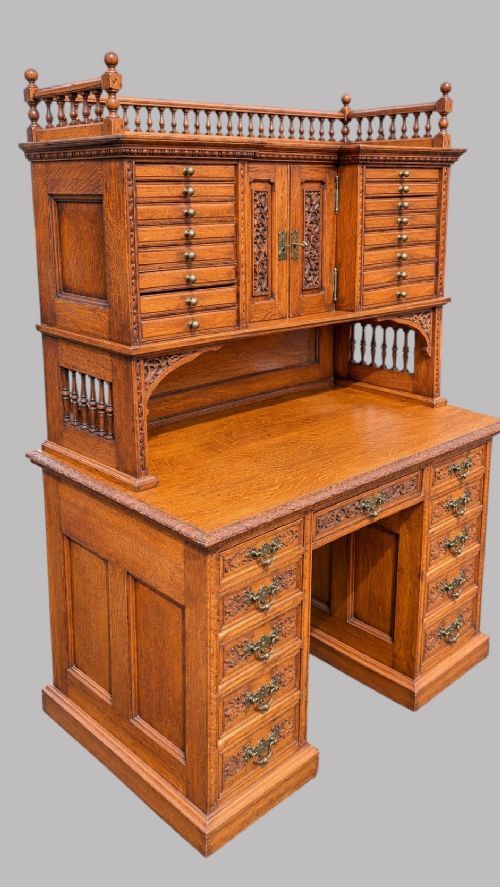
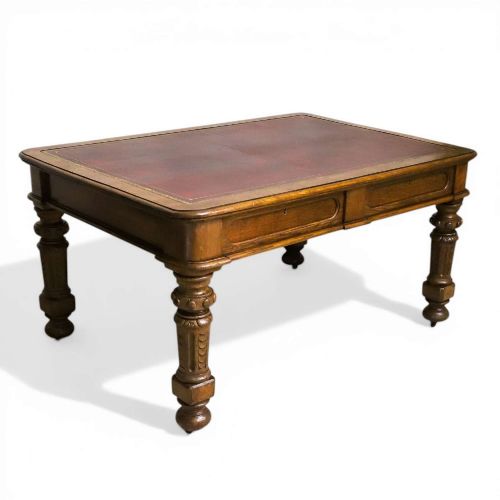
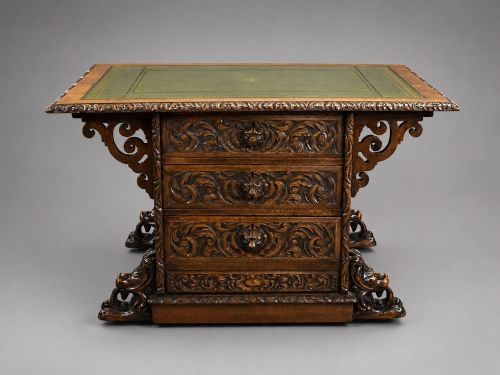
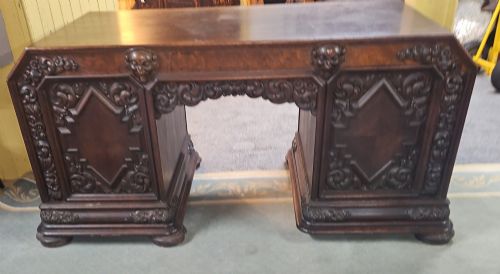
The form appears in various revival styles, including Jacobean, Gothic, and Flemish, often decorated with hand-carved panels, reeded mouldings, and figural details like Green Men or lions. Alongside traditional pedestal desks, the selection includes library tables designed with similar double-sided utility.
Most examples emerge from English workshops of the nineteenth century, though French variants with parquetry or limed finishes also appear. The timber framework is frequently paired with inset leather writing surfaces and brass hardware.
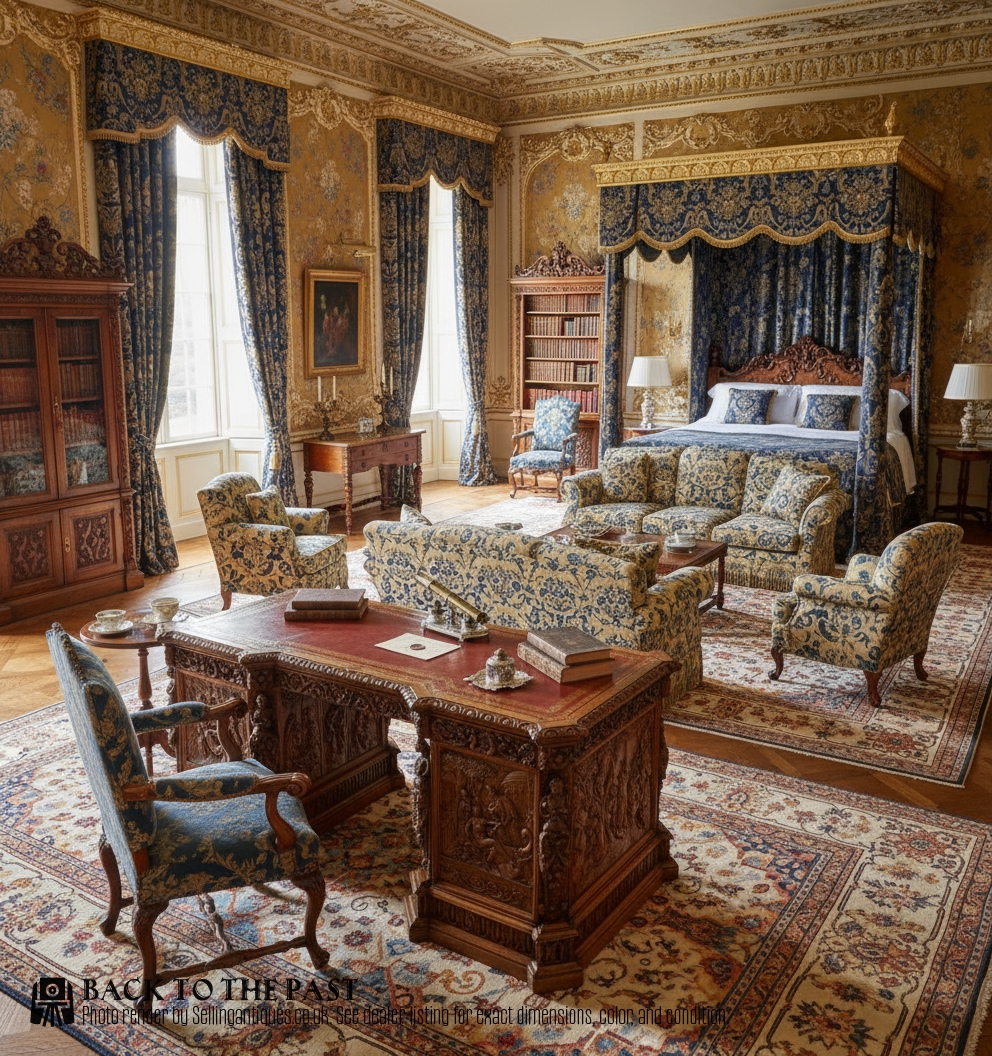
Materials and construction methods
Solid oak and burr oak form the primary structural and decorative timbers, frequently complemented by secondary woods within the drawer linings. Craftspeople utilised heavy framing and robust joinery to support the large double-sided pedestals and expansive writing surfaces.
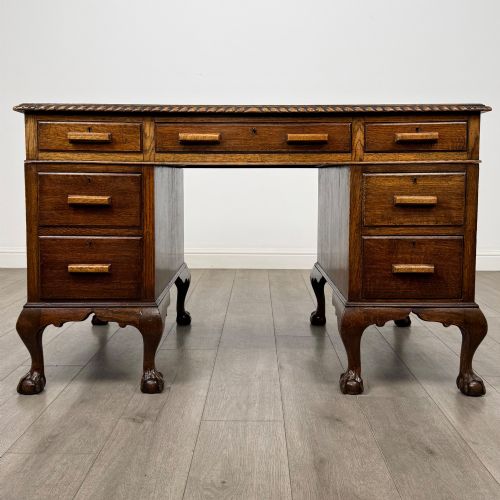
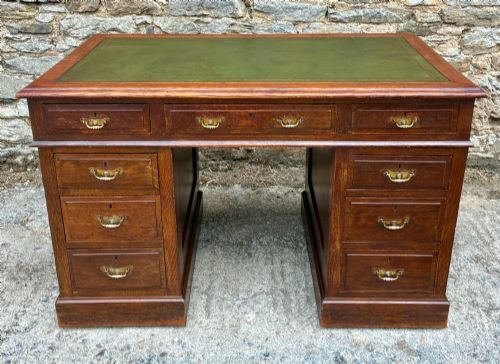
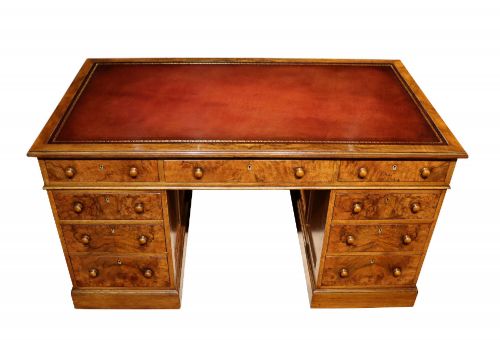
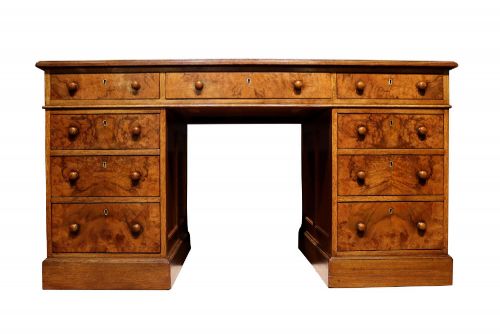
Writing surfaces were typically lined with coloured leather, often secured with blind-tooled or gilt borders. Hardware such as drop handles and drawer pulls were cast in brass, while supports ranged from standard plinth bases to bun feet.
Carving was executed by hand directly into the oak framework, incorporating deep relief panels, geometric motifs, and sculptural elements. Cabinetmakers combined these carved embellishments with reeded decoration and panelled sides.
Carved Oak Partners Desk Retail Price Guide 2026
Typical asking prices for carved oak partners desk among the pieces listed under this phrase on Sellingantiques today, from the lower quarter to the upper quarter. They describe what is for sale here now, not the wider market.
Materials recorded across the inventory include solid oak, burr oak, pollard oak, burr walnut, mahogany, ebonised wood, leather, and brass.
Assessing craftsmanship and design
Quality rests heavily on the depth and execution of the hand-carving, distinguishing standard commercial production from exhibition pieces commissioned from prominent makers. Crispness in figural motifs, such as Green Men or lions, indicates skilled hand-tooling rather than routine workshop output.
The choice of timber creates distinct visual tiers, with figured burr oak or pollard oak reserved for higher-status examples. Superior structural integrity is evident in thick solid oak carcases, substantial drawer construction, and the retention of original brass hardware and fitted leather tops.
T Wilson·Gillow and Co·Merryweather and Son·Edwards and Roberts·Howard and Sons·Drude and Co·Étienne Kohlmann
The Carved Oak Partners Desk Glossary
- Partners desk
- A large double-sided writing table featuring drawers and cupboards on both long sides, designed for two people to work opposite one another.
- Pedestal desk
- A form of desk consisting of a top surface supported by two independent banks of drawers or pedestals.
- Burr oak
- A figured timber harvested from oak tree growths, valued for its swirling, highly decorative grain patterns.
- Green Man
- A sculptural architectural ornament depicting a human face emerging from or entwined with foliage, frequently found in Victorian woodcarving.
- Library table
- A large freestanding table used for reading or writing, often finished on all four sides similarly to a partners desk.
Carved Oak Partners Desk: Frequently Asked Questions
What is a partners desk?
A partners desk is a large double-sided writing table built with drawers and cupboards facing outward on both sides. This layout allowed two individuals, such as business partners or bankers, to sit opposite each other while working.
Most surviving examples date from the Victorian and Edwardian eras and are constructed from solid oak with inset leather writing surfaces.
How do I date an oak desk?
Dating relies on examining the construction methods, hardware, and stylistic revival influences present in the piece. Victorian examples from the nineteenth century often feature heavy hand-carving, Gothic or Jacobean revival motifs, and dovetailed drawer construction.
Later Edwardian pieces tend to show cleaner lines or simpler Arts and Crafts influences, while nineteenth-century makers frequently incorporated specific brass pulls and secondary timbers.
How do I care for the leather top?
The leather writing surface requires gentle cleaning with a slightly damp cloth, avoiding harsh chemical cleaners that can strip the original dye and tooling. Conditioning wax or leather balm helps maintain the suppleness of the hide over time.
Protecting the surface from direct sunlight prevents the coloured leather from fading or drying out.
Are these desks suitable for modern offices?
These large tables function well as central freestanding desks in spacious rooms because their double-sided design allows them to be viewed from any angle. The dual pedestals provide substantial storage capacity through banks of deep drawers.
Their generous proportions require careful measurement of the room and clearance space for chairs on both sides.