


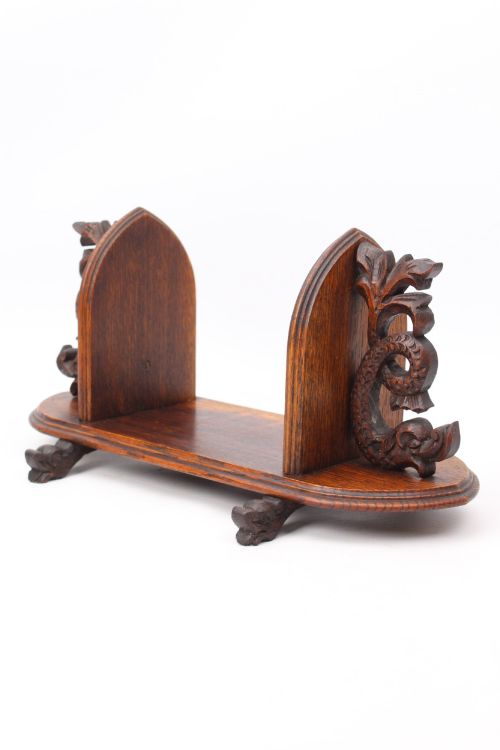
Victorian Carved Desk
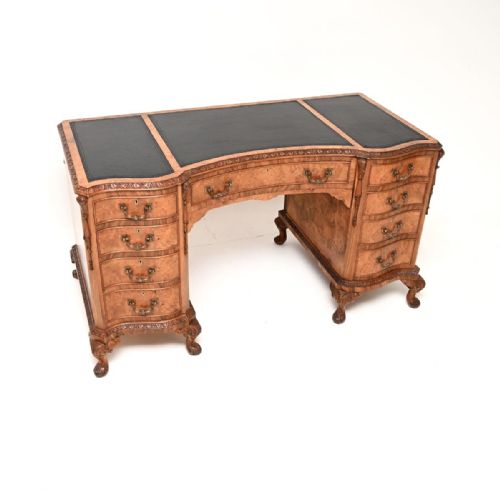
When you search for a victorian carved desk, you encounter robust timber writing furniture adorned with deep relief work and period ornamentation.

Victorian Carved Desk
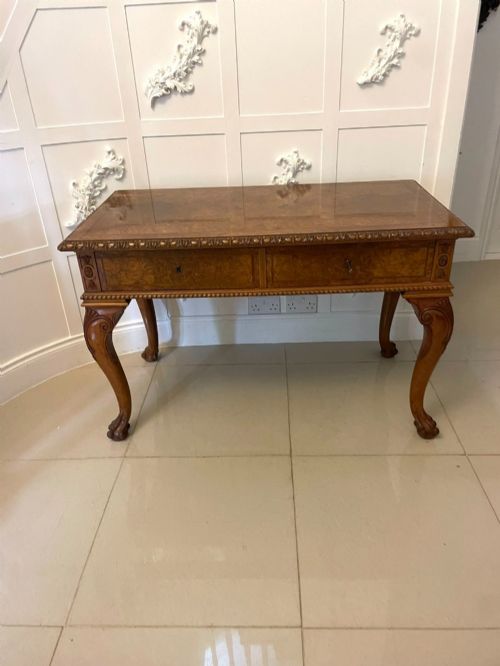
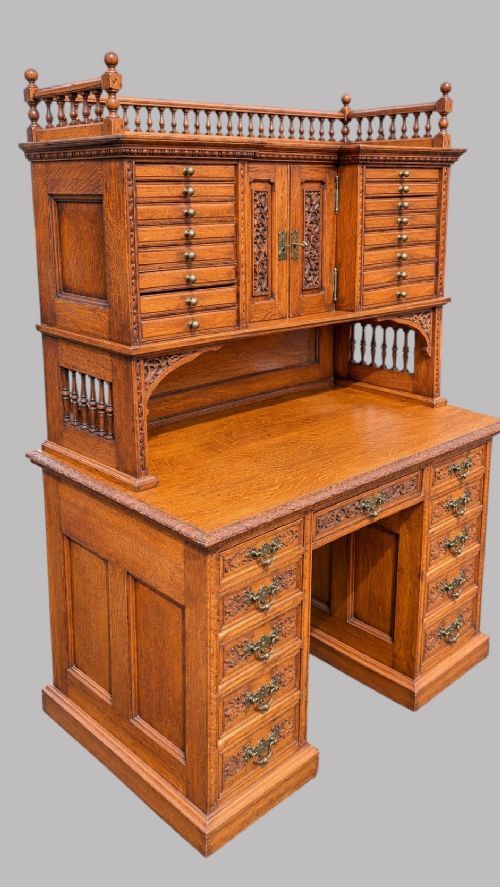
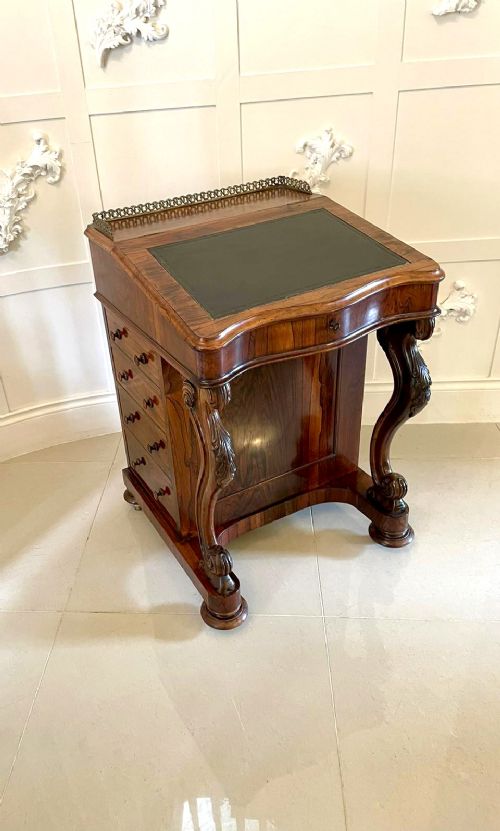
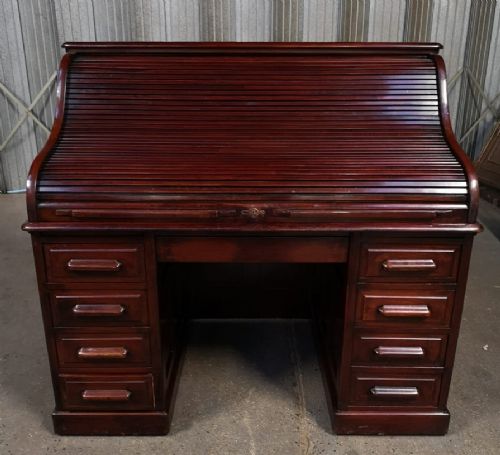
A victorian carved desk typically takes the form of a substantial pedestal format, a kneehole table, or a compact Davenport. These pieces originate from the nineteenth century, spanning decades such as eighteen eighty and nineteen hundred.
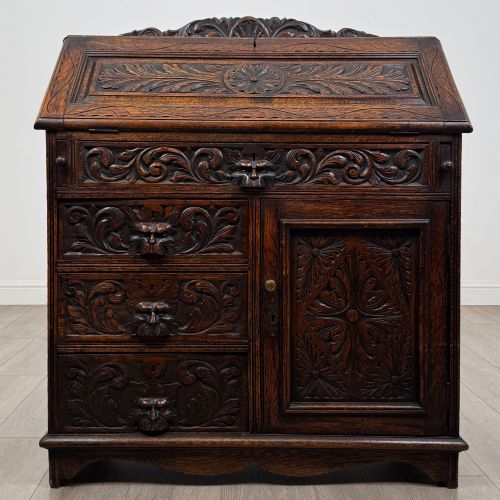
The heavy presence of oak and walnut dominates the selection, frequently displaying elaborate decorative motifs such as the Green Man. Buyers encounter both pedestal tables designed for partners and single-sided writing tables intended for private studies.
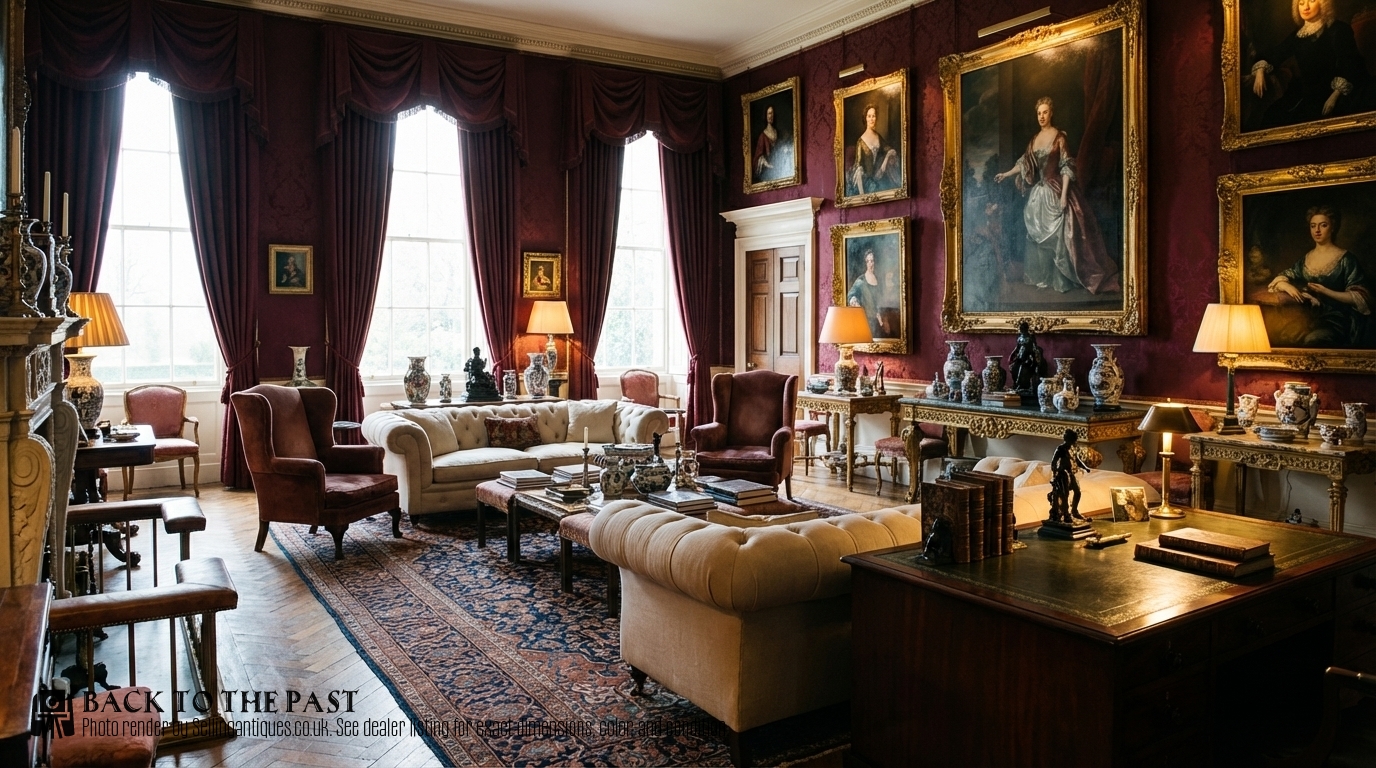
Materials and construction methods
Carpenters utilised dense hardwoods like oak, mahogany, and walnut to build the primary carcass and framing. Surfaces frequently incorporate secondary elements such as tooled leather writing inserts and brass hardware.
Carvers applied chisel work directly into the solid timber sections, creating high relief foliage, masks, and panel moulding. Joinery relied on traditional methods including dovetailing for drawers and mortise and tenon joints for the structural frames.
Victorian Carved Desk Retail Price Guide 2026
Typical asking prices for victorian carved desk among the pieces listed under this phrase on Sellingantiques today, from the lower quarter to the upper quarter. They describe what is for sale here now, not the wider market.
Listings show a strong preference for oak and walnut timbers combined with leather writing surfaces across nineteenth-century desks.
Determining grade and execution
Execution depends heavily on the depth and crispness of the hand-carved ornamentation rather than mechanical uniformity. Pieces displaying sharp, undercut relief demonstrate superior craftsmanship compared to shallow or cast substitutes.
The selection of timber grain, particularly figured burr walnut or quarter-sawn oak, separates standard utility furniture from exceptional workshop output. Original secondary woods and intact leather inserts retain the integrity of the piece.
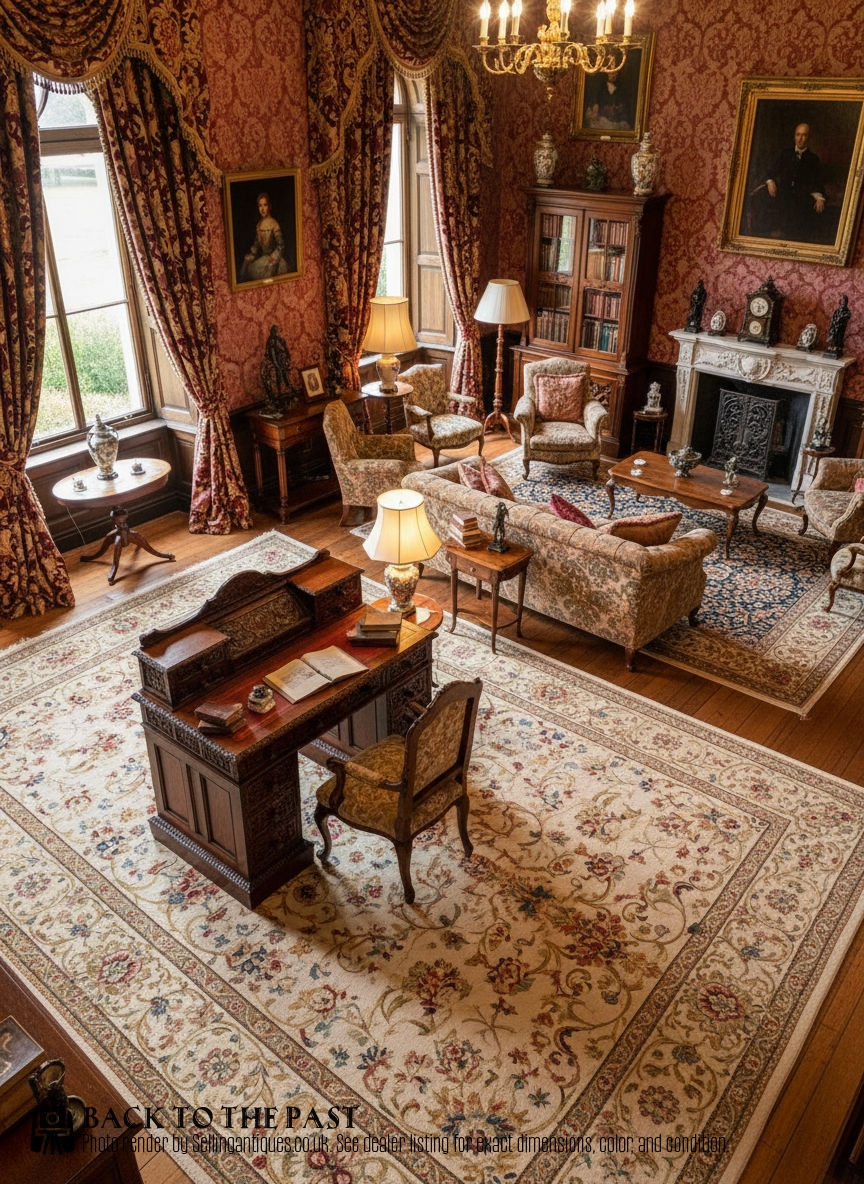
Maple and Co·Edwards and Roberts·C Bechstein
The Victorian Carved Desk Glossary
- Pedestal desk
- A writing table featuring two separate banks of drawers that support the upper work surface. These units often allow access from both sides in partners configurations.
- Green Man
- A sculptural motif depicting a human face surrounded by or emerging from foliage and vines. This carved detail appears frequently on nineteenth-century oak furniture.
- Davenport
- A compact writing desk featuring a sloping top above a bank of side drawers. The writing surface is usually lined with leather.
- Kneehole desk
- A desk with a central recess for the user's legs, flanked by pedestals or cupboards. This form became standard for domestic studies and libraries.
Victorian Carved Desk: Frequently Asked Questions
What is a Green Man carving?
The Green Man is a decorative architectural and furniture motif showing a face composed of leaves and vines.
In nineteenth-century joinery, this motif appears prominently on oak pedestal desks and library furniture.
Are Davenport desks practical for daily use?
Davenport desks provide a sloping surface suitable for laptop use or correspondence while occupying minimal floor space.
The side drawers offer storage for stationery, though the kneehole clearance is fixed by the compact cabinet design.
Which woods were used most often?
Nineteenth-century cabinet makers relied predominantly on oak, mahogany, and walnut for heavy furniture.
Finer examples occasionally utilise burr walnut veneers or incorporate rosewood and brass details.