


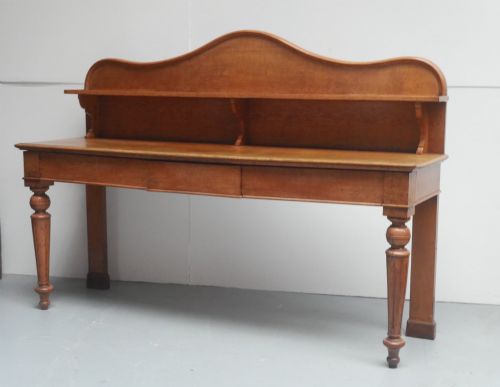
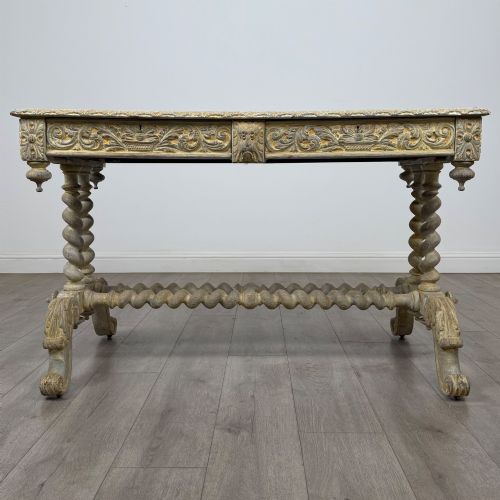
Victorian Oak Console Table
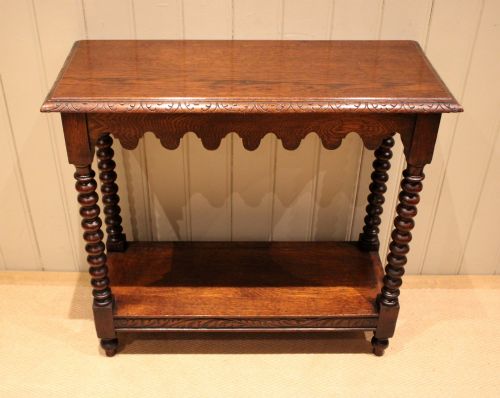
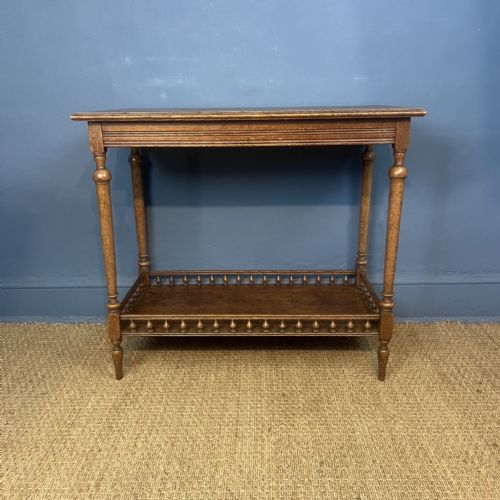
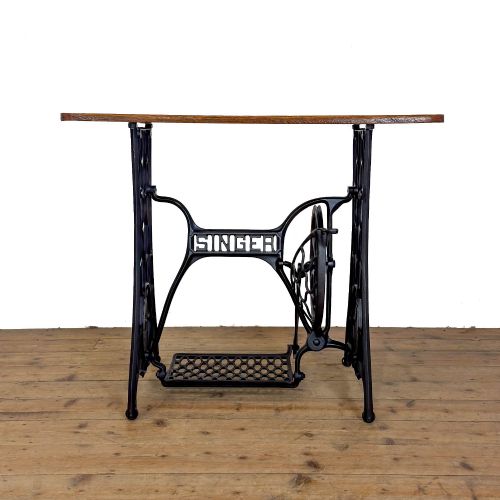
These robust victorian oak console table examples offer a practical surface and deep wood tones suited to traditional hallways and reception rooms.
Victorian Oak Console Tables
A victorian oak console table serves as a sturdy narrow surface designed for hallways, living spaces, and against walls where floor space is limited. The pieces on this page span the nineteenth century, including specific dates from eighteen forty through to eighteen ninety, capturing both early Victorian plainness and later decorative outbursts.
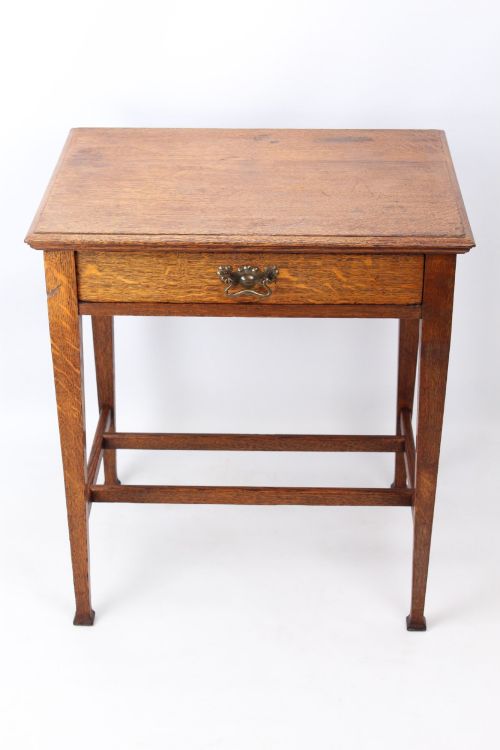
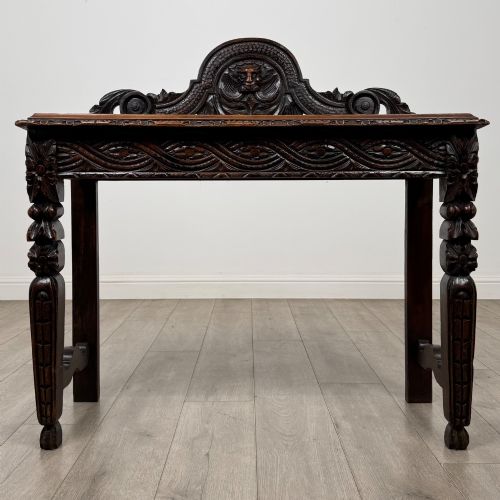
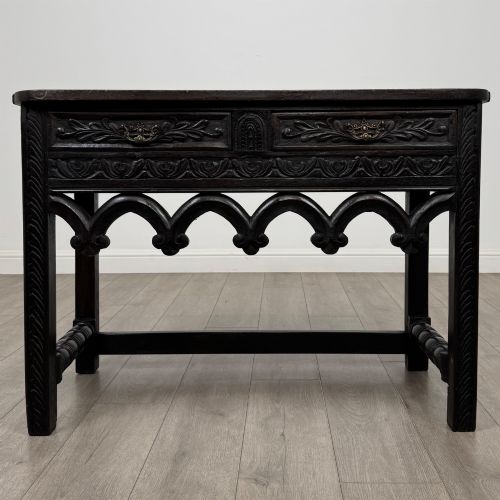
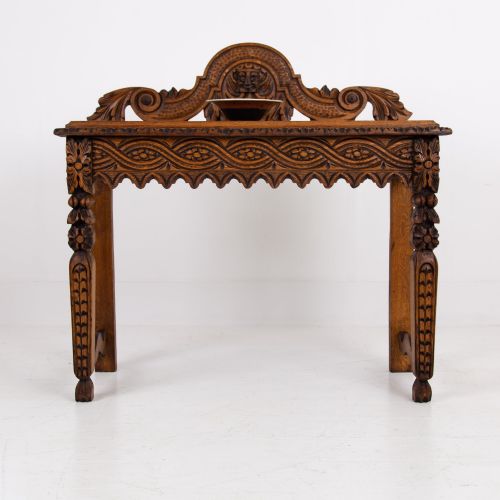
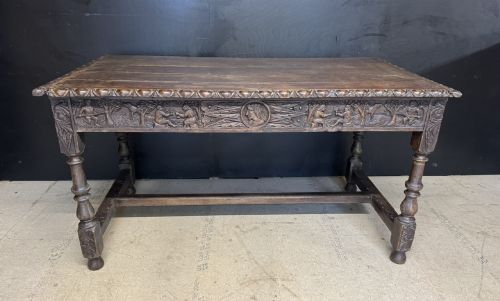
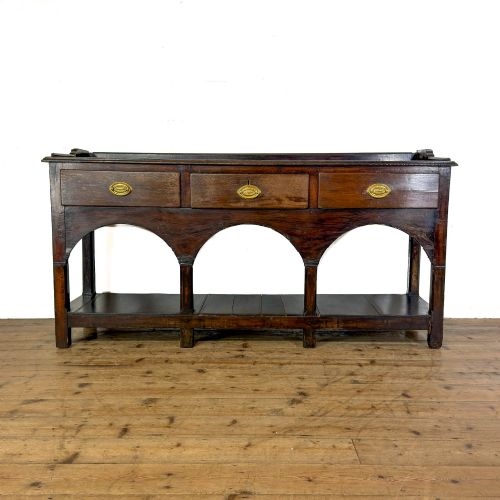
Forms cross over frequently with side tables, writing tables, and hall tables, often featuring single frieze drawers or tiered structures. Buyers frequently encounter heavily carved ornamentation, including Green Man motifs, alongside simpler golden oak and limed oak surfaces.
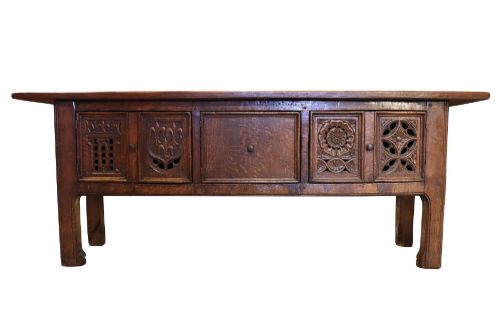
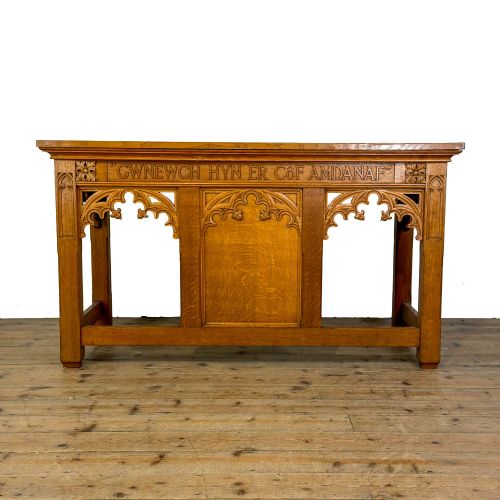
Origins include English and Scottish workshops, showing regional preferences from plain country builds to elaborate Gothic Revival and Aesthetic Movement expressions. Whether configured with bobbin turned legs, marble tops, or serpentine fronts, each piece fulfills the traditional hallway role.
Materials and Construction
Makers utilised solid oak, golden oak, and occasionally light oak or pine secondary woods, often complemented by brass handles and hinges. Timber selection prioritised dense grain and durability, capable of withstanding heavy hand-carved relief work.
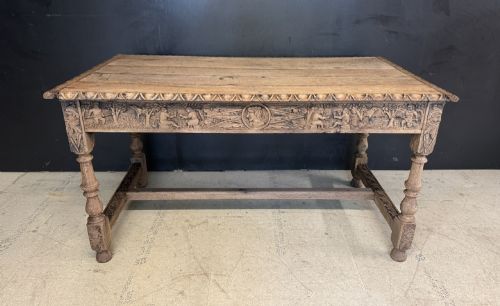
Construction techniques combine traditional joinery with elaborate surface decoration, ranging from crisp chisel-cut grape-vine motifs to smooth serpentine moulding. Surviving pieces demonstrate robust framing designed to support drawers and tiered shelving without warping.
Retail Price Guide 2026
Typical UK retail prices for victorian oak console table, calculated from the Sellingantiques database of over a million retail prices indexed since 2003. This retail price guide relies exclusively on Sellingantiques data; no external sources or auction records are used, so the figures do not describe the wider market.
Listings feature oak, golden oak, and brass materials across nineteenth century periods, spanning side tables, writing desks, and hall tables.
Assessing Quality
Quality rests upon the crispness of the hand-carving and the depth of the timber's grain, separating plain utilitarian items from finely articulated Gothic Revival or Aesthetic Movement pieces. Superior examples display thoughtful proportions, integrated drawer linings, and original brass hardware.
The distinction between standard country workshops and specialised cabinet makers shows in the tightness of the joinery and the selection of figured oak. Pieces featuring secondary elements like marble tops or multiple tiers represent more ambitious commissions of the period.
The Victorian Oak Console Table Glossary
- Frieze drawer
- A drawer integrated into the horizontal band beneath the tabletop. These compartments often feature hand-cut dovetails and small turned knobs.
- Green Man
- A sculptural architectural ornament depicting a human face disgorging foliage. This motif appears frequently on nineteenth-century carved oak furniture.
- Gothic Revival
- A nineteenth-century design style drawing inspiration from medieval architecture. Pieces in this taste often feature pointed arches, heavy linenfold panels, and deep relief carving.
- Aesthetic Movement
- A late Victorian design philosophy prioritising visual beauty over narrative function. Furniture from this circle exhibits clean geometric lines and lighter woods.
- Serpentine
- A furniture front or edge shaped with a central convex curve flanked by two concave curves. This contour requires skilled hand-shaping of solid timber.
Frequently Asked Questions
Where should I place a console table?
These tables suit narrow circulation spaces like entrance halls, corridors, and landings where a deep piece of furniture would obstruct movement. Their shallow depth also makes them useful as sideboard surfaces in dining rooms or as writing desks against living room walls.
Because many examples include frieze drawers or lower tiers, they provide practical storage for letters, keys, and small household items while maintaining a slim footprint.
How do I identify a Gothic Revival piece?
Gothic Revival items feature architectural details inspired by medieval buildings, such as pointed arches, quatrefoils, and heavy strapwork. You will often find Green Man carvings or deep, dark oak patination on these examples.
Unlike plain Victorian furniture, these pieces lean towards dramatic relief carving and sturdy, imposing silhouettes that reflect nineteenth-century romanticism.
What is the difference between golden oak and standard oak?
Golden oak refers to timber selected or finished to show a warm, honeyed tone, often associated with specific regional outputs or particular decades of the nineteenth century. Standard oak can range from very dark, fumed finishes to lighter nineteenth-century surfaces.
Both materials offer the same structural durability, but the visual impact changes the character of the room significantly.
Can I use a console table as a desk?
Many nineteenth-century console tables double as writing tables or hall desks, particularly those equipped with one or more frieze drawers. Their height matches standard seating, though knee clearance depends on the presence of lower stretchers or drawers.
Checking the internal depth of the drawer helps confirm whether it was designed to hold writing materials or simply serve as storage.
How do I care for antique oak furniture?
Antique oak benefits from simple dusting with a dry, soft cloth and occasional application of appropriate beeswax to nourish the timber. Avoid placing these tables in direct sunlight or near heat sources to prevent the solid wood from splitting.
Proper humidity control keeps the nineteenth-century joinery stable and preserves the natural patina built up over generations.